10 natural spectacles in the US that you must see at least once
There’s a lifetime’s worth of landscapes to explore in America. These should be at the top of the priority list
 ValVades
With so many natural spectacles packed into the U.S., planning sightseeing trips can be a conundrum — the choice is bewildering.
With this in mind, we’ve assembled a list of 10 must-visit-at-least-once landscapes that should be inked into your bucket list. These are places that have mesmerized tourists, stolen scenes in Hollywood movies and adorned millions of postcards — wild America at its most theatrical.
Our round-up includes a canyon in Arizona so vast that storms sometimes form inside it, a geothermal wonderland in Wyoming containing half the world’s geysers, a waterfall in New York that will leave you awe-struck (even if it does seem familiar) and a valley in California that’s home to some of the world’s most famous cliff faces.
Alaska claims two entries, thanks to an epic glacier and an extremely lofty mountain, while Oregon makes the cut thanks to a lake that’s surreally beautiful.
In Hawaii, there’s the coastline that wowed Steven Spielberg and a bizarre monolithic rock that caught his attention in Wyoming.
In New Mexico is a jaw-dropping desert that looks like it’s covered in snow.
1. Grand Canyon, Arizona
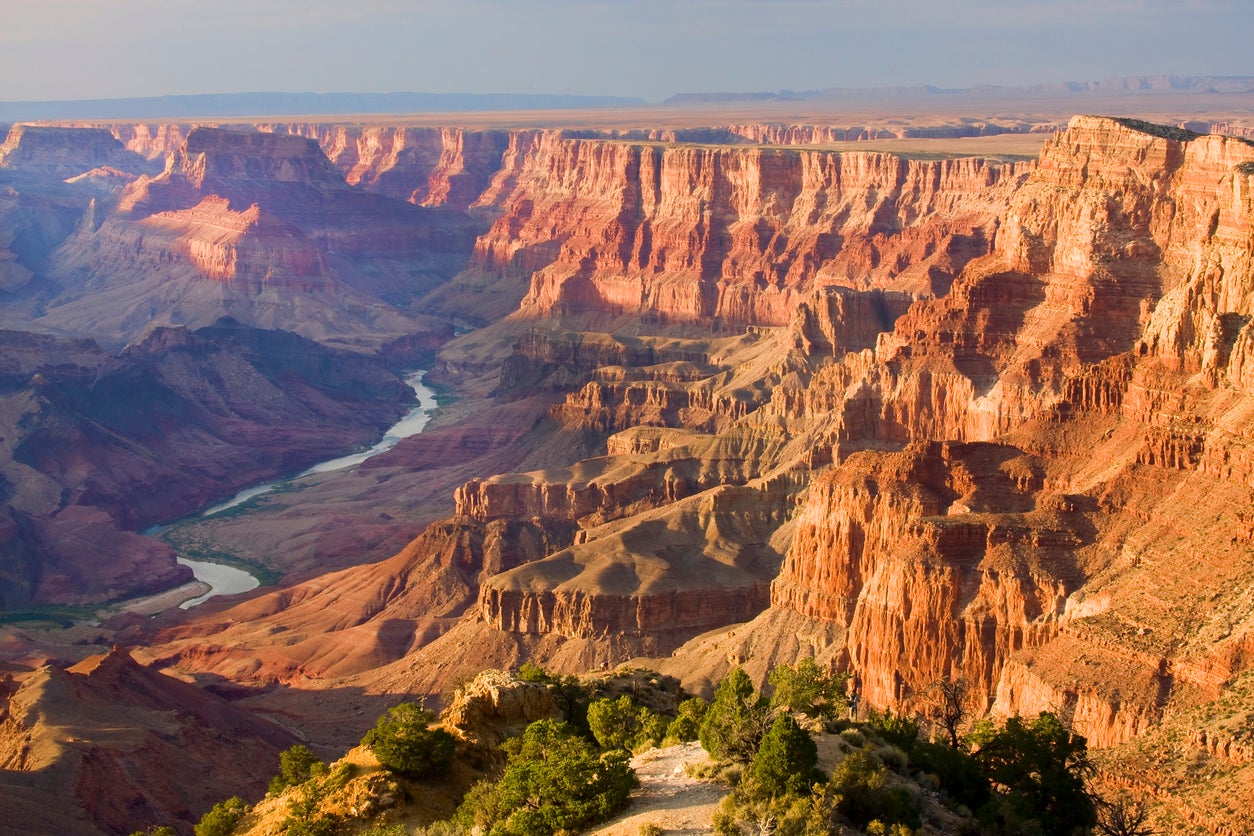
While there’s a postcard familiarity about the Grand Canyon, nothing beats experiencing the humbling majesty of the chasm in real life.
Carved by the Colorado River over millions of years (with rocks as old as two billion years old), the gorge, an uncontested entry on the seven natural wonders of the world list, has an immensity that’s almost difficult to comprehend.
A mile deep and up to 18 miles wide, and stretching for 277 miles, it’s one of Earth’s most jaw-dropping landscapes, and so huge that storms sometimes form within it.
The South Rim offers one of the best ways to experience the Grand Canyon. It’s open year-round and is where you’ll find viewpoints such as Mather Point or Yavapai Observation Station. The canyon is also a popular day trip from Las Vegas by helicopter.
Great place to stay: El Tovar Hotel (rooms from $270) is set directly on the canyon rim and is imbued with historic charm. It was built in 1905 as a cross between a Swiss chalet and a Norwegian Villa.
Read more: A sober guide to Napa Valley
2. Yellowstone’s geothermal drama — Wyoming/Montana/Idaho
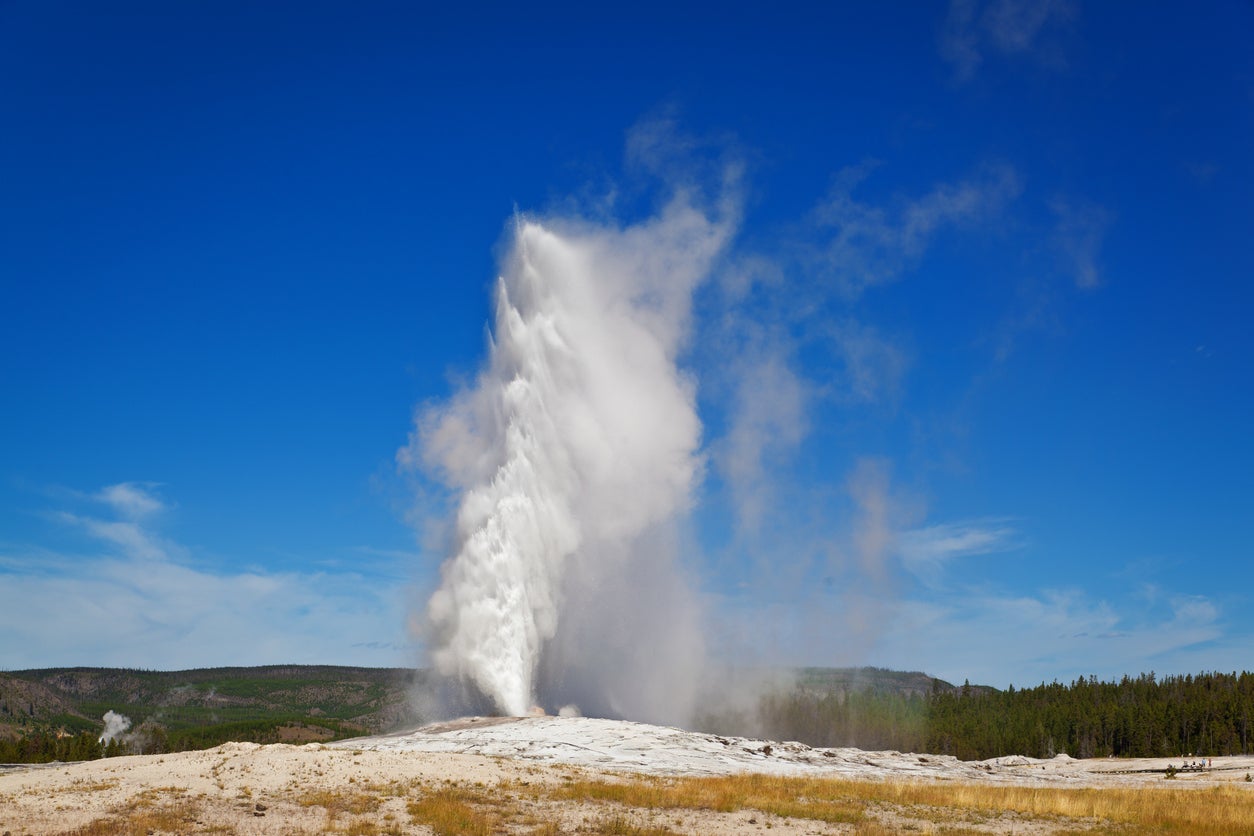
Thanks to a vast supervolcano lurking beneath the surface and heating the groundwater, Yellowstone National Park — which spans Wyoming, Montana and Idaho — is a geothermal adventure land, with around 10,000 hydrothermal features making it seem as if the land itself is breathing.
The 3,472-square-mile park features brightly colored hot springs, mud pots, travertine terraces and between 500 and 700 geysers (roughly half of the world’s total).
The most famous of these is Old Faithful in Wyoming, which blasts water up to 180 feet in the air around 20 times a day.
One of the best ways to view the park’s theatrics is to walk the boardwalks around Wyoming’s Upper Geyser Basin, home to Old Faithful and around 150 other geysers.
Great place to stay: Old Faithful Inn (rooms from $205, open May to October) oozes rustic simplicity — there’s no wifi or air conditioning, for example. But on the plus side, you’re within walking distance of the world's most famous geyser.
Read more: How to have an authentic Yellowstone experience in Montana
3. Niagara Falls, New York
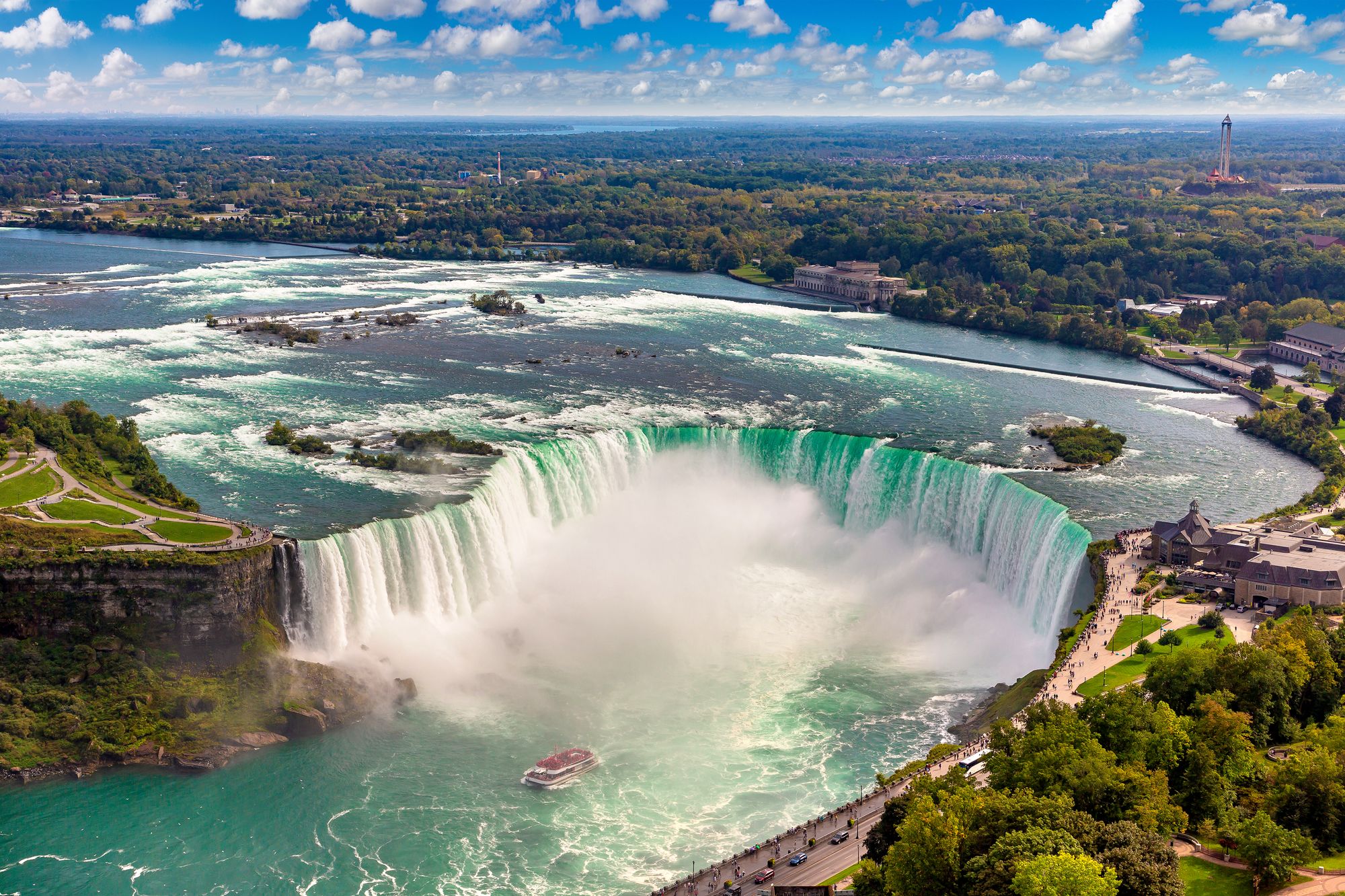
Around one million bathtubs of water pour over the edge of Niagara Falls every minute during peak flow. It’s a sight — and a thundering sound — that you’ll never forget.
Niagara comprises three waterfalls — the American Falls and Bridal Veil Falls, which are both in the U.S., and the vast Horseshoe Falls, which straddles the U.S./Canadian border.
The best way to experience the spectacle from the U.S. side is from the close-up viewpoints on Goat Island, which sits with the American and Bridal falls on one side, and the Horseshoe Falls on the other.
For perhaps the most awe-inspiring encounter, board the Maid of the Mist electric boat tour, which will take you right into the mist of the falls.
Great place to stay: The Giacomo is set in a restored Art Deco tower just minutes by foot from Niagara Falls State Park and the bridge to Goat Island.
Read more: 22 free things to do and see in New York City, from beaches to secret gardens
4. Yosemite Valley, California
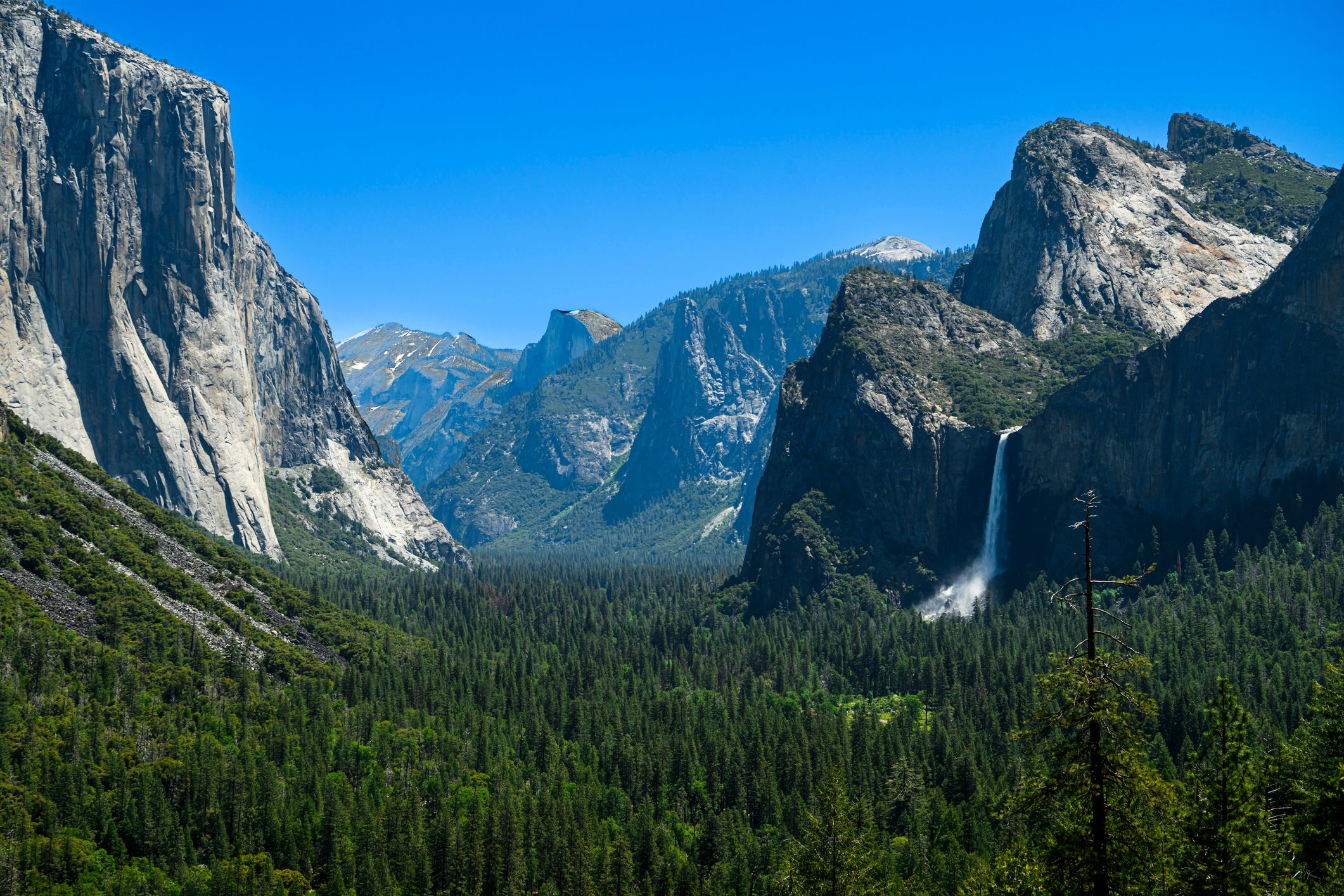
Few would argue that Yosemite Valley delivers some of the USA’s most iconic scenery.
Within this seven-mile-long glacial valley, which sits within Yosemite National Park, monolithic El Capitan (3,000 feet) and Half Dome (4,700 feet) rise dramatically from the valley floor, and Yosemite Falls, the tallest waterfall in North America, cascades 2,425 feet down a vast cliff face into Yosemite Creek.
One of the most breathtaking places to drink in the valley’s majesty is Tunnel View, just outside the Wawona Tunnel on State Highway 41.
It’s a vista made famous by the work of legendary photographer Ansel Adams, from where you can see El Capitan, Half Dome and Bridalveil Fall.
Great place to stay: Yosemite Valley Lodge (rooms from $350) is in the heart of the valley, close to Yosemite Falls.
Read more: Inside LA’s Koreatown: Where tradition meets a new generation of creativity
5. Denali, Alaska
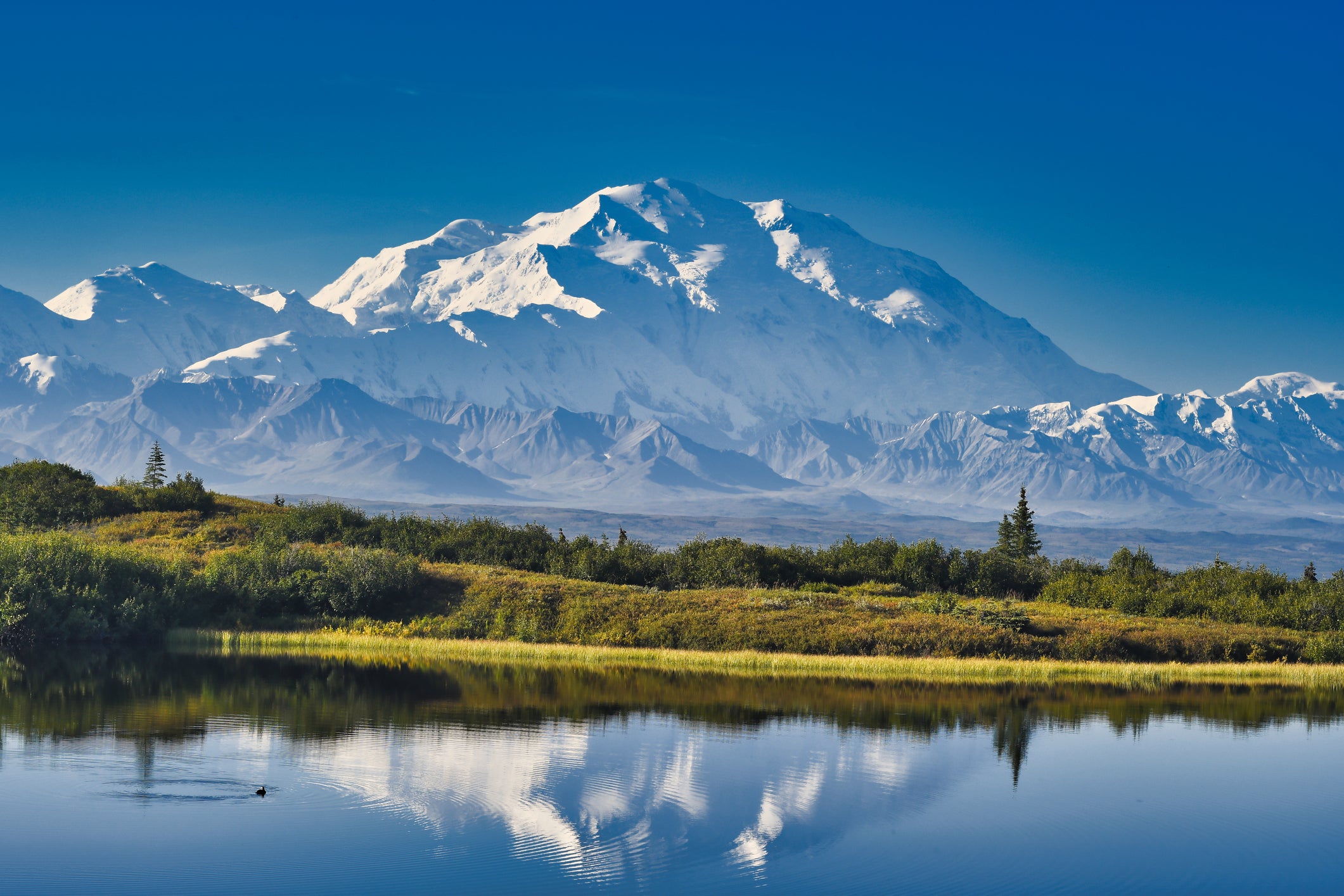
Denali (formerly Mount McKinley) is North America’s highest peak at 20,310 feet — but also one of the world’s great vertical ascents: from base to summit, the Alaskan behemoth measures 18,000 feet.
It’s a sight to behold, though famously elusive, with clouds often cloaking the summit.
The mighty mountain sits around 90 miles from the entrance to Denali National Park and Preserve, which is near the small town of Denali Park on the eastern edge.
As private cars are banned beyond the 15-mile mark, better views of Denali are offered by Denali National Park bus tours, which venture further in and feature a trained naturalist who both drives and provides narration.
Great place to stay: Grande Denali Lodge (rooms from $280) is about 1.5 miles from the park entrance and offers sweeping mountain views.
Read more: Anchorage, Alaska city guide: What to do and where to stay in America’s last frontier
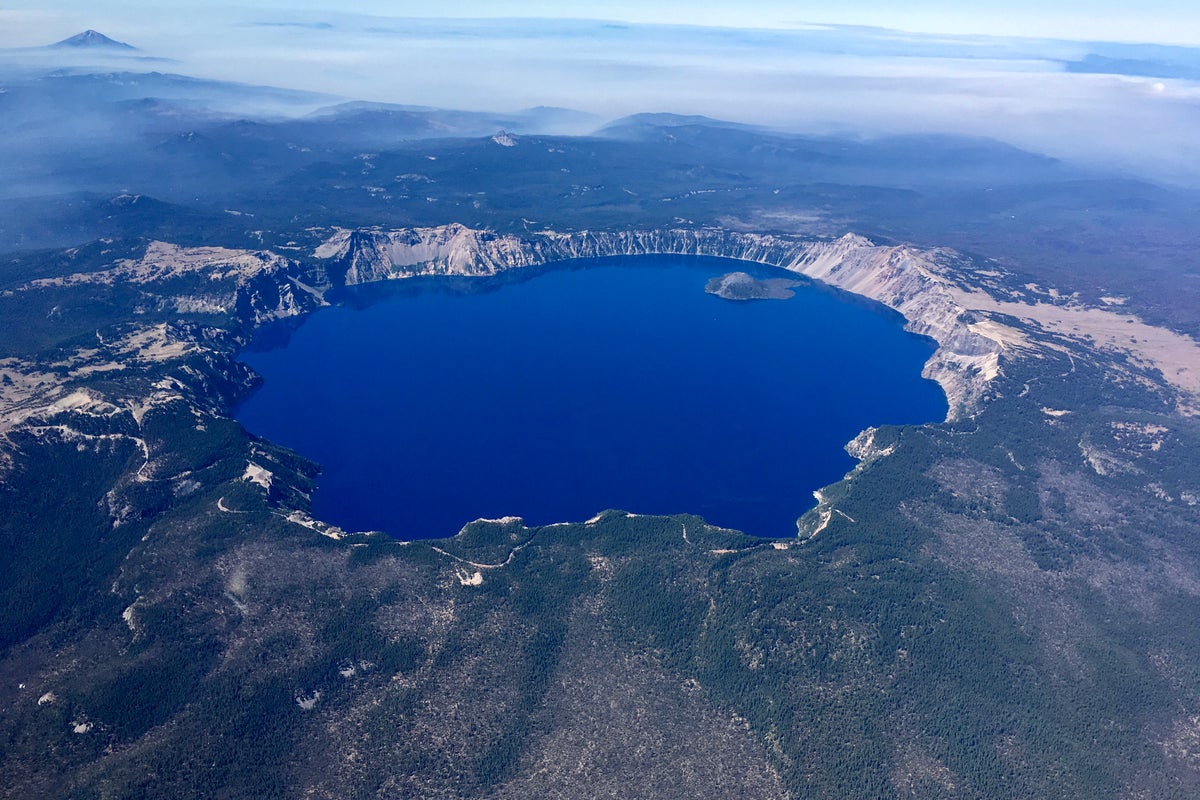
6. Crater Lake, Oregon
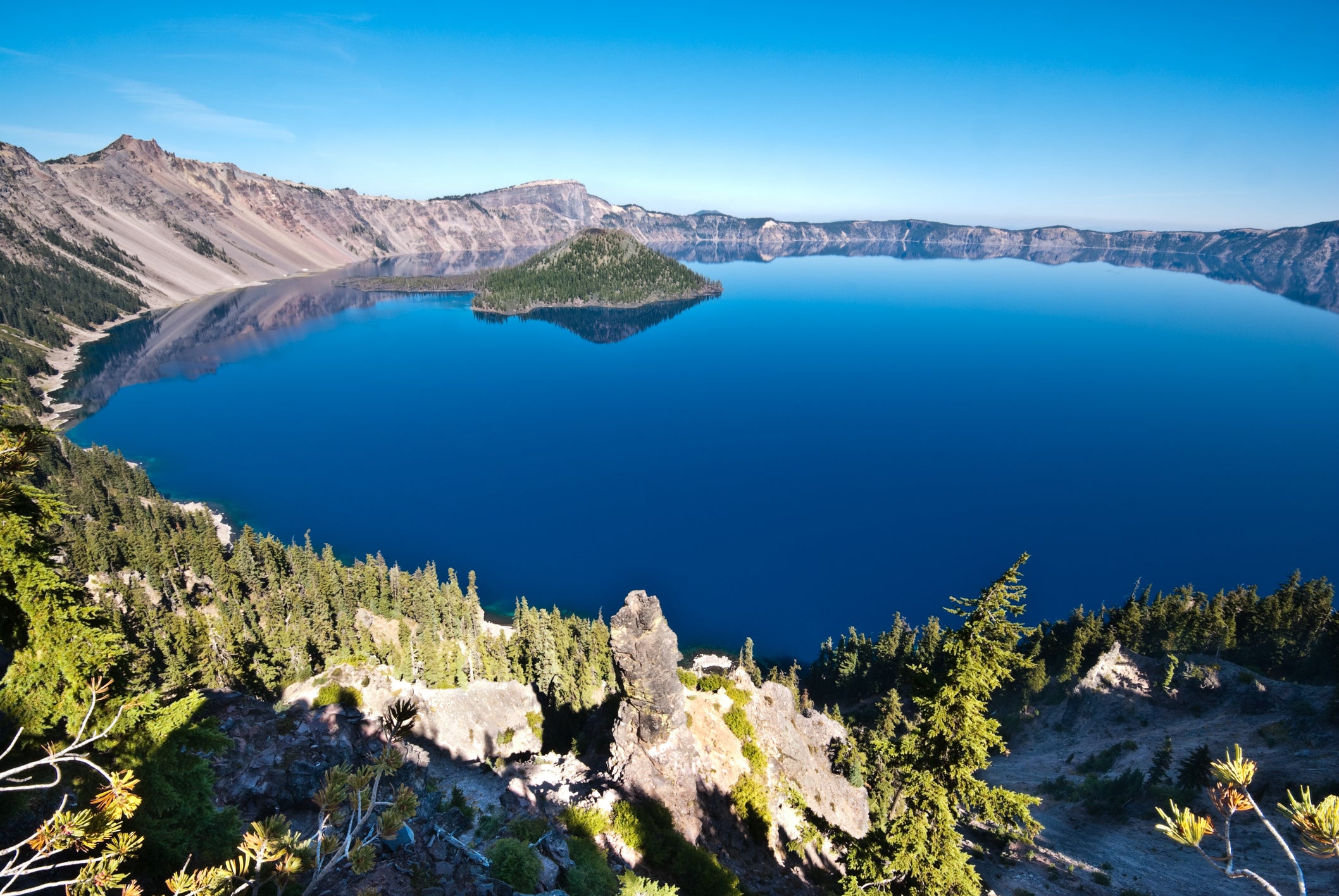
Behold America’s deepest, and most surreal, lake.
Crater Lake fills the caldera of a mammoth volcano that collapsed 7,700 years ago, and plunges to a depth of 1,943 feet. And the dazzling water is among the clearest on Earth. With no rivers in or out, it’s topped up only by rain and snow.
Adding to the otherworldly vibe is Wizard Island, a lone volcanic cinder cone at the west end that rises to 755 feet.
You’ll get the best photographs from the 33-mile road that loops the caldera, but taking to the water on a boat tour is also a must.
Great place to stay: Crater Lake Lodge (rooms from $280) is perched dramatically on the rim of the caldera, with showstopping views as standard.
Read more: A Euro trip without leaving America: Seven US towns that look exactly like places in Europe
7. Na Pali Coast, Kauai, Hawaii
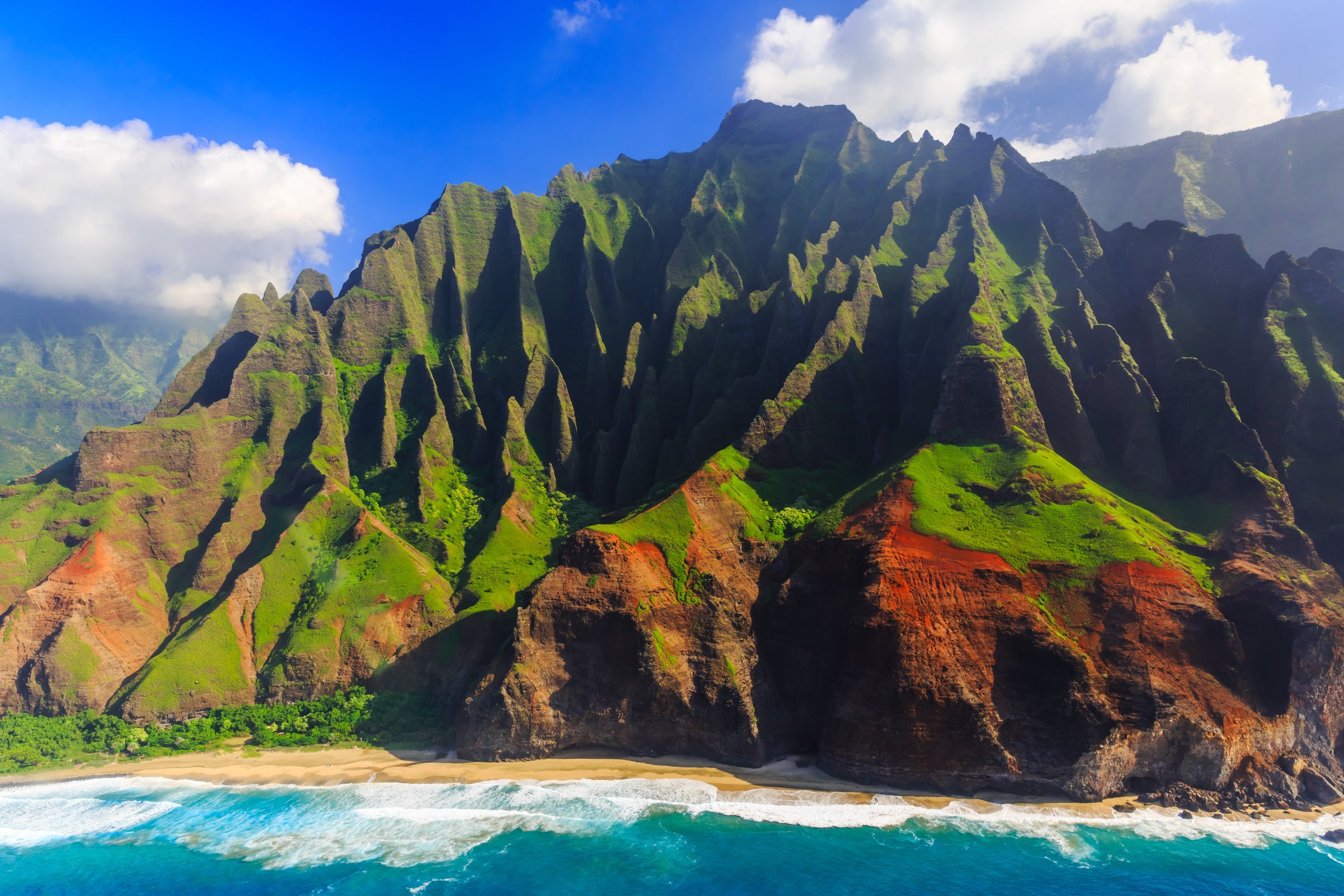
It’s no exaggeration to say that this landscape is truly cinematic — after all, it has the stamp of approval from Steven Spielberg.
The director used the serrated emerald cliffs of the Na Pali Coast as a stand-in for “Isla Nublar” in Jurassic Park.
In the movie, we see a helicopter carrying Dr. John Hammond and guests flying towards the shoreline’s seemingly razor-sharp ridges — this part of the coastline is so steep that road-building is completely thwarted. A fact that’s helped to preserve its lush, primeval look.
A helicopter tour is the gold-standard way to see the cliffs, but you’ll also get a great view from the water. Ground-level views are available via the Kalalau Trail.
Great place to stay: Hanalei Colony Resort (rooms from $350) is set by the beach, just minutes from the Na Pali Coast.
8. Devils Tower, Wyoming
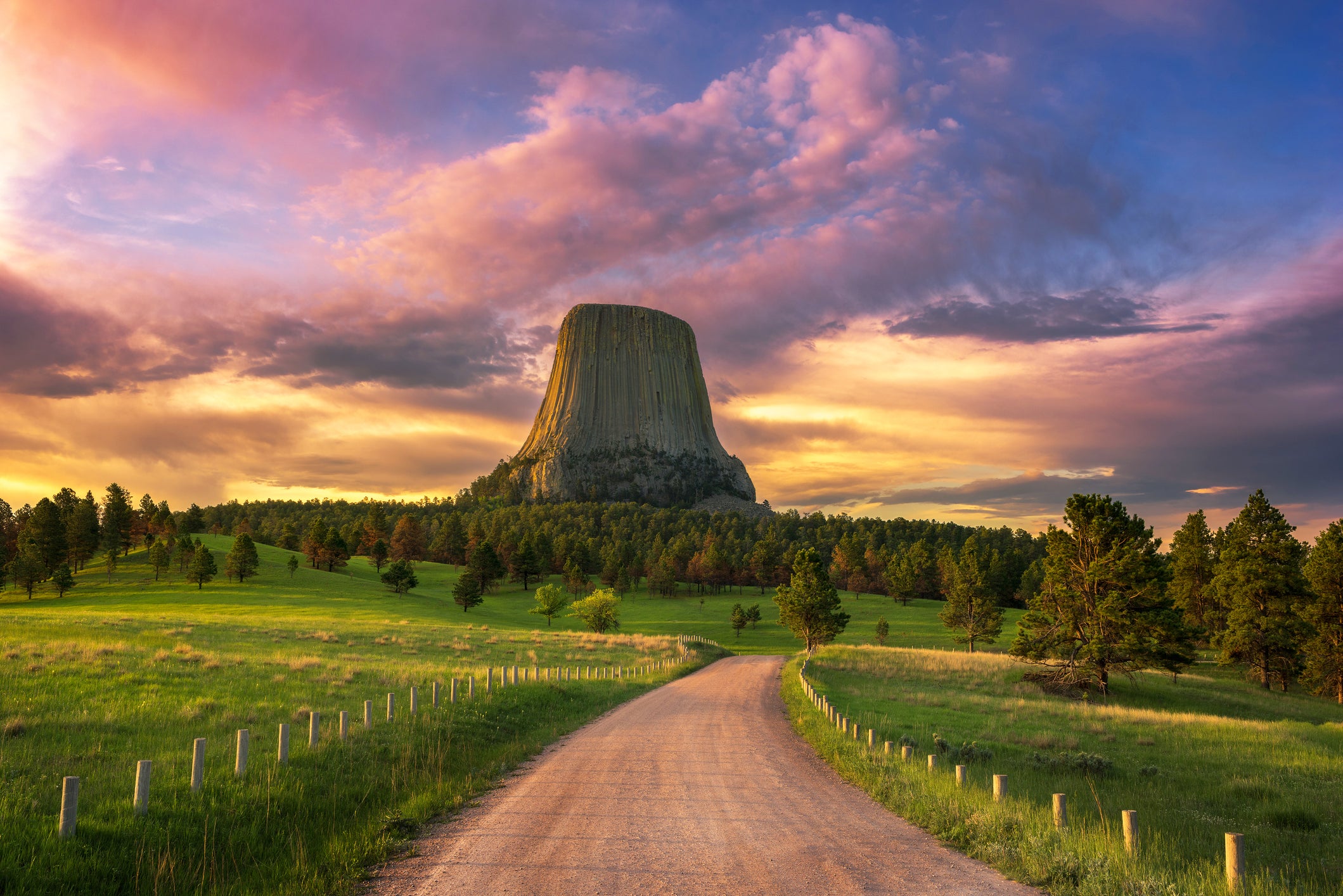
Devils Tower is one of America’s most startling natural sights, an 867 foot-high rock monolith in a rural area near the Black Hills of Wyoming that will stop you in your tracks.
The formation, created around 50 million years ago when molten rock erupted from below and cooled into distinctive hexagonal columns, has long attracted tourists — it became America’s first national monument in 1906. However, most will know it from Spielberg’s Close Encounters of the Third Kind, where it was used to striking effect as the point on Earth where aliens want to make contact with the human race.
For eye-popping up-close views, there’s a 1.3-mile trail that loops the base. Want to see what the view from the top is like? There are around 200 routes — but you’ll need to be an expert climber.
Great place to stay: Devils Tower Lodge (rooms from $200 per night) is just a few minutes from the monument’s base.
Read more: I drove in the US for the first time - here’s what shocked me on the 4,000-mile trip
9. Mendenhall Glacier, Alaska
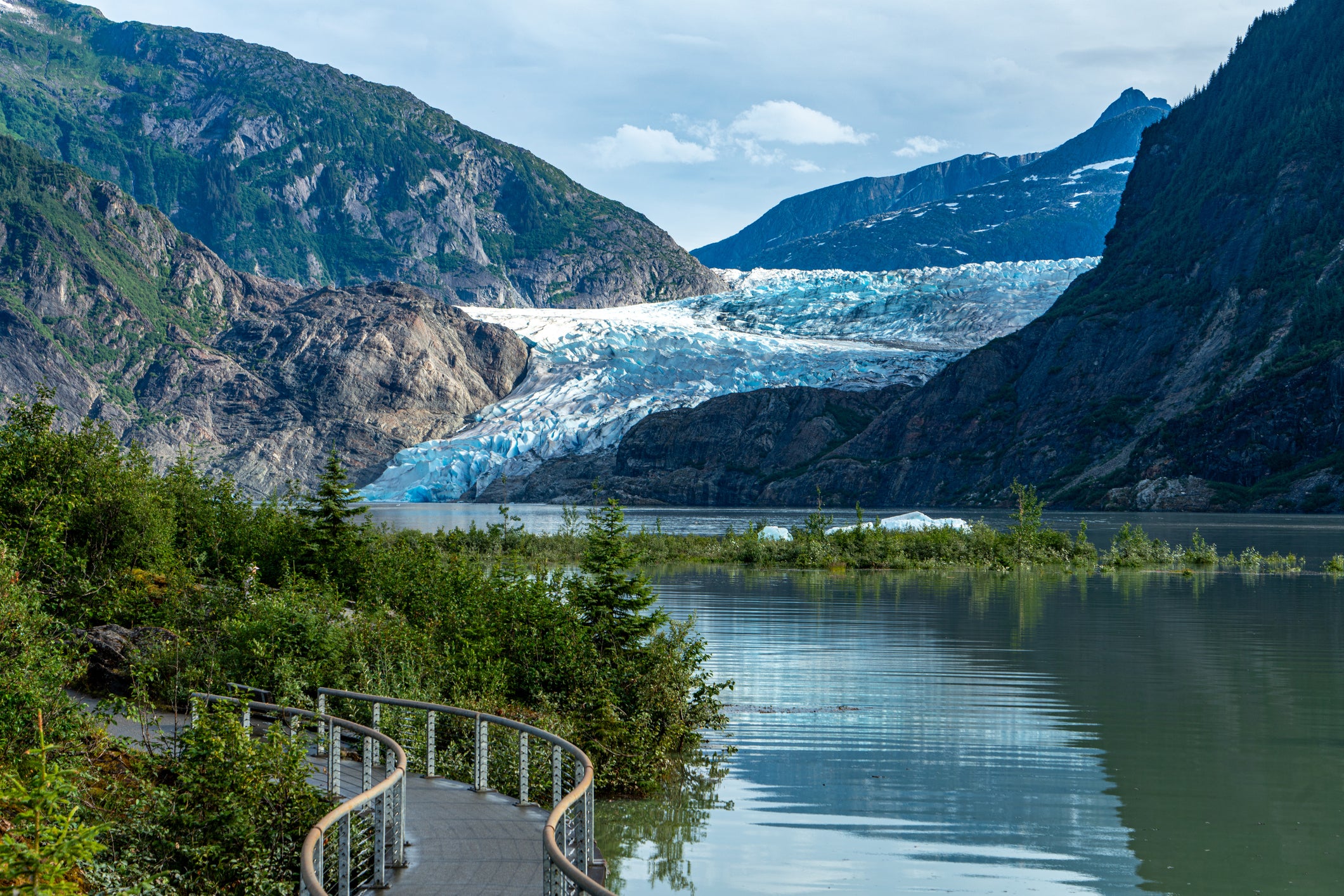
Mendenhall Glacier is vast — around 27 billion tons of ice stretching 13 miles from the mountainous Juneau Icefield to a lake dotted with icebergs. And it’s on the tourist trail, remarkable for being so easily accessible.
While many glacier visits require plane, helicopter or boat trips, followed by adventurous climbing, Mendenhall is an easy 12-mile drive from nearby Juneau city. Once there, tame trails lead to viewpoints with breathtaking vistas. You can even take to the water — guided kayak tours offer the chance to paddle among the icebergs.
There’s also the bonus of Nugget Falls, which plunges into the lake from a height of 377 feet, and the chance to spot wildlife, including black bears and eagles.
Incorporate the Visitor Center into your visit to learn about the glacier’s dramatic retreat since the 18th century.
Great place to stay: Baranof Downtown, BW Signature Collection (rooms from $220) is a 15-minute drive from the glacier.
Read more: Five bucket-list train journeys that showcase America’s most breathtaking scenery
10. White Sands National Park, New Mexico
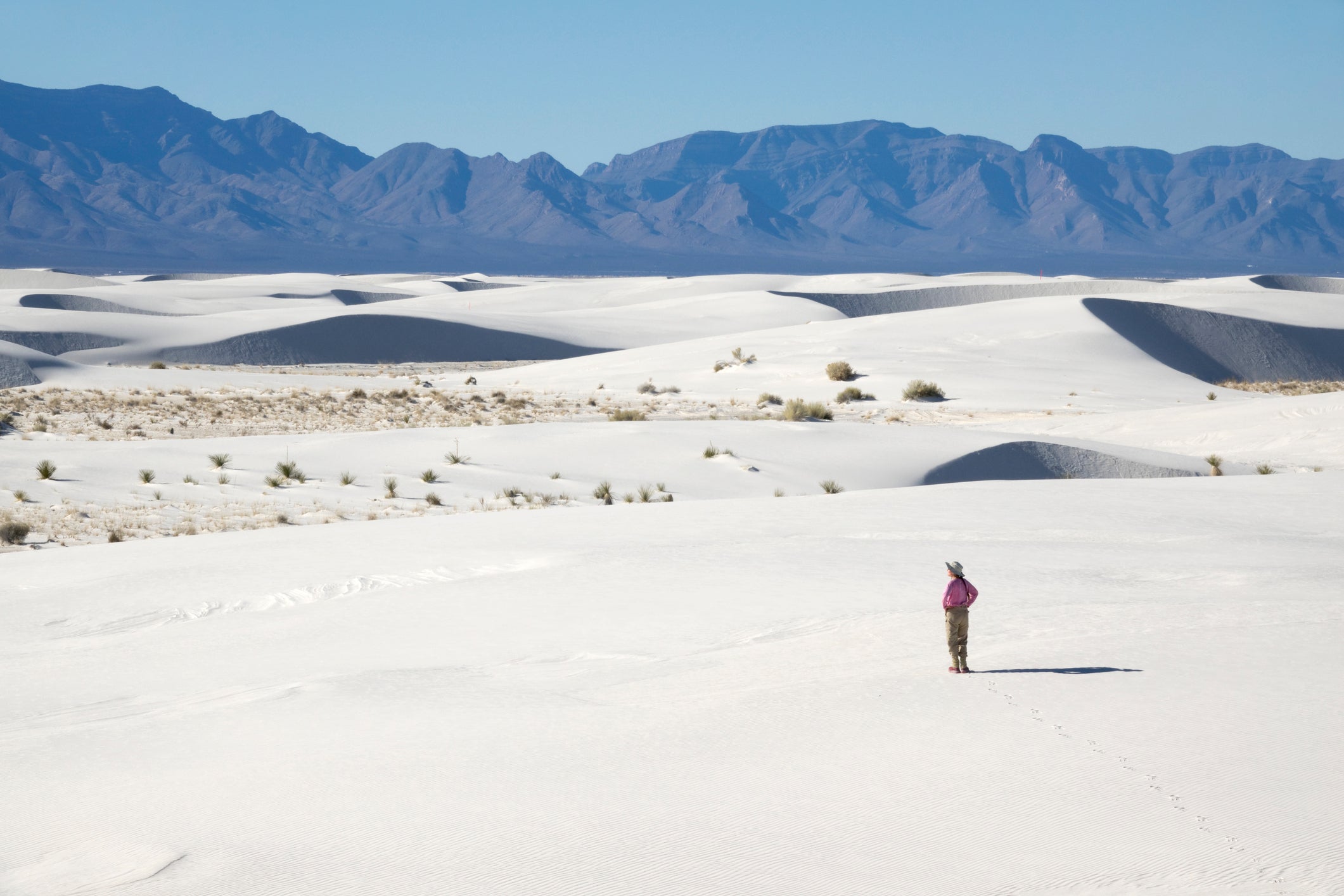
Snow in the desert? At White Sands National Park, you’d be forgiven for thinking so.
The park, which sits within the northern part of the Chihuahuan Desert, is 275 square miles of brilliant white powdery gypsum sand, and looks for all the world like an Arctic landscape.
However, in the summer you can expect highs of 100F. Remarkably, because gypsum doesn’t absorb heat very efficiently, it’s possible to walk barefoot across the dunes even in strong sunshine.
The Dunes Drive loop, which begins just beyond the main park entrance off U.S. Route 70, between Las Cruces and Alamogordo, is one of the most rewarding ways to experience the spectacle, especially at sunset. It's a paved route, and there are several parking areas from which you can step directly onto the snowy grains.
Great place to stay: Hotel Encanto de Las Cruces (rooms from $180) is around one-hour’s drive southwest of the park.
Read more: The ultimate guide to driving the American quintessential road trip: Route 66























.jpg&h=630&w=1200&q=100&v=c0f97a310e&c=1)