A 12-Year Study Just Found A Hidden Risk Factor For Those With Hearing Loss
A long-term study identified a modifiable depression risk factor.
 FrankLin

Image by Kristoffer Jensen / Unsplash June 19, 2026 Adults with hearing impairment already face a higher risk of depression. But a new study1 published in Frontiers in Nutrition suggests that vitamin D status may be compounding that risk behind the scenes, in ways that have gone largely unnoticed until now. Researchers tracked nearly 100,000 adults with hearing impairment over 12 years, comparing those with vitamin D deficiency against those with sufficient levels. What they found points to vitamin D as a potentially important, often overlooked piece of the puzzle for a group already vulnerable to mood disorders.
A closer look at how the study was designed
Researchers used a large, real-world health records database to identify adults aged 18 and older with hearing impairment who had their vitamin D levels tested between 2010 and 2023.
Participants were divided into two groups: those with vitamin D deficiency (levels below 20 ng/ml) and those with sufficient levels (at or above 30 ng/ml). After carefully matching the two groups for age, health history, and other key factors, each group included 48,184 people.
Vitamin D deficiency has been linked to depression in the general population through several proposed mechanisms, but no large-scale study had previously examined this relationship specifically in adults with hearing impairment, a population already at elevated depression risk.
People with hearing impairment are roughly 1.3 to 1.7 times more likely to develop depression than those without hearing loss, according to meta-analytic evidence cited in the study.
Communication difficulties, social withdrawal, and reduced engagement with daily life can all contribute to that vulnerability over time.
Low vitamin D was tied to a 57% higher depression risk over 12 years
Over the follow-up period, depression occurred in 10.21% of people with vitamin D deficiency, compared to 7.00% of those with sufficient levels (an absolute difference of 3.21 percentage points). In relative terms, that translates to a 57% higher likelihood of developing depression.
The pattern held across several other outcomes too, including higher rates of depressive episodes, recurrent depression, suicidal behavior and self-harm, and overall mortality.
One of the more notable findings was a graded relationship between vitamin D and depression risk. People with vitamin D insufficiency (levels between 20 and 29.9 ng/ml, which fall short of the "sufficient" threshold but don't quite reach "deficient") were still 37% more likely to develop depression. The lower the vitamin D, the higher the risk appeared to be, adding weight to the idea that vitamin D status genuinely matters here.
Older adults & those with chronic pain showed the strongest effects
The association between low vitamin D and depression wasn't uniform across all groups. The effect was notably stronger in adults over 65 compared to those aged 18 to 65. The researchers also found significant effect modification by obesity and chronic pain status, though the association remained statistically significant across all subgroups examined.
Sex and hypertension showed no significant interaction with the vitamin D–depression link, suggesting the relationship holds regardless of those factors.
The stronger effect in older adults likely reflects a combination of age-related declines in the body's ability to synthesize vitamin D from sunlight, reduced outdoor activity, and the cumulative psychosocial burden of progressive hearing loss over time.
Vitamin D does more than support your bones
The study points to three key ways low vitamin D may affect mood. First, vitamin D has been proposed to support serotonin synthesis through its role in activating tryptophan hydroxylase 2 (TPH2), the rate-limiting enzyme for serotonin production in the brain.
When vitamin D is low, that process may be disrupted. Second, low vitamin D has been linked to higher levels of neuroinflammation, which is increasingly recognized as a contributor to depression.
Third, vitamin D plays a protective role in brain health more broadly, and insufficient levels may leave the brain more vulnerable over time.
People with hearing impairment may be especially prone to low vitamin D for reasons that go beyond diet. Reduced outdoor activity, social withdrawal, and poor nutritional intake are all more common in this population and can contribute to lower levels.
The researchers acknowledge, though, that these same factors may independently raise depression risk, which means they could be part of the explanation rather than a simple cause-and-effect chain.
What the study does and doesn't establish
This study is large and well-designed, and it adds meaningful data to a relatively understudied area. But it has real limitations worth understanding.
Most importantly, this is an observational study; it can show that two things are connected, but it can't prove that one causes the other.
It doesn't tell us that correcting a vitamin D deficiency would reduce depression risk. What it does tell us is that vitamin D status is a consistent and notable risk marker in this population.
There are also some practical constraints.
Because data came from multiple healthcare organizations, vitamin D testing methods weren't standardized across sites. And since the study population consisted of people already receiving healthcare who had vitamin D testing on record, the findings may not apply to everyone with hearing impairment.
Simple steps to take if you have hearing loss
If you or someone you care about has hearing impairment, checking your vitamin D levels is a simple, low-barrier step. This research doesn't necessarily tell us that correcting a vitamin D deficiency would reduce depression risk, but it does tell us that vitamin D status is a consistent and notable risk marker. A standard blood test can tell you where you stand.
Most clinicians consider levels below 20 ng/ml deficient and levels between 20 and 29.9 ng/ml insufficient, the same thresholds used in this study.
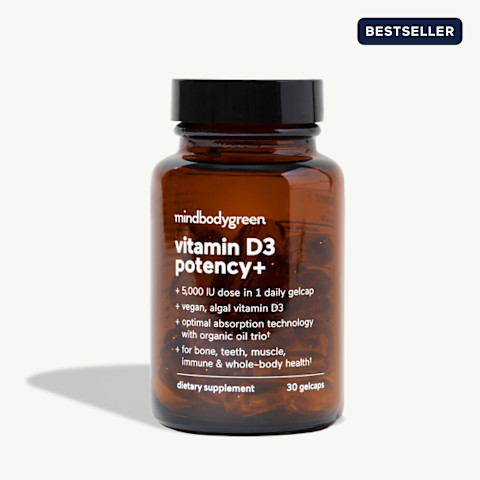
A few practical ways to support healthy vitamin D levels:
The takeaway
Hearing loss already raises the risk of depression, and this study suggests that low vitamin D may be compounding that risk in a population that often goes under-screened for nutritional deficiencies. A simple blood test can tell you whether your levels are where they should be, and if they're not, there are straightforward ways to address it.


















.jpg&h=630&w=1200&q=100&v=c0f97a310e&c=1)