Glacial Multimedia on GEO: Structuring AI Visibility as a Standalone Service
As generative AI continues to reshape how visibility is built online, agencies are beginning to move beyond experimentation and toward more structured GEO offerings. While some are still defining their approach, others are already integrating GEO into their service...
 Kass
Kass
As generative AI continues to reshape how visibility is built online, agencies are beginning to move beyond experimentation and toward more structured GEO offerings. While some are still defining their approach, others are already integrating GEO into their service models and workflows.
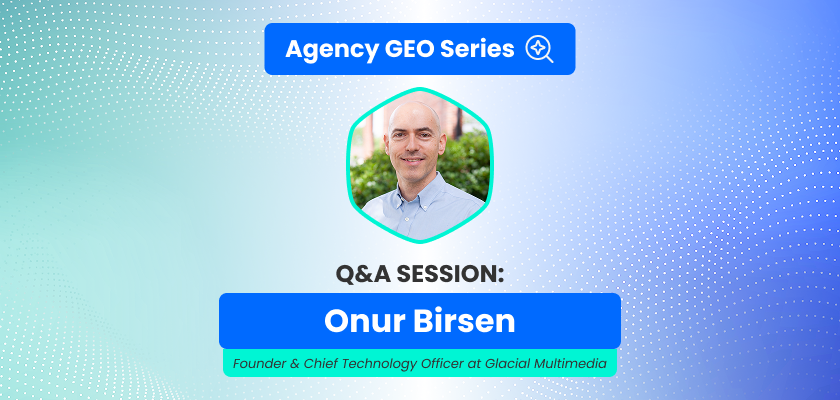
In this edition of The GEO Series, we spoke with Onur Birsen, Founder & CTO of Glacial Multimedia, about how the agency positions GEO as a standalone service, why strong SEO foundations still matter in AI-driven search, and how brands can increase their chances of being referenced inside AI-generated answers.
Based in Portland, Maine, Glacial Multimedia sees GEO as a core growth driver, with growing client interest around AI visibility and brand positioning across generative search environments.

GEO Strategy & Services
At Glacial Multimedia, GEO is not treated as an emerging capability or an experimental add-on. It is already embedded into the agency’s growth strategy as a core investment priority.
This positioning is reinforced by client demand. GEO is not something the team needs to introduce or educate clients about from scratch. Instead, it is increasingly part of ongoing conversations, signaling a shift in expectations.
What this suggests is a broader industry pattern: GEO is moving beyond early adoption and becoming part of how agencies are expected to deliver visibility.
What Glacial Multimedia’s GEO Services Include
Glacial Multimedia approaches GEO with a clearly structured service model.
Their work is divided into two primary components: on-page and off-page optimization. While this structure may sound familiar, the intent behind it is different.
On-page efforts focus on how content is interpreted by AI systems. This means ensuring clarity, structure, and alignment with how generative engines extract and synthesize information.
Off-page efforts, on the other hand, are centered around building the signals that influence whether a brand is referenced in AI-generated answers. This includes strengthening brand authority, entity recognition, and citation potential.
What makes this model particularly interesting is how it is positioned commercially.
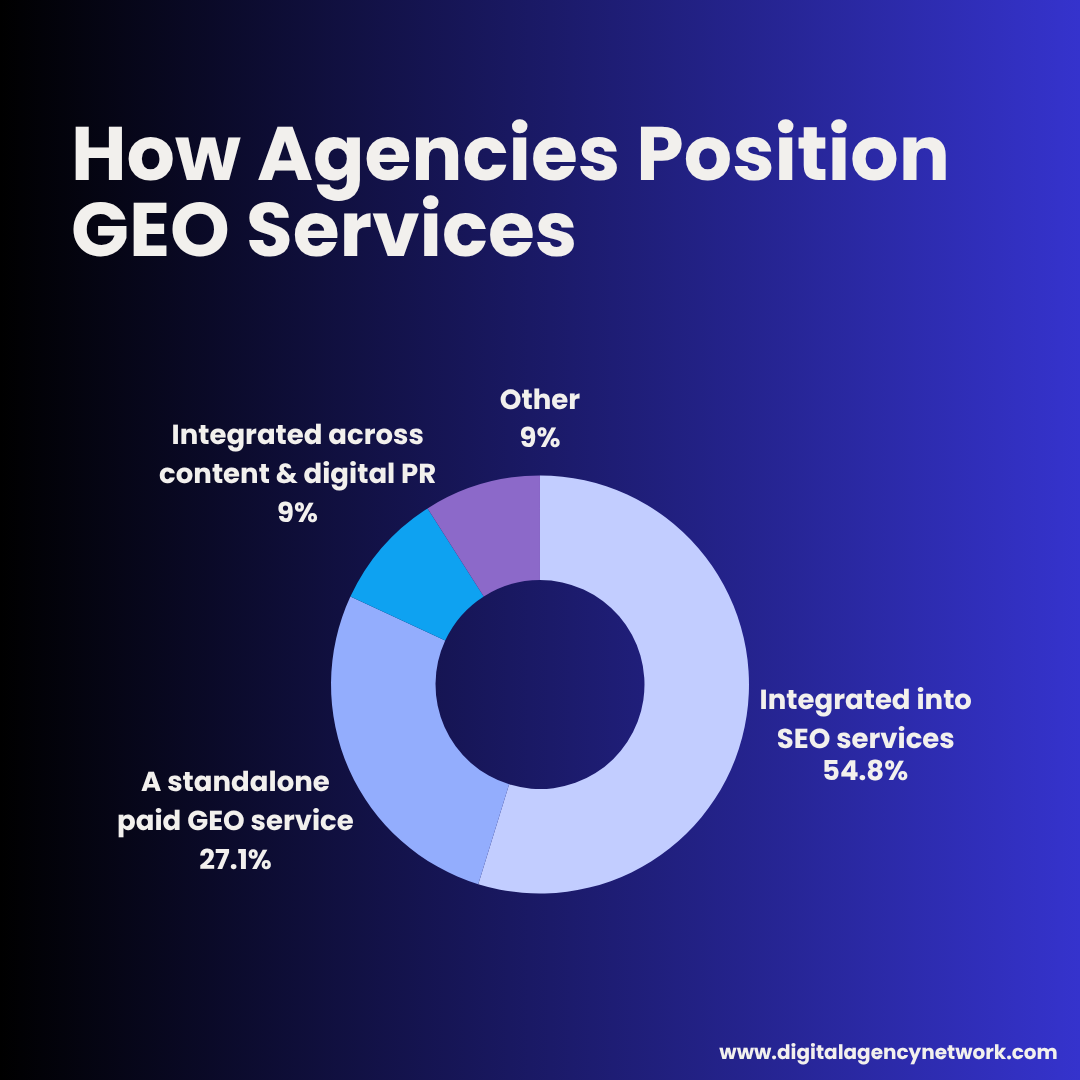
GEO is offered as a standalone service, but it is only available to clients who already have SEO in place. This creates a layered model, where GEO extends SEO rather than replacing it.
It reflects a practical reality: AI visibility does not emerge independently. It is built on top of strong search foundations.

How GEO Actually Works
One of the clearest distinctions highlighted by Glacial Multimedia is how generative AI systems evaluate content differently from traditional search engines.

This shift fundamentally changes the objective.
Instead of competing for position, brands are competing for inclusion.
For Glacial Multimedia, success in GEO depends less on keyword alignment and more on credibility. Content needs to demonstrate expertise, provide original insight, and reinforce strong brand and entity signals.
In this environment, being relevant is not enough. Being referenceable becomes the goal.
Measuring GEO Performance
Measurement remains one of the most complex aspects of GEO, and Glacial Multimedia approaches it with a focus on directional signals rather than absolute metrics.
Rather than relying solely on traffic or rankings, the agency looks at how brands are positioned within AI-generated outputs.
This includes understanding:
How often a brand appears in AI-generated answers How it is represented within those responses Whether AI-driven visibility translates into branded and organic search liftThis reflects an important shift. GEO is not just about whether users click, but about whether brands are present at the moment answers are formed.
How GEO Impacts Teams and Ownership
Introducing GEO has also led to internal changes within the agency.
Rather than creating entirely new teams, Glacial Multimedia has evolved existing roles. GEO is primarily owned by SEO leads, reflecting how closely connected these two disciplines are.
This highlights a pattern seen across many agencies: GEO is not a separate channel, but an extension of existing expertise.
Not all AI platforms play the same role in shaping visibility.
For Glacial Multimedia, ChatGPT and Google AI Overviews are the most critical environments. Other platforms, including Gemini and Perplexity, are also relevant, but secondary. This reinforces the idea that AI visibility is distributed, not centralized.
Like most agencies working in this space, Glacial Multimedia relies on a mix of traditional SEO tools and newer solutions.
SEO Tools such as Google Search Console and Google Analytics remain essential for understanding baseline performance, while tools like Keyword.com and FireCrawl support more specialized workflows.
For GEO-specific tracking, tools like Ahrefs Brand Radar are used to monitor brand visibility.
However, despite this growing ecosystem, a key limitation remains: Consistent reporting of results, particularly around citations and AI visibility, is still difficult to achieve. Without standardized metrics, aligning expectations between agencies and clients continues to be a challenge.
The Future of GEO
Looking ahead, Glacial Multimedia does not see GEO as a separate discipline that will replace SEO.
Instead, it is viewed as a natural evolution of search within existing structures.
As AI systems become more central to discovery, the definition of visibility will continue to shift.
Success will depend not just on ranking, but on whether a brand is included, interpreted, and trusted within AI-generated answers.








![Silent But Mighty: How Soundless Videos Are Winning Social Media [+ 2025 Data]](https://www.hubspot.com/hubfs/Soundless%20Videos%20We%20Love.png)
![HubSpot's 2025 State of Blogging Report [Data from 500+ Marketers]](https://www.hubspot.com/hubfs/untitled-design-4-67880d8b2a3db.webp)