How to Build an AI-Ready SEO Team: A Complete Guide
Modern SEO teams aren’t just optimizing for rankings in traditional search anymore. They’re also optimizing for visibility in AI-powered search and answer engines. And that shift is showing up in job listings. I recently came across this position: This...
 Tekef
Tekef
Modern SEO teams aren’t just optimizing for rankings in traditional search anymore.
They’re also optimizing for visibility in AI-powered search and answer engines.
And that shift is showing up in job listings.
I recently came across this position:
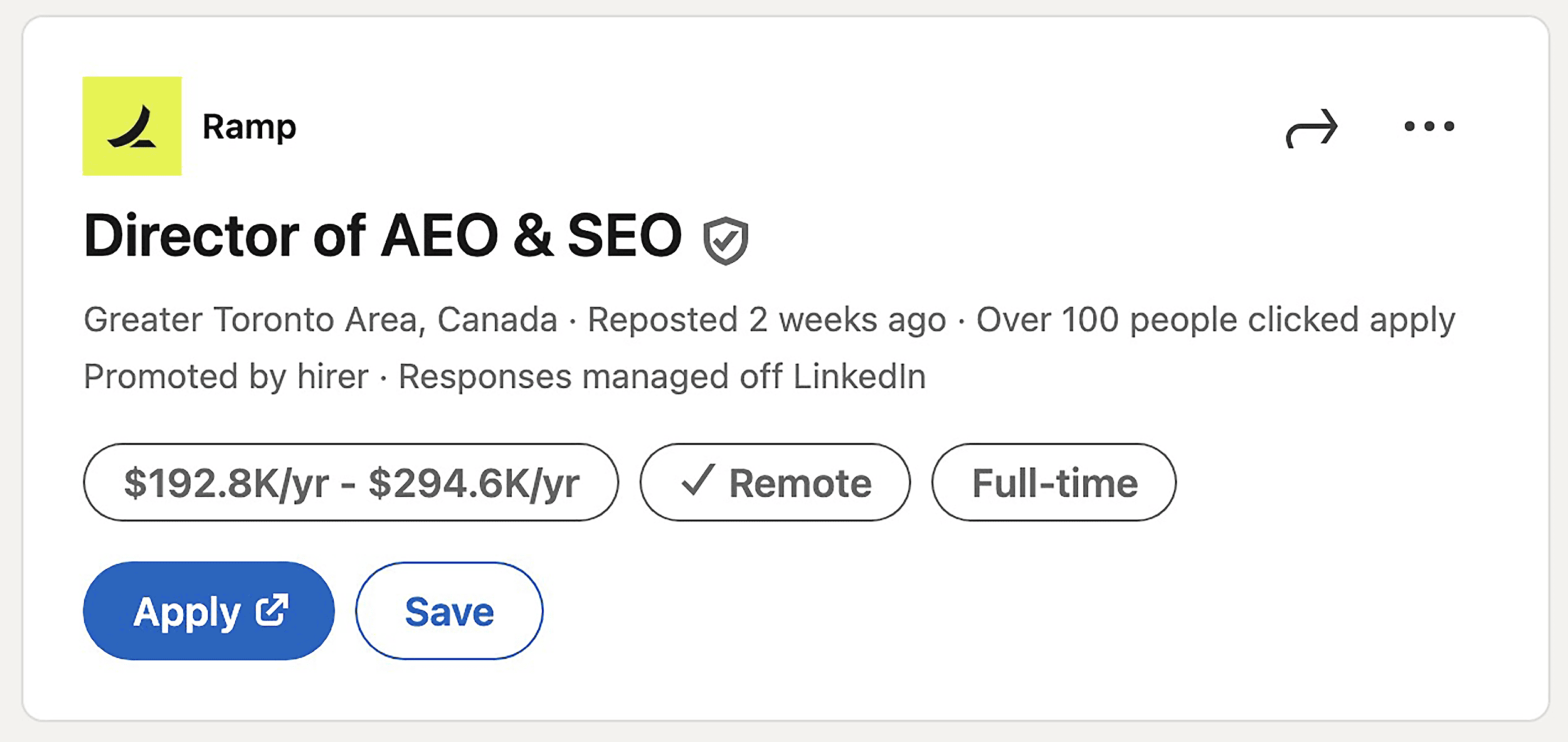
This isn’t an outlier.
Dozens of companies are now posting similar roles, and the shift runs deeper than new job titles.
I reviewed 100+ general SEO job postings.
96% mentioned AI somewhere in the description.
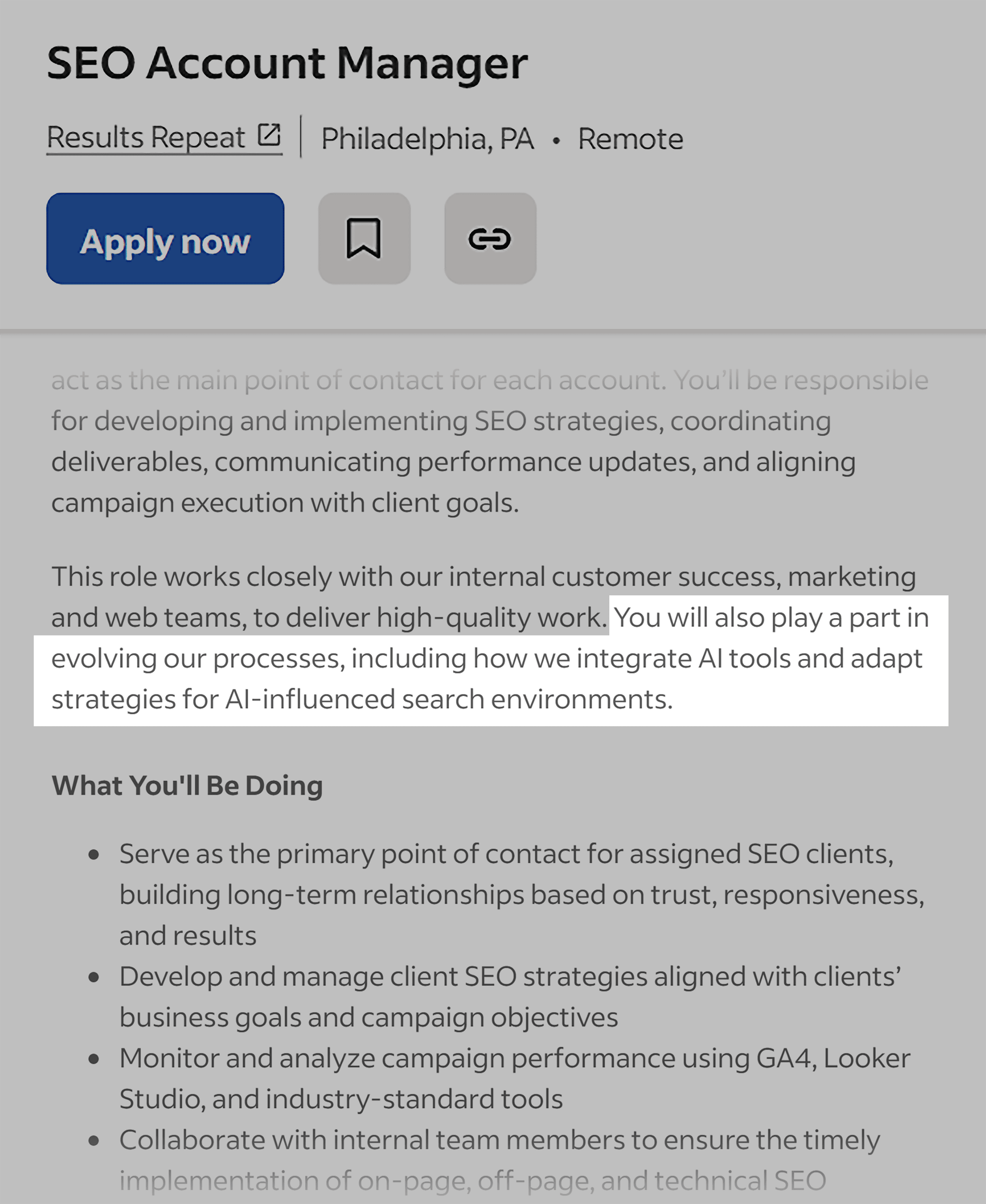
AI is creating entirely new positions, but it’s also changing what existing roles require.
Why?
Because AI search works differently from traditional Google ranking.
It extracts passages, synthesizes information, and presents instant answers from multiple sources.
This shift opens up new visibility opportunities beyond ranking in traditional search engines.
SEO teams that expand their skills now can ensure their brands are visible in AI search.
In this guide, you’ll learn:
Why traditional SEO skills are no longer enough to cover what AI search requires Which AI-era skills your SEO team needs How to evolve your existing team (without adding unnecessary new roles)The Skills Gap Between Traditional and AI SEO
The current SEO skill set still matters.
Keyword analysis. Technical optimization. Link building. None of that goes away.
But AI search adds a new layer your team needs to master.
Here’s what I mean:
Traditional SEO gets your pages ranking in top search positions.
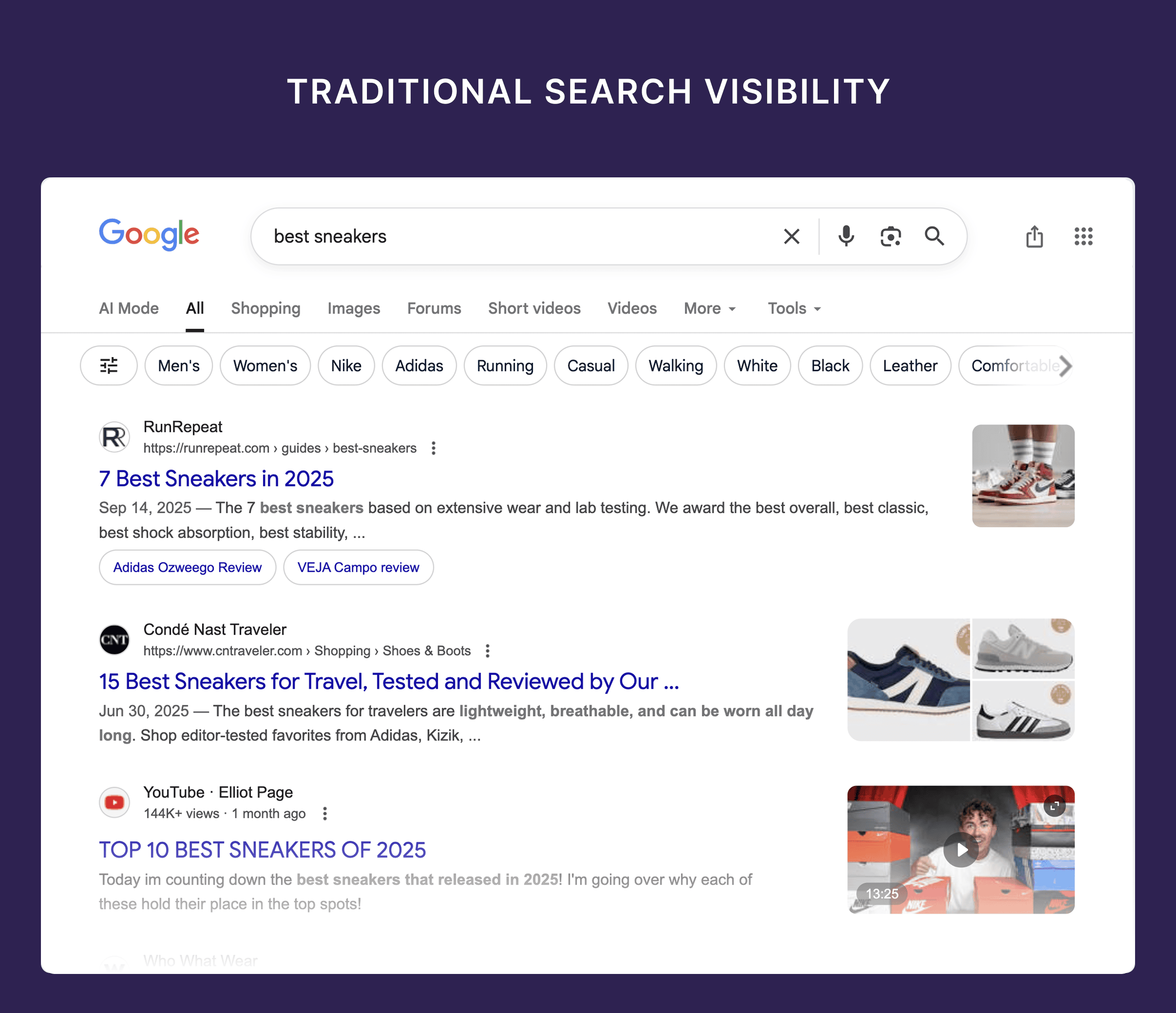
AI SEO gets your brand visible in AI-generated answers — through brand mentions, citations, or both.
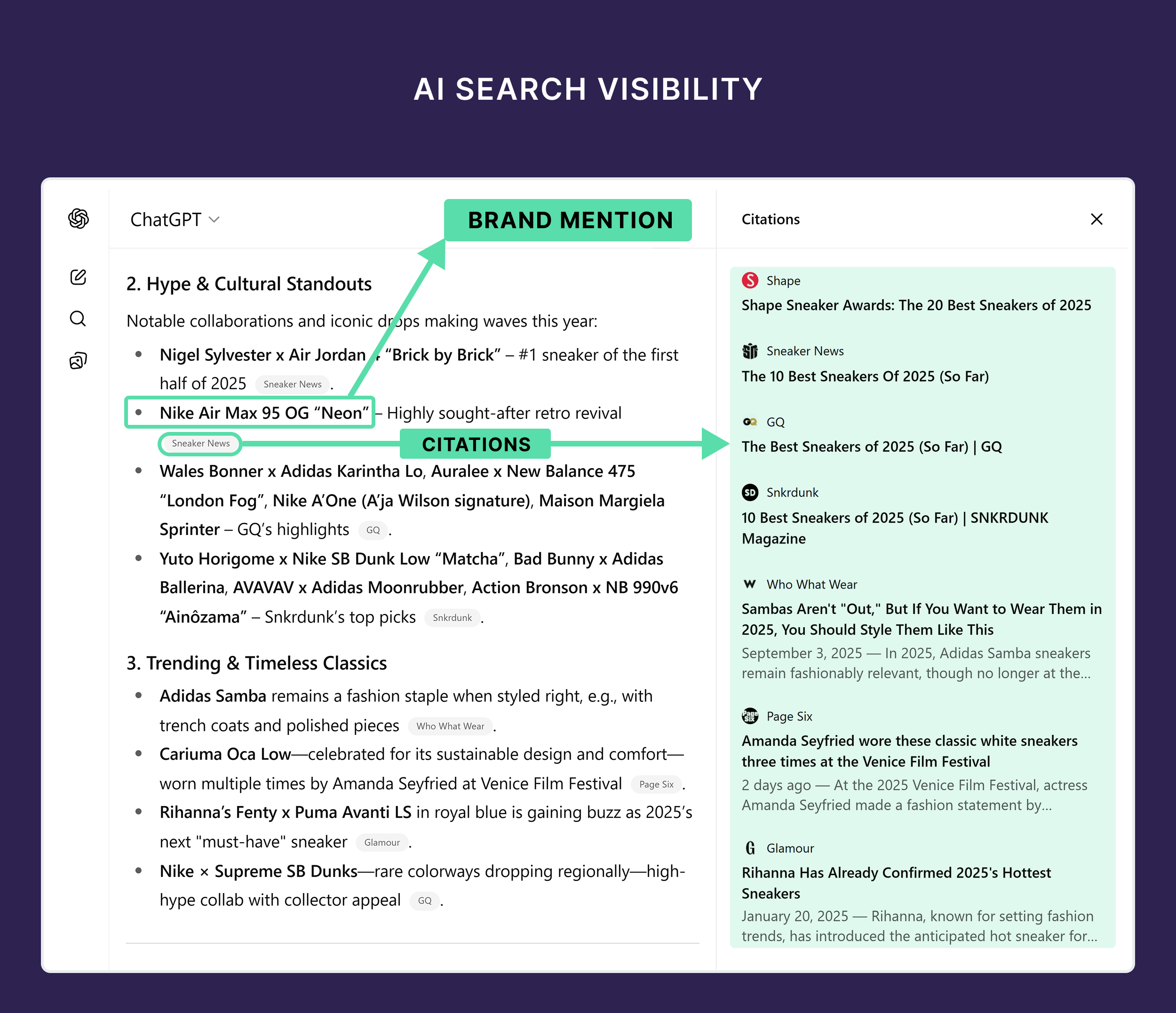
You’re expanding what SEO covers. Not replacing it.
Let me break down what’s changed and what it means for your team.
What’s Changed
Search behavior itself has evolved a lot over recent years.
A growing number of people don’t just “Google” anymore. They discover, compare, and decide across multiple platforms. (And this has been the case since long before ChatGPT came along.)
Someone might start on TikTok, check Reddit reviews, search on Google, and ask ChatGPT for a summary before taking action. And they might revisit these platforms at various stages of the journey.
That journey looks less like a straight line and more like a network.
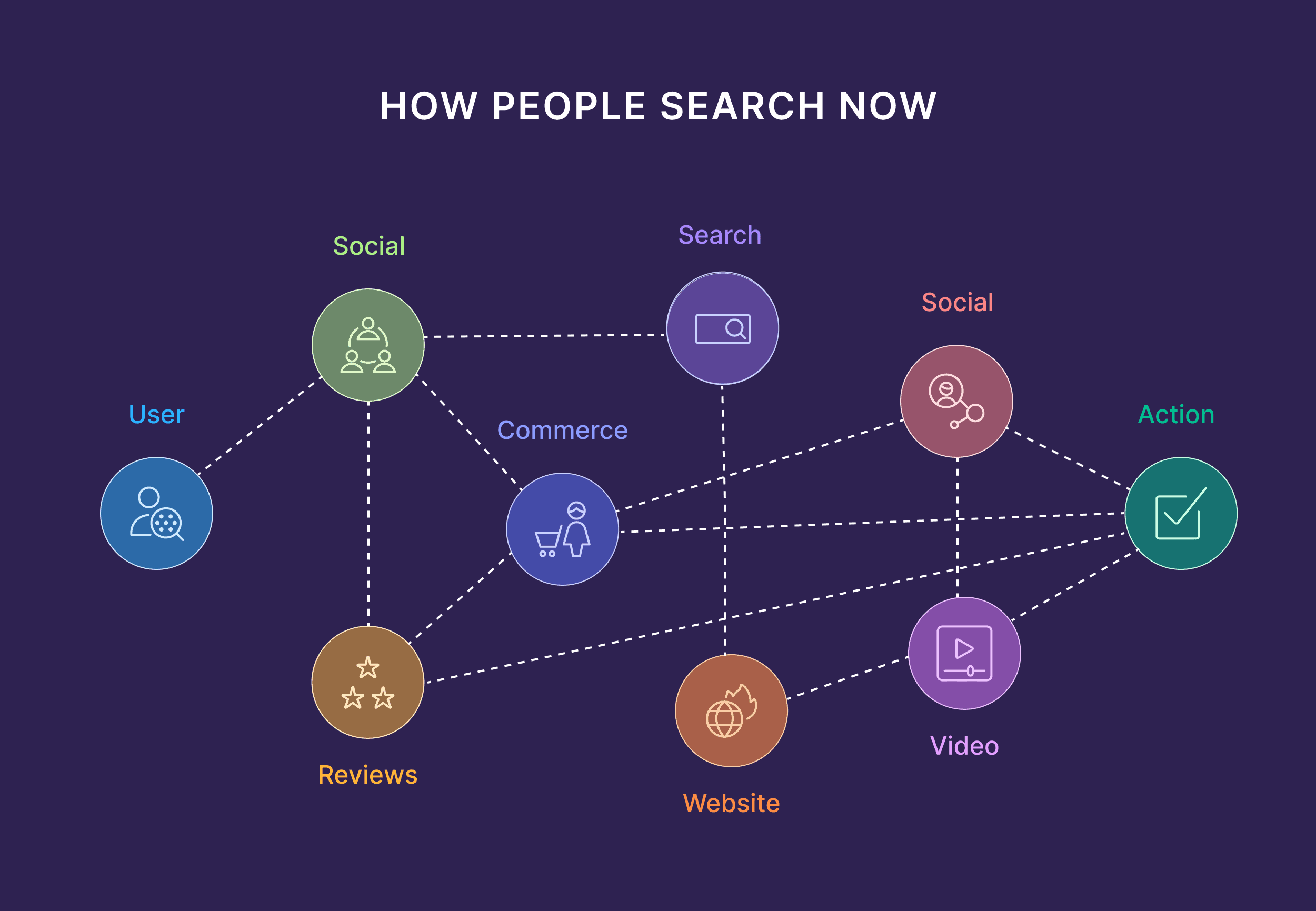
Here are five other changes reshaping how search works today:
Whole-web signals: AI pulls from your website and everywhere else your brand appears online. Your entire digital footprint influences your AI visibility. Entity recognition: AI understands your brand as a concept it can connect to products, industries, and related topics, not just keywords to match (learn more in our guide to entity SEO) Passage-level retrieval: AI extracts specific sections from your content to use in its answers, not entire pages. This means it needs to be clear what each section of your content is about. Conversational search behavior: AI search queries tend to be longer and more specific. People describe problems in detail rather than typing short keywords, which means the AI often cites highly specific content rather than generic guides. Zero-click reality: Users can now get complete answers without visiting websites. Traffic from search is no longer guaranteed, even with strong visibility.What This Means for Your Team
These changes don’t require you to rebuild your team from scratch.
But they do require expanding what your team focuses on:
Your content team still writes. But now they also need to structure content so AI can easily understand it and extract sections for its answers. Your technical SEO team still optimizes site architecture. But priorities shift toward AI crawlability, performance, and schema implementation. Your strategist still tracks performance. But now they also need to measure citations and brand mentions across AI platforms.Most of these skills build on what your team already knows. Again, they’re extensions, not replacements.
4-12 months is a typical timeline to get your team comfortable with AI SEO fundamentals.
You’ll need some combination of internal training, external guidance, and selective hiring — depending on your current gaps. I’ll talk more about this later.
First, let’s break down the specific skills your AI SEO team needs.
Essential AI SEO Skills Your Team Needs
Not everyone needs to be an AI SEO expert in all areas.
One person (typically a lead or strategist) needs strategic understanding. They understand how AI search works and can adapt when platforms change.
The rest of your team needs execution capability. They can follow guidelines and apply best practices.
It’s helpful if they show interest in understanding AI SEO, but it’s not required.
Here are the key skills that bridge traditional SEO and AI search.
Understanding AI Retrieval
AI platforms find and reference content differently from Google’s traditional ranking systems.
Some platforms, like Perplexity, search the web in real-time.
Others, like ChatGPT, can search the web or pull from their training data.
And AI Overviews use Google’s existing index and Gemini’s training data.
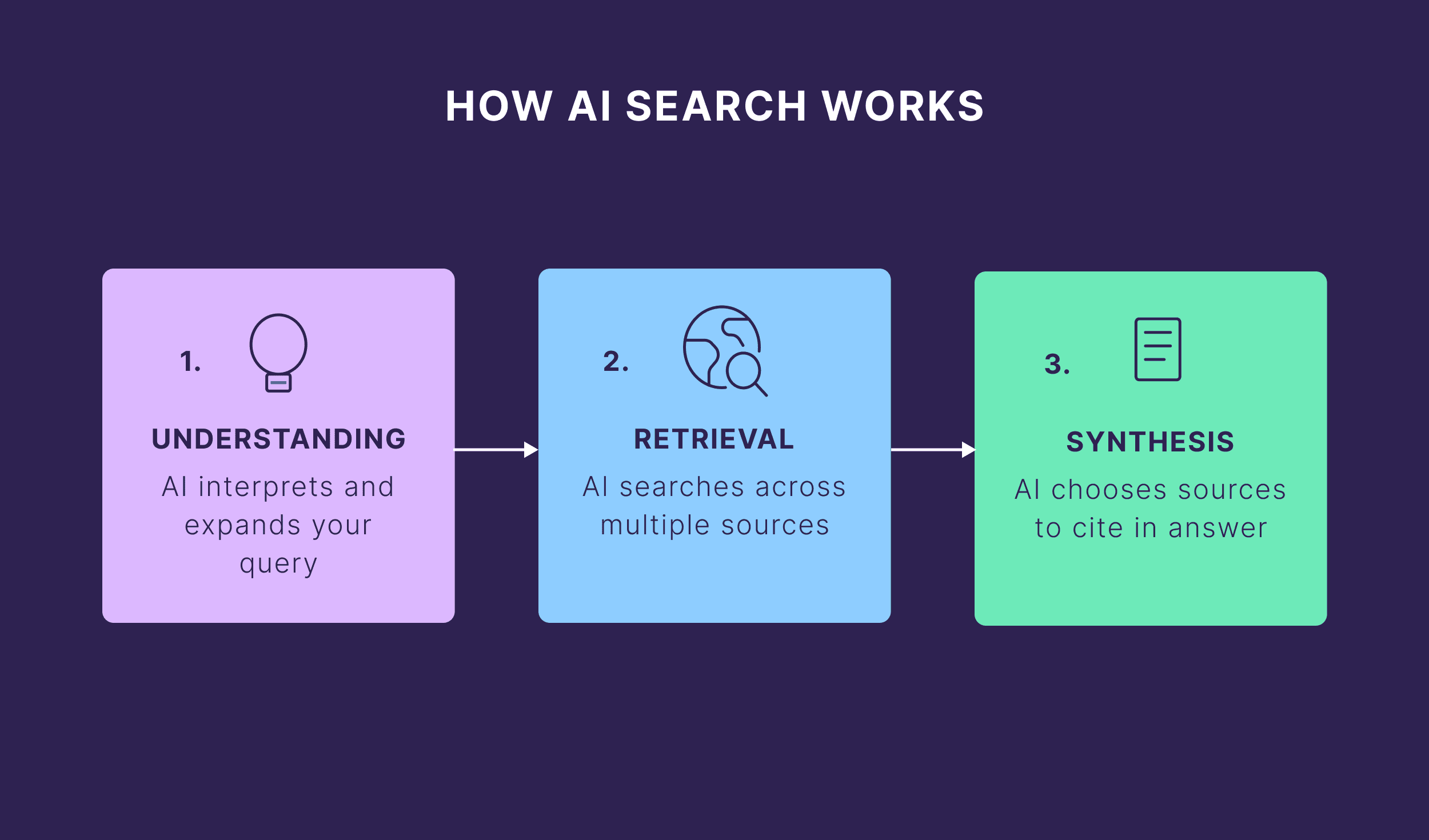
To optimize for and appear in these places, your team needs to understand how these systems select what to cite and mention.
When someone asks a question, these platforms look for content that directly answers the query. They prioritize sources that are clearly structured and contextually relevant.
Who Can Own It?
Your SEO lead or strategist typically owns this skill.
They already understand search intent and ranking logic — the same foundations that AI retrieval builds on.
In smaller teams, a content strategist can also take this on with a shallow learning curve.
Typically, they’ll spend 2-3 hours monthly testing how your brand appears across AI platforms. Document patterns in what gets cited. And adjust content strategy based on what’s working.
Writing for AI Extraction
AI search tools don’t respond to user queries with entire articles. Instead, the AI pulls specific passages that answer those queries.
If a passage requires a lot of surrounding context to make sense, AI may be less likely to understand its relevance and therefore be less likely to use it.
This means each section of your content needs to still make sense even when taken out of the context of the rest of the article.
Each section should answer a specific question on its own, without relying on references to other parts of the article.
This is generally just good writing practice. If you find yourself making too many unique points in one section, it’s probably best to split it into subsections.
But clarity here is also key.
For example, avoid: “As we mentioned earlier, this approach works well…”
Instead, write: “Structuring content into self-contained passages helps AI extract and cite your information more effectively.”
Here’s another example of effective writing for AI extraction:
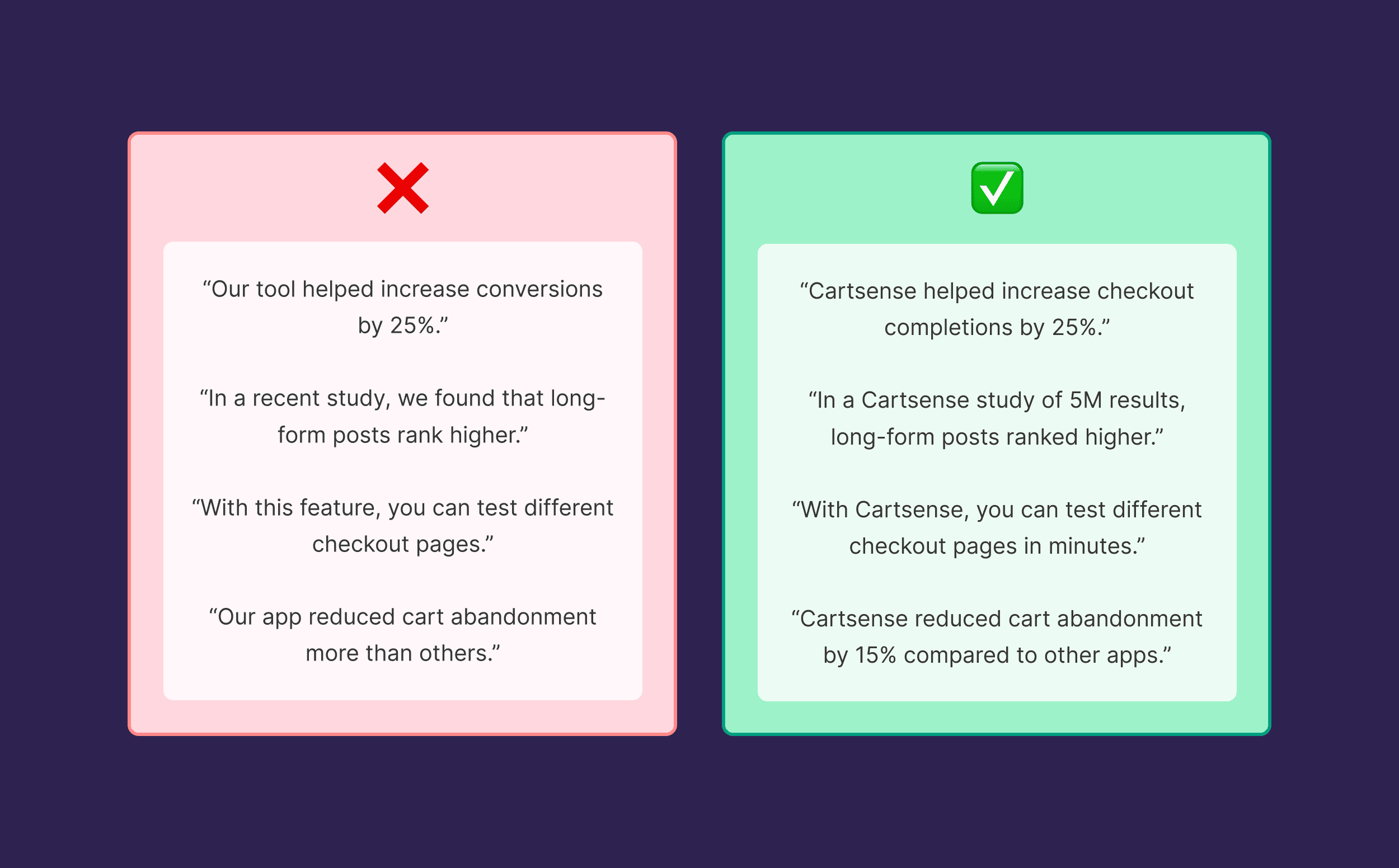
The second version makes sense whether someone reads your full article or sees just that paragraph in an AI response.
This doesn’t mean every sentence needs a complete context. It means key passages should stand alone.
Who Can Own It?
Your content or editorial team can handle this.
SEO provides the framework and guidelines. Writers implement it in their daily work.
For example, editorial reviews the article structure before publishing, ensuring each section has a clear, standalone takeaway.
Sometimes that means breaking a 500-word section into three shorter subsections with specific headers.
Building AI-Readable Structure
AI needs clear signals to understand your site’s structure and how content relates to other pages on your site.
Things like schema markup, internal linking, and clear site hierarchy provide those signals.
For example, schema markup makes your data more structured by defining what your content represents.
This can make it easier for AI systems to interpret and cite your content accurately.
While the full impact is still unclear, structured data makes your content easier to parse, which is helpful for search engines anyway. And since Gemini can lean on Google’s search infrastructure, it’s not all that unreasonable to expect that schema could at least indirectly affect your visibility in places like AI Overviews and AI Mode, now or in the future.
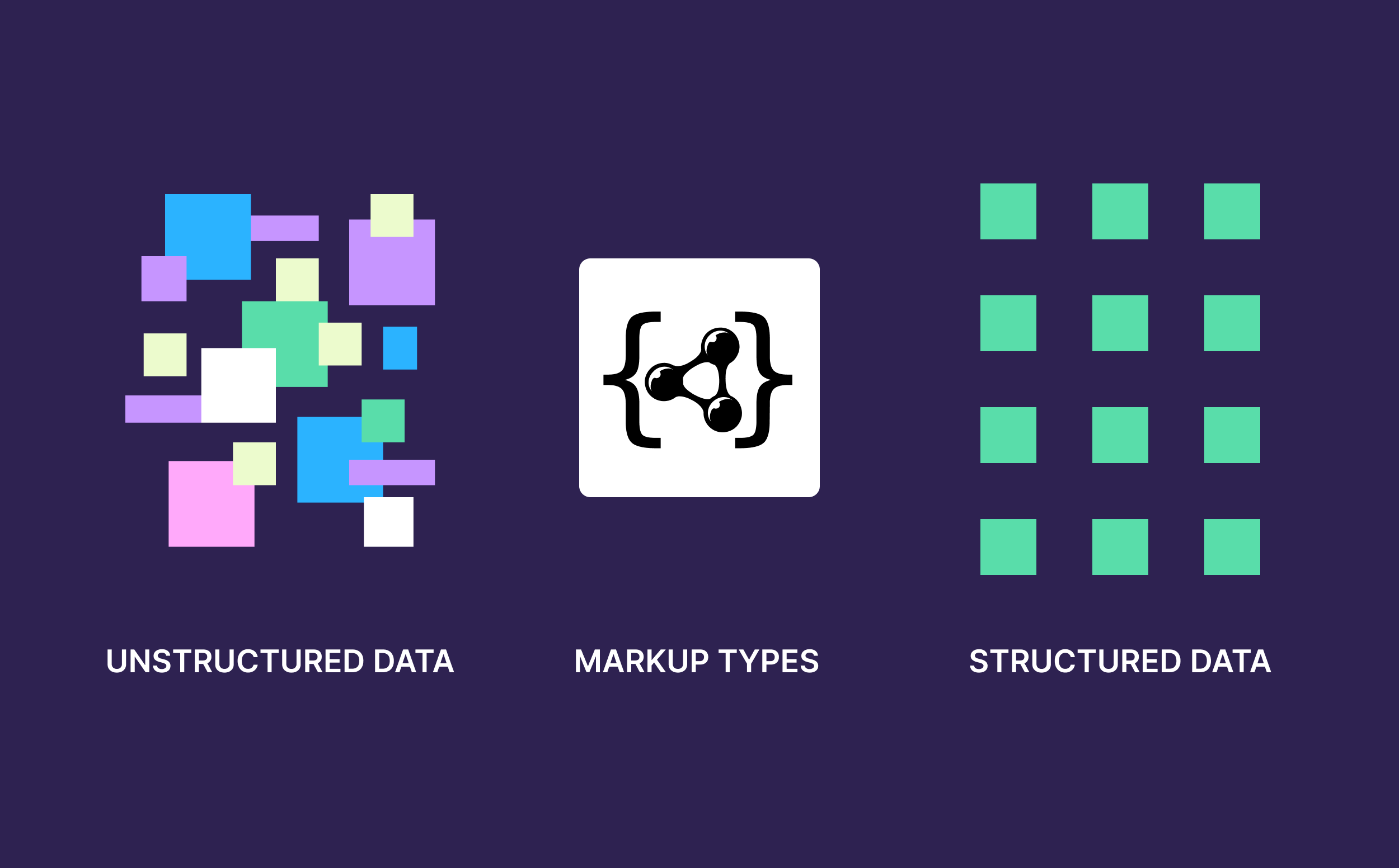
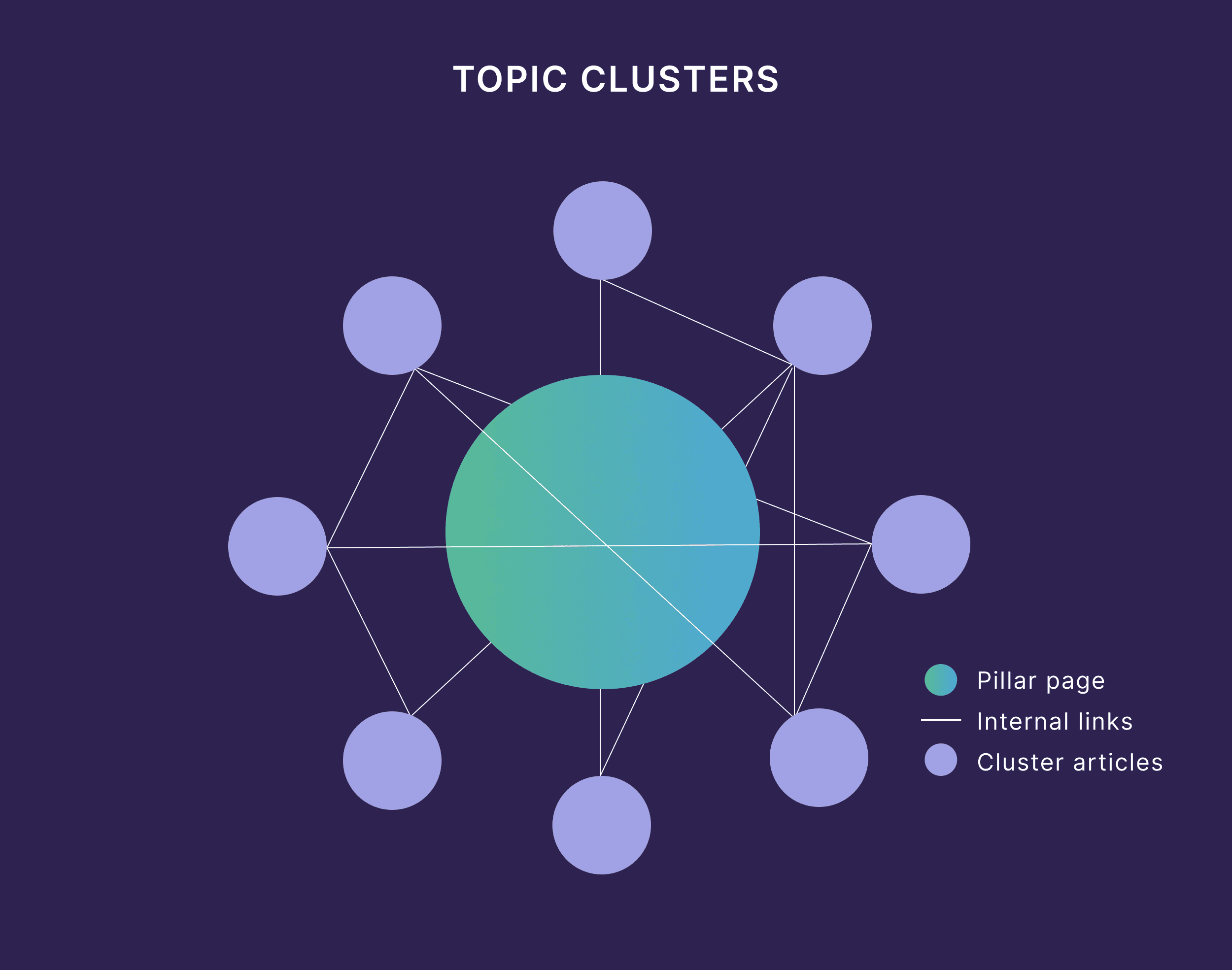
Similarly, internal linking shows how topics connect.
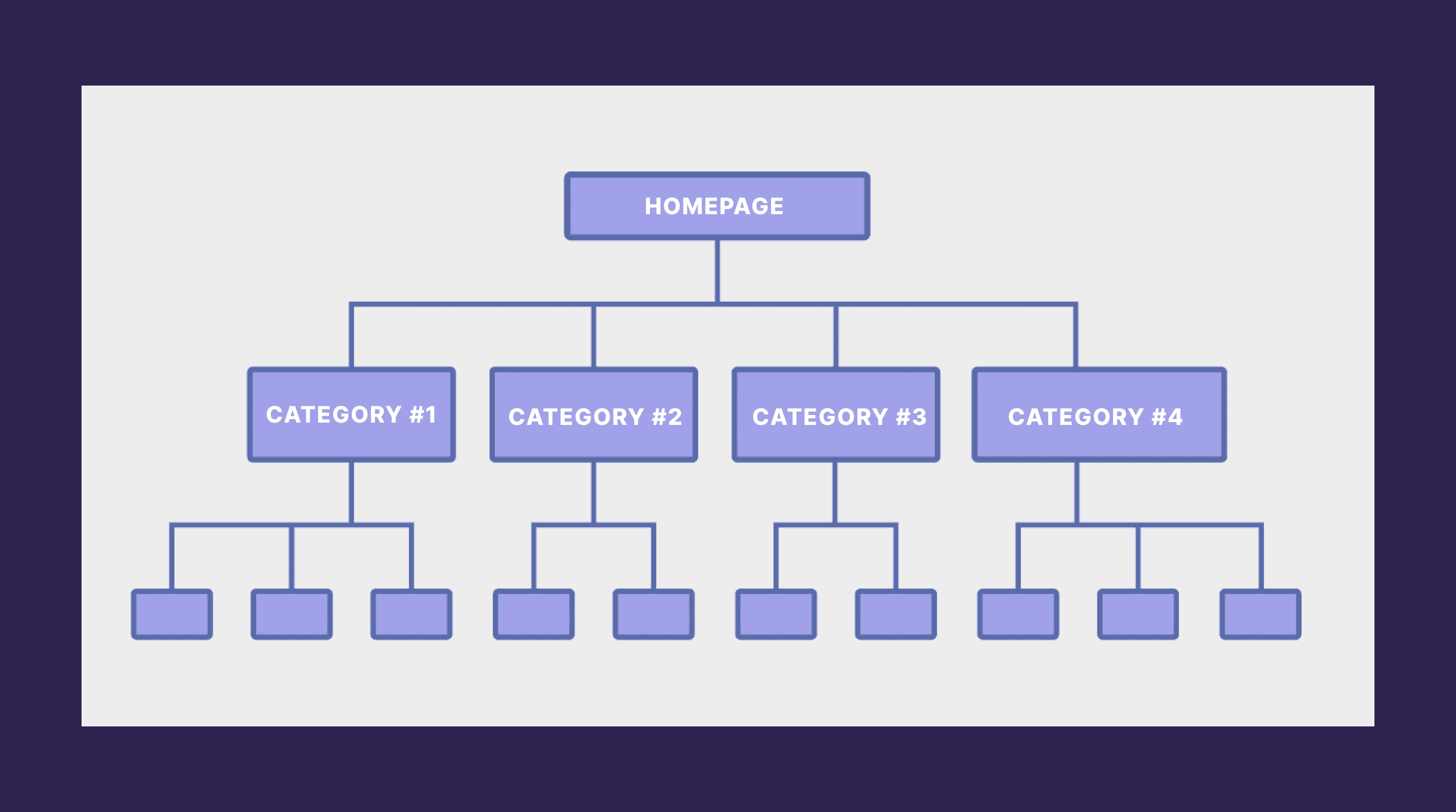
And a clear site hierarchy indicates which pages are most important.
Think of it as creating a map.
Instead of making AI infer relationships, you’re explicitly defining them.
Who Can Own It?
Your technical SEO can take ownership of this skill.
They already handle the fundamentals like implementing schema markup, managing site architecture, and optimizing internal linking structures.
The approach doesn’t change much. They’re just applying the same technical skills with AI systems in mind.
Tracking AI Performance
Traditional SEO metrics (like rankings, organic traffic, and click-through rates) still matter.
But they don’t say anything about your brand’s AI search visibility.
You need different metrics now, including:
Platform breakdown: Where you’re showing up (ChatGPT, Perplexity, Google AI Overviews, etc.) Citation frequency: How often your content gets cited as a source in AI responses Mention rate: How often your brand appears in AI-generated answers or recommendations Mention sentiment: Whether those mentions are positive, neutral, or negativeThese numbers indicate whether your AI SEO strategy is working.
Semrush’s AI Visibility Toolkit can help you track these key AI search metrics.
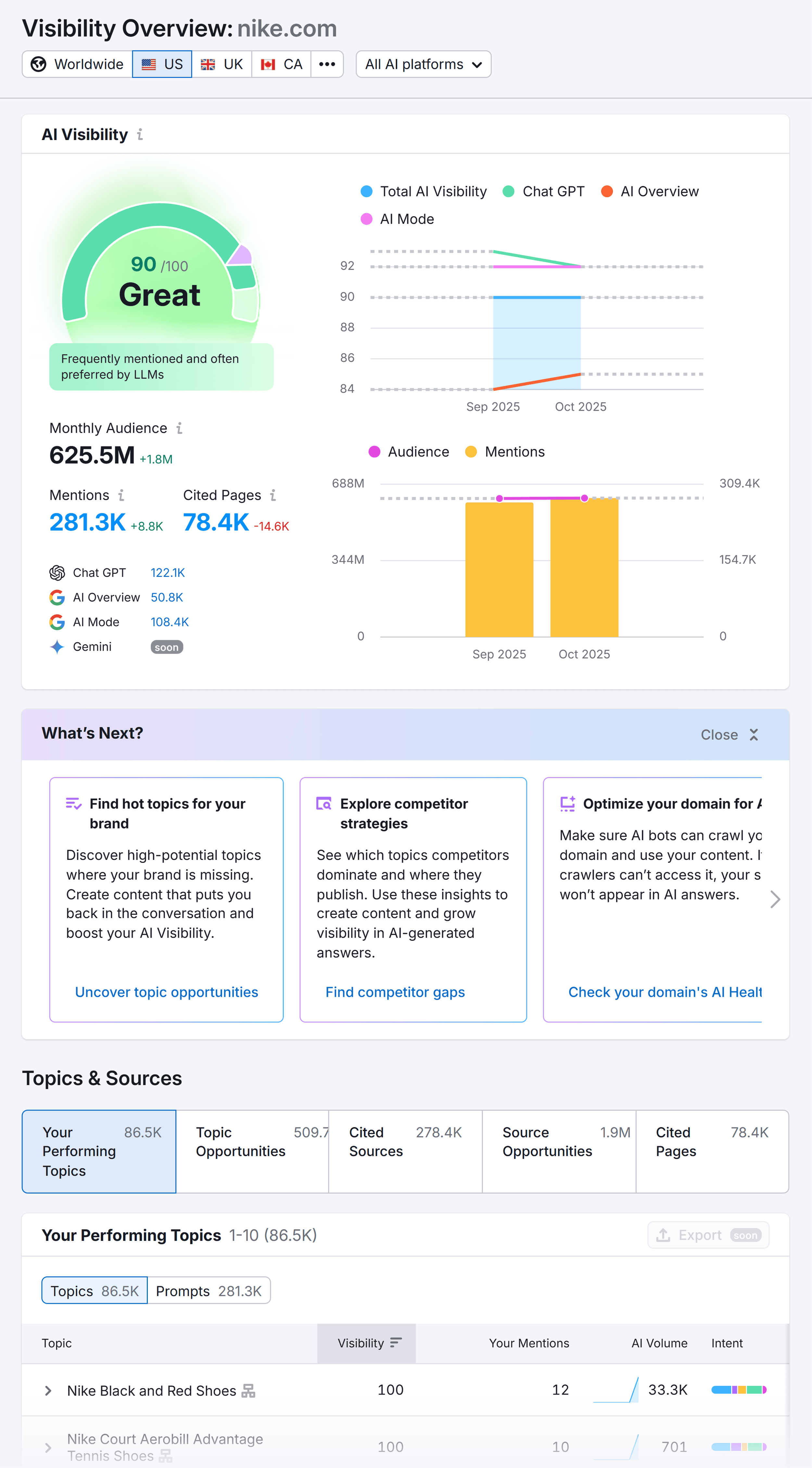
Without specialized tools, you’ll need to manually search key queries across platforms and track when your brand appears.
Who Can Own It?
Your SEO analyst or whoever handles performance reporting can own this.
They’re already tracking traditional metrics. AI performance metrics become an addition to that dashboard.
If using AI visibility tools, they’ll monitor your visibility score and citation trends monthly.
Without specialized tools, they’ll need to manually search key queries across platforms, document when and how your brand appears, and track changes over time.
Optimizing Off-Site Signals
AI tools go beyond just looking at your website and pull from everywhere your brand is mentioned online. Including:
G2 reviews comparing tools Reddit threads discussing your product Forum conversations about your industry News articles mentioning your company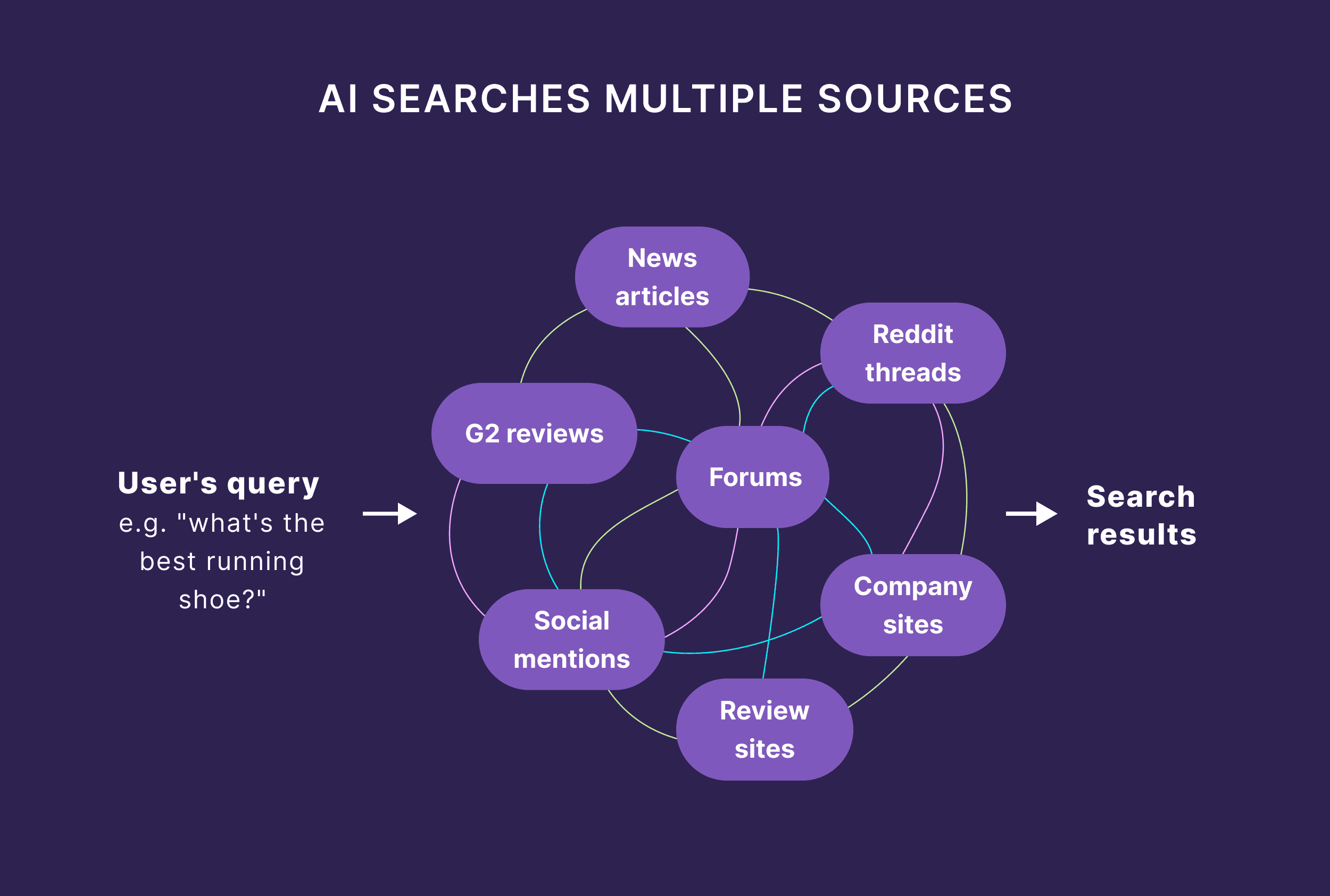
If those mentions are sparse or outdated, AI has less information to pull from when someone searches for your brand specifically or asks about your product category.
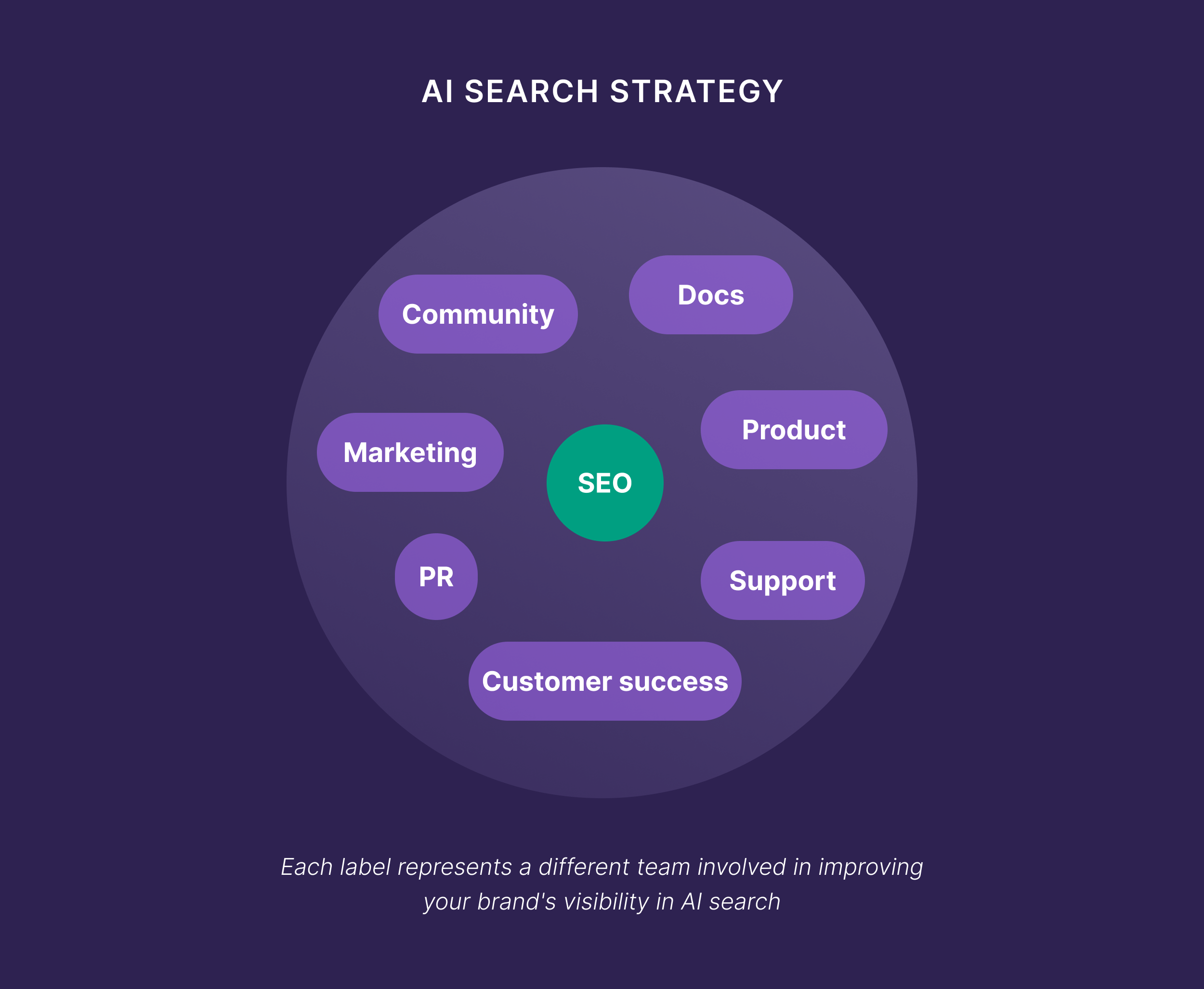
This is where AI search extends beyond your domain.
Who Can Own It?
No single person can own this entirely.
PR, community management, and customer success each control different pieces of the puzzle.
Someone from SEO can take the coordination role, ensuring these teams understand how their work affects AI visibility.
In practice, this often means your SEO lead or director works cross-functionally to align off-site efforts with AI discoverability goals.
For example, they work with customer success to encourage reviews on platforms like G2 or Trustpilot.
They also monitor where your brand gets mentioned across forums, social platforms, and community discussions.
Platform-Specific Optimization
Different AI platforms retrieve and display information in their own ways.
For example:
Perplexity searches the web in real-time and shows numbered citations ChatGPT can search the web or pull from its training data Google’s AI Overviews draw from Google’s search index and Gemini’s training dataWhat gets you cited on one platform won’t automatically work on another because each platform follows patterns in what it mentions and cites.
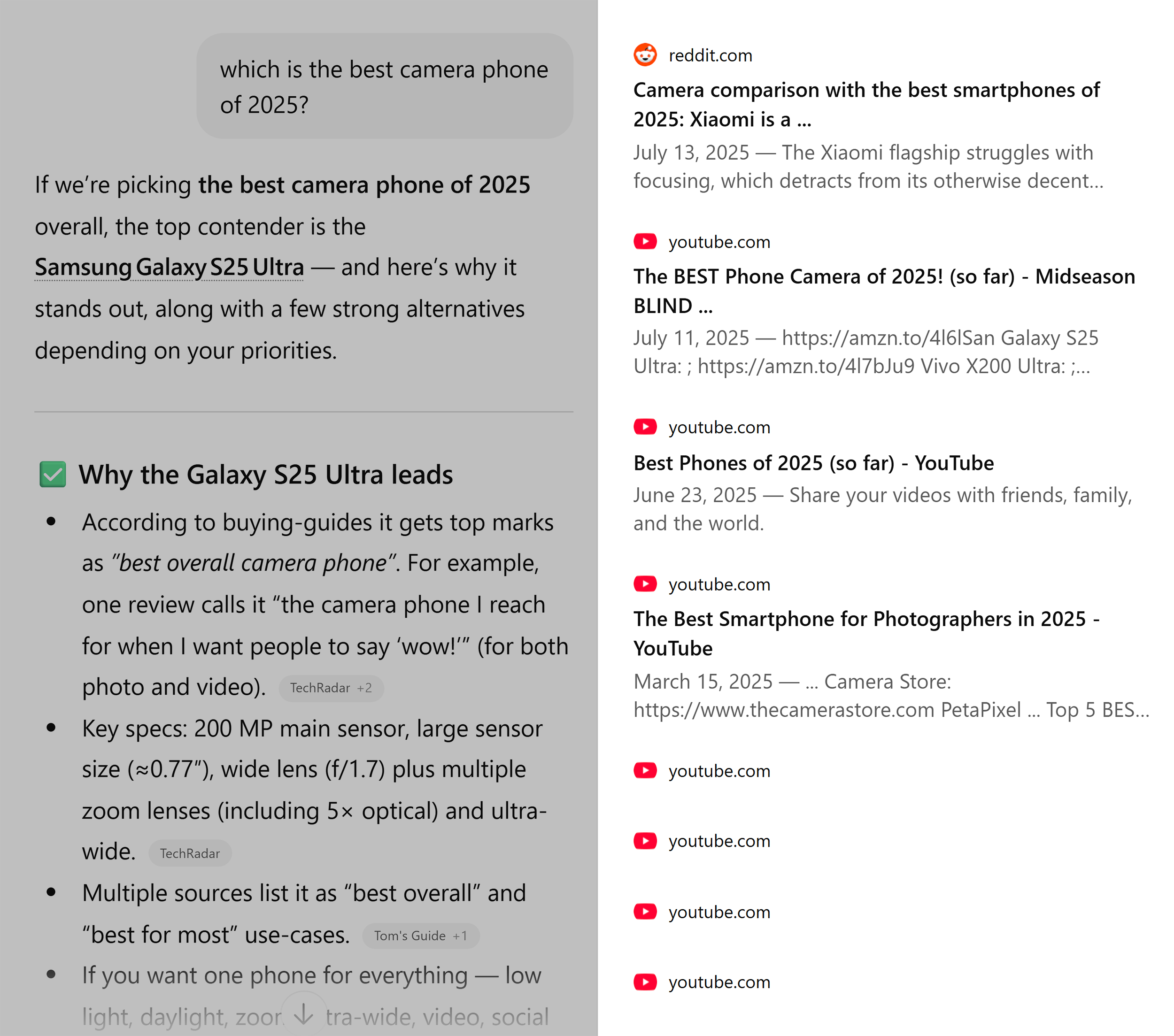
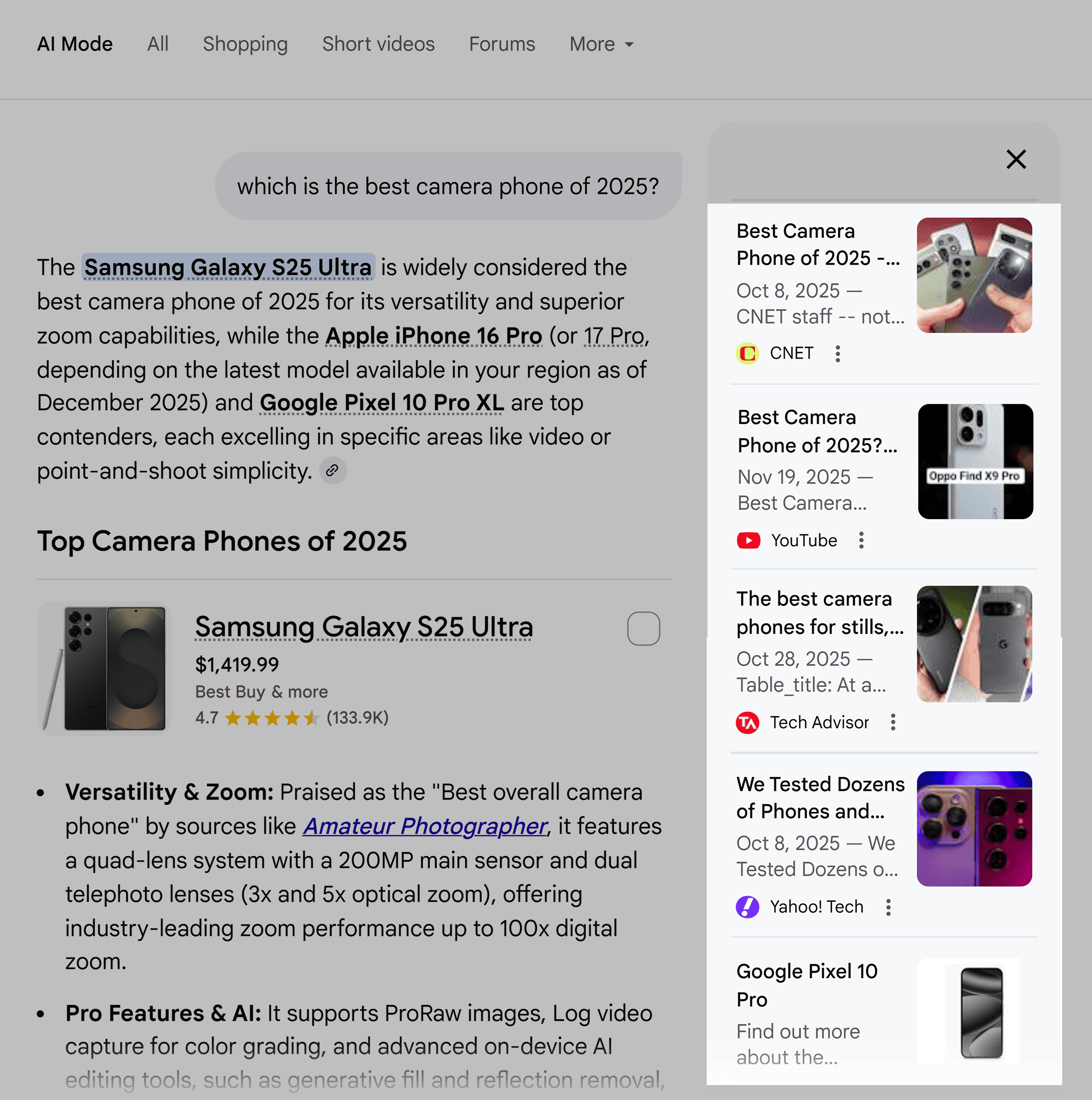
For instance, I searched “which is the best camera phone of 2025” across three platforms.
ChatGPT cited multiple YouTube videos, a Reddit thread, Tom’s Guide, Yahoo, and Tech Advisor.
Google’s AI Mode cited one YouTube video along with a bunch of other websites — no Tom’s Guide, Yahoo, or Tech Advisor.
Claude cited Quora and Android Authority twice. No Reddit threads, YouTube, or Tom’s Guide.
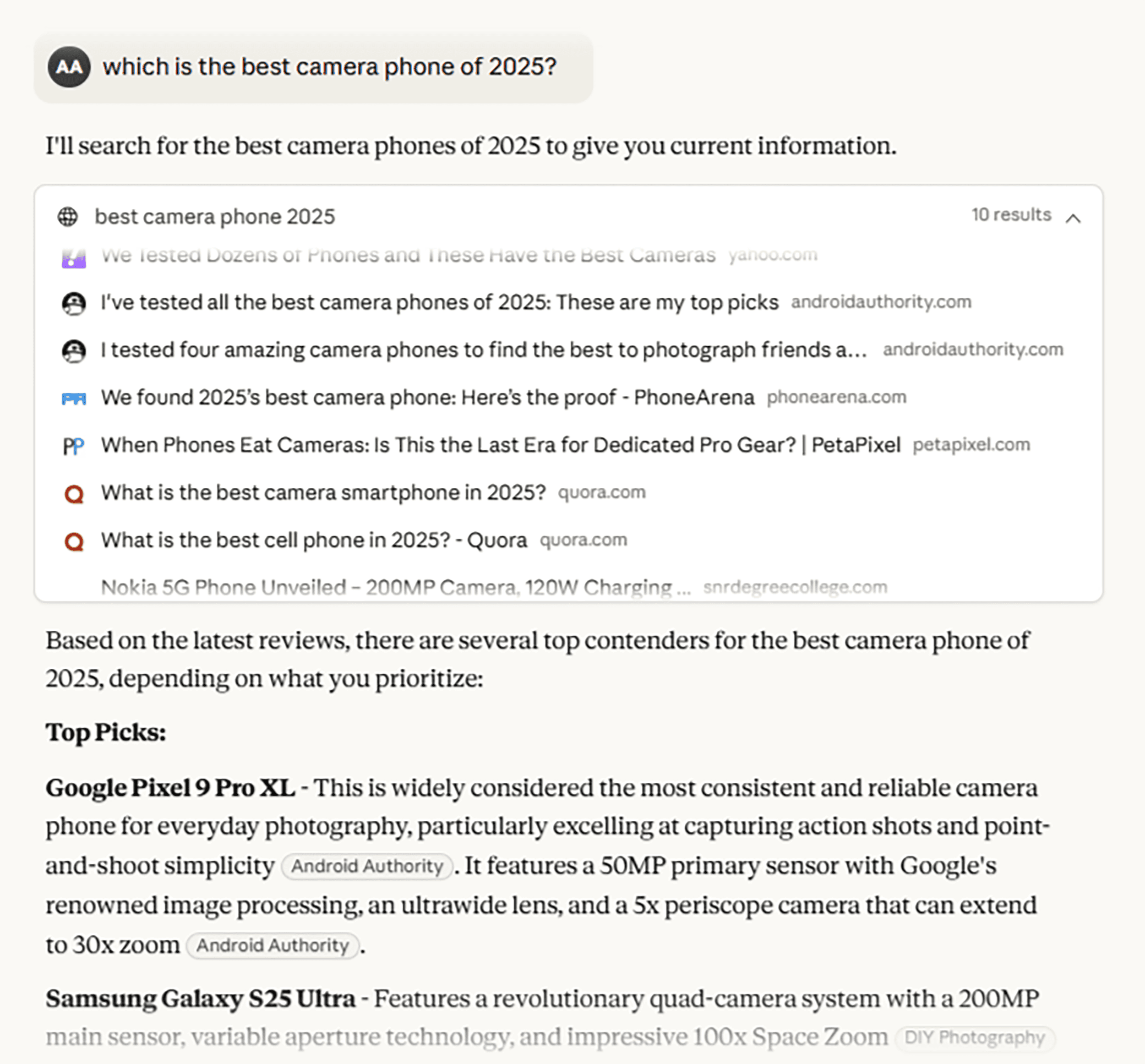
Same query, completely different sources and mentions.
Your team needs to understand these differences when optimizing for AI visibility.
You don’t need separate strategies for each platform. But knowing how different platforms prioritize sources helps you structure your entire approach, from content to technical implementation to off-site presence.
Who Can Own It?
Your SEO lead or strategist can typically own this.
They can track how your brand appears across platforms and identify what’s working where.
They’ll spot gaps in coverage on LLMs that matter to the brand. For example, strong presence in ChatGPT but weak in Perplexity.
Then they work with content, technical, and other teams to adjust the overall strategy.
Query Intent Mapping
People search differently in AI platforms than they do in Google.
Traditional Google: “best CRM software”
ChatGPT: “I need a CRM for a 50-person sales team, budget around $10K annually, must integrate with Salesforce”
The queries are longer. More conversational. More specific.
I checked my own most recent 100 prompts to ChatGPT. They averaged 13 words each.
Compare that to traditional Google searches, which typically run 3-4 words.
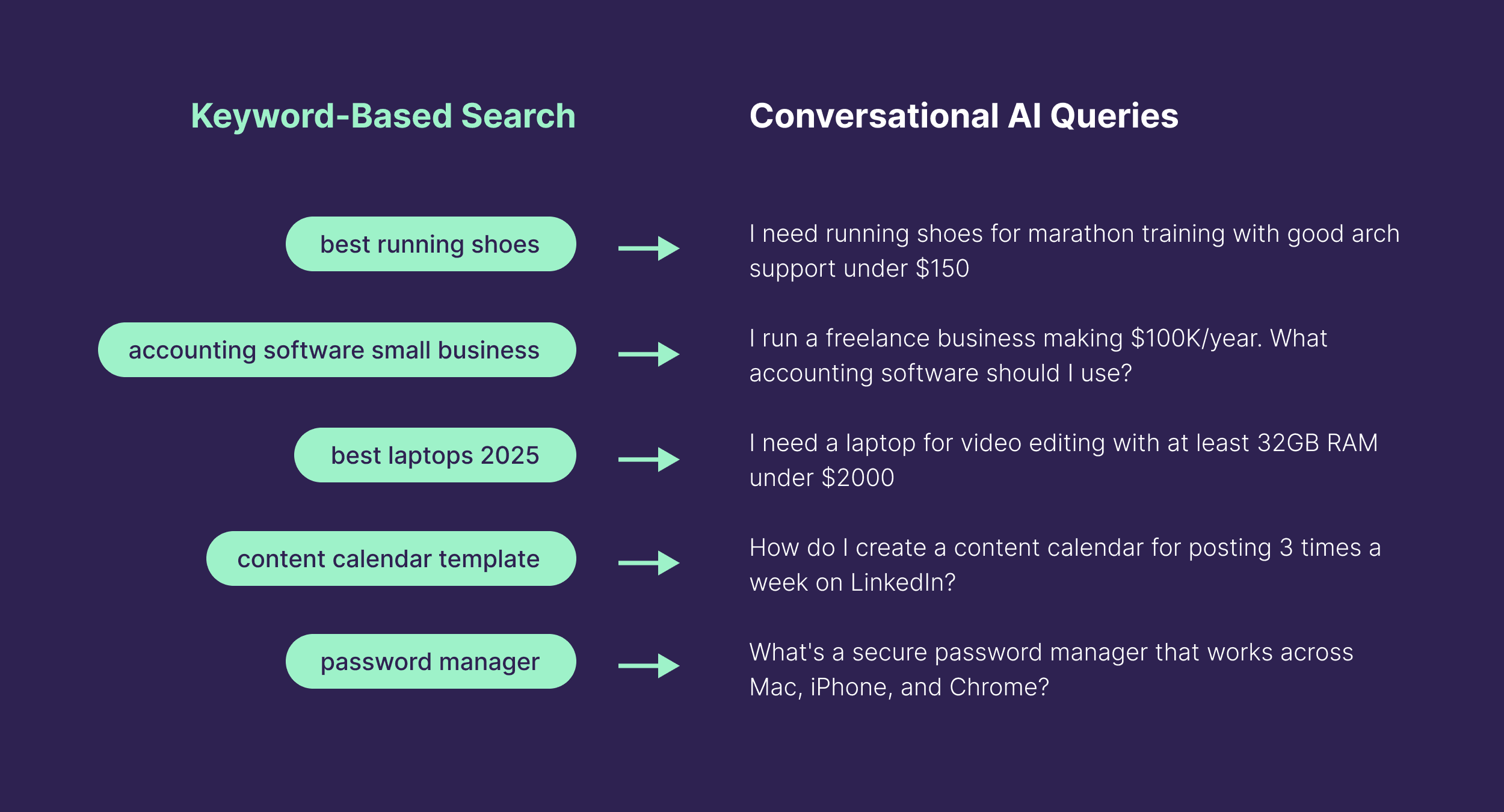
Understanding these prompt patterns helps you create content that answers the actual questions people ask AI.
You need to think beyond traditional keywords.
What detailed questions are the people in your audience asking? What context are they providing? What outcome do they want?
Who Can Own It?
Whoever leads keyword research or content planning can take this on, usually your SEO strategist or content planner.
This builds directly on existing keyword research skills.
You’re expanding from “what keywords do people use?” to “what problems are people trying to solve?”
(Which you should have been doing all along, but now with a stronger focus.)
This person will analyze how people search in AI platforms and document the longer, conversational queries they use.
Then they’ll build content briefs that address those specific questions and scenarios.
The Build, Buy, or Borrow Decision: Getting AI SEO Skills on Your Team
You know which skills your team needs.
Now comes the practical question: how do you actually get them?
You have three options:
Build internally Hire new talent Bring in outside expertiseHere’s a snapshot of the pros and cons of all three:
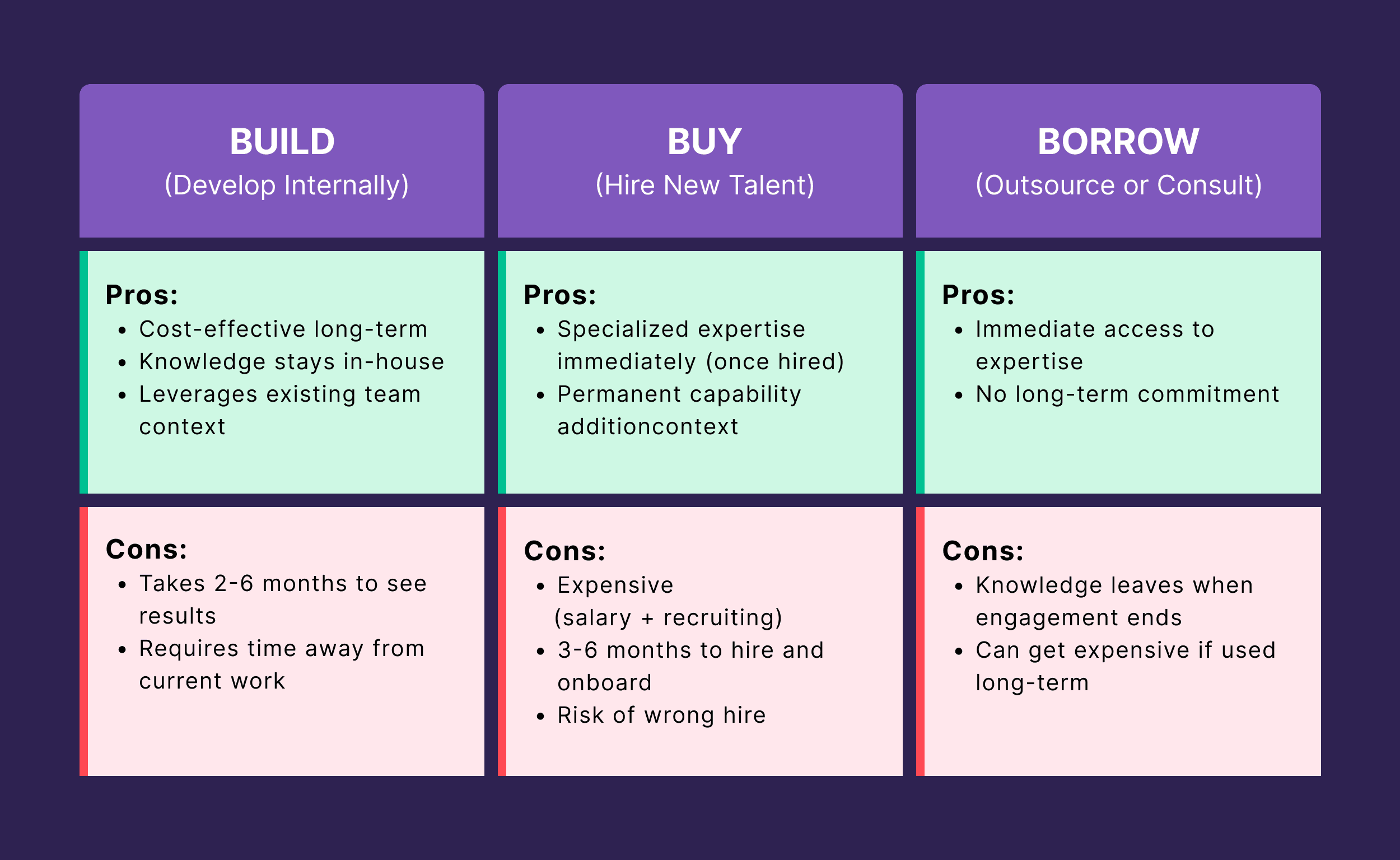
Most teams end up doing some combination of all three. The key is knowing which approach works best for specific skills.
Let’s look at each one in detail.
1. When to Build (Develop Internally)
Upskilling your current team is almost always the smartest first move.
They already know your brand, your workflows, and your audience. That context shortens the learning curve dramatically.
Focus on developing skills that evolve naturally from what your team already does.
For example:
Train writers to structure content for AI extraction Help your SEO lead understand AI retrieval patterns and how citations work Encourage your analyst to track AI visibility metrics alongside rankingsThese are logical extensions of existing expertise. Not entirely new disciplines.
Now, training doesn’t have to mean building a full internal curriculum.
Start small. For example:
Run short internal workshops to explain how AI search retrieves and cites content Review recent AI-generated answers for your top keywords and note which competitors get mentioned Compare their cited passages to yours, and update one or two articles using those patternsTo make internal training effective, use this quick checklist:
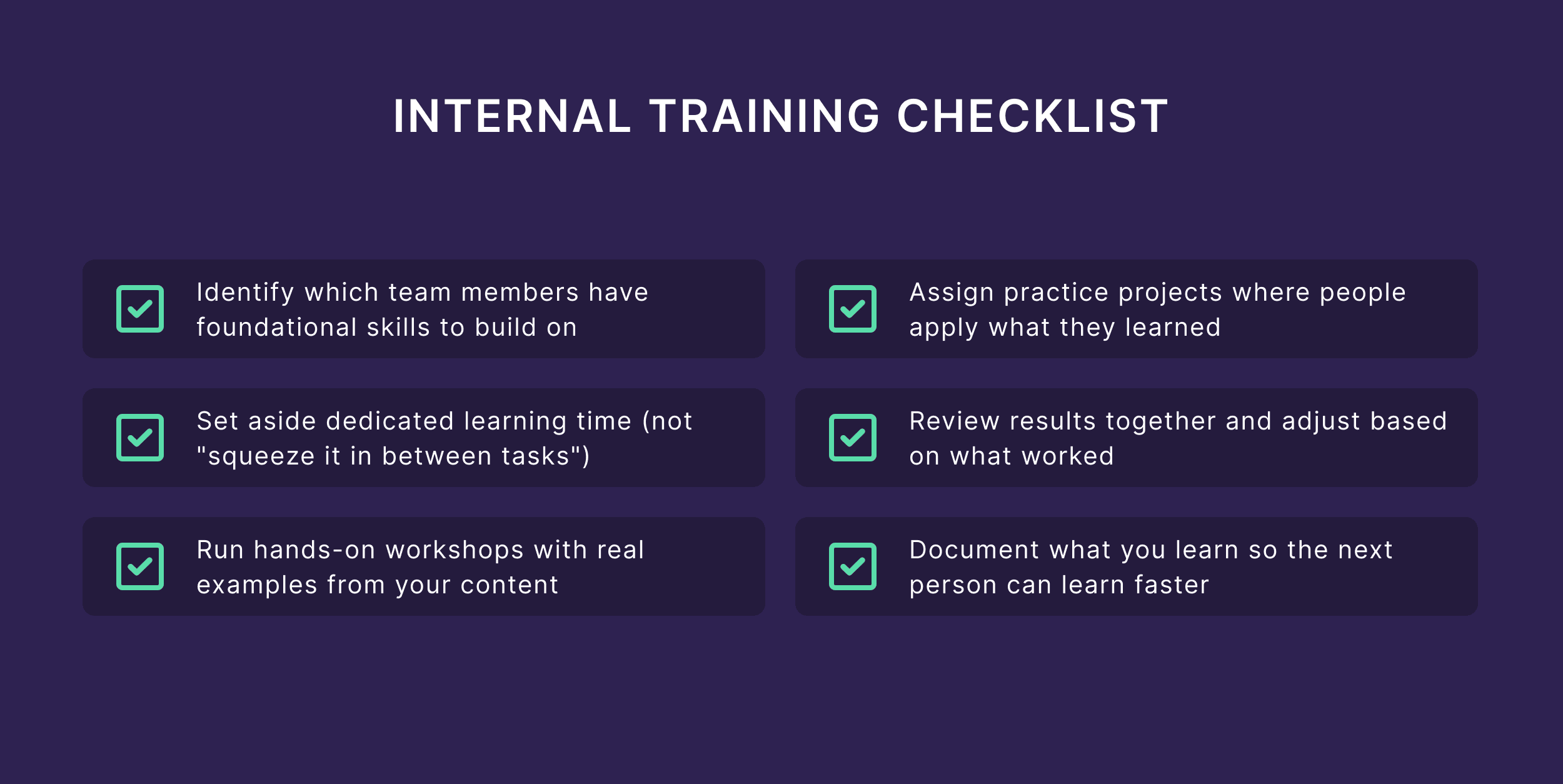
Upskilling may not be the fastest route to output. It can take a few months before you see real traction.
But it is the most sustainable.
Once your team starts applying AI-first thinking, you’ll see compounding returns with every new SEO campaign.
| Best For | Startups and mid-sized teams that already have strong SEO foundations but a limited budget for new hires. |
| Watch Out For | Don’t overload your team with theoretical “AI SEO” training.
Focus primarily on skills that directly connect to visibility outcomes, like structure, clarity, and retrievability. Also watch for skill concentration. If one person (like your SEO lead) ends up owning 3+ new AI skills, that’s a bottleneck. Consider hiring or borrowing expertise to spread the load. |
2. When to Buy (Hire New Talent)
When you need expertise faster than you can build it internally, it’s time to hire.
Bringing in new talent makes sense when the skill is both specialized and strategic.
Something that gives your brand a long-term edge, not just a short-term fix.
For example:
Hiring a data or visibility analyst who understands how to measure citations and brand mentions across AI platforms Bringing in a technical SEO who can model entities and implement structured data at scale Adding an AI content strategist who can guide how your content aligns with AI retrieval patternsThese hires extend the capabilities of your existing SEO team. They don’t replace it.
The key to finding the right people?
Clarity before you post the job. Decide what outcome you’re hiring for.
Do you need faster technical execution, deeper analytics, or dedicated AI visibility leadership?
Before you start recruiting, here’s a quick checklist to work through:
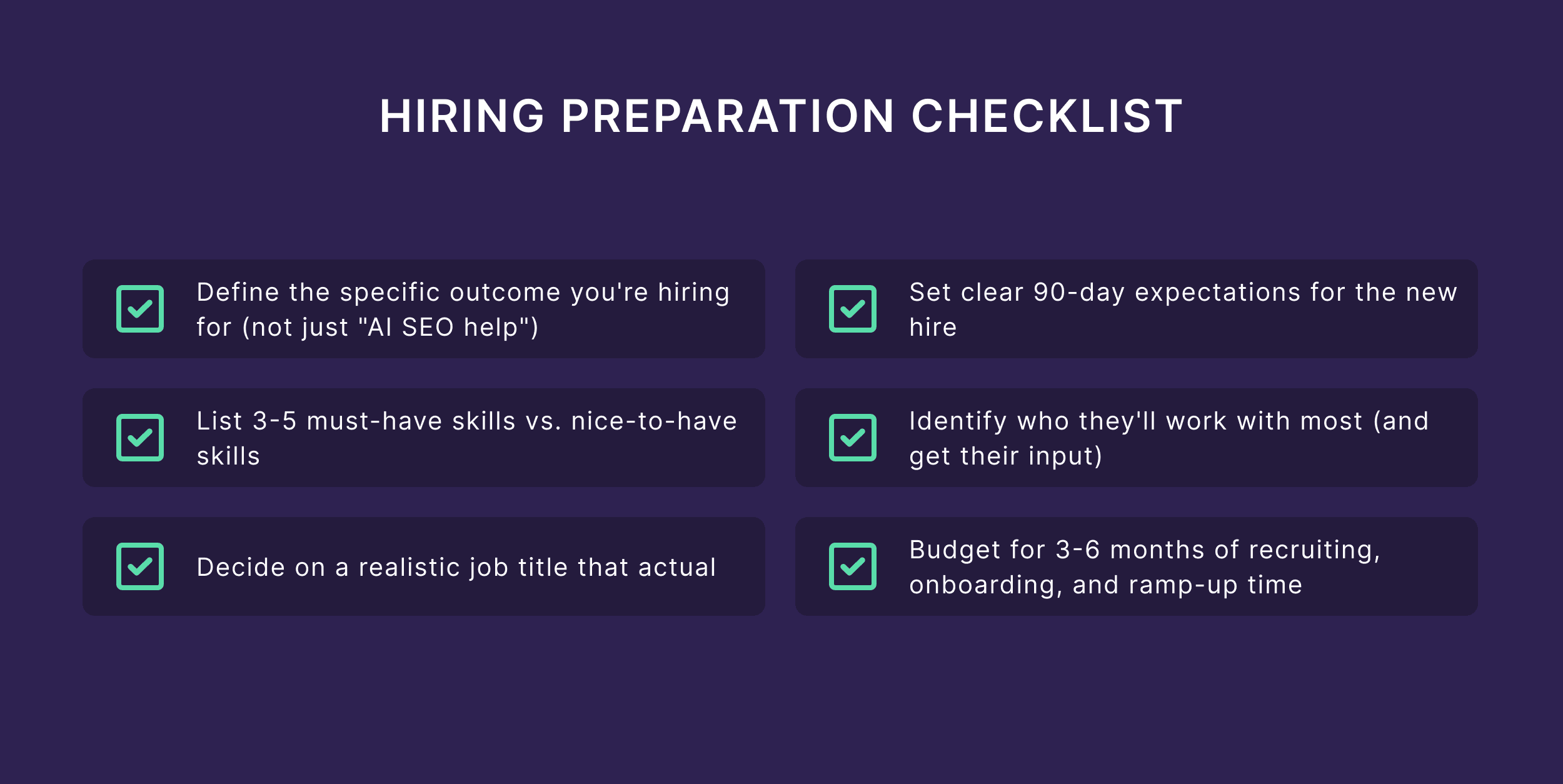
With clear hiring criteria, you’ll know which expertise to prioritize and what title makes sense for your organization.
| Best For | Mid-sized and enterprise teams that have budget flexibility and want to move faster than internal training allows. |
| Watch Out For | Don’t over-index on shiny new “AI SEO” titles. Few people have that exact label yet.
Instead, look for specialists in areas like data, structured content, and retrieval systems. These are people who can bridge SEO and AI. |
3. When to Borrow (Outsource or Consult)
Not every skill is worth building or hiring for.
Some are highly specialized. Others you only need for a short period.
That’s where borrowing expertise makes sense — through consultants, freelancers, or agencies.
Outsourcing works best when you need to move fast on projects that require niche expertise.
For example:
Hiring a consultant to set up AI visibility tracking before your analyst takes over Partnering with a content firm to scale passage optimization across hundreds of pages Bringing in a Reddit marketing expert to boost your brand’s presence in relevant subredditsThis approach gives you access to deep expertise without expanding headcount.
You can bring in specialists to handle complex projects, fill capability gaps, or run pilot programs that would slow your internal team down.
Sometimes that means a one-off engagement.
Other times, it’s a recurring partnership that supports your strategy long-term.
The goal isn’t to offload responsibility. It’s to fill gaps your team can’t cover yet and to get critical work done without slowing down larger projects.
When evaluating potential partners, here’s a quick checklist to follow:
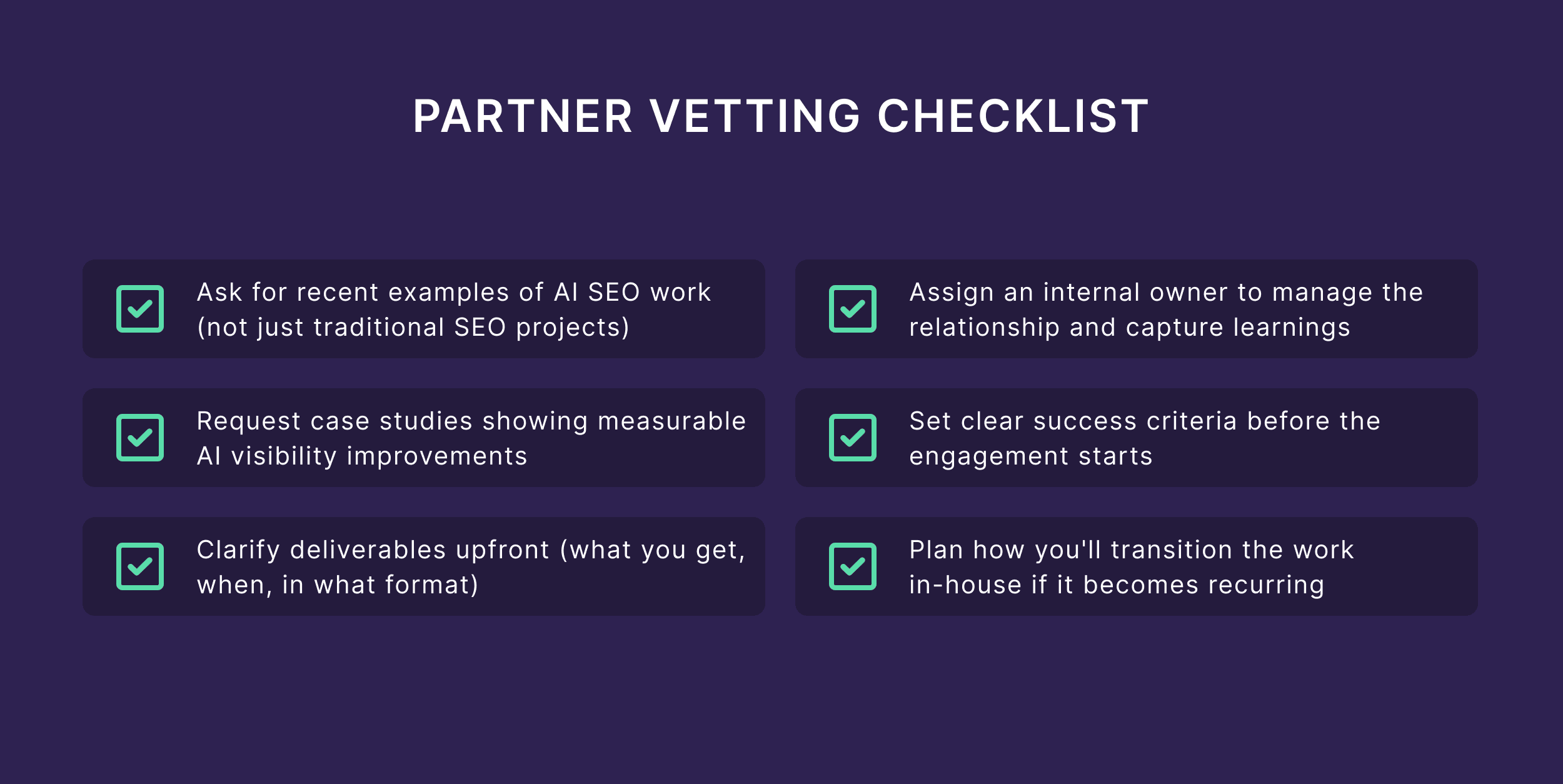
| Best For | Teams that need quick access to specialized expertise or extra hands for complex, time-bound projects. |
| Watch Out For | Don’t treat outsourcing as a default fix.
If a skill becomes core to your strategy, consider bringing it in-house. But for niche or technical projects, keeping trusted external support can be more practical. Choose partners who understand your brand voice. AI-first SEO still needs human context. |
The Hybrid Reality
In practice, it’s rare that a team is fully built, bought, or borrowed.
You’ll probably use all three, often at the same time.
How much you lean on each one depends on factors like:
Your current team’s strengths and bandwidth Budget flexibility for hiring or contracting The urgency of upcoming SEO goals How quickly AI search is evolving in your industry Leadership’s appetite for experimentationIn my experience, many teams land somewhere near a 70-20-10 split. Which is roughly 70% built internally, 20% borrowed through outside experts, and 10% bought as new hires.
The exact ratio matters less than how deliberately you manage it.
Here’s how to keep that balance right:
Prioritize by impact: Build skills that sustain long-term visibility. Borrow when you need speed or experimentation. Buy only when a role becomes essential to your strategy. Keep ownership internal: Even if outside partners execute the work, ensure someone on your team owns the outcome and applies the learnings. Plan for rotation: As new AI SEO trends emerge, your mix will likely shift. What starts as a borrowed skill may become core within six months. Audit regularly: Review your mix every quarter to see which skills rely too heavily on outside help. If a borrowed skill becomes recurring, start building it internally.Follow this quick team review checklist to keep stock of your built, bought, and borrowed setup.
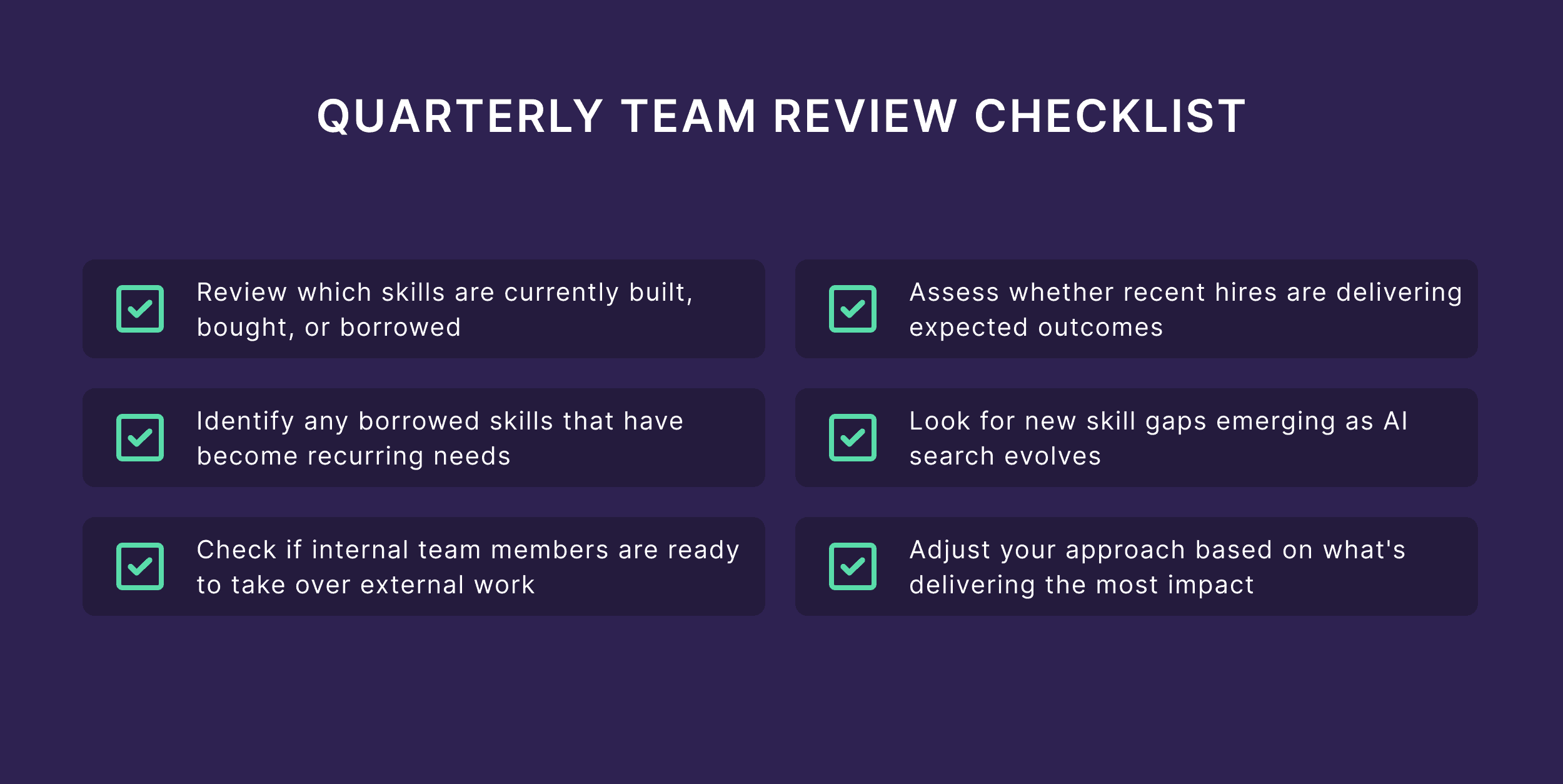
The key is flexibility and adaptability.
As priorities shift, don’t hesitate to rebalance how your team works.
That might mean promoting someone internally to take ownership of AI visibility, bringing in a freelancer to handle off-site optimization, or hiring a new analyst to deepen your data capability.
Adjust your structure based on what delivers the most impact, not what’s written on the org chart.
Your AI SEO Adoption Roadmap
You don’t need a massive reorg to evolve your SEO team for AI search.
You need a plan that helps your team build capability, test what works, and scale what proves effective.
This roadmap gives you that plan.
It breaks down:
What to focus on in each phase How to build momentum What progress should look like along the way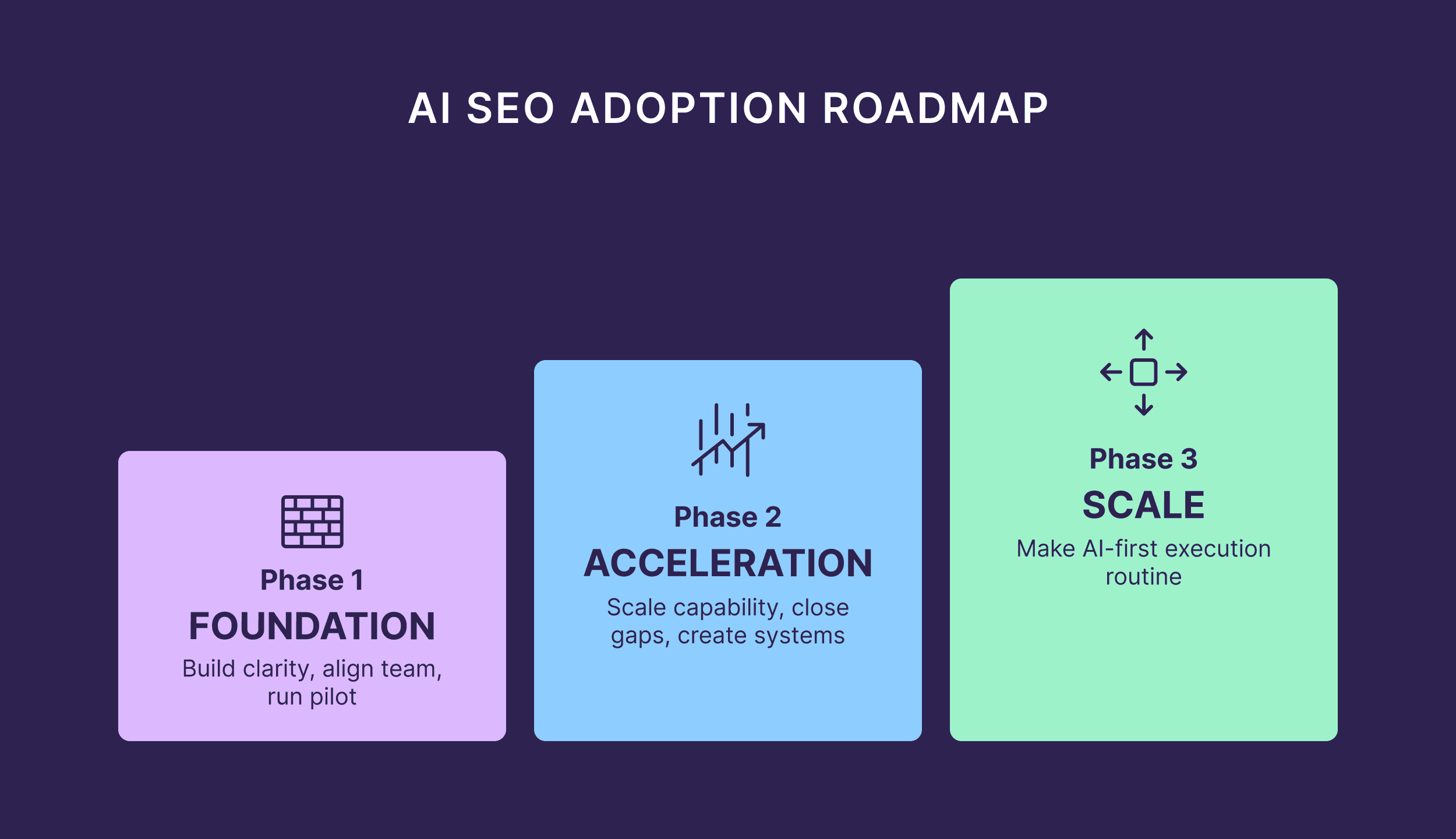
By the end, your team will know how to apply AI SEO principles consistently.
Phase 1: Foundation
Start by taking stock of where your team stands.
Before diving into new tactics, align everyone around what AI SEO means for your brand and how your current approach fits into it.
This stage sets direction and gives your team the confidence to move with purpose.
Here’s what to focus on in the first three months:
Assess current capabilities: Review your team’s strengths across content, technical, and analytical areas. Identify which AI-era skills exist internally and which ones you’ll need to hire for or outsource. Establish your visibility baseline: Search your most important topics in tools like ChatGPT, Perplexity, and Google AI Overviews. Track if (and how) your brand shows up. Pick 2-3 priorities to act on: Choose the areas with the clearest opportunity to improve. That might mean tightening content clarity, mapping entities, or aligning off-site mentions. Run a small pilot: Select a few representative pages and update them based on what you’ve learned. Then recheck whether those updates help your brand appear more often in AI answers. Document key learnings: Capture what worked and what didn’t in a short internal memo. This becomes the foundation for next quarter’s priorities.Phase 2: Acceleration
Once you’ve built your baseline, it’s time to turn insights into action.
The second phase focuses on building capability and momentum. This involves scaling what worked in your pilot, closing skill gaps, and introducing systems that help your team move faster together.
Here’s what to focus on over the next few months:
Strengthen capability: Run short training sessions to deepen AI SEO understanding across functions. If a skill gap exists, bring in a freelancer, consultant, or new hire to fill it quickly. Encourage cross-functional collaboration: Bring content, SEO, analytics, product, and brand together under one shared visibility goal. Clarify ownership so responsibilities don’t overlap. Expand your pilot: Apply what worked from Phase 1 to more pages or campaigns Build repeatable workflows: Turn early learnings into working systems. Standardize how technical, analytical, and content tasks are executed for AI-driven discovery. Each function should know what “AI-ready” means in its area. Use shared dashboards: Track AI visibility metrics in one place and review them as a team so everyone sees how their work contributes to results Run monthly reviews: Check how well your team is adapting to new systems and responsibilities. Identify where people need support, additional training, or outsourced help.Phase 3: Scale
This final phase turns AI-first thinking into how your team operates by default.
The goal now is to make the new skills, workflows, and decision habits permanent. This way, your AI SEO capability grows without needing constant resets.
Here’s what to focus on in the next six months:
Integrate what works: Expand the proven approaches from earlier pilots across your full SEO and content programs. Keep the frameworks that consistently improve visibility; drop the ones that don’t. Solidify roles and ownership: Define who leads AI-related strategy, measurement, and experimentation. Clarify responsibilities so the team stays agile even as you scale. Strengthen internal training: Turn what your team learned into short onboarding sessions, playbooks, or process docs. This keeps new hires aligned and prevents knowledge loss. Plan for selective specialization: As your AI SEO programs mature, assign ownership where consistent work is required. That could mean promoting a team member to lead AI visibility reporting, assigning an SEO specialist to oversee off-site signals, or partnering long-term with a proven external expert. Create leadership visibility: Share quarterly reports on AI-driven results and learnings with senior stakeholders. This keeps support (and budgets) growing with your progress.Measuring AI SEO Team Success
You can measure your AI SEO team’s success by tracking how often your brand appears in AI-powered answers.
Here are important AI SEO metrics to track:
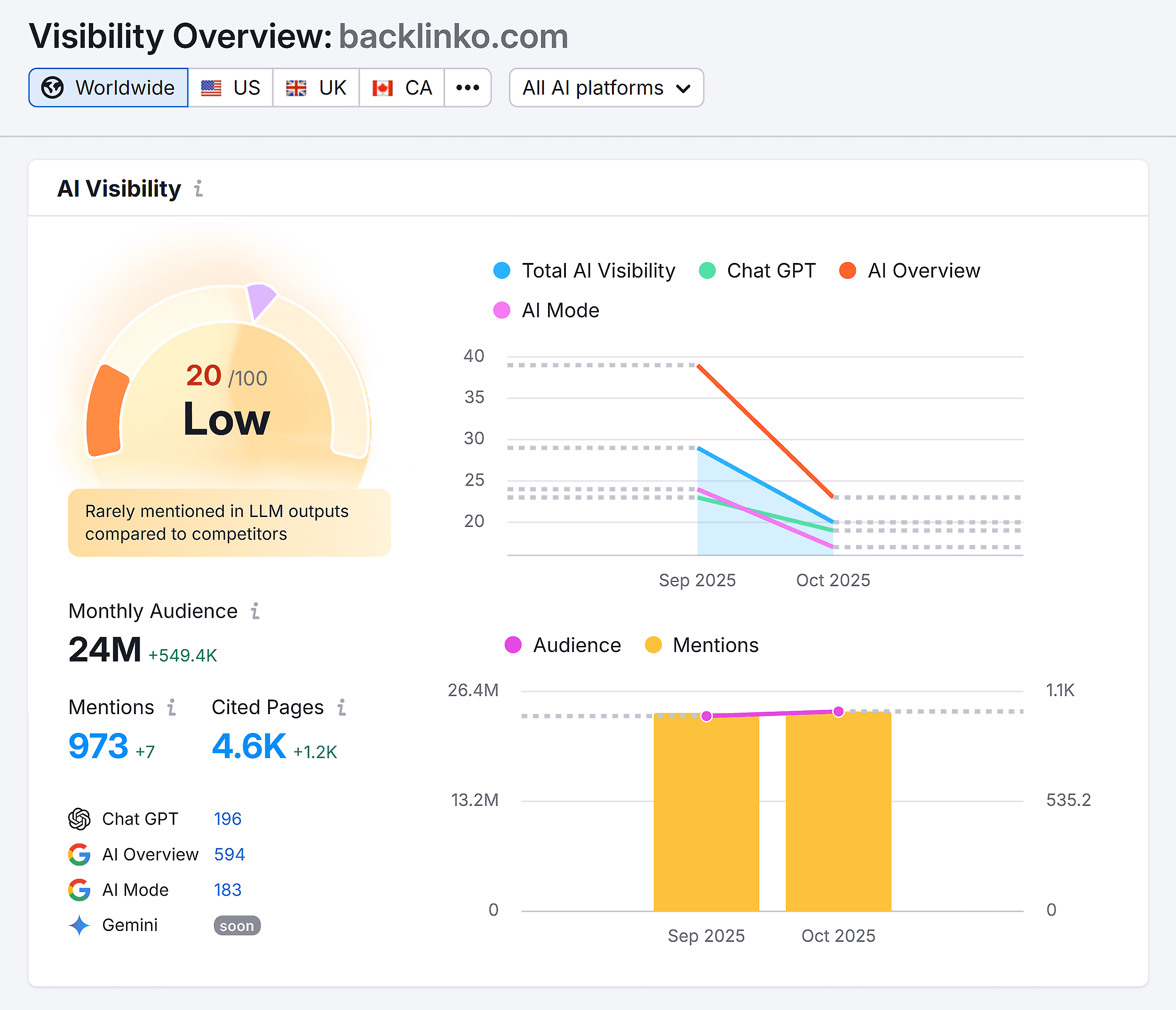
Citation frequency: How often AI platforms cite your content as a source Brand mention rate: How often your brand appears in AI responses Platform coverage: Which AI platforms reference you (ChatGPT, Perplexity, Google AI Overviews, etc.) Sentiment: Whether those mentions align with your brand positioningSemrush’s AI Visibility Toolkit makes tracking these metrics simple.
It shows your AI Visibility Score and how many times your brand is mentioned across different AI platforms.
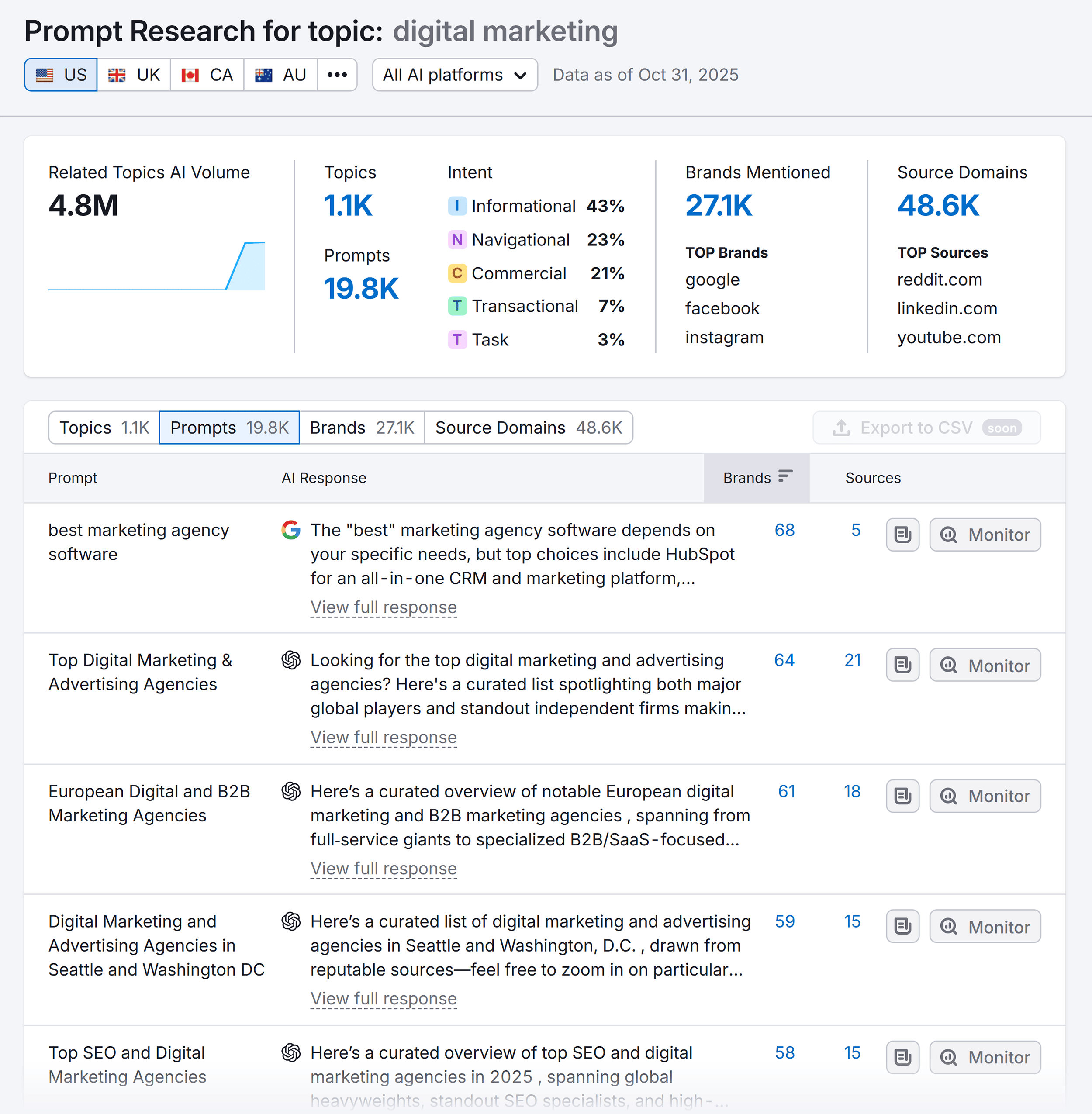
It also shows which prompts your brand appears for, revealing which topics your team’s content strategy is successfully targeting.
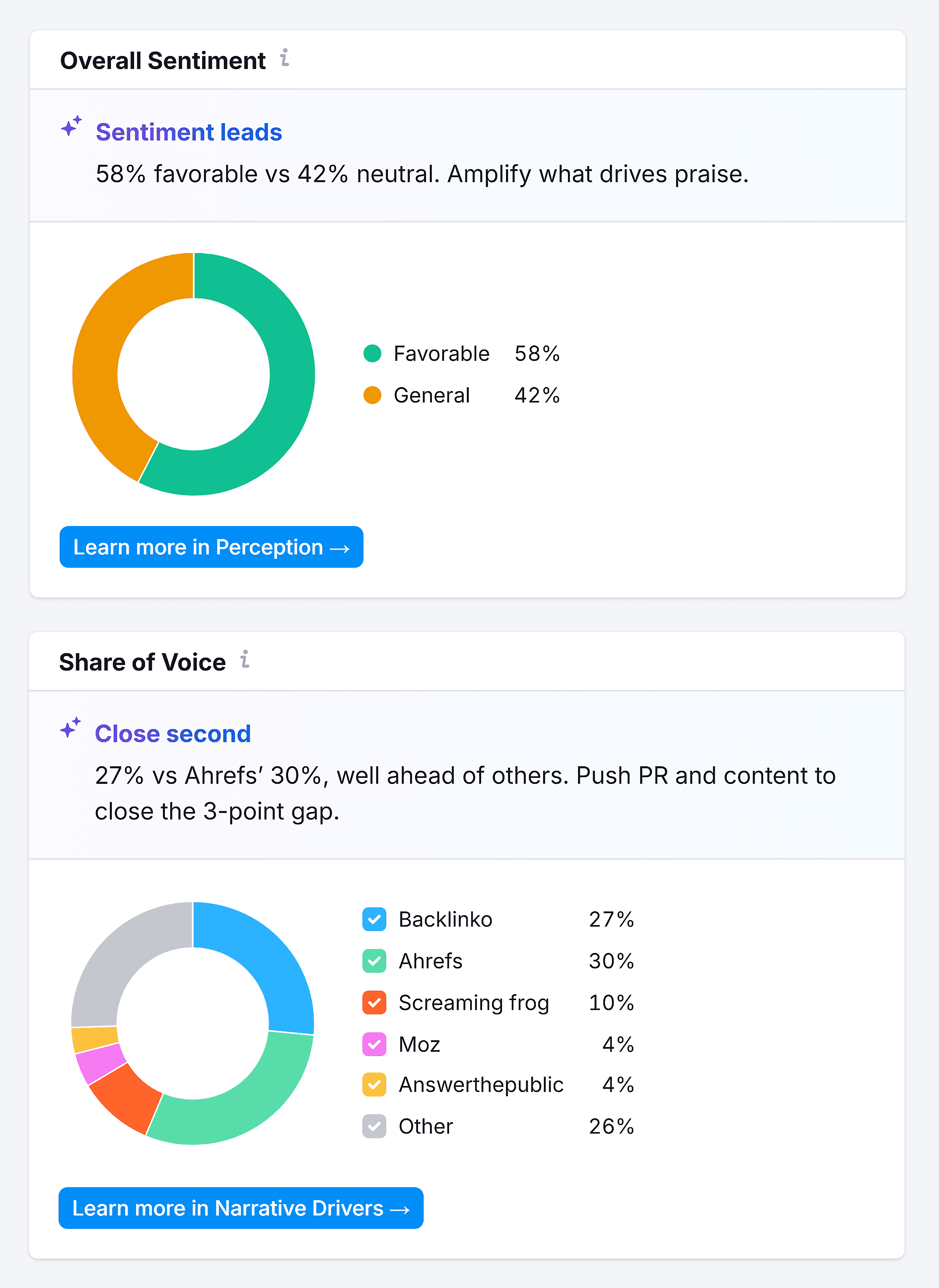
In your Brand Performance report, you can compare your brand’s visibility against multiple competitors.
The report includes insights like your Share of Voice (percentage of mentions compared to competitors) and sentiment analysis. This tells you whether AI platforms present your brand positively or negatively.
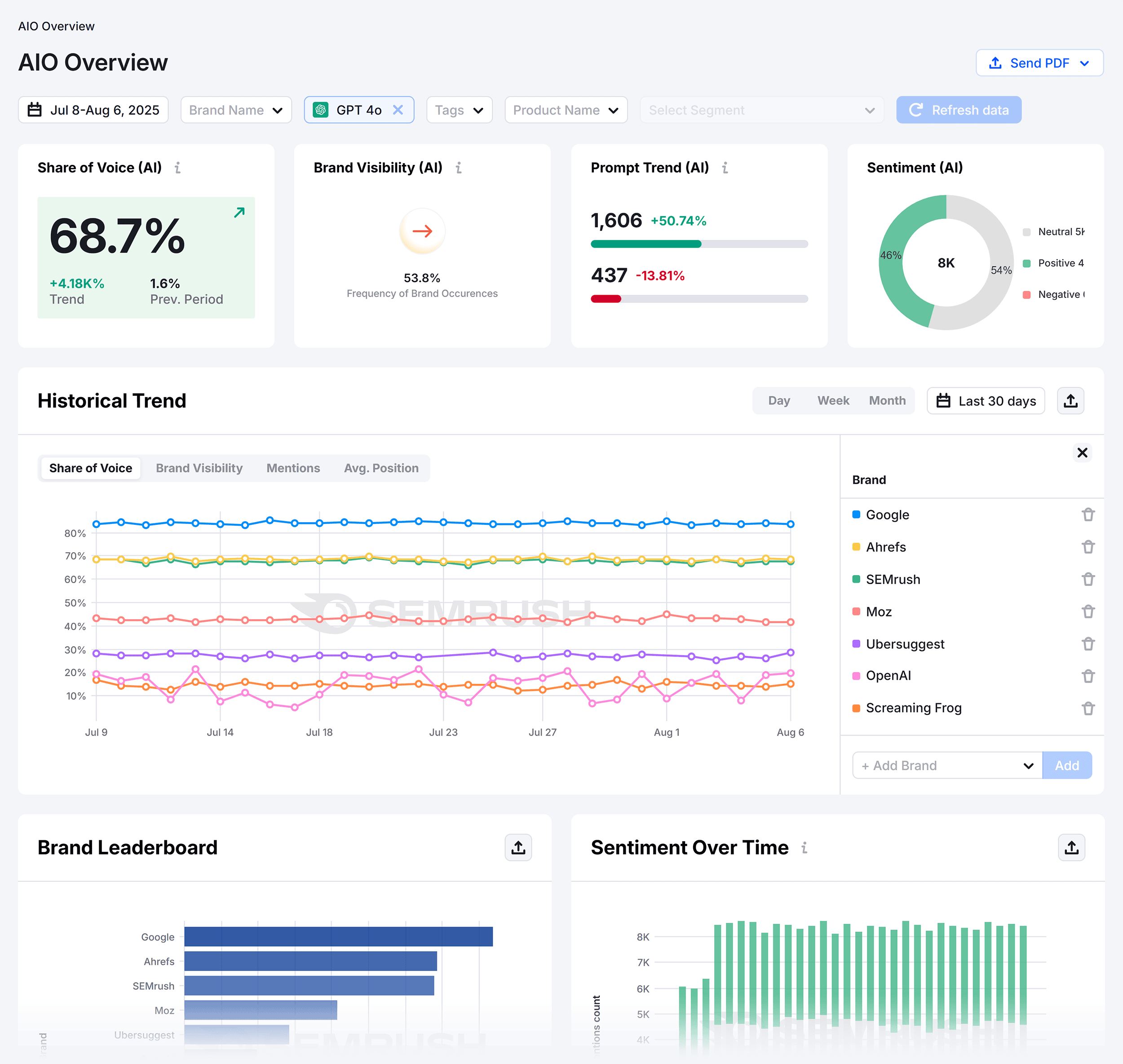
For larger organizations, Semrush offers Enterprise AIO, with team collaboration features and advanced analytics.
Specifically, your AI Visibility Score is a good overall indicator of your AI SEO team’s performance.
If it has improved over 3-12 months, it means your team is executing well. The skills are translating into real visibility.
If results aren’t showing after two quarters, revisit your priorities. You might be focusing on the wrong skills first or need to adjust your build/buy/borrow mix.
Get a Custom AI SEO Team Plan in 20-30 Minutes
AI SEO is built on traditional SEO. But there are more layers to it.
Your SEO team needs updated systems and upgraded skills so your brand gets mentioned (and your website cited) in AI search results.
We created the free AI SEO Team Building Assistant to turn everything you just read into a custom action plan for your team.
Download the file, upload it into your AI platform of choice (Claude, ChatGPT, Gemini), and follow the conversation.
This is an interactive session that adapts to your specific team, budget, and constraints. It’s not just a cookie-cutter report after a basic prompt.
It takes around 20 minutes to work through (but you should take your time with it). At the end, you’ll walk away with a complete implementation plan.
Here’s an example of the output, starting with the one-page plan:
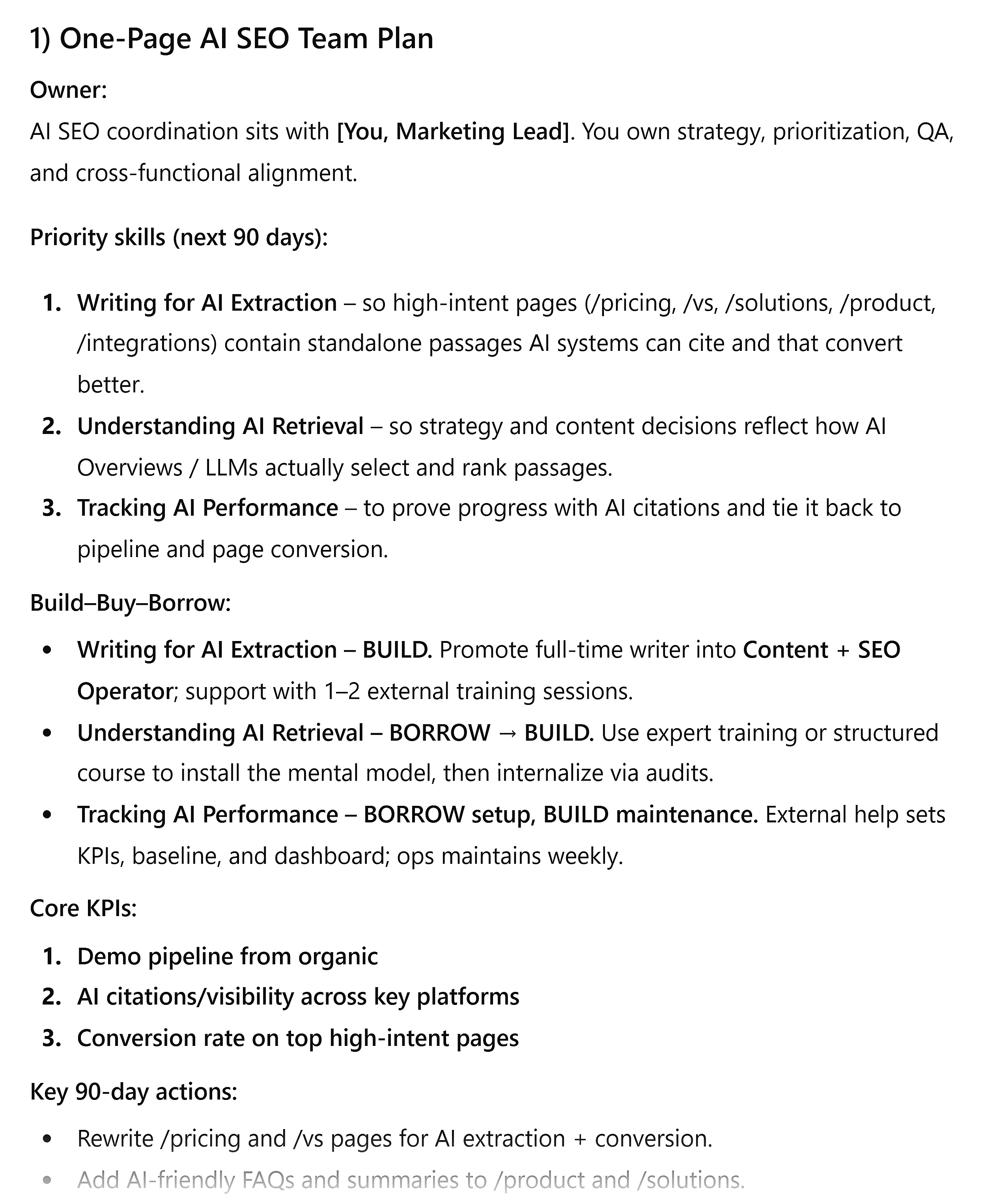
You’ll also get a “Skills Ownership Map” showing which team member owns which skill. And which skills to build, borrow, or buy.
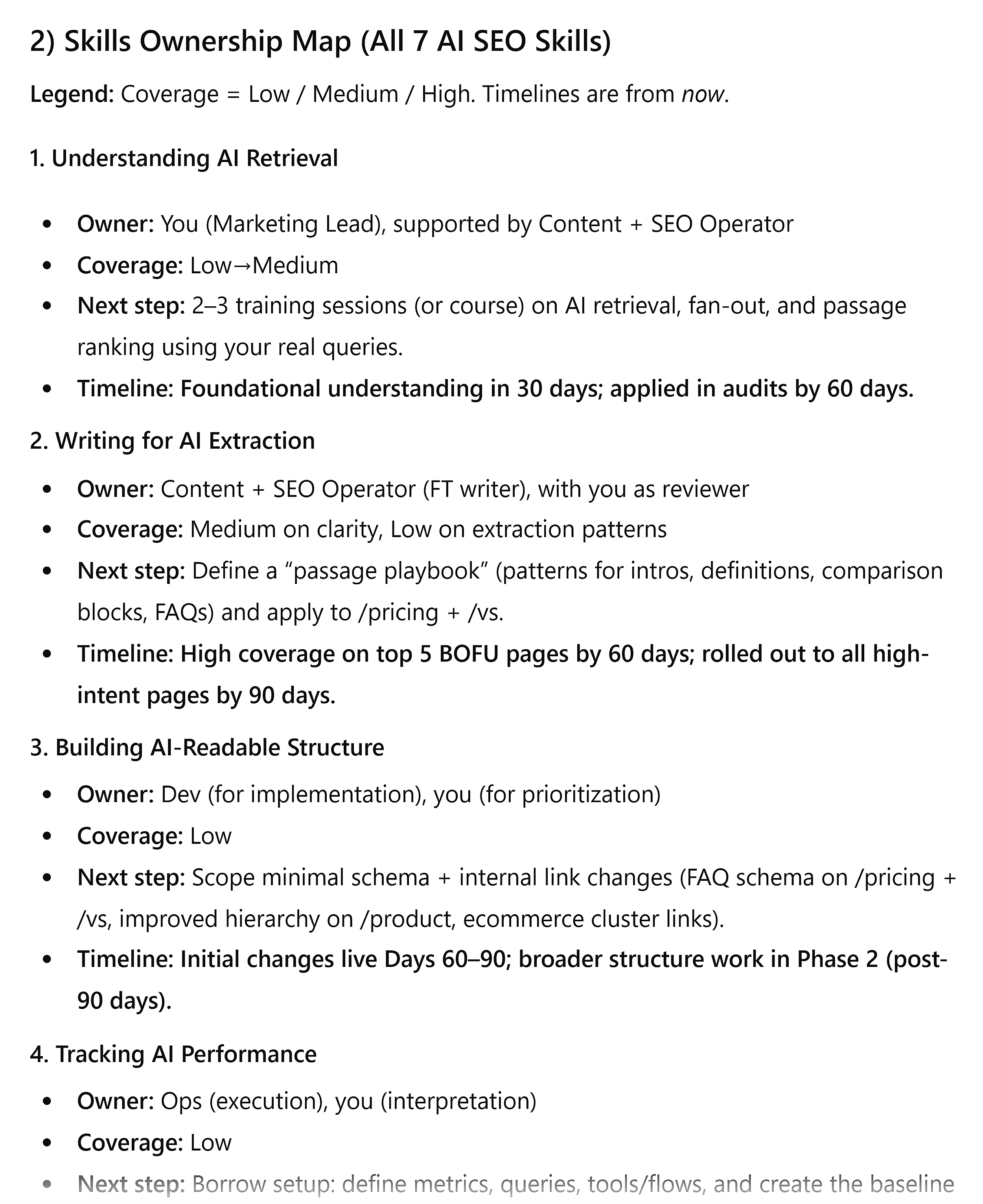
Plus a Phased Roadmap, KPI Tracking Framework, Leadership Brief, and 30-day checklist.
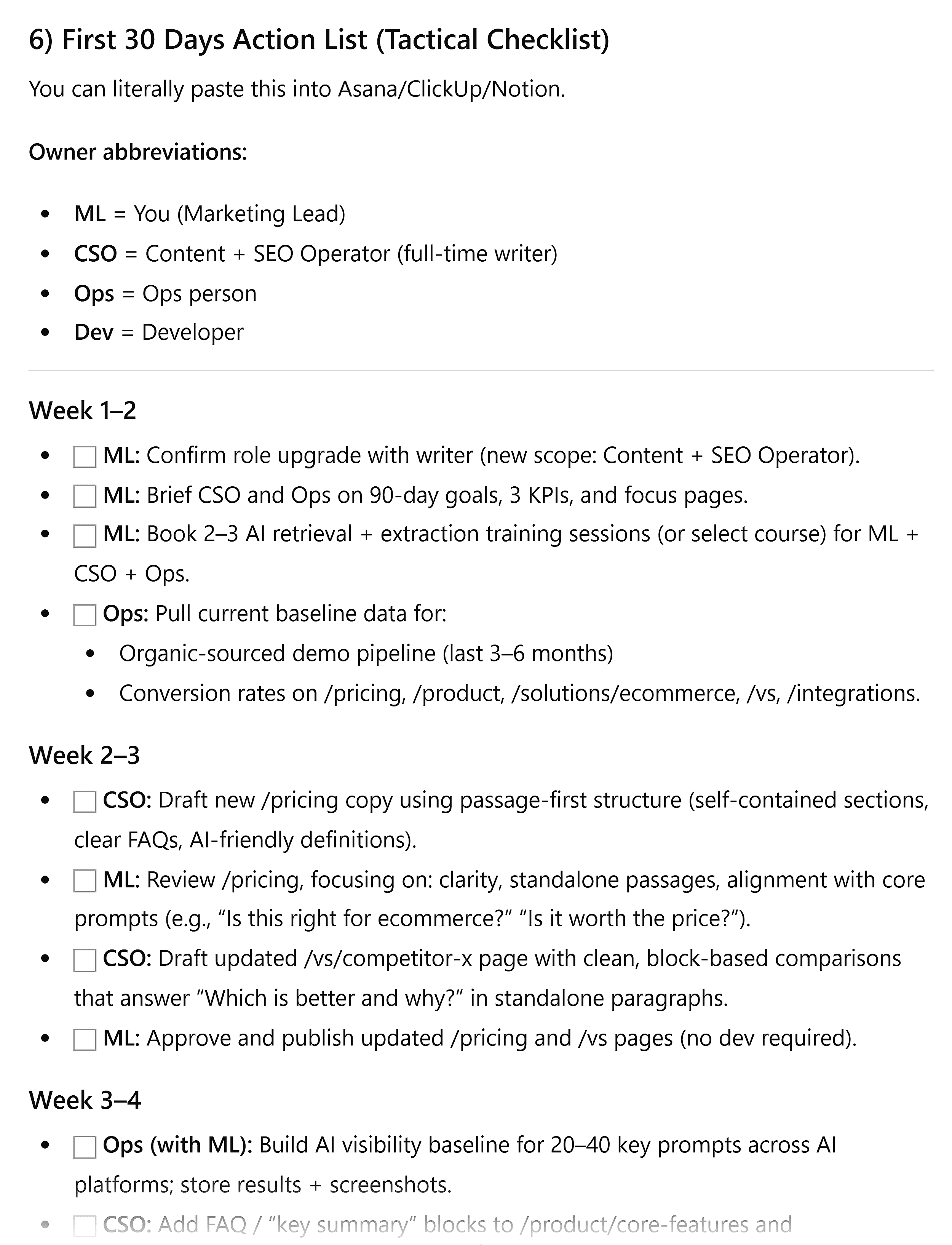
Everything is tailored to the specific inputs you provide in the interactive conversation.
Here are some tips for getting the most out of this assistant:
Block 30 uninterrupted minutes so you can really engage with the conversation Have your current team structure in mind Be specific in your answers (vague input = generic output) Be honest about constraints (like budget, time, and capabilities)Download the AI SEO Team Building Assistant and start building your AI-ready team.
Backlinko is owned by Semrush. We’re still obsessed with bringing you world-class SEO insights, backed by hands-on experience. Unless otherwise noted, this content was written by either an employee or paid contractor of Semrush Inc.






















.jpg&h=630&w=1200&q=100&v=7abd35f457&c=1)