Kylie Jenner & Timothée Chalamet’s Courtside Kiss Is Selling Us a Fantasy. Here’s What Comes Next.
Kylie Jenner wrapped her arms around Timothée Chalamet’s neck and kissed him while the Knicks ran up a 40-point lead in Cleveland. The internet, predictably, lost its mind. Two of the most-watched people on the planet, perfectly in sync,...
 Fransebas

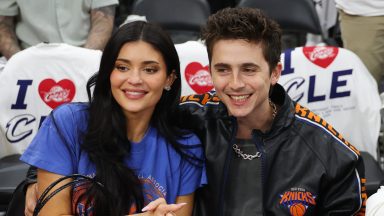
Kylie Jenner wrapped her arms around Timothée Chalamet’s neck and kissed him while the Knicks ran up a 40-point lead in Cleveland. The internet, predictably, lost its mind.
Two of the most-watched people on the planet, perfectly in sync, glowing under arena lights. She’s beaming. He’s beaming. The Knicks are winning. The aesthetic is flawless.
And every single person scrolling past those photos felt the same quiet ache. The one that whispers: why doesn’t mine look like that?
Here’s the thing nobody is saying out loud. What you’re watching is real. It’s also a phase. And the fantasy it’s selling you, that the right person makes love effortless, is the exact belief that breaks most relationships I see in my office.
The Honeymoon High Is Doing Something Specific to Their Nervous Systems
In my opinion, from birth to death, human beings are wired for emotional bonding. Our nervous systems are constantly scanning the people closest to us, asking two questions underneath everything: Are you there for me? and Am I enough for you?
In the honeymoon phase, the answer is a continuous, intoxicating yes.
I describe it to clients like a dance floor. One person steps on and breakdances. The other responds with a flawless moonwalk. Both nervous systems conclude, instantly, that they were made for each other. That’s the courtside kiss. That’s the arm around the neck. That’s two attachment systems flooded with validation in real time.
The danger isn’t the high. The danger is the cultural story we wrap around it.
We’ve been sold the idea that love is a static achievement. Find the right one, and the synchronization holds forever. I call this Proof of Stake love, where appearances and early alignment are treated as evidence of permanent security. It’s the relational equivalent of claiming you own something just because you posted a picture of it.
The truth is harder. People mistake the initial alignment for the relationship itself. The actual relationship starts when the synchronization cracks. And it always cracks.
For Kylie and Timothée, that crack will happen inside what I call the goldfish bowl. Every move watched, judged, archived. No private corner to fumble through a misunderstanding. Nowhere to be ugly with each other and recover before the screenshots circulate.
The Pattern I See in High-Achievers, Which Is Exactly Who These Two Are
Here’s the dynamic I watch unfold in my office almost every week, especially with executives, creatives, and public figures. Two highly competent people walk in devastated, because they’re treating their relationship like a project they’re failing.
The strategies that built their careers, the relentless drive, the cool composure, the ability to perform under pressure, are the exact strategies destroying intimacy at home.
I describe it as an emotional building with a Penthouse and a Basement.
One partner lives in the Penthouse. Articulate, high-energy, convinced they’re doing all the emotional heavy lifting. When they feel a drop in attention, their nervous system reads it as an existential threat. They protest. They criticize. They ask the same question seventeen ways. I call this partner the Relentless Lover. Underneath the anger is a terrified longing for reassurance.
The other partner retreats to the Basement. To survive the shame of feeling like a constant disappointment, they shut down, intellectualize, or the silent treatment becomes their default. This is the Reluctant Lover. The coldness is a shield against the fear of failure.
When these two strategies collide, the couple gets locked in what I call the Waltz of Pain. The Relentless Lover reaches. The Reluctant Lover retreats. The reach gets sharper. The retreat gets deeper. Neither person is the villain. Both are terrified.
And here’s the kicker. They spend hours arguing about logistics, communication styles, who said what at brunch. They’ve become world-renowned experts on each other’s flaws. If you held a conference on their partner’s defects, either one could deliver the keynote, fully sourced.
What they almost never touch is the actual feeling underneath: I’m scared I don’t matter to you.
Disconnection Isn’t a Bug. It’s a Feature.
This is the part that gossip columns get wrong. When a famous couple starts fighting, the takes start flying. He’s toxic. She’s controlling. They were never compatible.
I see it differently. Fights erupt precisely because the couple means so much to each other. When a partner’s nervous system senses distance, it reacts with the same biological panic a child feels when separated from a caregiver. The protests and the withdrawals aren’t malicious. They’re survival strategies running on autopilot.
There are no bad guys in this dynamic. Just two frightened people in adult bodies, using the only tools they have.
If you’re sitting with this article and recognizing yourself, the Penthouse or the Basement, I’d encourage you to get your free relationship assessment and see which pattern you’re running. Most people are shocked by what surfaces.
Here’s what real security actually requires. Proof of Work, not Proof of Stake. The grueling, calorie-burning humility of crossing the bridge into your partner’s reality after you’ve hurt them. Love isn’t the absence of rupture. Love is the active, sustained presence of repair.
To expect a relationship to survive without conflict, especially under public surveillance, is to fundamentally misunderstand human biology.
What Actually Works When the Synchronization Cracks
If Kylie and Timothée walked into my office two years from now exhausted, trying to recapture the Cleveland kiss, I wouldn’t help them recapture anything. I’d help them grow up into the relationship.
First directive: stop solving the surface content. The argument about the schedule, the friend, the comment at dinner, those are almost always red herrings for deeper attachment panic.
Second: shift from the Story of Other to the Experience of Self. Stop being the keynote speaker on your partner’s flaws. Start investigating what’s happening inside your own body when the fight starts. The tightness in your chest. The heat behind your eyes. The urge to walk out or escalate.
That sensation is the doorway. The story about your partner is the distraction.
I use the metaphor of a mango. High-achievers can analyze a mango’s color, its origin, its nutritional profile, for hours. That’s entirely different from the messy, vulnerable act of actually tasting it. Couples do the same thing with their pain. They analyze it from every angle to avoid feeling it.
The work is to taste it. To say the scary sentence underneath the criticism. I’m scared you don’t want me anymore. That’s the move that breaks the Waltz.
What the Kiss Actually Means
The Cleveland kiss is real. So is what comes after it. Both are part of the same story.
The couples I admire most aren’t the ones who never lost the spark. They’re the ones who learned to find each other again, on the worst nights, in the ugliest moments, when no cameras were rolling. That’s the part you can’t photograph.
That’s the only part that lasts.
______________________________________________________________________________________________
Empathi founder Figs O’Sullivan and his wife Teale are couples therapists in San Francisco, relationship experts to the Stars and Silicon Valley, founders of Empathi, and built Figlet, an AI relationship coach trained on their clinical work.