So Your Traffic Tanked: What Smart CMOs Do Next
Organic traffic is declining, but answer engines are driving higher-intent conversions. Here’s how CMOs should rethink strategy, structure, and measurement. The post So Your Traffic Tanked: What Smart CMOs Do Next appeared first on Search Engine Journal.
 Konoly

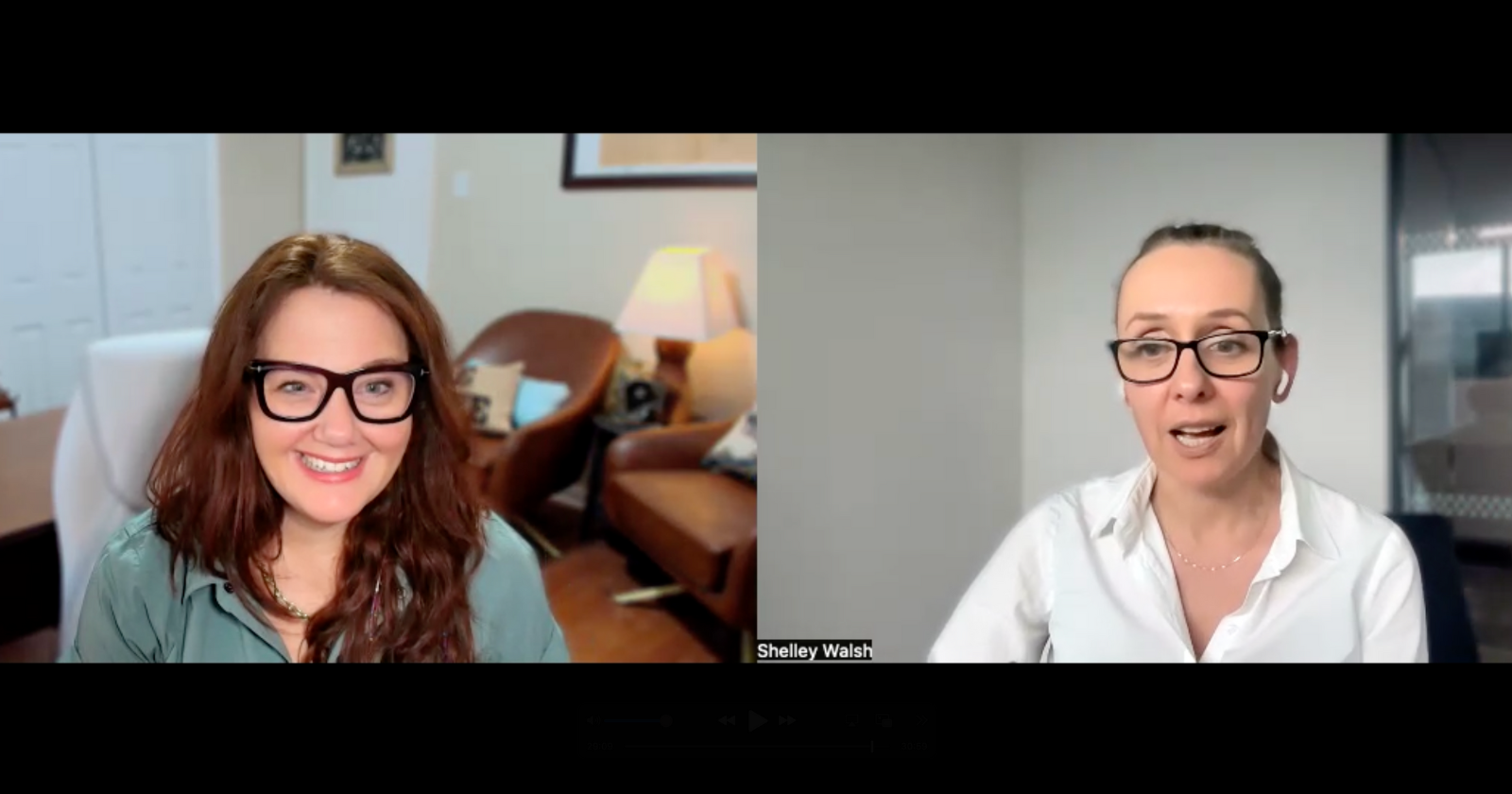
We’ve all seen it. Brands with healthy websites and excellent content have been watching their organic traffic from Google’s SERP erode for years. In a recent webinar hosted by Search Engine Journal, guest speaker Nikhil Lai, principal analyst of Performance Marketing for Forrester Research, estimated his clients are losing between 10 and 40% of organic and direct traffic year-over-year.
However, a stunning bright spot is this: Lai said referral traffic from answer engines is growing 40% month over month. Visitors arriving from those engines convert at two to four times the rate of traditional search visitors, spend three times as long on site, and arrive with queries averaging 23 words, compared to the three or four words that defined the last decade of search.
Lai asserted that the channel driving this shift deserves a seat at the CMO’s table. Answer engines influence brand perception before purchase intent forms, which makes answer engine optimization (AEO) a brand investment, and puts budget and measurement decisions at the CMO level.
Here is the strategic roadmap Lai laid out at SEJ Live. He highlighted the decisions, org structures, and measurement frameworks that will move AEO from a search team initiative to a C-suite priority.
Answer Engines Build Demand Before Buyers Know What They Want
Classic search captures intent that already exists. A user types “running shoes,” clicks a result, and evaluates options. Answer engines operate earlier and differently: users hold extended conversations with large datasets, rarely click through, and leave those sessions with specific brand associations formed across multiple follow-up questions.
A user who once searched “running shoes” now asks ChatGPT, “What’s the best shoe for overpronation with wide feet in cold weather on pavement?” They exit that conversation with a brand name in mind and search for it directly. Your brand appeared in an AI conversation before the user ever reached your site. Every day, demand generation is created from users’ research sessions.
The Forrester data Lai presented reinforces the quality of that exposure: Sessions on answer engines average 23 minutes, with users asking five to eight follow-up questions per session. Each turn is another brand impression. The click-through rate stays low; the conversion rate on the traffic that does arrive runs two to four times higher than search-sourced traffic, with stronger average order value and lifetime value.
Brand familiarity is built in answer engines before purchase intent crystallizes in the user’s mind.
SEO Is The Foundation Of AEO
The brands pulling back on SEO investment in response to AEO are making a costly mistake. Lai put it directly: 85 to 90% of current SEO best practices remain fully valid for answer engine visibility.
Google’s E-E-A-T framework (experience, expertise, authoritativeness, trustworthiness) still governs how quality is evaluated across every index. Site architecture, mobile load speed, structured data, and indexation hygiene all strengthen performance across every engine. Every alternative index (Bing’s, Brave’s) is benchmarked against Google’s for completeness. Every bot (GPTBot, Claudebot, Perplexitybot) is benchmarked against Googlebot for sophistication.
SEO is the infrastructure on which AEO runs. The shift is an expansion of scope and emphasis, but AEO is not a replacement of SEO fundamentals.
What changes is where additional effort goes: natural-language FAQ optimization, off-site authority building, pre-rendering for less sophisticated bots, and a measurement framework built around share of voice rather than click volume.
Bing Is Now Your Distribution Network For Every Non-Google Engine
Most answer engines outside Google draw primarily from Bing’s index.
Bing evaluates credibility by weighting what others say about your brand more heavily than what your own site claims. This explains why Reddit threads, Quora answers, Wikipedia entries, G2 reviews, YouTube videos, and Trustpilot pages dominate AI-generated answers. The off-site web has become the primary source of record for how AI describes your brand.
The immediate tactical implication: Push every sitemap update directly to Bing via the IndexNow protocol. This triggers Bingbot to crawl fresh content and feeds that content into Perplexity, ChatGPT, and the broader answer engine ecosystem faster than waiting for organic discovery.
Bing’s index remains the fastest route to non-Google answer engine visibility. Perplexity is building its own index (Sonar), and OpenAI has signaled plans to build or acquire one, but Bing is the distribution network that matters today.
AEO Requires Cross-Functional Ownership
AEO arguably spans more functions than SEO, with these three in common with SEO: content, web development, and paid search. AEO also more strongly interfaces with PR, brand marketing, and social media.
PR earns a seat because off-site authority outweighs on-site signals in AEO. Brand mentions in publications, influencer mentions, and third-party reviews all directly shape how answer engines describe your brand.
Social belongs in the room because Reddit threads and Facebook group discussions show up in AI-generated answers. Community management and reputation management, previously handled separately from SEO, are now integral to AEO. When your social listening data reaches content teams before they draft, the content responds to the questions buyers are actually asking. When it doesn’t, you’re optimizing for questions nobody asked.
Lai proposed two organizational models that work to capture the opportunities inherent in AEO:
Center of Excellence: A senior SEO specialist evolves into an AEO evangelist, runs a COE, and publishes cross-functional standards: clear rules like “every piece of content must answer these five questions” or “every page must include author schema.” AI Orchestrator: A dedicated hire who builds agents to handle repeatable AEO tasks (schema implementation, JavaScript reduction, FAQ content creation) and governs the cross-functional workflow with published guidelines for all stakeholders.The CMO’s decision is which model fits the organization’s scale, and whether to build it internally or partner with an agency that has already built the infrastructure.
The Content Strategy That Wins In AI Responses
Long-form skyscraper content is an ancient relic. Answer engines reward precise, specific answers to real questions, delivered succinctly and across multiple formats. Lai framed this as Forrester’s question-to-content framework: Every piece of content maps directly to a FAQ being asked on answer engines, including the follow-up questions that emerge within a single session.
Five content moves that produce results:
Build surround-sound FAQ coverage. Create glossaries, FAQ pages, videos, and blog posts that address the same topic cluster from different angles. When Claudebot crawls 38,000 pages for every referred page visit (per Cloudflare data), each page it indexes is an opportunity to signal topical authority. Volume and variety matter. Publish direct competitor comparisons. Users ask answer engines to compare brands. Brands that create honest, data-backed comparison guides are gaining prominent visibility, because they directly answer the queries being asked that pit a brand against its competitors. This was once a taboo content format; it has become a competitive requirement. Treat off-site syndication as the new backlinking. Hosting AMAs on Reddit, answering questions on Quora, and contributing to industry publications that rank in AI responses all earn the off-site authority that answer engines weigh most heavily. Give third-party voices data and perspective they couldn’t generate themselves, and they will produce mentions that shape how AI describes your brand. Pre-render pages for bot access. The bots crawling your site lack the compute budget to render JavaScript-heavy pages. Claudebot’s 38,000:1 crawl-to-referral ratio compared to Googlebot’s 5:1 ratio reflects this sophistication gap. Pre-rendering a JavaScript-free version for bots while serving the full experience to human visitors ensures your content gets indexed across every engine. Over time, limit the amount of JavaScript on site. Have content directly in HTML so bots can understand your content, and index it more often. The more you’re crawled and indexed, the more visible you become. Create unique content. Lai said, “Being distinctive, differentiated, and unique will help your brand stand out in a sea of sameness. Implicit in all this is that you need a lot more content, greater content velocity and diversity, which means you can use AI to create content. Google won’t automatically penalize AI-created content unless it lacks the watermarks of human authorship. The syntax and diction have to be natural. Use AI to create content, but don’t make it seem AI-generated. Get down into the details. It’s not enough to say your product is great. Explain why in different temperatures, conditions, the thickness, and so on, to satisfy long-tail intent.”Replace Legacy KPIs With Metrics That Predict Market Share
The internal conversation, Lai said, he hears most from Forrester clients: “The hardest part of this transition from SEO to AEO has been trying to convince management to not focus as much on CTR and traffic. Those were indicators of organic authority. They are no longer reliable indicators.
“The new KPIs to focus on are visibility and share of voice. Share of voice can be measured in many ways. The most common are citation share: how often is my brand cited, how often is my content linked, of the opportunities I have to be cited; and mention share: how often is my brand mentioned of the opportunities I have to be mentioned. I’m also seeing more clients look into citation attempts: how often is ChatGPT trying to cite my content, and are there things I can do on the back end of my site to make that citation attempt score go up? Those are the new indicators of authority,” said Lai.
These metrics connect directly to branded search volume, which Lai called “the single strongest leading indicator of market share growth.” The chain of logic to present to the board: higher citation and mention share drives more branded searches, which converts at higher rates, which compounds into measurable market share gains against competitors.
Lai said he expects Google to add citation metrics to Search Console once AI Max adoption reaches critical mass, and an OpenAI Analytics product before year-end.
For now, Lai suggested, the best course of action is to establish a baseline with your current SEO platform and track the directional trend. Lai contended that, to address concerns of accuracy within today’s popular SEO tools of answer engine mentions, even imperfect measurement reveals which content clusters are earning citations and which need rebuilding.
The Agentic Phase Starts The Clock On B2B Urgency
Answer engines are moving from conversation to action. The current phase, characterized by extended back-and-forth with large datasets, is the warm-up. The agentic phase is defined by engines’ booking, filing, researching, and purchasing on users’ behalf. This will mean fewer clicks, longer sessions, and richer intent signals available to advertisers.
For B2B CMOs, the urgency is immediate. Forrester research shows GenAI has already become the number one source of information for business buyers evaluating purchases of $1 million or more, coming in ahead of customer references, vendor websites, and social media. Your largest deals are being influenced by AI conversations before your sales team enters the picture.
AEO visibility in B2B is a current-pipeline variable that requires immediate attention.
The brands building complete search strategies now, covering answer engines, on-site conversational search, and structured data across every indexed channel, will own discovery and have greater control over brand perception in the next phase of buying behavior.
The window to gain an early-mover competitive advantage is shrinking, before AEO visibility becomes just another standard expectation everyone has to meet.
Key Takeaways For CMOs
Reframe the traffic story. Lower overall traffic volume paired with two-to-four-times higher conversion rates is a net performance gain. Build that case proactively before your CEO draws the wrong conclusion from a falling traffic chart. Fund AEO as an upper-funnel brand channel. That means applying the same budget logic, measurement frameworks, and executive ownership you would bring to any major brand awareness investment, where success is measured in visibility, perception, and long-term share of voice rather than clicks and conversions. Move to share-of-voice KPIs. Citation share and mention share drive branded search volume, which drives market share. Make that causal chain visible to your leadership team. Assign cross-functional ownership with clear governance. Choose between a center of excellence or an AI orchestrator model and make that structural decision this quarter. Prioritize off-site authority as a content strategy responsibility. Reddit, Quora, third-party publications, and YouTube shape AI’s perception of your brand. PR and social teams own the channels that matter most for AEO. Push every sitemap update to Bing via IndexNow. Bing’s index feeds most non-Google answer engines. This is a 15-minute technical change with compounding distribution benefits. Use AI to help with content, but always apply human editing for authority. Content that reads as machine-generated loses trust across every engine, including Google.What Does A Smart CMO Do Next?
Start with a 90-day experiment using some or all of these strategies.
Audit your current citation and mention share in one category using your existing SEO platform. Identify three high-intent FAQ clusters where your brand should be visible and build surround-sound content for each: a dedicated FAQ page, a comparison guide, and one off-site piece in a publication that appears in AI responses. Push fresh sitemaps to Bing. Track citation share and branded search volume at 30, 60, and 90 days.
The data may make the investment case for broader rollout. If not, tweak your approach. The brands moving first will capture the highest-quality traffic at the lowest incremental cost, and set the citation baseline that becomes progressively harder for competitors to close.
The full webinar is available on demand.
More Resources:
How AI Is Reshaping Who Gets Recommended: Marketing In The Eligibility Era How AI Agents Decide Which Brands To Recommend The Triple-P Framework: AI & Search Brand Presence, Perception & PerformanceFeatured Image: Dmitry Demidovich/Shutterstock









![Local SEO: How To Make More Customers Click, Choose & Walk Through Your Doors [Webinar] via @sejournal, @hethr_campbell](https://www.searchenginejournal.com/wp-content/uploads/2025/04/featured-596.png)