True Nature of the Cosmos Body
According to the late Zen master Thich Nhat Hanh, if we look deeply at our body, we can see the entire universe. The post True Nature of the Cosmos Body appeared first on Tricycle: The Buddhist Review.
 Troov
Troov
Recognizing our body as a wonderful manifestation of interbeing is very different from how we normally think about our body. There is no separate body that is a lone entity, and yet we are very much inclined to think that there is. As humans, we are made exclusively of nonhuman elements. Human beings cannot exist by themselves alone; we have to inter-be with animals, plants, and minerals. If we remove all these nonhuman elements, there’s no humanity left.
Our human body is a wonder, and we know that we should consume in such a way that promotes physical health and well-being. But when we spend hours in front of our computer, lost in work, we may forget that we have a body at all. And when body and mind are not together, we are not truly alive. The mind needs to be embodied in order to be a real mind; the body needs to be inhabited by the mind in order to be a living body.
The Buddha was, first of all, a human being with a human body. Therefore, to awaken like the Buddha, we need a physical body. Master Linji said that the human being and Buddha always go together; you cannot take the Buddha out of the human being and you cannot take the human being out of the Buddha. All of us have a human body, so all of us can become a buddha. This is good news.
Buddha Body
Every one of us possesses a Buddha body, and though our Buddha body has not yet fully manifested, it exists in the form of seeds. “Buddha” means awakening, great understanding, and great love, and we already carry the seeds of awakening, love, and understanding within us. Yet, in daily life, worries, anger, and sorrows prevent the Buddha body within us from growing and fully manifesting. We have the capacity to love, the capacity for mindfulness and great understanding, but because these capacities are not properly nurtured, they have not yet grown strong.
We don’t have to travel to look for our Buddha body; it’s available right here and right now. We’re all capable of drinking our tea mindfully. Every one of us can breathe, walk, and eat in mindfulness. Every one of us can speak and listen with compassion. When you are awake and fully present, when you can get in touch with the wonders of life, you are a buddha.
When you are awake and fully present, when you can get in touch with the wonders of life, you are a buddha.
We should take care of our Buddha body and allow it to grow. As the Buddha in us grows, our understanding and love grow with the Buddha body, and we become happier and freer. The Buddha body in us is not an abstract idea; it is something very real and concrete. All of us have the capacity to understand and to love. There’s no reason not to believe in our Buddha body.
Dharma Body
Besides having a Buddha body, we also have a dharma body. In order to nourish the Buddha body in us, we have to practice. The practice of mindfulness, concentration, and insight is called the practice of the dharma. When we sit, we sit mindfully so that we can enjoy our sitting. When we walk, we walk mindfully so that we can enjoy every step. When we eat, we eat mindfully and with concentration so that we can enjoy every morsel of food. Every moment of our daily life can be joyful and happy, thanks to the practice of mindfulness. When we wash our dishes, if we know how to do it mindfully, we enjoy washing the dishes. We can smile and practice mindful breathing while doing the dishes so that it becomes a moment of peace. And when we practice breathing mindfully, walking mindfully, eating mindfully, washing the dishes mindfully, the Buddha body in us grows. The practice of mindfulness, the practice of the dharma, helps our Buddha body to grow.
A Buddha is made of mindfulness, concentration, and insight, and these three energies are generated by the practice of the dharma. As a friend of the Buddha—if you practice mindful breathing, mindful walking, mindful eating, mindful dishwashing—you have a dharma body. When we have a strong practice, our dharma body is solid, and our Buddha body grows very quickly. We carry that dharma body with us always. Wherever you go—to the supermarket, to the bus stop—you bring the dharma body with you.
The term “dharma body” refers to our practice, and it also refers to the Buddha’s teachings themselves. In the past, a monk named Vakkali was deeply enamored of the Buddha’s physical appearance. He would follow the Buddha closely, captivated by his beauty, but he neglected to listen deeply to the Buddha’s dharma talks. The Buddha eventually reproached Vakkali and dismissed him from his role as the Buddha’s attendant in order to help Vakkali overcome his attachment. Vakkali was deeply distressed, but over time, he transformed himself and practiced diligently. When Vakkali fell gravely ill, the Buddha visited him and asked
—Vakkali, are you in pain?
—Yes, Blessed One, I am in great pain and close to death.
—Have you been practicing?
—Yes, I have been practicing.
—Do you have any regrets?
—No, I have no regrets, except that I can no longer follow you and behold your form daily.
The Buddha said
—Vakkali, my physical form is impermanent, subject to birth and death. Do not cling to this form. If you are practicing diligently, you already possess my Dharma body, which will endure forever. You should hold onto the Dharma body, not this physical body.
The physical body of the Buddha, of the teacher, disintegrates, but the dharma body does not. Once you have the dharma body of the Buddha—the true teachings—there is no need to cling to the teacher.
Sangha Body
You have a Buddha body, a dharma body, and also a sangha body. The sangha is a group of people who come together in order to practice mindfulness. It’s very easy to keep our practice alive in a sangha. Since everyone is breathing mindfully, walking mindfully, eating mindfully, we naturally do the same. Practicing together, the sangha generates a collective energy of mindfulness and concentration that nourishes us and supports our practice. If we really want to practice, we will seek out a sangha, a community of practitioners, to support us on our path. When we do this, in addition to a Buddha and dharma body, we also have a sangha body. The sangha is not exactly outside of us; it is inside. A sangha is the best kind of environment, one that guides you, nourishes you, and helps your Buddha body and dharma body grow.
In my tradition, we treasure the sangha body. Without the sangha body, we’re likely to abandon our practice. When a tiger leaves the mountain and goes to the lowland, it will most likely be caught by humans and killed. When a practitioner leaves their sangha, they will lose their practice, and their life as a practitioner dies, like the tiger who leaves the mountain. The sangha is our mountain, where we don’t risk abandoning the practice.
Our sangha should be a true sangha, one where all its members practice the dharma. As we do walking meditation, we really make mindful steps. As we do sitting meditation, we really nourish ourselves. We know how to release the tension in our body, handle a feeling of pain and sorrow, and cultivate joy and happiness. In a good sangha, the dharma is the true dharma—not the spoken or written dharma but the living dharma. When you breathe mindfully, when you sit mindfully, when you walk mindfully, you produce the living dharma. And if the living dharma is there, surely the Buddha is also there. Therefore, the true sangha carries within herself the true dharma and the true Buddha.
Body Outside the Body
The term body outside the body means that our body is there outside of our physical body. If we can see ourselves outside of ourselves, outside of this body, we begin to see our true body; we transcend notions like being and nonbeing, existing or not existing.
To meditate is to see that you are everywhere; your nature is nonlocal.
There may be inmates in a prison somewhere sitting in meditation, practicing walking meditation, or smiling gently. They, too, are my body because they have read my books and are putting the teachings into practice. They are continuing my path. This is the body outside the body. Similarly, when a father looks at his child with the eyes of the Buddha, he will see that his child is also himself. He is the father, but he is also the child. Looking deeply, the father can recognize his body outside his own body. The child can also look at their father this way and recognize their body outside the body.
You are more than this body. To meditate is to see that you are everywhere; your nature is nonlocal.
Continuation Body
Whether your continuation body is beautiful or not depends on the quality of your thoughts, speech, and actions. When you look at these things, you see your continuation body very clearly. We are the sum of our three actions of body, speech, and mind. This is our karma, our continuation, and these actions continue into the future forever.
We must be mindful in each moment of our daily life—the future depends on the present moment. But we don’t need to wait until the complete disintegration of this body in order to begin to see our continuation body. It is possible for each of us to see our continuation right away. When a schoolteacher looks at their class, they can see their students as their continuation. If they are a happy schoolteacher, if they have a lot of freedom, compassion, and understanding, their students will also be happy and feel understood.
The cloud doesn’t need to be transformed entirely into the rain in order to see her continuation body. The cloud looks down at the rain and sees herself in the rain. We should all practice to see our continuation body now. Then, when the time comes for the dissolution of our physical body, we will be able to release it easily.
Cosmic Body
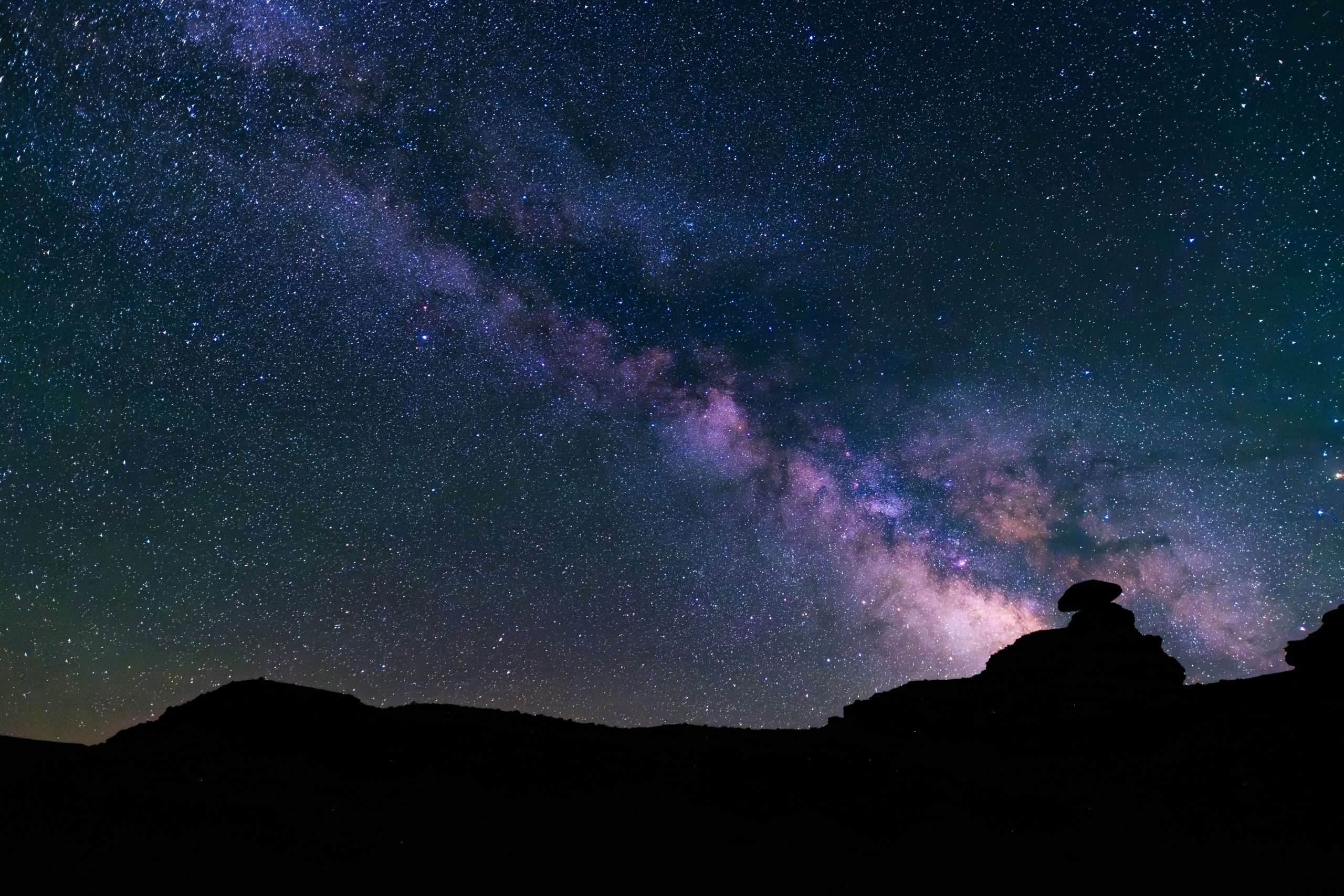
Looking into your physical body, you can also recognize your cosmic body. If the cosmos is not there, your physical body cannot be here; your body would not be possible. The cosmos is the domain of all phenomena: the air, the water, the sun, the soil, and even the stars. Without the sunshine, for example, there would be no life on Earth, so you are made of sunshine. You are a child of the sun. And without food from the earth, you could not exist either. So you are also a child of the earth. Your little human body contains the whole cosmos.
I often refer to the sun as our second heart, a heart which lies outside our body but is as essential for our body as the heart inside our body. When the heart inside the body ceases to function, we know very well that we will die, but we often forget that if the heart outside our body, the sun, ceases to function, we will also die.
In the beginning we see things—phenomena—as existing outside of each other. But looking deeply, we see that things are interwoven with each other. You cannot take anything out of anything else. You cannot be by yourself, alone. You have to inter-be with the whole cosmos. A cloud, a pebble, a river, a star, everything obeys the law of interbeing.
True Nature of the Cosmos Body
Our eighth body is the “true nature of the cosmos” body. When we get in touch with everything that is—like the sunshine, vegetation, air, water, or stars—we touch the phenomenal world of appearances and signs. At the level of appearances, everything is changing, subject to birth and death, to being and nonbeing. But when we touch the phenomenal world deeply enough, we touch the true nature of the cosmos, the nature of no birth and no death, no coming and no going, no being and no nonbeing, and we transcend all these notions.
A wave on the ocean is subject to beginning and ending, to going up and coming down. The wave may be caught in the idea that “I am here now, and I will not be here later on.” She may feel angry or afraid. But if the wave can go home to herself and touch her true nature—the water—her fear and anxiety will disappear. We, too, can touch our true nature of no birth and no death, no being and no nonbeing. Like the wave who realizes she is the water, we can experience absolute freedom and non-fear.
Contemplating Our Many Bodies
If you look deeply at your body, you can see your parents, your grandparents, all your ancestors, and the whole history of life on Earth. We see that our body is a formation, a composite made of everything else that we do not normally think of as body. You can see the sun, the moon and the stars, time and space. In fact, the whole universe has come together to form our body. Only one thing is missing from our body, and that is a separate self, a separate existence. If we put the sunlight back in the sun, the rain back in the clouds, and the minerals back in the earth, how could our body exist? All phenomena contain the whole universe. We can look at our body in such a way that we see its dependence on all things and thus see that it has no reality as a separately existing entity. You may like to take a moment now to do this, breathing in and out mindfully, as you read the following contemplation:
This body has been there for a long time, for millions of years. It is the continuation of many generations. It has never died.
I cannot take this body lightly. It is not mine alone. I cannot underestimate this body. It is the body of all my ancestors.
The mind is in this body. The mind gives rise to this body and this body gives rise to the mind. In this body, all the wonders of the life of the cosmos are to be found. The realm of no birth and no death, the Pure Land, and the Kingdom of God are also in this body. I cannot take it lightly. It contains all the mysteries of the cosmos.
This body is also a wonderful flower of the cosmos. I want to take good care of it. I want my body to reveal to me all the mysteries, all the wonders of the cosmos.
This body will be continued in many other forms, whether I have children and grandchildren or not. I want this body to continue beautifully for many lives to come.
♦
Reprinted from Reincarnation by Thich Nhat Hanh, 2025, with permission from Parallax Press.