10-year Treasury yield jumps after Fed leaves rates unchanged, oil prices soar
U.S. Treasury yields rose on Wednesday after the Federal Reserve kept its key interest rate steady.
 Hollif
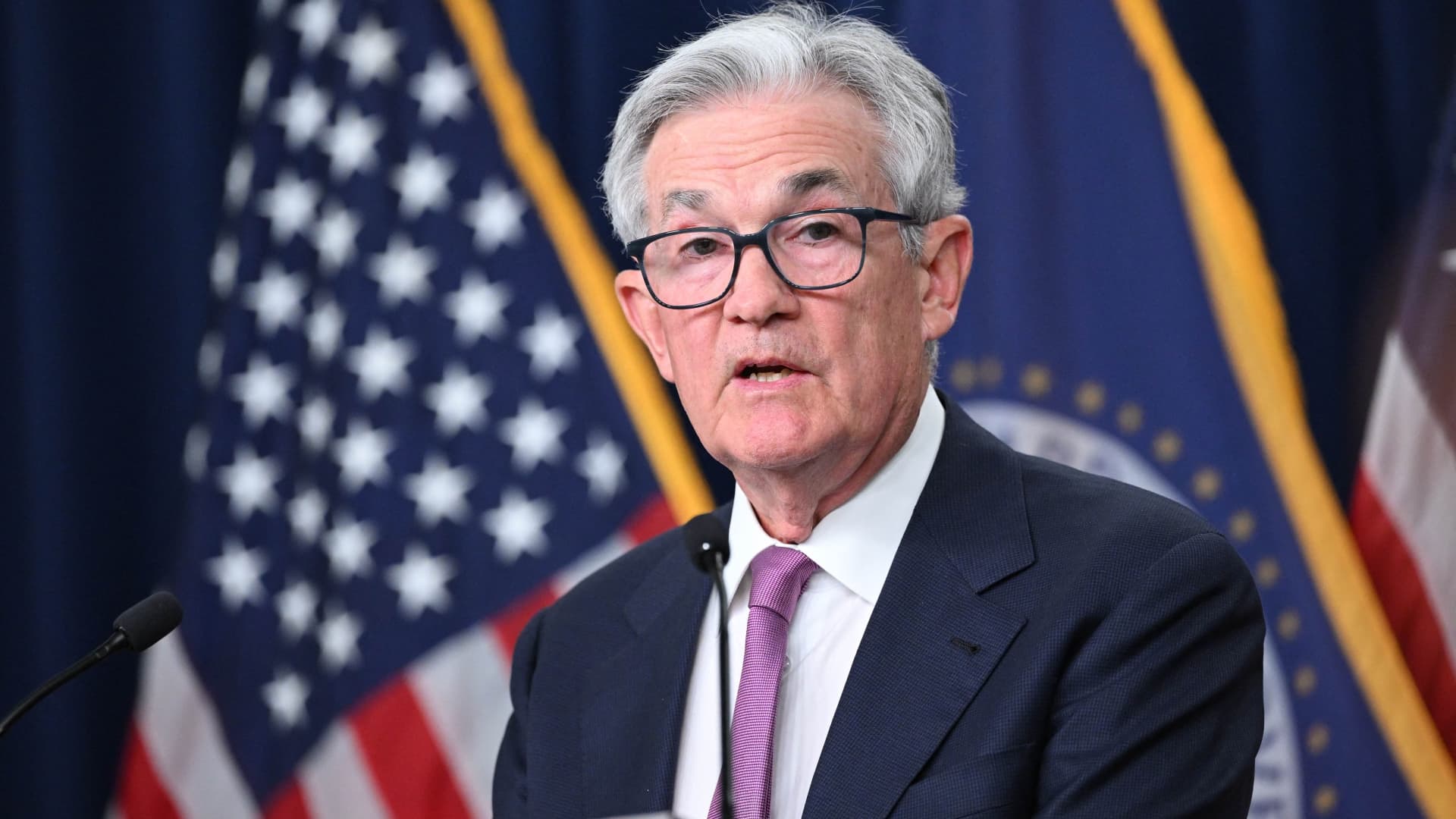
Federal Reserve Board Chairman Jerome Powell speaks during a news conference following the Federal Open Market Committee meeting, at the Federal Reserve in Washington, DC, on June 14, 2023.
Mandel Ngan | AFP | Getty Images
U.S. Treasury yields rose on Wednesday after the Federal Reserve kept interest rates unchanged during what could be Jerome Powell's final policy meeting as Federal Reserve chair.
The yield on the 10-year U.S. Treasury note — the key benchmark for U.S. government borrowing — was up 5 basis points at 4.402%. The 2-year Treasury note yield, which more closely tracks short-term Federal Reserve interest rate policy, was higher by 8 basis points at 3.92%.
One basis point is equal to 0.01%, and yields and prices move in opposite directions.
The Fed on Wednesday voted to keep the benchmark federal funds rate on hold between 3.50% to 3.75%, which investors had expected heading into the meeting.
But the meeting also saw the highest level of dissent since 1992 — with three officials voting against "the inclusion of an easing bias in the statement at this time." This phrasing indicates the likelihood that the next move from the U.S. central bank will be to lower stocks.
The dissenters show that a growing number of Fed officials are becoming worried about a potential flareup in inflation. Recently, stubborn inflation and a resilient labor market leaving little room for interest rate cuts.
"While upside risks to inflation have increased, the Fed is keeping one eye on potential weakness in growth and the labor market. This balance could see rates being brought back down to neutral later this year; however, the FOMC will be sensitive to a re-escalation in Iran and rising energy prices, and could keep policy restrictive in that scenario," said Kay Haigh, global co-head of fixed income and liquidity solutions in Goldman Sachs.
While Powell's term as chair ends in May, he said during a Wednesday press conference that he will stay on the Board of Governors for an indefinite period of time. Kevin Warsh, Powell's likely successor, appears on track to take the helm at the central bank. The Senate Banking Committee voted to advance his nomination on Wednesday, and a final confirmation vote in now expected in the Senate.
Sen. Thom Tillis had said Sunday he is willing to end his blockade of Warsh's nomination after the U.S. Department of Justice dropped its criminal investigation into current chair Powell. With Tillis's support, the confirmation of President Donald Trump's pick to lead the Fed is all but assured.
Yields were also propped higher by rising oil prices as tensions in the Middle East persist. WTI crude traded more than 7% higher above $107 per barrel. Brent jumped 6% to more than $117.
Meanwhile, after so-called durable goods orders in March came in higher than expected, investors are also shifting their attention to March's personal consumption expenditures reading due out Thursday.
According to Osaic's Philip Blancato, a rate cut won't be in the cards in the near term if PCE comes in relatively flat, especially given that the latest durable goods orders data "reiterates that you really don't want to be cutting in this environment because you're on the precipice of a growth phase," the chief market strategist said.
"The bond market is simply so threatened by the idea that higher oil leads to higher broad-based inflation, even though that's not been validated yet," he added. "If PCE comes in hotter than expected, much hotter, then I think [in] the bond market, you can see a 4.5% on the 10-year. That wouldn't surprise me."
— CNBC's Jeff Cox and Matt Peterson also contributed to this report.