100-Syllable Yidam Samaya Mantra: Union, Bliss, Bonding, Renewal, Purification, Wish Fulfilment and Wisdom
Why is the Samaya mantra so profoundly important in Yidam practice? Why is it an bonding practice, that brings us closer to our chosen Heart Deity? What does the mantra actually mean, and what does it do? Why does...
 UsenB
UsenB
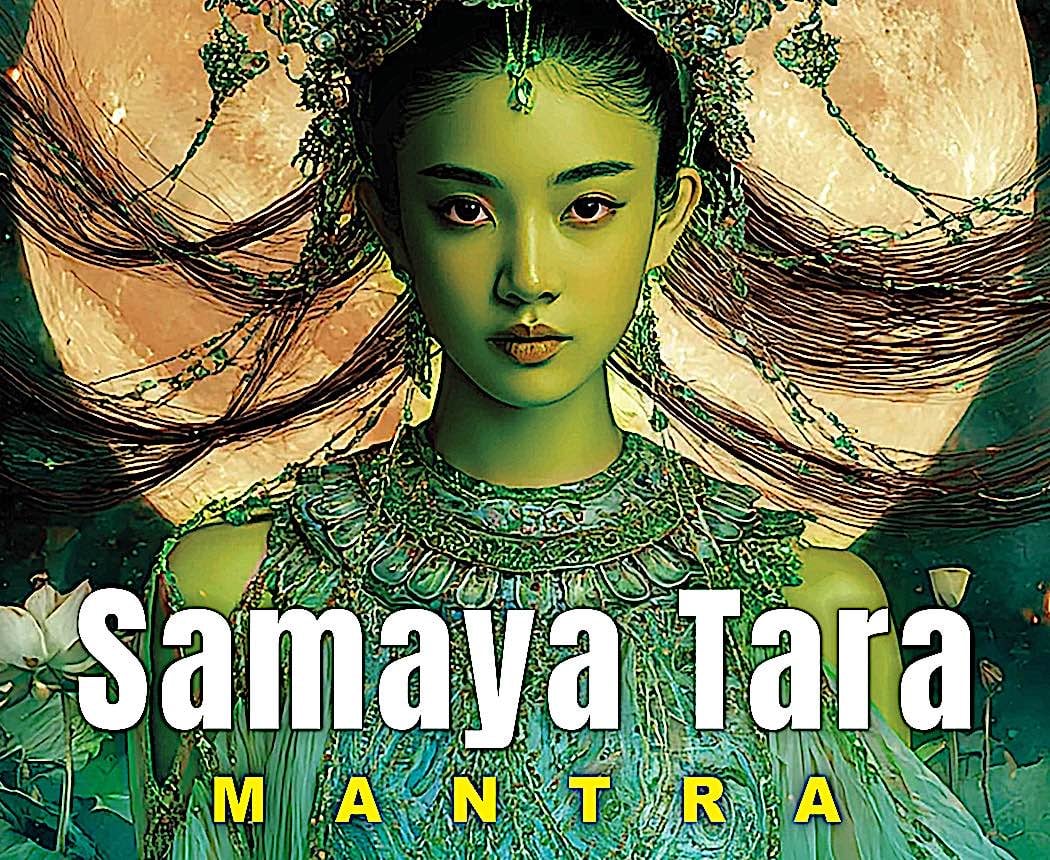
Why is the Samaya mantra so profoundly important in Yidam practice? Why is it an bonding practice, that brings us closer to our chosen Heart Deity? What does the mantra actually mean, and what does it do? Why does this one mantra purify all of my negative downfalls, karmas and obstacles. How do I do it? We’ll answer these questions and more in this important, but short feature on the Samaya, or or “vow” mantra.
Renewing Samaya with Yidam
In Buddhism we have the principle of renewing samaya with one’s chosen yidam, and one’s teacher, as foundational as well as purifying and meritorious. This is an emotional, or heart bond, deeply felt and moving. This powerful bond makes the Yidam Samaya mantra the most potent and powerful for our practice.
Making a commitment and keeping it, and especially renewing it, is an act of joyous celebration in Buddhist practice. It should never feel like a duty of compliance. Without the joy and bliss, there can be no samaya.
Samaya is not just a simple promise. Samaya is the living, energetic bond between the practitioner and their yidam (meditation deity). It’s the very fabric of the Vajrayana path, built on trust, commitment, and the inseparable nature of the practitioner’s own mind and the enlightened mind of the deity.
Meaning of Samaya
Samaya has many layers and nuances of meaning, including: vow, promise, union, connection, bond, faithfulness, commitments of conduct and promise of Bodhisattva behaviour. With samaya we become “one” with our Yidam or our guru, who are generally inseparable. Samaya renewal purifies.
The most famous of these Samaya mantras is the Vajrastattva 100-Syllable mantra. Vajrasattva is specifically associated with purification of the five poisons, and is often the first practice given to new students, so this is likely the first samaya mantra given.
This mantra is well known because it’s an early foundation practice for most of us, to help us purify and bond with the Buddha, Dharma, Sangha and our teachers. Later, the Samaya mantra names your personal Enlightened Yidam practice. Since the essence of all Yidams is Oneness – the essence of Vajrasattva is no different from Amitabha or Tārā or Heruka Chakrasamvara. In various liturgies, you’ll see the same Samaya mantra, but naming different Yidams.
This practice beautifully illustrates the Mahayana principle of form and emptiness. The mantra has a specific form (the structure), but it is empty in that it can be filled with the essence of any yidam. It is a testament to the living, breathing nature of the tradition—rooted in ancient liturgy, yet pulsing with the personal devotion of the practitioner.
Whether one turns to the wrathful compassion of Heruka, the purifying light of Vajrasattva, or the swift grace of Tārā, the call is the same: “Uphold our bond, be present, and do not abandon me, until my mind becomes one with yours.”
Benefits of Samaya Mantra
Samaya, in Buddhist context, simply means “mind seal” or the “vow” to practice and to honor the practice commitments and the good conduct of a Mahayana Bodhisattva.
By renewing this promise daily or regularly, and especially at the end of each lunar month and year, we purify all past downfalls and negative karma – even the most heinous fixed karmas. There are several methods for this in different teaching lineages, including 35 Buddhas Purification, Vajrasattva 100-Syllable Mantra – which is a form of the Samaya mantra – and the Five Buddhas and Vajrayana Vow Ceremony. Advanced methods also include all empowerment events with your guru, and self-initiation, for those who have completed retreats.
Yet, the simplest, and first taught method is usually the Samaya Mantra, which firmly renews our commitments, vows, and remedies all our downfalls and even the most terrible karmas.
Primary Purpose: Drawing Closer to the Yidam
Aside from the purification benefits, the main purpose is to draw us closer and closer to our Yidam. This is stated explicitly in the mantra. Tārā bhava mahā samaya sattva – “Tārā, be the great samaya being.” (This refers to the union of the samaya-sattva, the practitioner’s commitment, with the jñāna-sattva, the wisdom being). In Buddhism, we, ourselves are the Samaya Sattva (body of Commitment) while Tara (or your Yidam ) is the Wisdom Being. Our goal, ultimately, is to be inseparable.
Drawing close to the Yidam is the main purpose of Vajrayana practice. It represents the union of student and Yidam, wisdom and compassion, manifesting as Enlightened activities. For this reason, this mantra also fulfils all wishes, aspirations, and siddhis, which are natural outcomes of our close relationship with our Yidam.
English Translation of Samaya Mantra
Here is a fairly literal English translation of the Samaya mantra, in this example Tara Samaya mantra to illustrate its use with a Yidam practice, although the only difference for another Yidam is the name in the mantra.
Oṃ, Tārā, protect your samaya with me.
May you, Tara, stand with me and save me.
Be firm for me.
Be pleased for me.
Be lovingly kind to me.
Help me to flourish.
Grant me all accomplishments and wishes.
In all activities, make my mind excellent, hūṃ.
Bless me with love, compassion, joy, equanimity and wisdom.
O Blessed Lady Tara, do not abandon me.
Tara, be my great samaya being.
Thus it is! Om Ah Phat.
The Joyous Bliss of Samaya
The goal of Samaya is union, the union of wisdom and compassion, of teacher and student, of Yidam and you. As you can see from the spirit of the translation, the mantra is one of joy. We ask to be blessed with love, compassion, joy, equanimity and wisdom. We ask to never be separated from our Yidam. Bliss and joy are as much a commitment as good Dharma conduct.
The Sanskrit Mantras
Tārā Samaya Mantra
Oṃ
Tārā samayam
anupālaya Tārā tvenopatiṣṭha
dṛḍho me bhava
sutoṣyo me bhava
anurakto me bhava
supoṣyo me bhava 52
Sarva siddhiṃ me prayaccha
Sarva karma su ca me
cittaṃ śreyaḥ kuru hūṃ
ha ha ha ha hoḥ
bhagavan 20 Tārā mā me muñca
Tārā bhava mahā samaya sattva
āḥ hūṃ phat
Devanagari
ॐ
तारा समयं
अनुपालय तारा त्वेनोपतिष्ठ
दृढो मे भव
सुतोष्यो मे भव
अनुरक्तो मे भव
सुपोष्यो मे भव
सर्व सिद्धिं मे प्रयच्छ
सर्व कर्म सु च मे
चित्तं श्रेयः कुरु हूं
ह ह ह ह होः
भगवन् तारा मा मे मुञ्च
तारा भव महा समय सत्त्व
आः हूं फट्
Here are some other examples, in Sanskrit with Vajrasattva, Heruka and Yamantaka. The best known, of course is Vajrasattva.
Vajrasattva Samaya Mantra
Oṃ
vajrasattva samayam anupālaya
Vajrasattva tvenopatiṣṭha
dṛḍho me bhava
sutoṣyo me bhava
supoṣyo me bhava
anurakto me bhava
sarva siddhiṃ me prayaccha
Sarva karma su ca me
cittaṃ śreyaḥ kuru
hūṃ
ha ha ha ha hoḥ
bhagavan sarva tathāgata vajra mā me muñca
vajrī bhava mahā samaya sattva
Āḥ
Heruka Samaya Mantra
Oṃ
śrī vajra Heruka samayam
anupālaya vajra Heruka tvenopatiṣṭha
dṛḍho me bhava
sutoṣyo me bhava
anurakto me bhava
supoṣyo me bhava
Sarva siddhiṃ me prayaccha
Sarva karma su ca me
cittaṃ śreyaḥ kuru hūṃ
ha ha ha ha hoḥ
bhagavan vajra heruka mā me muñca
Heruka bhava mahā samaya sattva
āḥ hūṃ phat
Yamantaka Samaya Mantra
Oṃ
Yamantaka samayam
anupālaya Yamantaka tvenopatiṣṭha
dṛḍho me bhava
sutoṣyo me bhava
anurakto me bhava
supoṣyo me bhava
Sarva siddhiṃ me prayaccha
Sarva karma su ca me
cittaṃ śreyaḥ kuru hūṃ
ha ha ha ha hoḥ
bhagavan Yamantaka mā me muñca
Yamantaka bhava mahā samaya sattva
āḥ hūṃ phat
Why Vajrasattva is our First Samaya?
Why, then, do we usually begin with Vajrasattva Samaya mantra?
If you are new to practice, your teacher may assign you 100,000 Vajrasattva 100-syllable mantras at the foundation stage, before you’ve chosen your future Yidam practice. Vajrasattva, for many people, remains our practice for life. Others, gravitate to other practices to focus on their own special heart needs, their strongest poisons or obstacles and other reasons, such as lineage or teacher. For a video on helping you choose your Yidam, see
Yidam Practice
Later, when you have a Yidam you usually continue to daily practice the 100-syllable mantra, to renew and purify daily, but your Samaya is, of course, to your Yidam. For this reason, your Yidam’s name is recited in the Samaya mantra. So for example, we have liturgies for Heruka Chakrasamvara, Yamantaka, Tārā, Hevajra and many others, all of which begin with the renewal of Samaya. Instead of Vajrasattva, we intone the name of our heart or Yidam deity – since that is the practice we have sealed with Samaya.
Here, we’ll use four examples of this mantra with four Yidams: Vajrasattva, Heruka (known as Chakrasamvara), Yamantaka and Tārā. If you have a different Yidam, you likely would substitute your Yidam’s name, but your teacher will likely explain this to you.
Sanskrit Meaning and Grammar
A few minor points of grammar and common variant spellings to consider:
General Note on Sandhi (Blending of sounds):
In continuous chanting, the final m of samayam often blends with the initial a of anupālaya. This is natural and correct in flow.
Translation
Sarva siddhiṃ me prayaccha – means “Grant me all accomplishments.”
Sarva karma su ca me – meaning “and in all activities, [make] for me…”.
cittaṃ śreyaḥ kuru – “Make my mind excellent/virtuous.”
vajrī bhava – “Be Vajra-possessing” or “Become the Vajra-holder.”
Heruka & Yamantaka Mantras:
A couple of notes, on Heruka the liturgy often adds śrī (glorious/auspicious) at the beginning of the Heruka mantra, which is traditional for him.
The ending āḥ hūṃ phat is standard for wrathful deities and activity mantras. Note that the Vajrasattva mantra ends more peacefully with just Āḥ. With Tārā and other deities, you end more forcefully with āḥ hūṃ phat since Tārā and many other Yidams are Action oriented (activity deities).
Tārā Samaya Mantra full breakdown:
Oṃ Tārā samayam anupālaya – “Oṃ, Tārā, protect/keep (your) samaya with me.”
Tārā tvenopatiṣṭha – This is a contraction of Tārā + tvā + upatiṣṭha. tvā is the enclitic form of the pronoun “you”. So it means “As you are Tārā, stand before me.” or “May you, as Tārā, be present.”
dṛḍho me bhava – “Be firm for me.”
sutoṣyo me bhava – “Be easily pleased for me.”
anurakto me bhava – “Be lovingly attached/kind for me.”
supoṣyo me bhava – “Be easily nourished/flourishing for me.”
Sarva siddhiṃ me prayaccha – “Grant me all accomplishments.”
Sarva karma su ca me cittaṃ śreyaḥ kuru hūṃ – “And in all activities, make my mind excellent, hūṃ.”
ha ha ha ha hoḥ – Symbols of the four immeasurables (love, compassion, joy, equanimity) and the fifth wisdom.
bhagavan Tārā mā me muñca – “O Blessed Lady Tārā, do not abandon me.”
Tārā bhava mahā samaya sattva – “Tārā, be the great samaya being.” (This refers to the union of the samaya-sattva, the practitioner’s commitment, with the jñāna-sattva, the wisdom being).
āḥ hūṃ phat – The seed syllables, with phat adding a note of dynamic, protective energy, since Tārā has both peaceful and wrathful aspects. If you prefer a purely peaceful version, you might end with just āḥ, but āḥ hūṃ phat is a common and powerful closing for many mantras. (For example, if your Yidam is White Tārā you might end with “Ah” but for “Green” Tārā who includes all forms, it would be āḥ hūṃ phat.)
Commentary – Samaya – a Central Practice of Vajrayana
The Significance of the Samaya MantraSamaya is not just a simple promise. Samaya is the living, energetic bond between the practitioner and their yidam (meditation deity). It’s the very fabric of the Vajrayana path, built on trust, commitment, and the inseparable nature of the practitioner’s own mind and the enlightened mind of the deity.
The act of reciting a samaya mantra is therefore a profound act of renewal and repair. Imagine it as a heartfelt conversation with your most trusted guide:
“anupālaya” (please keep/watch over) is a request to the deity to hold that sacred bond.
“upatiṣṭha” (stand before me) is an invocation for their immediate presence.
“me bhava” (be for me) is a series of pleas for their qualities to manifest in our being: firmness, ease, love, fulfillment.
The four laughs (“ha ha ha ha”) are not mere sounds; they are the spontaneous expression of the four joys and the realization of the four wisdoms, shattering conceptual mind.
The final plea, “mā me muñca” (do not abandon me), is the raw heart-cry of the practitioner, acknowledging their own weakness and their absolute reliance on the deity’s grace.
“mahā samaya sattva” (great samaya being) is the culmination, where the practitioner visualizes themselves as the deity (samaya-sattva) and invokes the actual wisdom deity (jñāna-sattva) to merge, becoming inseparable.
The Template and the IndividualThe beauty of this mantra is its structure. It provides a powerful, time-honored framework, but the heart of it—the name of the deity—is what gives it specific flavor and connection. This shows that while the path is structured, the relationship with one’s yidam is deeply personal.
Heruka (Chakrasamvara) and Yamantaka are wrathful or semi-wrathful deities. Their mantras include the forceful “phat” at the end, reflecting their dynamic energy that cuts through obscurations. Heruka’s mantra even begins with “śrī” (glorious), setting a tone of sacred majesty.
Vajrasattva is the master of purification. His mantra, ending peacefully with “Āḥ,” emphasizes the cleansing and restorative aspect of the samaya bond.
Why Use Your Yidam’s Name?
The name “Vajrasattva” or “Heruka” or “Yamantaka” or “Tārā” transforms the entire energetic field. For example:
Tārā’s Unique Energy
When we chant “Bhagavan Tārā mā me muñca” in the mantra, which means “O Blessed Lady Tārā, do not abandon me”, it invokes the energy of motherly protection.
Tārā is the embodiment of compassion in action. Her “samaya” is her famous vow to always appear in female form for the benefit of beings and to swiftly answer their calls with heroic activity. Renewing samaya with her is tapping into that specific promise of swift, compassionate activity.
The Power of the Female Buddha
Tārā in the Samaya mantra, subtly highlights that this profound samaya principle applies equally to all enlightened beings, regardless of their form. Her presence in this lineage of mantras affirms the complete and perfect Buddhahood of the feminine divine. The “anurakto me bhava” (be lovingly attached to me) takes on a particularly tender, maternal quality when directed towards Tārā, the mother of all Buddhas.
Pronunciation guide
We write mantras is IAST romanized Sanskrit, which is Unviersally accepted (for consistency). It’s important for pronunciation to know:
Ś and ṣ is like a “sh” sound
S is just like “s”
C is like “ch” so ca sounds like ‘cha” and cittam sounds like “chittam”
E is like a soft e so the word “me” sounds like meh rather than “me”
Ī is like the “ee” sound
Ā is like “ah” not “eh”
“H” is softly aspirated and each syllable is pronounced, so “phat” is p-hat sound not fat.
J is often so soft it’s almost silent (slightly there, but very gently rolled over. So jnana sounds more like yana with a very slightly hardness in front.
Nasalization: The anusvāra (the dot above the line, as in ं) indicates a nasal sound. For example: समयं is pronounced samayam (with a closed-mouth ‘m’). सिद्धिं is pronounced siddhim. चित्तं is pronounced cittam. Visarga: The two dots (:) represent a voiceless aspiration ‘h’ sound after a vowel. होः is pronounced hoḥ, like a soft exhale after the ‘o’. फट् is pronounced phaṭ, with a sharp, unaspirated ‘t’ sound at the end. Vowel Length: The macrons (the lines over vowels, like ā, ī ) indicate a long vowel, held for approximately twice the duration of a short vowel. This is crucial for the mantra’s rhythm and energy.