B2B Marketing Strategies: A Complete Guide
B2B marketing often gets treated like a second-class citizen compared to B2C. But here’s the truth: business-to-business marketing is growing fast and generating real results across industries. Eighty percent of B2B buyers expect a B2C-like experience when interacting with...
 ValVades
B2B marketing often gets treated like a second-class citizen compared to B2C. But here’s the truth: business-to-business marketing is growing fast and generating real results across industries.
Eighty percent of B2B buyers expect a B2C-like experience when interacting with brands. That means the old-school, relationship-only playbook won’t cut it anymore. You need a digital-first strategy that attracts high-quality leads, builds trust at scale, and drives measurable revenue.
In this guide, we’ll walk through proven B2B marketing strategies that actually work in 2026 and how to build your own roadmap from scratch.
Key Takeaways
B2B buyers are research-driven, digital-first, and selective. Content marketing, SEO, and email are foundational for long-term growth. LinkedIn and Google Ads are ideal for paid B2B campaigns. You need a strategy built on your ideal customer profile, clear goals, and constant testing. Trends like AI-generated content, video, and ABM are shaping the future of B2B digital marketing.What is B2B Marketing?
B2B marketing stands for business-to-business marketing. Instead of selling directly to consumers (like B2C), you’re selling to other businesses.
That means longer sales cycles, more stakeholders, and a bigger focus on ROI. B2B decisions are driven by logic, not emotion. Buyers want to solve a pain point, improve operations, or generate a clear return.
In B2C, you might sell running shoes to a single customer. In B2B, you could be selling supply chain software to a procurement team of 12. That’s a very different game.
But even though you’re selling to companies, it’s still humans making the call. So your B2B strategy still needs to connect on a personal level.
How B2B Marketing Works Today
The modern B2B buyer looks a lot like a B2C consumer:
They start online. They do extensive research. They talk to peers. They want to be educated before they talk to sales.According to Gartner, 83% of a typical B2B purchasing decision happens before a buyer speaks with a sales rep. That means your marketing needs to do the heavy lifting.
The journey isn’t linear either. One stakeholder might download an e-book. Another might follow your brand on LinkedIn. A third might attend your webinar two months later. You need to stay visible and valuable at every stage.
Digital-first, multi-touch, always-on marketing wins in B2B today. It’s about building trust long before the sales team gets involved.
Core B2B Marketing Strategies That Work
There isn’t one silver bullet for B2B growth, but there are a handful of tried-and-true strategies that consistently deliver results. From attracting leads to nurturing them into customers, each of these plays a key role in your overall marketing mix.
Content Marketing
Content marketing is at the heart of every successful B2B strategy. It’s how you build authority, answer buyer questions, and stay visible throughout long sales cycles. Whether it’s blog posts, whitepapers, or customer success stories, great content gives prospects a reason to trust you before they buy.
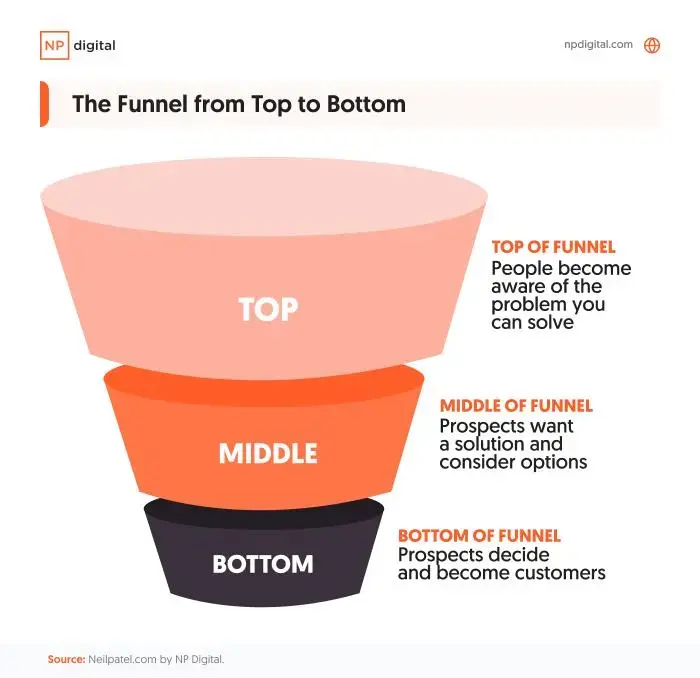
Create a content calendar that includes top-of-funnel topics (like how-to posts or industry trends), mid-funnel pieces (case studies and solution guides), and bottom-funnel assets (ROI calculators, product comparisons). Use SEO research to guide your topics, and always write with your ICP’s pain points in mind. Update old content regularly to stay relevant, and use internal linking to guide users deeper into your funnel.
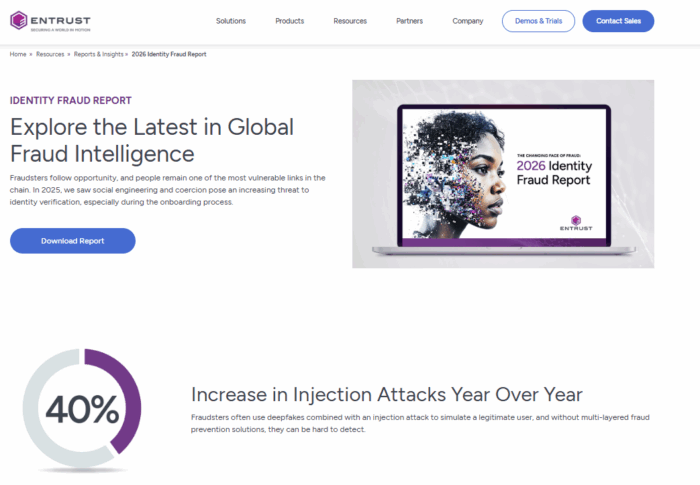
Blogs, whitepapers, guides, and case studies all play a role in educating and nurturing your audience. For example, security software provider Entrust does an annual report on fraud, relevant to their audience of enterprise, finance, and government professionals.
Long-form SEO-driven content builds authority and captures top-of-funnel traffic. Tie your strategy to the funnel. For example, TOFU is best suited for blogs, MOFU for case studies, and BOFU landing pages.
SEO
Search is where most B2B buyers begin. If you’re not showing up for high-intent keywords, you’re missing out on warm leads who are actively looking for a solution like yours. That’s why SEO is a non-negotiable for any serious B2B strategy.
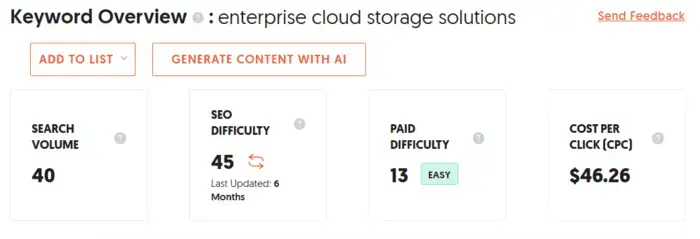
Start by identifying search terms your audience uses throughout their buying journey through tools like Ubersuggest. Prioritize informational and commercial keywords, not just branded terms. Sometimes a low MSV may be okay if it’s relevant to your core audience, like the example below:
Optimize your site structure, title tags, meta descriptions and content. Build backlinks through guest posts and digital PR. Use schema markup to help search engines understand your pages. B2B SEO takes time, but it compounds, make it part of your long game.
Email Marketing
Email marketing continues to be the highest-performing B2B channel when it’s done right. It’s personal, direct, and measurable. But today’s buyers won’t tolerate one-size-fits-all blasts. You need segmentation, automation, and value in every send.
Use gated content and lead magnets to build your list, then segment it based on industry, buyer stage, or behavior. Set up automated drip campaigns that educate and nurture. Include useful resources, not just sales CTAs. Monitor open and click rates, and A/B test everything from subject lines to CTA placement. Good email marketing feels like a helpful nudge, not a pushy pitch.

Segment your lists by persona, behavior, and funnel stage. Use lead magnets like checklists or templates to grow your list. Automate nurture flows, and track opens, clicks, and replies.
Paid Ads
Organic takes time. Paid gives you speed and scale, especially when targeting high-value buyers. The key is precision. B2B paid ads work best when you combine targeting capabilities with smart messaging.

LinkedIn ads let you reach decision-makers by job title, industry, and company size. Google Search ads help you show up when someone searches for your product or service. Retarget website visitors with display or video ads to stay top of mind. Use UTM tracking to measure effectiveness, and continuously refine your copy and creatives. Paid ads work best when they amplify a strong organic strategy.
Webinars and Events
Webinars and virtual events are lead generation machines when done well. They give you the chance to educate prospects, show off your expertise, and interact with potential buyers in real time.
Pick topics that align with pain points your audience is actively researching. Bring in subject matter experts, use polls to engage viewers, and offer the replay as a gated asset post-event. Promote your webinar via email, social, and paid channels, especially after the initial release where it will show the most impact:
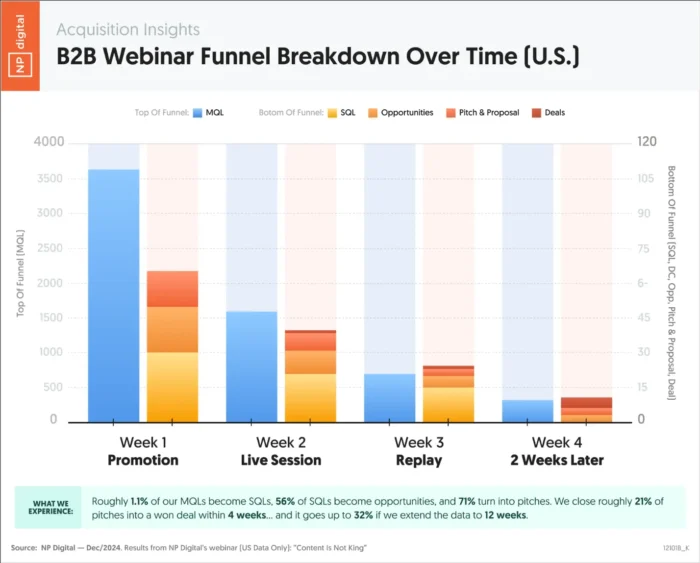
Events are also a content goldmine—turn recordings into short video clips, blog recaps, and nurture emails to extend their value.
They let you demonstrate expertise, answer objections, and collect leads. Keep topics specific. Invite prospects already in your pipeline. Repurpose the content as video clips, blog posts, or gated downloads.
B2B Vs B2C Marketing: How Do They Compare?
The biggest difference between B2B and B2C marketing comes down to the buyer’s mindset and how they make decisions.
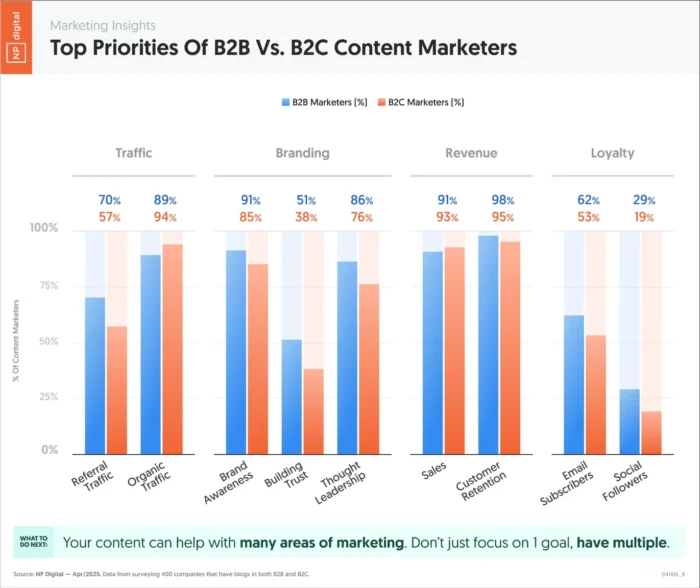
Here’s a breakdown of how each approach typically differs:
B2B Marketing
Driven by ROI, efficiency, and logical outcomes Longer sales cycles with multiple stakeholders Higher-value deals and more complex products or services Content is educational, technical, and data-backed Messaging targets decision-makers and buying committeesB2C Marketing
Driven by emotion, desire, and personal benefit Shorter sales cycles with individual decision-makers Lower price points and more impulse-driven purchases Content is entertaining, persuasive, and brand-oriented Messaging targets individuals based on lifestyle or interestsThese differences also extend to the type of content that performs well for each segment based on these needs.
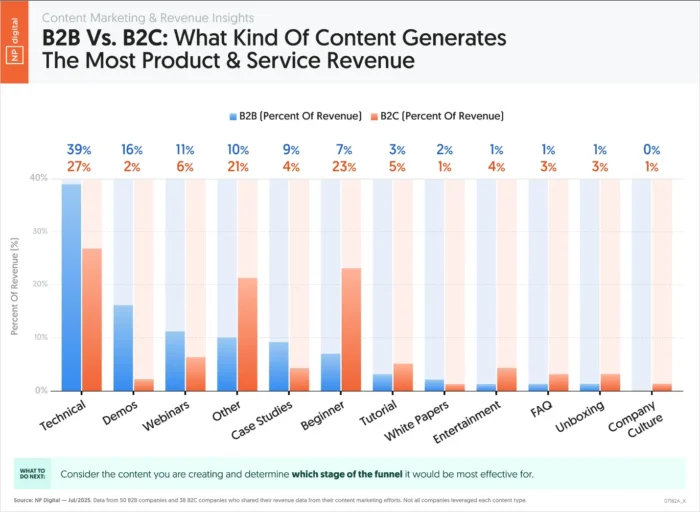
How To Build a B2B Marketing Strategy From Scratch
You don’t need a huge team or budget to build a powerful B2B strategy. What you do need is clarity: on who you’re targeting, what you want to achieve, and how you’ll measure success. These are the building blocks every marketing plan should be built on.
Know Your Ideal Customer (ICP)
Everything starts with knowing who you’re selling to. Your ideal customer profile (ICP) should be specific and rooted in data—not assumptions. Outline key characteristics like industry, company size, annual revenue, and tech stack. Then go deeper: what roles make the buying decisions? What keeps them up at night? What objections do they raise in the sales process?
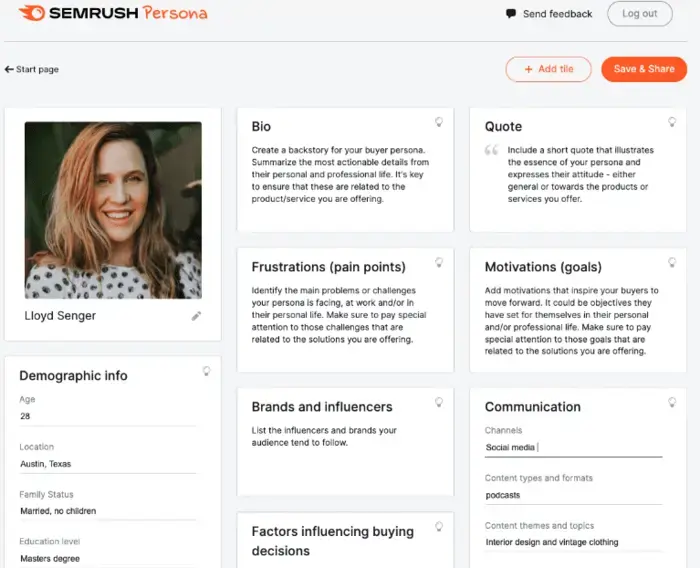
Use interviews, win/loss analysis, and CRM insights to map these out. A strong ICP informs your messaging, targeting, offers, and even product positioning. Without it, your marketing will feel generic—and miss the mark.
Who do you want to reach? What are their roles, pain points, objections, and decision criteria? Use interviews, surveys, and CRM data to build accurate personas.
Set Goals and KPIs
A marketing plan without measurable goals is just guesswork. Define success using metrics that align with business outcomes. Think beyond vanity metrics like impressions or traffic. Focus on KPIs such as MQLs, SQLs, CAC, CLV, and pipeline velocity.
Set benchmarks based on past performance or industry standards. Make sure sales and marketing agree on definitions and expectations. Use dashboards and regular reporting to track progress. When your team knows what “good” looks like, they’re more likely to hit it.
Track MQLs (marketing qualified leads), SQLs (sales qualified leads), CAC (customer acquisition cost), and CLV (customer lifetime value). Tie your KPIs to revenue.
Choose Your Channels
Don’t spread yourself thin trying to be everywhere. Choose marketing channels based on where your ICP actually spends time and how they make decisions.
LinkedIn is a powerhouse for targeting professionals. Email is ideal for nurturing. SEO brings long-term compounding returns. Paid ads provide immediate visibility. Webinars and events build authority. Select a mix of 2–4 core channels and go deep before you go wide.
Document how each channel maps to your funnel. Assign ownership and set clear goals for each.
Use a blend of organic and paid. For example: content + SEO + LinkedIn Ads.
Create a Content Plan
A content plan connects your ideas to outcomes. Start by mapping topics to each stage of the funnel: awareness, consideration, and decision. Awareness content (like blog posts) attracts traffic. Consideration content (like case studies or webinars) builds trust. Decision content (like pricing pages) removes friction.
Balance evergreen content that compounds over time with campaign-specific pieces tied to launches or seasonal priorities. Repurpose content across formats, turn webinars into blog posts, or blogs into LinkedIn posts. Make distribution part of the plan, not an afterthought.
Test and Optimize
No B2B strategy is perfect out of the gate. The best teams test constantly. Start with A/B tests on subject lines, CTAs, landing pages, and ad copy. Measure what actually moves the needle, not just what looks good.
Review performance weekly or monthly, depending on volume. Use heatmaps, CRM data, and attribution tools to identify where leads drop off. Small improvements add up fast, especially in long sales cycles. Optimization is where great marketing gets better.
A/B test CTAs, landing pages, ad creatives, subject lines. Run monthly reviews and adapt based on performance.
B2B Marketing Trends To Watch
Staying ahead in B2B marketing means paying attention to what’s gaining traction across digital channels.
AI Content Creation: Tools like ChatGPT, Jasper, and Writer.com are speeding up workflows and lowering content costs. That said, AI is best used for drafts, outlines, or ideation. Final outputs should still go through human editing to preserve quality, tone, and brand voice. Video for Trust: Short-form video continues to dominate attention spans. Think beyond YouTube. Platforms like LinkedIn and TikTok now prioritize native video. B2B brands are using testimonial videos, product explainers, and founder messages to build credibility fast. Account-Based Marketing (ABM): ABM is moving from enterprise-only to mid-market and even SMBs. With more tools available, it’s easier than ever to target specific accounts with personalized content, ads, and outreach. Align sales and marketing to increase close rates and shorten cycles. First-Party Data Focus: With the decline of third-party cookies, companies are investing more in building their own data. Expect more gated content, newsletter offers, and community-building plays to capture emails and preferences directly from users. Sales and Marketing Alignment: Marketing can no longer just focus on lead gen. It’s also about sales enablement, creating assets that help close deals. Look for tighter integration between CRM systems, shared KPIs, and ongoing collaboration between both teams. Conversational Marketing: Chatbots and live chat are becoming standard on B2B websites. Instant answers and qualifications can speed up pipeline velocity. Use tools like Drift or Intercom to build conversational flows that feel personal, not robotic.FAQs
What is B2B marketing?
B2B marketing stands for business-to-business marketing,strategies used to sell products or services to other businesses. B2B marketers use a mix of digital channels, from content, SEO, social media, email, PPC, and webinars to gain authority and interest from customers.
How do you do B2B marketing?
Build a strategy based on your ideal customer, set measurable goals, pick the right channels, and consistently test and improve.
How does content marketing help B2B?
Content builds trust and educates potential buyers before they talk to sales. It drives organic traffic and supports every stage of the funnel.
Conclusion
If you’re serious about growing in B2B, you need a digital strategy that reflects how modern buyers behave. They expect value at every interaction. They need proof that your solution works.
Focus on building trust through content, SEO, email, and targeted campaigns. Measure what matters. Optimize relentlessly.
And if you need help building a scalable, high-converting B2B strategy, NP Digital is here for you.










![Do More With Less: How To Build An AI Search Strategy With Limited Resources [Webinar] via @sejournal, @hethr_campbell](https://www.searchenginejournal.com/wp-content/uploads/2025/04/featured-1-73.png)