B2C Marketing Strategies: A Complete Guide
Good business to consumer marketing (B2C marketing) is the lifeblood of any consumer-facing business. Even Apple, the best-known and most valuable consumer electronics company in the world still invests heavily in B2C digital marketing and advertising. Here’s a brief...
 Kass
Kass

Good business to consumer marketing (B2C marketing) is the lifeblood of any consumer-facing business. Even Apple, the best-known and most valuable consumer electronics company in the world still invests heavily in B2C digital marketing and advertising.
Here’s a brief look at some of the trends driving the shifting B2C market:
In this guide, I’ll dive into the strategies driving these trends. We’ll also discuss what B2C marketing means, which channels should you use, and how can you improve your odds of your success. I’ll explain everything in this article. If you’re ready to start implementing B2C marketing ideas, then let’s begin.
Key Takeaways
B2C marketing is about connecting directly with consumers using strategies like SEO, social media, content, email, and paid ads to drive sales and loyalty. Consumer expectations have shifted. Mobile-first design, personalization, and fast-loading websites, and are now essential for success. Strong foundations matter: Define your brand strategy, craft a clear value proposition, build detailed buyer personas, and set SMART goals to guide your campaigns. Top-performing channels include social media (especially TikTok and Instagram), SEO, content marketing, influencer partnerships, and email. Use a mix based on where your audience spends time. Measurement is key: Track relevant KPIs like conversion rates, retention, engagement, and emerging metrics like AI visibility to evaluate campaign performance.What Is B2C Marketing?
B2C marketing—also known as business-to-consumer marketing or just consumer marketing—is the process of selling to individual consumers (rather than other businesses). The process can involve multiple marketing channels, including targeted digital campaigns, social media engagement, and personalized communication like emails and newsletters.
A lot of people will tell you that the B2C marketing funnel is short. Customers are looking to fill an immediate need. They want a product and they do a Google search (or head to Amazon) to buy it. But I don’t think that’s always true.
In many cases—and especially for expensive products—customers do a significant amount of research and comparison shopping. In other words, the customer journey can be very direct, but it can also be fairly convoluted and have a lot of different touch points.
Because of the proliferation of e-commerce, social media, and the internet in general, B2C marketing happens mostly online. But there are plenty of traditional, offline B2C marketing strategies you can use, too.
B2C vs. B2B Marketing
Unlike B2C marketing, brands use B2B marketing to target other companies rather than individual consumers. But it’s not just the target audience that is different between these two marketing strategies.
Here are some more ways B2C marketing is different from B2B marketing:
B2C sales cycles tend to be shorter B2B products tend to cost more B2C marketers usually target a more general audience B2C buyers aren’t doing as much research as B2B (but it’s getting closer now) B2B buyers typically have a strict approval process, while B2C buyers are making decisions often on an individual basisBecause of the longer and more complex buying process I’ve described above, many marketers will tell you B2C marketing is easier than its B2B sibling. But I think that’s unfair. B2C marketing is often much more competitive—and that can make it just as tough a nut to crack.
B2C Marketing Facts and Stats
Want to get the top line on the size and importance of the B2C space? Check out these facts:
The global B2C e-commerce market was worth $7.69 trillion in 2025. There are over 55,000 independent sellers on Amazon in the U.S., generating over $1 million in sales. The vast majority (80 percent) of marketers plan to keep the same B2C inbound marketing budget or add more for this strategy.How B2C Marketing Strategies Have Evolved
B2C marketing used to be about interruption. Flashy TV ads. Cold emails. Pop-ups. Now, it’s about value.
Consumers expect more, and they want it right away. Personalized product recommendations, mobile-first experiences, and lightning-quick responses are the new normal. If your marketing doesn’t deliver that, people will bounce.
Speed, social proof, and user experience now drive buying decisions. That’s why influencer marketing and user-generated content (UGC) have exploded. People trust TikTok creators and Instagram reviews more than traditional ads. If you’re not building social credibility, you’re losing trust and sales.
AI and machine learning are powering this shift. Real-time email triggers, personalized content, predictive product suggestions—all of it runs on data. AI isn’t a future tool. It’s already shaping how we create better e-commerce marketing funnels that convert.
Take mobile commerce. It’s dominating the space. Fifty-seven percent of global e-commerce sales now happen on smartphones, and that number’s still growing. If your site isn’t fast, clean, and easy to use on mobile, you’re leaving money on the table.
Even customer support is getting a tech makeover. AI-powered chat and automation now handle real-time engagement without compromising the user experience. If you’re curious how this plays out, check out how brands are using AI in e-commerce to deliver smarter, faster service.
Today, B2C marketing is about relevance, not reach. Serve value. Stay fast. Stay human.
Build a Strong Foundation for B2C Marketing Campaigns
Here’s my four-step plan to get you started on the path of a killer marketing B2C campaign.
1. Define Your Brand Identity
A brand strategy is the blueprint for how your business presents itself and connects with customers. It includes your brand purpose, voice, positioning, values, visual identity, and messaging. Together, these elements guide how you show up consistently across marketing, products, and customer experiences to build recognition and trust.
The B2C space is incredibly competitive. You need to have a strong brand identity to stand out from the crowd and get the attention of competitors.
Think about Oatly. There are dozens of milk alternatives, as well as specific oat-based drink brands, but Oatly has done a fantastic job of creating a bold brand identity. Although we saw a slight downtrend (3%) in sales of refrigerated oat milk recently, Oatly is steadily increasing its market share, rising 5% from 2023 to 2024. One of their keys to success is sticking to strong brand principles like their sustainability ethos:
Source: https://www.oatly.com/en-us/oatly-who/sustainability-plan
So, what does your brand stand for? How do you want to be seen?
Once you’ve answered these questions, you can craft a consistent image and tone of voice and apply them to all of your B2C marketing efforts.
2. Develop Compelling Value Propositions
A value proposition is a statement that communicates the benefits you offer to customers and the things that make your brand stand apart.
Think of it like a 30-second elevator pitch. What’s going to make customers choose your brand over your competitors?
A strong value proposition is clear, specific, and customer-focused. It should answer three key questions fast:
What are you offering? Who is it for? Why is it better or different?If you need inspiration, look at what your top competitors are claiming and then find the gap they’re not addressing.
Avoid vague promises. “High quality” or “great service” doesn’t mean much unless you back it up. Focus on tangible outcomes—”save time, save money, feel better, look better, get results.”
You also want to speak your customer’s language. Use words they actually use when they talk about their problems or goals. That’s how you build relevance and trust.
3. Create Buyer Personas
Who are you targeting? Without a clearly defined target audience, it can be difficult to find the right B2C marketing channels and your campaigns can quickly lose money. That’s where a buyer persona comes in.
A buyer persona is a detailed description of an imaginary member of your target audience. It includes demographic information, as well as their preferences, behaviors, desires, and pain points. The more detailed your buyer personas are, the easier it will be to build B2C marketing strategies that target them effectively.
Here’s a simple example of a buyer persona to give you a starting point:
Sarah, 34, is a busy working mom living in the suburbs. She shops primarily on mobile, values fast delivery, and trusts online reviews. Her biggest pain point is finding affordable, healthy meals her kids will actually eat. She follows parenting influencers on Instagram and prefers brands that save her time without sacrificing quality.
4. Set Clear Goals
What do you want to achieve from your B2C marketing ideas?
Think about your overall business objectives, and then highlight one or more specific improvements that will help you get there. The more specific and measurable your goal, the more likely you’ll be to achieve it.
One proven framework is SMART goals. These help you stay focused and track real progress:
Specific – Clear and well-defined Measurable – Can be tracked with data Achievable – Realistic based on your resources Relevant – Tied to business objectives Time-bound – Has a clear deadlineHere are some example goals to inspire you:
Increase SEO traffic by 30% in six months Acquire 2,000 email signups through PPC Ads within 2 months Decrease shopping cart abandonment rates by 5 percent in 12 monthsB2C Marketing Channels
There are countless B2C marketing channels you can use to promote your product. Let’s quickly run through some of the most popular below.
Your Website
This one is easy. Your website is arguably your most important B2C marketing channel—especially if you are an e-commerce store. It’s a great way to collect leads (via email signups), nurture customers (via blog posts and other forms of content marketing) and sell directly to users.
If you’re looking for an example of how to use your website as a B2C marketing channel, look no further than a well-established e-commerce website like Amazon. It’s tough to leave the site without making a sale. Even then, there’s plenty of additional content to keep you sticking around.

But it’s not just about content or offers. Your site’s technical performance matters. Slow-loading pages or images are some of the top reasons customers will leave your site.
This plays into your overall user experience (UX). Your UX needs to be fast, intuitive, and mobile-friendly. Accessibility matters, too. If users can’t navigate or trust your site, they won’t convert. B2C websites need to feel smooth and make buying (or signing up) effortless. That’s what keeps people coming back.
SEO
SEO stands for search engine optimization. It’s the process of optimizing your website to increase the chances it appears on the first page of Google (and other search engines) for relevant terms. This is a powerful strategy since ninety-three percent of online experiences begin with a search engine.
The right SEO strategy can have an incredibly high ROI. In the e-commerce sector, that number is 317 percent. B2C brands like Gymshark prove how powerful it can be. They rank for over 356,000 keywords and generate about 1.5 million organic monthly visitors.

To be effective, you’ll need a mix of on-page and off-page SEO strategies. Start by optimizing all e-commerce product and category pages with relevant keywords in headers, body copy, and URLs.
Then build authority with high-quality backlinks through digital public relations (DPR) or linkable content like data roundup pieces.
Don’t skip technical SEO either. Behind-the-scenes metrics like site speed, mobile usability, internal linking, and clean navigation all influence rankings. Tools like Google Search Console and Ubersuggest can help you monitor performance and spot issues.
SEO takes time, but once it kicks in, it drives traffic without having to continue spending on ads.
Email is a huge marketing channel in the B2C space. Think about how many emails you get every week from brands. It’s probably a lot, given there are 376.4 billion emails sent every day. There’s a reason that number is so high; it’s because they are easy and cheap to send, and they can generate a huge ROI.
Here’s a great example of a B2C abandoned cart email from McDonald’s encouraging users to go back and make a purchase:

Social Media
Social media is a more popular marketing channel for B2C brands than B2B companies. Research from HubSpot shows that social media produces the highest ROI for marketers, and marketing teams are doubling down. Don’t believe me? Just look at the breakdown of the roles that marketing managers consider a top priority:

Source: HubSpot’s 2025 State of Marketing and Digital Marketing Trends Report
Whether it’s Facebook and Instagram or Twitter and TikTok, almost every B2C brand will find its audience somewhere on these platforms.
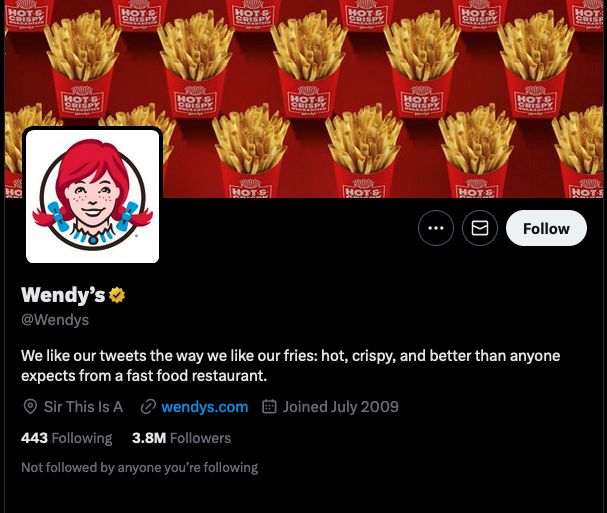
Consumers spend an average of 141 minutes per day on social media. That’s time you could be connecting with them. That doesn’t mean you have to constantly promote your products, however. You can use social media to showcase your brand’s personality (like Wendy’s does below) or use it as a customer support channel. Some brands, like Crypto.com, even have dedicated customer support accounts.

But you don’t even have to sell or offer customer support to make a splash on social media. Fast food chain Wendy’s uses social media to build huge brand awareness and increase customer loyalty.
The key is not to treat every platform the same. Here’s how to win on the big ones:
Instagram: Prioritize eye-catching visuals and short-form video (Reels). Partner with influencers for reach and credibility. TikTok: Focus on trends, sound-driven content, and authentic, behind-the-scenes videos. It’s great for discovery. Facebook: Best for community building, retargeting, and paid ads. Use Groups and Lives to engage. Pinterest: Strong for e-commerce, especially fashion, beauty, and home. Optimize pins with keywords. X (Twitter): Lean into real-time conversation, updates, and brand voice. YouTube: Great for tutorials, product demos, and long-form storytelling. It also helps with SEO.Stay consistent, track what works, and lean into the platforms where your audience actually hangs out.
Content Marketing
Content marketing is one of the most powerful strategies for B2B businesses. But I find B2C brands regularly overlook it. That’s a shame, because B2C content marketing can be incredibly effective.
The more content you create, the more chances you have to engage your audience. And it’s not just about blog posts. Men’s grooming brand Beardbrand built a loyal customer base through educational and entertaining YouTube videos.

You don’t always have to create content yourself, either. User-generated content (UGC) like reviews, forum replies, or social posts from customers can be just as powerful. Just make sure you have permission before sharing.
Great content marketing helps customers see themselves in your brand. Keep it authentic, consistent, and valuable.
Whether you’re writing how-to guides, sharing tips on Instagram, or curating UGC, the goal is the same: create content your audience actually wants, not just what you want to say.
Influencer Marketing
Love them or hate them, influencers are a big deal in the B2C marketing space. When used right, they can be strategic partners for your business. You don’t need to blow your budget on someone like Bella Hadid to see success, though.
Micro-influencers—people with fewer than 100,000 followers—are often more cost-effective and deliver stronger engagement. Their audiences trust them, which means your product comes with built-in credibility.
Influencer marketing works best when it feels authentic. Give creators creative freedom to showcase your product in a way that fits their style. Forced or overly scripted content sticks out—and not in a good way.
Fashion brand Princess Polly is a great example. They’ve built a massive presence by consistently partnering with mid-tier and micro-influencers across TikTok and Instagram. The result? Relatable content that drives real conversions.
Looking to scale? This guide can help you build a team of social media influencers without draining your budget.
SMS
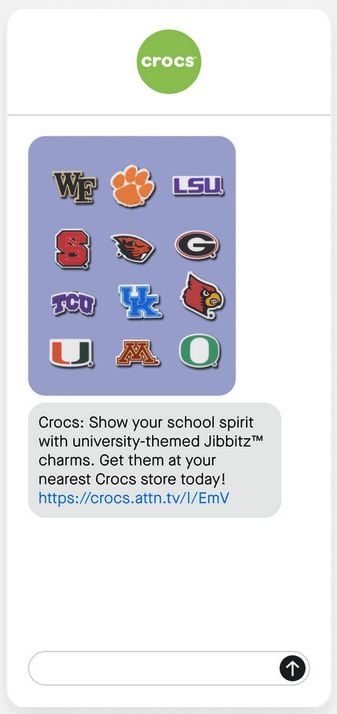
SMS (or text messaging) marketing lets your brand slide into your potential customers’ messages. Given that almost eighty percent of consumers have used their phones to make a purchase, reaching them directly on these devices can be powerful.
Here’s a fantastic example of how you can promote your products by text, courtesy of Crocs.
Paid Media
B2C paid media offers fast visibility and scalable reach, if you know how to use it.
Paid search is one of the most popular options. With over two-thirds of web experiences starting on search engines, it’s no surprise brands pay to show up first. You only pay when someone clicks, and attribution is clear. Just know that competitive industries (like insurance or legal) come with higher costs.
Display ads—text, image, or video banners on third-party sites—are another widely used tactic. Platforms like the Google Display Network make it easy to target specific audiences based on their interests, behaviors, or locations. These work well for building awareness and retargeting past visitors.
If you’ve got a bigger budget, TV and streaming ads can be incredibly effective. A 30-second primetime spot can cost hundreds of thousands just for placement—like $828,501 for Sunday Night Football. But when done right, the impact is massive. Think of iconic Apple or Nike ads that people still remember years later.
Paid media is especially powerful in e-commerce marketing, where you can track every click, view, and sale. The best B2C strategies use a mix: search for intent, display for awareness, and streaming for emotional punch. Test often, watch performance closely, and optimize based on results, not guesses.
YouTube
YouTube can be used as a full-funnel B2C marketing channel.
You can use it to build brand awareness, educate customers, showcase products, drive traffic, and even close sales. Think of it as a visual search engine. People go to YouTube to solve problems, research products, and get inspired. That gives you plenty of room to meet them where they are.
A well-optimized branded channel lets you create evergreen content that drives traffic long after it’s published. Tutorials, reviews, and behind-the-scenes videos all perform well, especially when they’re authentic and useful.
And yes, YouTube ads still have their place. Skippable in-stream ads can be effective if you hook the viewer fast. Just lead with value, not a hard sell.
Brands like GoPro grew massive followings by turning product use into entertainment. That’s the real power of YouTube: it sells without feeling like an ad.

CRO
Conversion rate optimization (CRO) is the process of improving your website or landing pages to increase the percentage of visitors who take a desired action—like making a purchase, signing up for emails, or adding to cart.
In B2C, where buying decisions are often made quickly and impulsively, even small improvements can lead to significant gains. CRO is all about reducing friction and making it as easy as possible for someone to say “yes.”
Start with your product pages and checkout flow. Are CTAs clear? Is mobile performance smooth? Are you building trust with reviews, photos, and guarantees?
A strong CRO strategy includes A/B testing elements like headlines, images, button copy, and layouts. Use data—heatmaps, session recordings, and analytics—to help you make data-driven changes that will move the needle.
At its core, CRO helps you get more value from the traffic you already have. And in a crowded B2C space, that can be a serious edge.
B2C Marketing Strategies to Attract and Engage Customers
There’s no shortage of B2C marketing strategies you can use to attract buyers. Below, I cover some of the most popular and powerful methods.
Run Retargeting Campaigns
Not every consumer who lands on your website is going to make a purchase immediately. The B2C sales cycle may be short, but it’s not that short. But you can use a retargeting campaign to advertise to those consumers until they do.
When you launch a retargeting campaign, you show relevant ads on websites and social media platforms to users who have visited your site but didn’t convert.
To make it work, tailor your ads based on user behavior. Show product reminders or testimonials to establish trust and create a sense of urgency. Keep the messaging consistent with what they viewed.
For example, fashion brand ASOS uses dynamic retargeting to show shoppers the exact items they browsed, often with a discount or low-stock warning to prompt action.

Source: https://www.emailaudience.com/email-retargeting/
The goal isn’t to annoy, it’s to stay top of mind until they’re ready to buy.
Offer Rewards and Exclusive Discounts
If there’s one strategy I know that almost always works, it’s giving your customers exclusive rewards and discounts. Not only do customers love getting something for free, but they also love feeling like they are part of a special club.
Beauty Insider Benefits from Sephora is a great example of a rewards program. Members earn 1 point for every $1 they spend, as well as additional savings like 20 percent off all year and free gifts on your birthday. Customers can also unlock more benefits based on what they spend each year.

The best thing about rewards and discounts is that they don’t have to cost your brand anything. Sure, you’re giving a small bit away, but you should more than make up for it through an increase in sales.
Consider Starting A Podcast
If you really want to stand out and take your content marketing to the next level, then consider starting a podcast. There are plenty of examples of B2C brands doing this effectively. Check out Duolingo, Bobbie Baby Formula, and Thrive Market.
The best B2C podcasts focus on storytelling, shared values, and topics your audience already cares about. They don’t just promote products—they entertain or educate.
A successful podcast is about giving listeners something worth coming back for. Keep episodes short, focused, and consistent. Interview experts, share behind-the-scenes insights, or answer real customer questions.
And when done right, it doesn’t just support brand awareness. It builds trust, loyalty, and long-term engagement.
Emphasize Your Commitment To Social Responsibility
It’s not enough to sell great products. Consumers also care about what brands stand for and how they behave. It’s why brands like Patagonia have become so popular.

This is particularly important if you target younger generations. Over two-thirds (70%) of Gen Z-ers say they are willing to pay more to support brands that are committed to positive social and environmental impact. Eighty-one percent expect brands to make a public statement about the initiatives they stand for.
Create and Implement Product Schema
If you want your products to stand out in search—and get picked up by AI-driven tools and language models—product schema is a must.
Product schema is a type of structured data that helps search engines understand what’s on your page. When implemented correctly, it can enhance your listings with rich results like star ratings, pricing, availability, and more.
It also gives Google and large language models better context, increasing your chances of showing up in relevant queries or AI summaries.
Start by optimizing your product pages with clear titles, images, and persuasive copy. Then layer in product schema to give search engines a detailed blueprint of each item.
There are plugins and generators that make adding schema easier—even for non-developers.
Product schema helps your pages look better in search, perform better in rankings, and stay visible in an AI-powered search future. Sixty-three percent believe a brand’s actions should reflect what they stand for.
Measuring the Success of Your B2C Campaigns
How you measure the success of your B2C marketing campaigns will depend largely on your goals. You’ll want to make sure the key performance indicators (KPIs) you track are as relevant as possible. So if you want to increase website traffic from SEO, for example, you’ll want to track SERP rankings, SERP click through rates, and web traffic from Google.
Here are some common B2C marketing KPIs to get you started:
Web traffic: If you want to drive customers to your website, this KPI is key. Don’t forget to split it into channels to see which B2C marketing channel is driving the most traffic. Conversion rate: Traffic isn’t any good if it doesn’t convert. That’s why you need to measure your site’s conversion rate. You can also measure the conversion rate of specific B2C marketing strategies like PPC ads. Social engagement: Social media is a vital part of the B2C marketing mix. Forget about vanity metrics such as Likes and Views. Measure engagement instead. Customer retention rate: You don’t just want to win customers; you want to retain them. That’s why I always recommend B2C brands measure their retention rates. Customer satisfaction score: One of the most accurate forecasters of customer retention rate is your customer satisfaction score. NPS is my favorite metric to measure this. AI visibility: As search engines evolve, so should your metrics. Track how often your content appears in AI-generated responses or overviews, especially for branded and product-related queries. This helps you measure reach in AI-powered search experiences.B2C Marketing Tools
B2C marketing becomes a lot easier when you have access to the right tools. Here are some solutions I think will greatly help your efforts.
SEO and PPC marketing tools: Tools like Ubersuggest and Semrush are virtually mandatory to improve your SEO and PPC efforts. Market research tools: The more you can learn about your market the easier you’ll find it to create messages that cut through the noise. I turn to Answer the Public for help here. B2C marketplaces: You don’t have to sell directly to consumers from your website or storefront. B2C marketplaces like Amazon and Etsy mean you don’t have to invest thousands into acquiring customers. Analytics platforms: You need to know how customers behave on your website. There’s no better tool than Google Analytics. Email marketing tools: These platforms can be one of the most cost-effective ways to reach your target audience. Try Mailchimp or MailerLite to start.Overcoming Challenges in B2C Marketing
Marketing a B2C business isn’t plain sailing. You’ll need to overcome the following challenges:
Rising Competition and Saturation: One way to beat the competition is to have a superior product. Another is to have a superior marketing strategy. You can outwork the competition by optimizing your ad campaigns to the nth degree or building the perfect SEO strategy. Or you can do something no one else is doing, like launch a controversial campaign or invest in a PR stunt. Data Privacy and Security Concerns: Privacy and security are major concerns in the B2C environment. Customers care about their data more than ever, with eighty-four percent saying the government should do something to regulate the way companies collect and use user data. When you are capturing and storing data from customers, you need to make sure you are doing so in a compliant manner. That means adhering to the GDPR if you operate in the EU and the California Consumer Privacy Act if you operate in the U.S. If you’re concerned about privacy issues, I recommend keeping your efforts focused on first-party data. Adapting to Changing Consumer Trends and Preferences: In the B2C world, consumer trends and preferences can change in an instant. As a B2C brand, you need to adapt quickly and stay ahead of rapidly changing consumer sentiment. In some cases, this may involve adjusting your messaging, imagery, and other marketing materials. In other cases, it may mean creating new consumer products that you can market if the popularity of your main product fades.FAQs
Business-to-consumer (B2C) marketing refers to the strategies brands use to reach, engage and convert individual consumers. B2C marketers use a mix of digital channels—including SEO, social media, email, and PPC—as well as other tactics to attract and retain customers.
Start by identifying your ideal customer and creating messaging that speaks directly to their needs or desires. Use a mix of channels—like social media, content marketing, SEO, and paid ads—to reach them where they are. Track results and keep optimizing based on what drives engagement and sales.
B2B and B2C are two differeLinkedIn isn’t a go-to platform for most B2C brands, but it can work in specific cases—especially for high-end, education-focused, or career-related products. If your target audience includes professionals or working parents, it may be worth testing. Just keep the content tailored to the platform’s tone and audience.
Conclusion
B2C marketing is one of the most important strategies any consumer-facing brand can use to grow its business. As you’ll now realize, there’s no single B2C marketing strategy or channel that will work for everyone.
That’s why I advise you to try one or two channels and a couple of different marketing strategies first. Only once you’ve got a firm grasp of who your audience is and how they behave, should you start to tailor your efforts and start experimenting with new channels.








![AI Overviews: We Reverse-Engineered Them So You Don’t Have To [+ What You Need To Do Next]](https://www.searchenginejournal.com/wp-content/uploads/2025/04/featured-438.png)