Best of the Haiku Challenge (November 2025)
Announcing the winning poems from Tricycle’s monthly challenge The post Best of the Haiku Challenge (November 2025) appeared first on Tricycle: The Buddhist Review.
 FrankLin
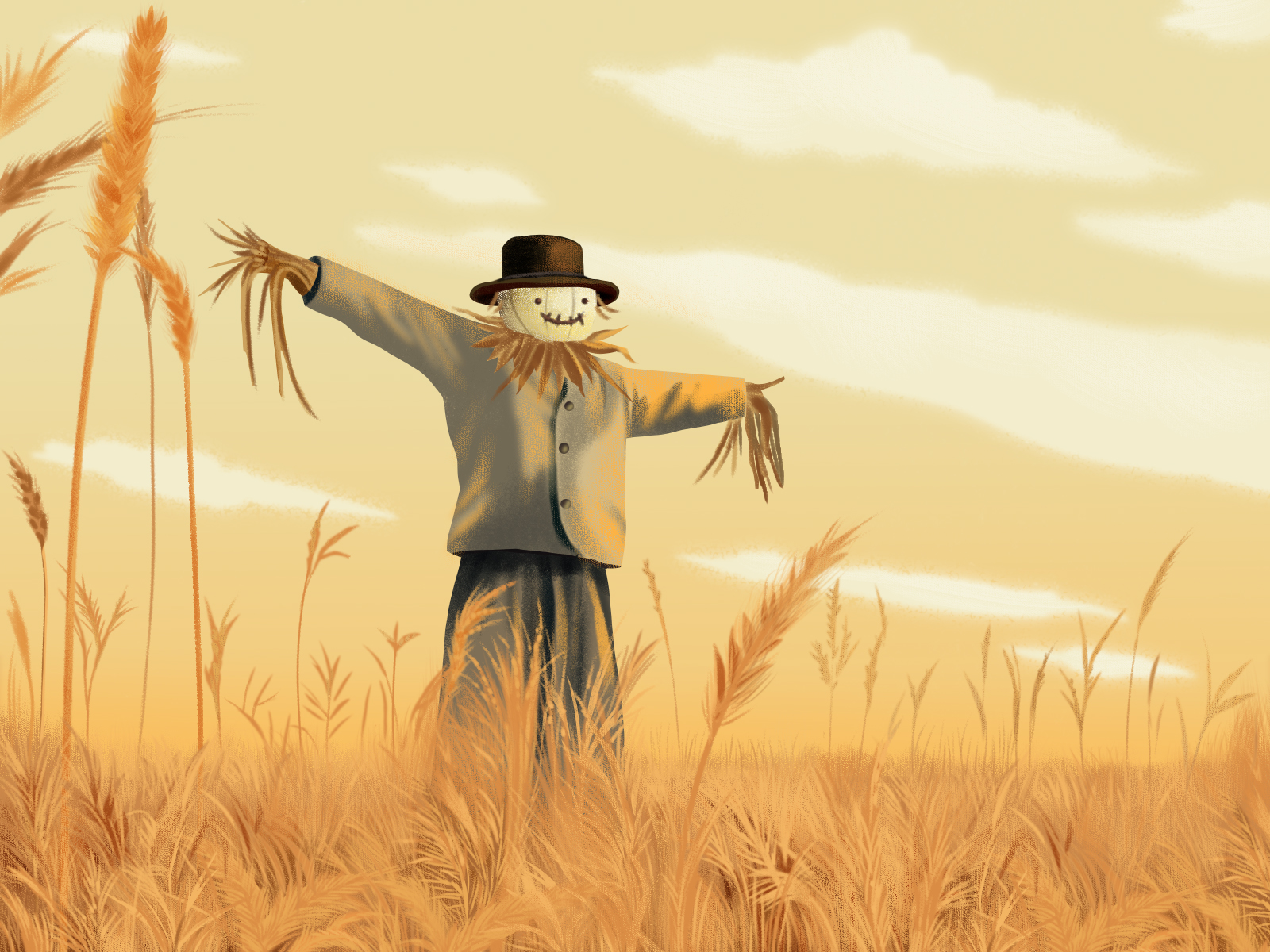
The use of season words varies widely across the spectrum of haiku in English, but especially in Formal Haiku. Because the syllabic pattern is fixed, poets distinguish themselves most clearly in how they handle the traditional seasonal themes. The winning and honorable mention poems for last month’s challenge explored the full range of seasonal treatments for Formal Haiku in English.
Gregory Tullock evokes a culture of menace and intimidation in his image of ten thousand scarecrows “and only one bird.” Jesus Santos marks the end of the harvest season on a birdless afternoon when the scarecrow finally “unshrugs his shoulders.” Paul Engel delights in counting sparrows—“twelve thirteen fourteen fifteen”—as they collect along a scarecrow’s arms.Congratulations to all! To read additional poems of merit from recent months, visit our Tricycle Haiku Challenge group on Facebook.
You can submit a haiku for the current challenge here.
Fall Season Word: Scarecrow
WINNER:
this world we live in
ten thousand scarecrows on guard
and only one bird
—Gregory Tullock
Broadly speaking, there are three approaches to Formal Haiku in English. Since the genre is defined by its 5-7-5 syllable form, that remains constant. What varies is how the season word functions, and to what effect.
The classical approach takes the season word literally, while allowing for some subjective nuance. The scarecrow is a scarecrow, but the poem will generally suggest some parallel to the human world. Last month’s honorable mention haiku by Jesus Santos offers a fine example. The poem can be read literally as the portrait of a scarecrow at the tail end of the harvest season, but the last line (“unshrugs his shoulders”) suggests something like a sigh of relief.
The modern approach sticks to the facts, stripping a haiku of subjective elements until only the concrete image remains. The content of the poem lies in the reader’s cognitive or emotional response to that image. Paul Engel’s haiku about counting eleven sparrows perched on a scarecrow—which are joined four more to make fifteen—evokes a gently ironic humor, though the poem itself contains nothing but numbers and nouns.
The postmodern approach breaks set completely, detaching the season word from its traditional context in haiku literature, and from its literal meaning as an observable phenomenon in the natural world. The scarecrow may not even be a scarecrow in a postmodern haiku. The word is used to address issues of contemporary relevance in new and original ways.
Last month’s winning poem by Gregory Tullock belongs to the final category. The season word doesn’t turn on a neat “pivot” to establish a vector of meaning for the poem. It functions like the cueball that begins a game of pool, scattering the balls across the table.
The season word is still there, informing the constellation of meanings. But its effect is surreal and disturbing. For there are “ten thousand scarecrows on guard / and only one bird.”
What could this mean? Is the poem about ecocide? Is the world we are living in the one that Philip K. Dick described in his novel Do Androids Dream of Electric Sheep?—a future where the main character searches the globe for a living animal but finds only robots everywhere he looks?
Is it about modern surveillance society? Government regulation? The prison industrial complex? Factory farming? Fascism? Is it about AI?
After sitting with the poem for the better part of a week, I asked myself why the poet chose to reverse the usual ratio of one scarecrow for ten thousand birds. The feelings produced by the sight of a single scarecrow range from amusement to melancholy. Ten thousand scarecrows is an army. The image can evoke nothing but dread.
That dread is the core meaning of last month’s winning haiku, whatever its cause might be. The poem brings us face to face with our worse fears for the coming century. It’s one against ten thousand. And we are the bird.
HONORABLE MENTIONS:
birdless afternoon
at last the tattered scarecrow
unshrugs his shoulders
—Jesus Santos
eleven sparrows
twelve thirteen fourteen fifteen…
perched on the scarecrow
—Paul Engel
◆
You can find more on November’s season word, as well as relevant haiku tips, in last month’s challenge below:
Fall season word: “Scarecrow”
it should be harder
than it is to make a coat
into a scarecrow
I watched a farmer fashion a scarecrow using an old barn jacket, a nail, and two pieces of wood. It was shocking to see how quickly an empty coat could be made to resemble a man. —Clark Strand
Submit as many haiku as you please on the fall season word “scarecrow.” Your poems must be written in three lines of 5, 7, and 5 syllables, respectively, and should focus on a single moment of time happening now.
Be straightforward in your description and try to limit your subject matter. Haiku are nearly always better when they don’t have too many ideas or images. So make your focus the season word* and try to stay close to that.
*REMEMBER: To qualify for the challenge, your haiku must be written in 5-7-5 syllables and include the word “scarecrow.”
Haiku Tip: Master the Single-Sentence Haiku!
In books and articles on Japanese poetry, the third most common aspect of haiku (after the 5-7-5 syllable form and the use of season words) is the inclusion of a kireji, or “cut word.” The cut word is a form of spoken punctuation in Japanese poetry that calls attention to the relationship between the words that come before and after it. A kireji basically breaks a poem in two.
The closest thing to a cut word in Western poetry is the caesura, or “pause,” in the middle of a line of verse. In English language haiku, poets have often used punctuation marks like colons, commas, dashes, or ellipses to indicate this kind of pause. Increasingly, however, poets leave their haiku unpunctuated, relying on rhythm and grammar to suggest where the pauses might occur.
So far, so good. But there is a problem. In Japanese haiku, the cut word is necessary for generating a turn of thought. In English it is not. In fact, a pause-less haiku of one sentence can create nuanced meanings in English that are impossible to produce in any other way.
That was the idea behind Allen Ginsberg’s “American Sentence”—a one-line poetic form of 17 syllables with no other rules. Two examples from the early 1990s:
Put on my tie in a taxi, short of breath, rushing to meditate.
Four skinheads stand in the streetlight rain chatting under an umbrella.
Arguably, the first poem contains two pauses, one for each comma. But not really. The point is to create a breathless rush-through-to-the-end sentence which mirrors the experience being described. The second poem is more perfectly emblematic of the “American Sentence” in terms of its structure, with no punctuation but a period at the end.
Another beat poet also wrote occasionally in this form. One of Jack Kerouac’s most famous haiku is sometimes cited as an American Sentence, albeit one broken into three lines:
In my medicine cabinet
the winter fly
has died of old age.
Kerouac’s poem—which also reads as a single-sentence of seventeen syllables—combines the best of haiku with the American Sentence in its use of a season word.
I hadn’t yet discovered Ginsberg’s experiments with the form when I came up with my most basic rule for haiku a few years ago—namely, that a haiku in English is “whatever you can get away with in 17 syllables.” Apart from organizing those syllables into 5-7-5, however, the idea is the basically the same: to create a matrix for meaning for English language haiku that is analogous to, but not identical to, the haiku form in Japanese.
The American poet Andrew Schelling remembers Ginsberg’s enduring fascination with the challenge of making sentences of seventeen syllables “that really carry the weight of a poem.” It isn’t as easy as it seems. But the best poets are able to make it look easy.
This is the secret of writing a single-sentence haiku. Nothing could seem more innocuous at first glance than a straightforward, descriptive sentence of seventeen syllables with no obvious poetic flourishes—which makes it all the more surprising when it turns out to have further levels of meaning.
Naturally, the single-sentence Formal Haiku is a little different from the American Sentence as Ginsberg imagined it. For one thing, it has three lines of 5-7-5 syllables. For another, it requires a season word. Even so, the two share one attribute in common. They harnesses the power of English as it is spoken in everyday life. That is why, at first glance, they sound less like poems, and more like something that could’ve been spontaneously uttered out loud.
A note on scarecrows: Season word editor Becka Chester writes about this month’s season word: “In Medieval England, young boys were required to patrol the fields, clapping blocks of wood together to scare away birds. A shortage of children after the Great Plague was the impetus for farmers to seek alternative solutions, and scarecrows were invented. Traditionally, these human effigies are made by stuffing discarded clothing hung on a wooden cross. Because of their resemblance to a crucifix, scarecrows are seen by some as a symbol of death and resurrection.
“Scarecrows are often torched after the harvest, their ashes returning potassium and nitrogen to the soil. In Japan, Kuebiko, the Shinto deity of knowledge and agriculture, is represented by a scarecrow—a one-footed being who cannot walk but possesses a conscious awareness. Today, scarecrows are emblematic of fall. ‘When the harvest is brought in, the scarecrow stands revealed in all its tatters,’ writes William J. Higginson in Haiku World.”