Best Online Yoga Teacher Training Programs 2026: Honest Reviews and Rankings
Quick Answer: The best online yoga teacher training in 2026 is an accredited, 200-hour program that aligns with Yoga Alliance […]
 MikeTyes
Quick Answer: The best online yoga teacher training in 2026 is an accredited, 200-hour program that aligns with Yoga Alliance standards, offering a mix of synchronous live sessions and self-paced anatomy and philosophy modules. Programs like My Vinyasa Practice, YogaRenew, and Brett Larkin’s Uplifted consistently rank highest for affordability, comprehensive curriculum, and robust graduate support.
The landscape of yoga education has transformed dramatically over the last few years. As we step into 2026, obtaining an online yoga teacher training certification is no longer viewed as just a “backup option” to in-person learning. In fact, due to advancements in learning management systems, high-definition streaming, and virtual community-building, it has become the preferred choice for aspiring instructors worldwide.
Students are drawn to the immense flexibility, significantly lower costs, and the ability to study under globally renowned master teachers without having to book a flight or take a month off work. Whether you are looking for an affordable 200-hour online yoga teacher training to deepen your personal practice or the absolute best premium platform to launch a full-time wellness career, this definitive 2026 guide provides the honest reviews, comparisons, and roadmaps you need.
Why Choose an Online Yoga Teacher Training in 2026?
Before investing your time and money, it’s important to understand why online trainings have exploded in popularity and why they continue to hold immense value.
Cost-Effectiveness: Traditional in-person trainings can cost anywhere from $3,000 to $5,000, not including travel, accommodation, and food if you attend a retreat-style immersion. Online programs typically range from $300 to $1,500, making yoga education highly accessible. Unparalleled Flexibility: For working professionals, parents, and full-time students, dedicating 30 straight days to an in-person training is impossible. Online programs allow you to study at 2 AM or during your lunch break. Access to Master Teachers: You are no longer limited to the teaching styles of your local studio. You can learn alignment from experts in California, philosophy from scholars in India, and anatomy from physical therapists in London—all from your living room. Lifetime Access to Materials: In-person trainings rely heavily on manual note-taking and memory. The best online yoga teacher training programs provide lifetime access to their video libraries, meaning you can revisit a complex anatomy lecture years into your teaching career.Understanding Yoga Alliance Accreditation in the Online Space
One of the most common questions aspiring teachers ask is: Are online yoga teacher trainings Yoga Alliance approved?
The short answer is yes.
During the global shifts of 2020-2021, Yoga Alliance (the largest nonprofit association representing the yoga community) temporarily allowed online learning. Due to its massive success and high standards, Yoga Alliance implemented a permanent provision allowing Registered Yoga Schools (RYS) to conduct their 200-hour, 300-hour, and 500-hour trainings completely online.
What is the RYS 200 Designation?
To become a Registered Yoga Teacher (RYT 200), you must graduate from a school that holds the RYS 200 designation. To maintain this status in 2026, schools must adhere to strict curriculum guidelines, ensuring you receive adequate education in:
Techniques, Training, and Practice (Asana, Pranayama, Meditation) Anatomy and Physiology (Physical and Energetic) Yoga Humanities (History, Philosophy, Ethics) Professional Essentials (Teaching Methodology, Practicum, Business of Yoga)Expert Tip: Always verify a school’s current standing directly on the Yoga Alliance directory before handing over your credit card. A school’s website might claim accreditation, but their RYS status could be lapsed.
Format Types: Synchronous vs. Asynchronous Learning
When comparing the best platforms for online yoga teacher training, you will encounter two main educational formats. Choosing the right one is critical to your success.
Asynchronous (100% Self-Paced)
What it is: All lectures, pose breakdowns, and sequences are pre-recorded. You watch the videos and complete quizzes on your own schedule. Teaching practicums are usually recorded and submitted for grading. Pros: Maximum flexibility. You can finish in 3 weeks or 12 months. Usually the most affordable option. Cons: Requires immense self-discipline. Less real-time connection with peers. Best For: Independent learners, busy parents, those on a strict budget.Synchronous (Live & Interactive) or Hybrid
What it is: While theory and anatomy might be recorded, a significant portion of the training (like teaching practicums, Q&As, and group meditations) happens live via Zoom at scheduled times. Pros: Immediate feedback from lead trainers. Stronger sense of community and accountability. Cons: Less flexible. You must adhere to a schedule across specific time zones. Higher cost. Best For: Students who thrive in classroom environments, those who want direct mentorship.Honest Reviews: The 8 Best Online Yoga Teacher Training Programs in 2026
After analyzing curriculums, graduate success rates, and student feedback, here is our definitive ranking of the top online YTTs available today.
1. My Vinyasa Practice (Best Overall Value & Affordability)
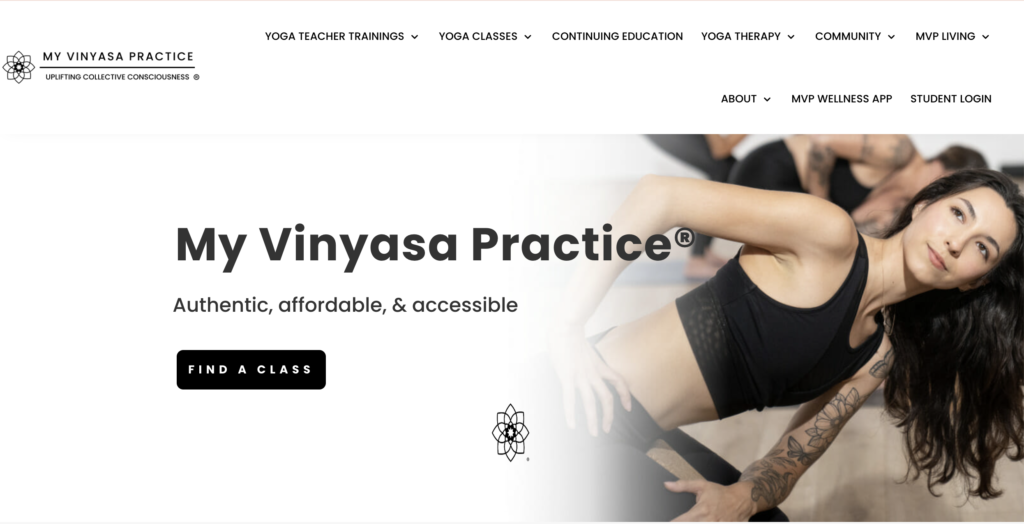
My Vinyasa Practice (MVP), founded by Michelle Young, is an industry juggernaut. It has built a reputation for offering high-quality, Yoga Alliance-approved education at a price point that makes yoga accessible to everyone.
Format: 100% Self-paced (with optional live weekly zoom calls). Curriculum Focus: Vinyasa, accessibility, trauma-informed teaching, and deep yogic philosophy. Cost: ~$400 (Frequent 50% off sales available). Pros: Unbeatable price, lifetime access, dedicated peer support representatives, incredibly thorough manuals. Cons: The sheer volume of reading and self-paced video can be overwhelming for those who need structure. Verdict: If you are looking for an affordable online yoga teacher training course without sacrificing curriculum depth, MVP is the gold standard.2. YogaRenew (Best for Comprehensive Resources & Business Tools)
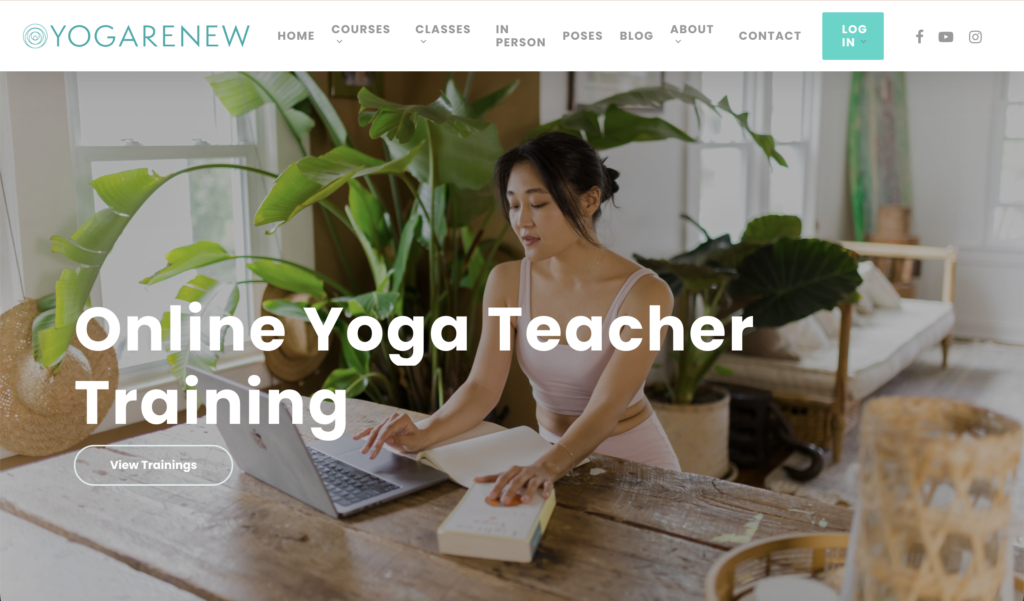
YogaRenew is another massive player in the online space, heavily praised for its organized learning dashboard and massive library of supplemental materials.
Format: Self-paced with live weekly Zoom calls. Curriculum Focus: Vinyasa, Yin, business of yoga, and sequence structuring. Cost: ~$437. Pros: Includes a “business in a box” module with templates for waivers, class planning, and marketing. Exceptional pose breakdown library. Cons: Feedback on final teaching videos can sometimes feel a bit templated due to the high volume of students. Verdict: Ideal for the student whose primary goal is to launch an independent yoga business or online studio immediately upon graduation.3. Uplifted by Brett Larkin (Best Premium Hybrid Experience)
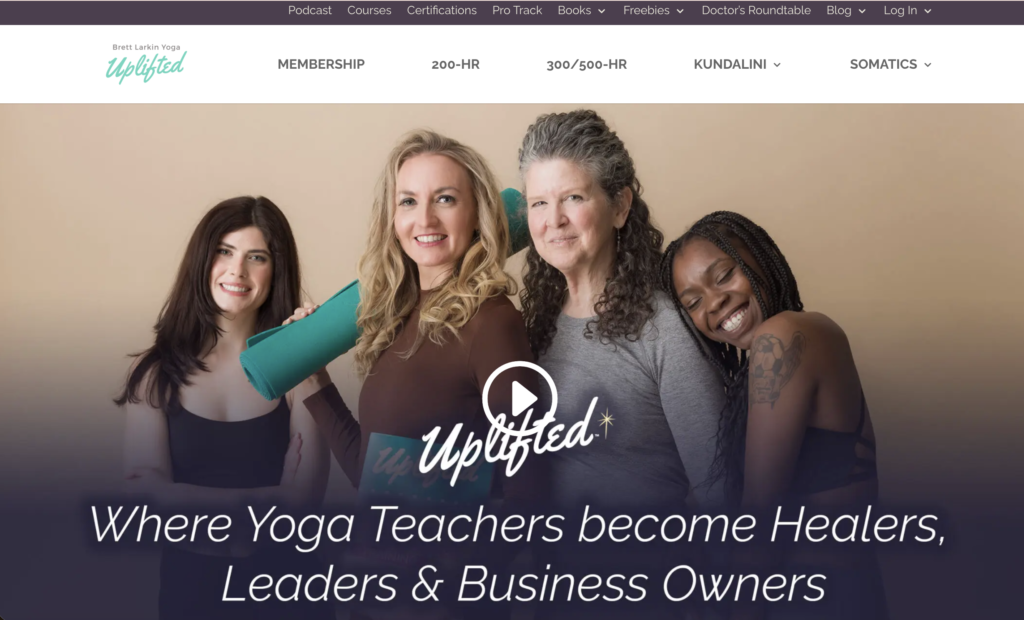
Brett Larkin was one of the pioneers of online yoga teacher training, launching her program long before the pandemic. Her experience shows in the exceptional production quality of her courses.
Format: Hybrid (Self-paced video + mandatory live interactive Zoom calls). Curriculum Focus: Vinyasa, Hatha, deep anatomy (often taught by guest physical therapists), and personal transformation. Cost: ~$2,850. Pros: High-touch mentorship, small cohort sizes, unmatched video production quality, incredibly rigorous anatomy section. Cons: High price point; the live schedule requires a firm time commitment. Verdict: This is the closest you can get to an in-person, immersive studio training while remaining online. Best for those who want serious mentorship and have the budget for a premium experience.4. Drishti Beats (Best for Modern Vinyasa & Sequencing)
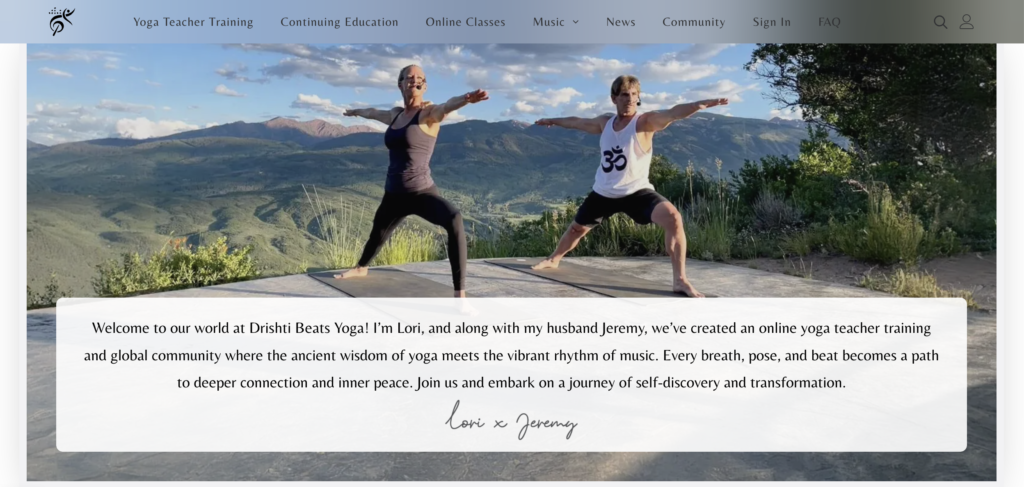
Drishti Beats brings a highly modern, fluid, and music-driven approach to yoga teacher training.
Format: Self-paced with live support. Curriculum Focus: Vinyasa flow, intelligent sequencing, musicality in teaching. Cost: ~$800. Pros: Excellent focus on how to build creative, safe, and fluid vinyasa sequences. Great community feel. Cons: Less focus on traditional Hatha or slower, restorative styles. Verdict: Perfect for students who want to teach in modern, fast-paced Vinyasa studios or gyms.5. Yoga Farm Ithaca (Best for Spiritual Depth & Kundalini)
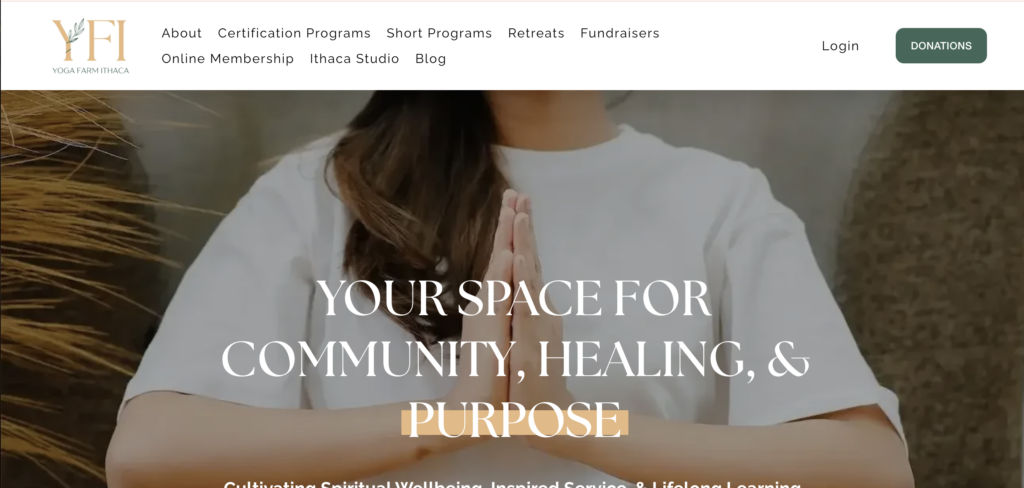
If you are less interested in “gym yoga” and more focused on the spiritual, energetic, and emotional healing aspects of the practice, Yoga Farm Ithaca is exceptional.
Format: Cohort-based hybrid (live calls + recorded content). Curriculum Focus: Vinyasa, Enneagram, Kundalini, trauma-informed mindfulness. Cost: ~$1,499. Pros: Incredibly supportive community, unique integration of Kundalini and meditation, focuses heavily on the teacher’s inner healing. Cons: The curriculum is heavily spiritual, which may not appeal to those looking strictly for fitness-based anatomy. Verdict: The best choice for aspiring teachers who view yoga primarily as a tool for mental, emotional, and spiritual transformation.6. The Kaivalya Yoga Method (Best for Anatomy & Adjustments)
Founded by Alanna Kaivalya, Ph.D., this program is known for being academically rigorous and highly focused on functional anatomy.
Format: Self-paced. Curriculum Focus: Vinyasa, functional anatomy, hands-on adjustments (adapted for online understanding), mythology. Cost: ~$1,000 – $1,500 depending on the tier. Pros: Ph.D. level instruction, lifetime mentorship options, phenomenal breakdown of the physical body. Cons: Can feel very academic and dense. Verdict: Best for students who want to specialize in safe alignment, work with injured populations, or those transitioning from personal training/physical therapy backgrounds.7. Siddhi Yoga (Best for Traditional Indian Lineage)
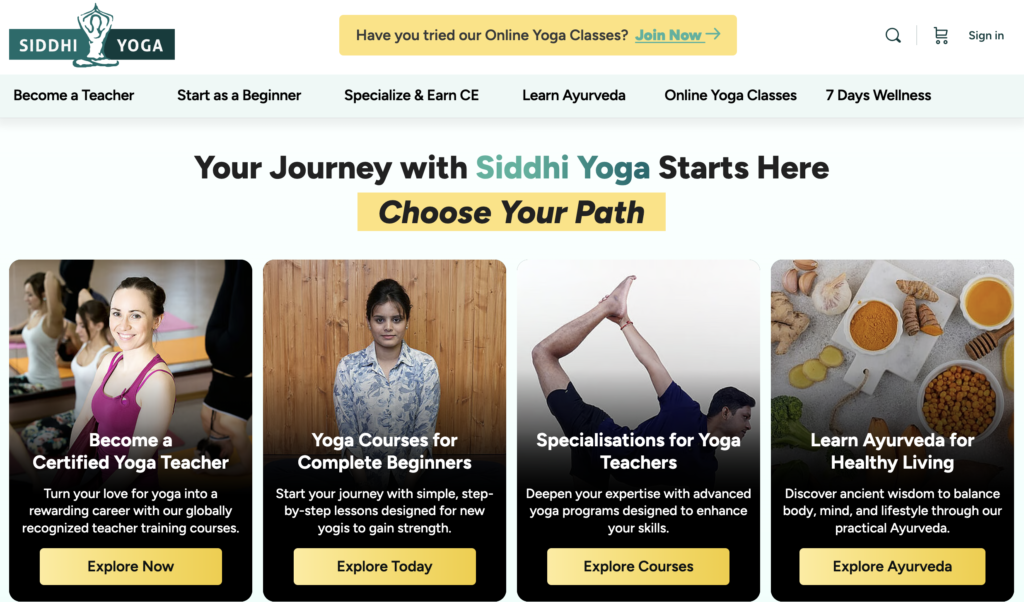
Based in India, Siddhi Yoga brings authentic, traditional teachings to the global online market, often taught by Indian masters.
Format: Self-paced. Curriculum Focus: Traditional Hatha, Ashtanga Vinyasa, Ayurveda, traditional philosophy. Cost: ~$397. Pros: Deeply authentic to the roots of yoga, includes Ayurveda certifications, highly affordable. Cons: Production quality on some older videos is slightly lower than Western-based premium programs. Verdict: Best for students seeking a traditional, spiritual approach directly from the birthplace of yoga.8. School Yoga Institute (Best for Shamanic Integration)
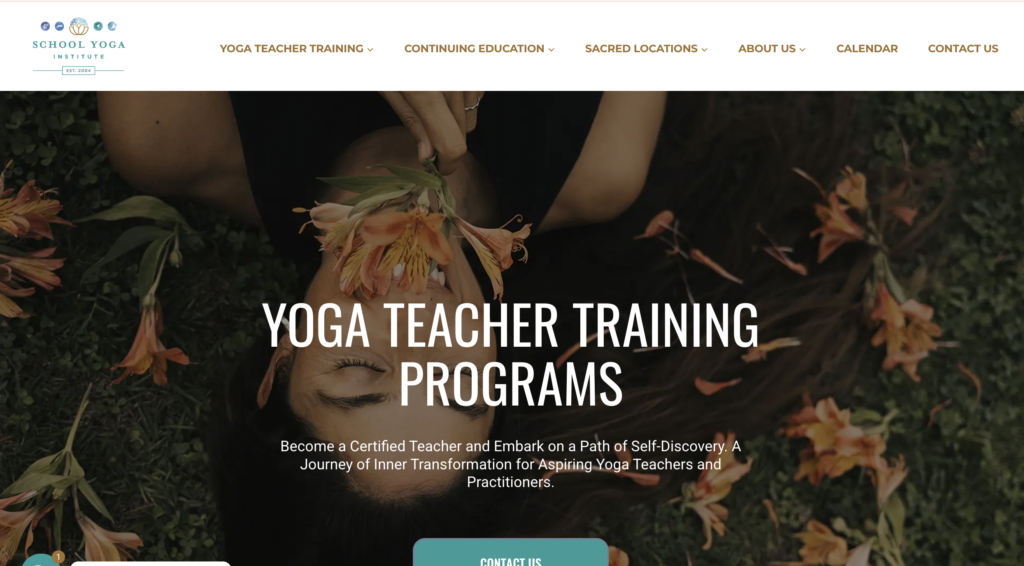
School Yoga Institute blends traditional yoga with Peruvian Shamanic earth medicine and energy work.
Format: 21-Day Intensive Online or paced over 4 months. Curriculum Focus: Mystical yoga, Shamanic medicine wheel, Vinyasa, Yin. Cost: ~$1,200. Pros: Highly unique curriculum you won’t find anywhere else. Very transformational approach. Cons: Niche focus; the shamanic elements may not align with everyone’s personal beliefs. Verdict: Best for spiritual seekers and those interested in blending energy healing with asana practice.Curriculum Breakdown: What Will You Actually Learn?
A common myth is that a 200-hour YTT is just 200 hours of doing yoga poses. In reality, physical practice is only a fraction of the curriculum. Here is what a standard accredited online syllabus looks like:
Techniques, Training, & Practice (75 Hours): You will break down the alignment, modifications, and contraindications of 50-100 foundational poses (Asanas). You will also learn breathing techniques (Pranayama) and meditation. Anatomy & Physiology (30 Hours): This covers both physical anatomy (bones, muscles, fascia, joints, biomechanics) and energetic anatomy (Chakras, Nadis, Koshas). You’ll learn how the body moves and how to keep students safe from injury. Yoga Humanities (30 Hours): You will dive deep into the history of yoga, studying sacred texts like The Yoga Sutras of Patanjali and the Bhagavad Gita. This section also covers the ethics of being a teacher. Professional Essentials (50+ Hours): This is where you learn how to teach. You will study sequencing (how to order poses logically), cueing (what words to use to guide students), voice modulation, pacing, and the business of yoga (insurance, marketing, finding jobs).What Are the Prerequisites for Online Yoga Teacher Training?
A major source of anxiety for prospective students is whether they are “good enough” at yoga to take a training.
The truth: You do not need to be able to do a handstand, the splits, or a perfect headstand to become a yoga teacher.
Teacher training is about learning how to teach the general population safely. The prerequisites are much more about your mindset than your physical prowess. Most accredited programs require:
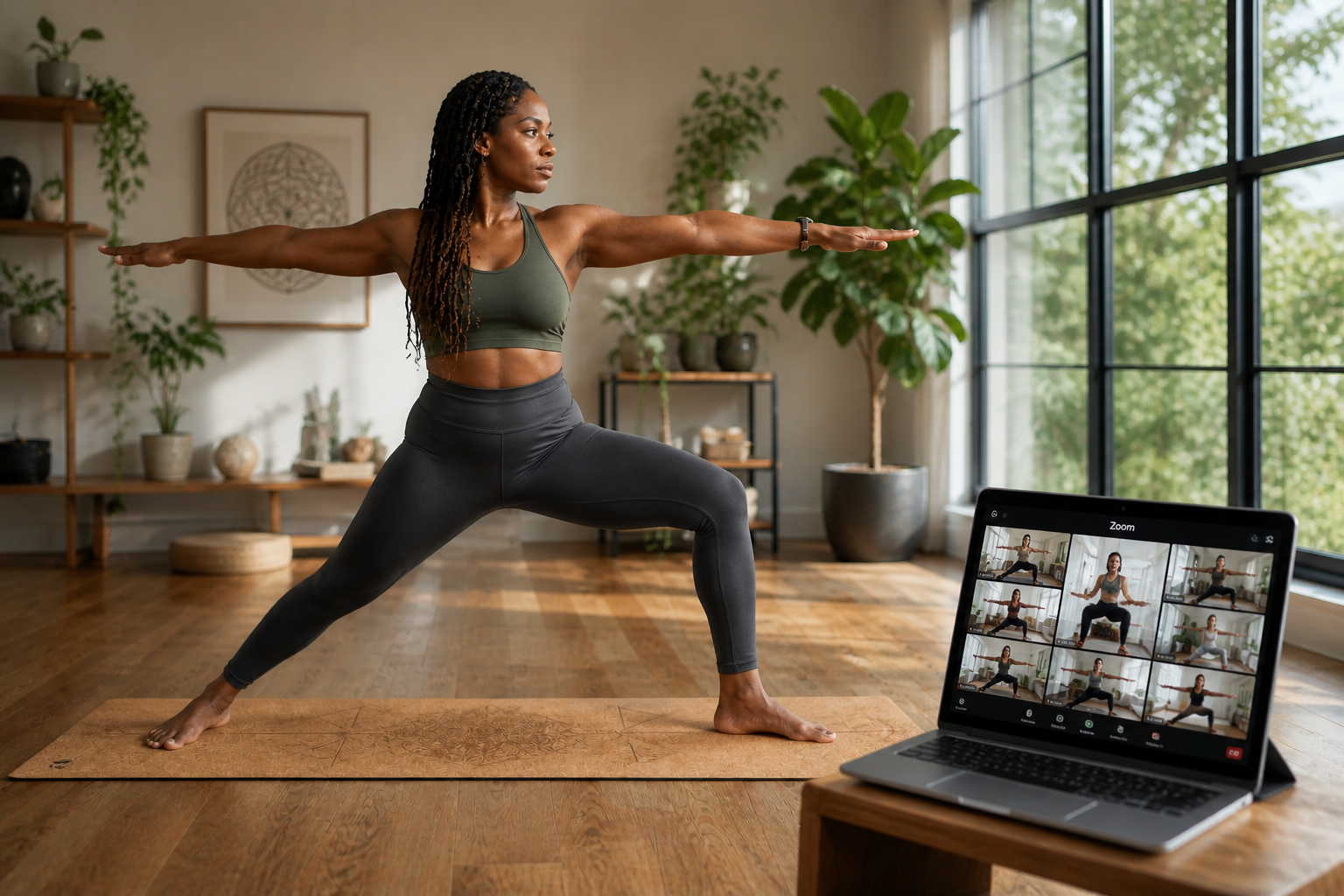
Consistent Practice: A minimum of 3 to 6 months of regular, dedicated yoga practice (2-3 times per week). This ensures you are familiar with basic poses like Downward Dog, Warrior II, and Chaturanga. Technical Setup: A reliable internet connection, a laptop or tablet with a webcam, and enough physical space to practice safely on camera while your full body is visible. Time Commitment: Willingness to dedicate 10-15 hours per week for self-paced part-time programs, or 40 hours per week for online intensives. An Open Mind: The willingness to unlearn bad habits, receive constructive criticism on your teaching, and dive into deep self-reflection.How to Choose the Right Program: A Buyer’s Checklist
With hundreds of options, selecting the right certification is crucial. Use this checklist before enrolling:
[ ] Is the school an active RYS 200 with Yoga Alliance? (Check the YA directory). [ ] Who are the lead trainers, and what is their background? [ ] Does the format (Self-paced vs. Live) fit my current work/life schedule? [ ] Does the curriculum emphasize the style of yoga I actually want to teach (e.g., Don’t take a strict Ashtanga training if you want to teach gentle Yin)? [ ] How is the final teaching practicum graded? Will I get personalized feedback from a human, or is it automated? [ ] Are there hidden fees? (e.g., costs for manuals, required reading books, or certificate printing fees).Career Outcomes: Teaching After an Online YTT
Can you actually get hired after an online training? Absolutely.
In 2026, the stigma against online certifications is effectively gone. Studios, gyms, and corporate wellness programs care about two things:
Are you insured? (You can get insurance if you have an accredited certificate). Can you teach a safe, inspiring, and well-sequenced class during your live audition?Furthermore, online YTT graduates are uniquely positioned to excel in the digital economy. Because you learned online, you are already comfortable with camera angles, lighting, Zoom etiquette, and virtual cueing. Many online graduates bypass local studios entirely, choosing instead to launch independent online businesses, Patreon communities, or YouTube channels.
Frequently Asked Questions (FAQ)
Q1: What are the best online yoga teacher training certifications in 2026?
Ans: he most respected certifications come from Yoga Alliance Registered Yoga Schools (RYS). Top platforms currently include My Vinyasa Practice, YogaRenew, Brett Larkin’s Uplifted, and The Kaivalya Yoga Method, due to their updated 2026 curriculums, rigorous anatomy modules, and high graduation success rates.
Q2: Are online yoga teacher trainings Yoga Alliance approved?
Ans: Yes. As of 2026, Yoga Alliance continues to offer a permanent provision allowing Registered Yoga Schools to conduct 100% of their training online, provided they meet strict synchronous (live) and asynchronous curriculum standards. Graduates receive the exact same RYT-200 credential as those who attend in-person.
Q3: How much does an affordable online yoga teacher training cost?
Ans: An affordable, high-quality, and accredited 200-hour online yoga teacher training typically costs between $300 and $500. Programs dropping significantly below $200 should be heavily vetted, as they often lack proper accreditation, comprehensive manuals, or human feedback on your teaching practicums.
Q4: Can I actually teach yoga after an online training?
Ans: Absolutely. Online graduates are fully recognized by major insurance providers, allowing them to be hired by local studios, commercial gyms, and corporate wellness programs worldwide. Furthermore, online graduates often excel at launching independent virtual teaching businesses because they are already comfortable with digital instruction.
Q5: How long does it take to complete an online YTT?
Ans: This depends entirely on the format. Most students complete a self-paced 200-hour program in 3 to 6 months while working full-time. However, intensive live online programs (where you treat the training like a full-time job) can be completed in as little as 3 to 4 weeks. Most self-paced programs give you up to 12 months to finish.