Black Sesame Amaretti Cookies
Amaretti are some of my favorite cookies for a reason: they are ridiculously simple to make, with only 3 main ingredients—plus the black sesame in this case—and always a crowd pleaser. Even better, they’re naturally gluten-free AND dairy-free (but...
 Kass
Kass
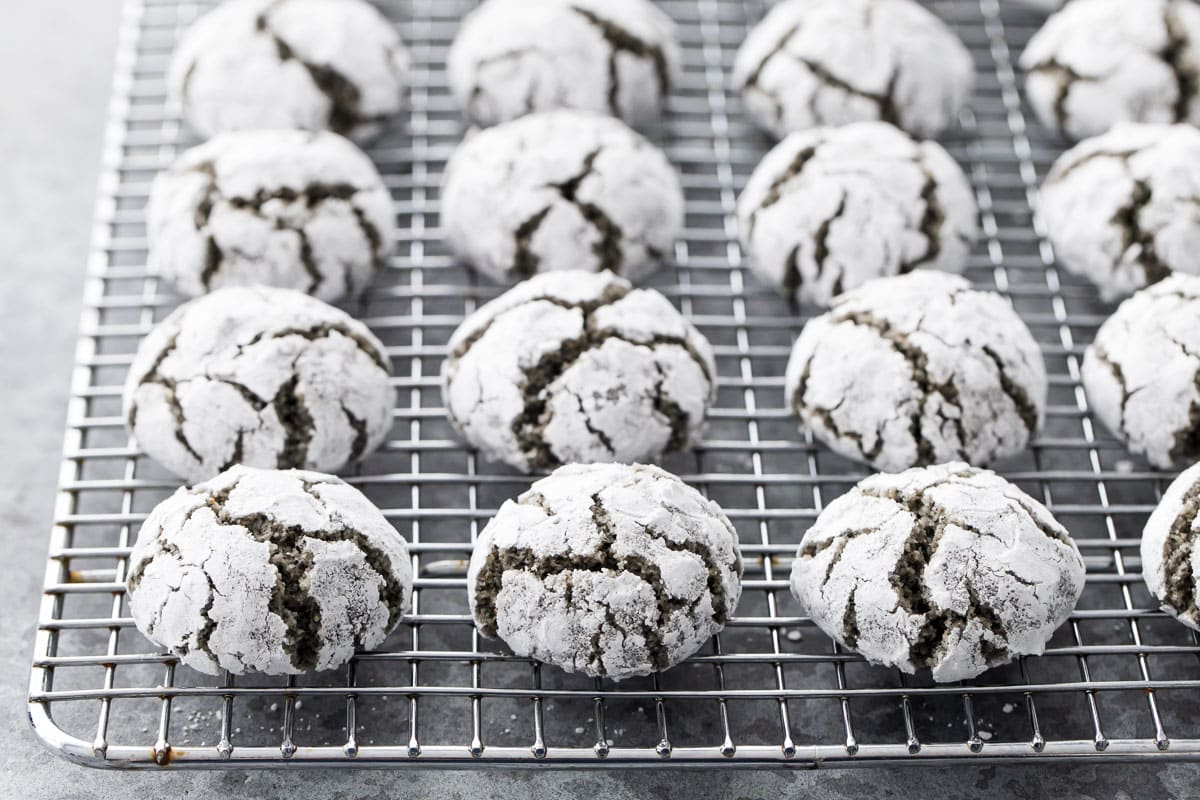
Amaretti are some of my favorite cookies for a reason: they are ridiculously simple to make, with only 3 main ingredients—plus the black sesame in this case—and always a crowd pleaser. Even better, they’re naturally gluten-free AND dairy-free (but you won’t miss a thing, I promise!)
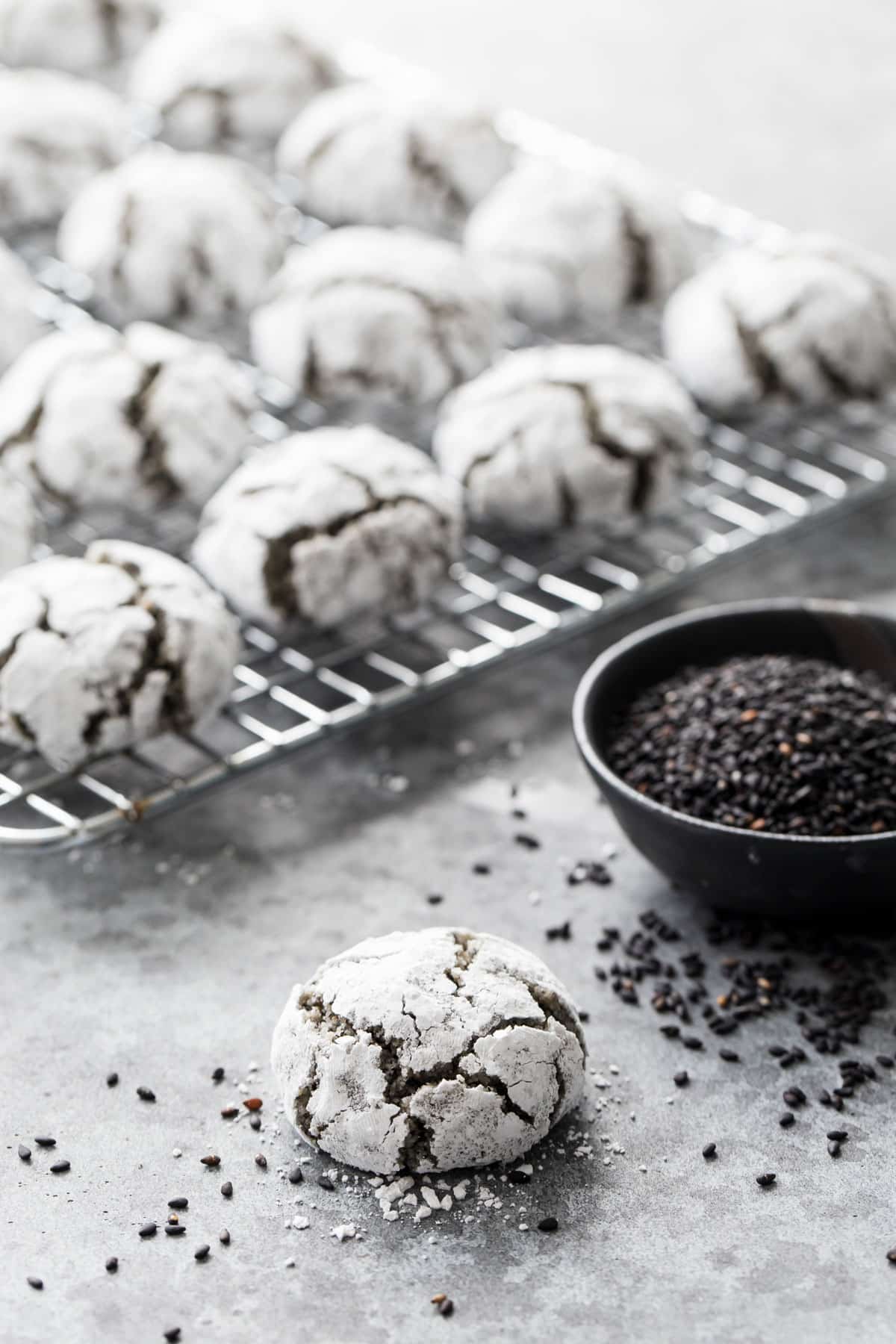
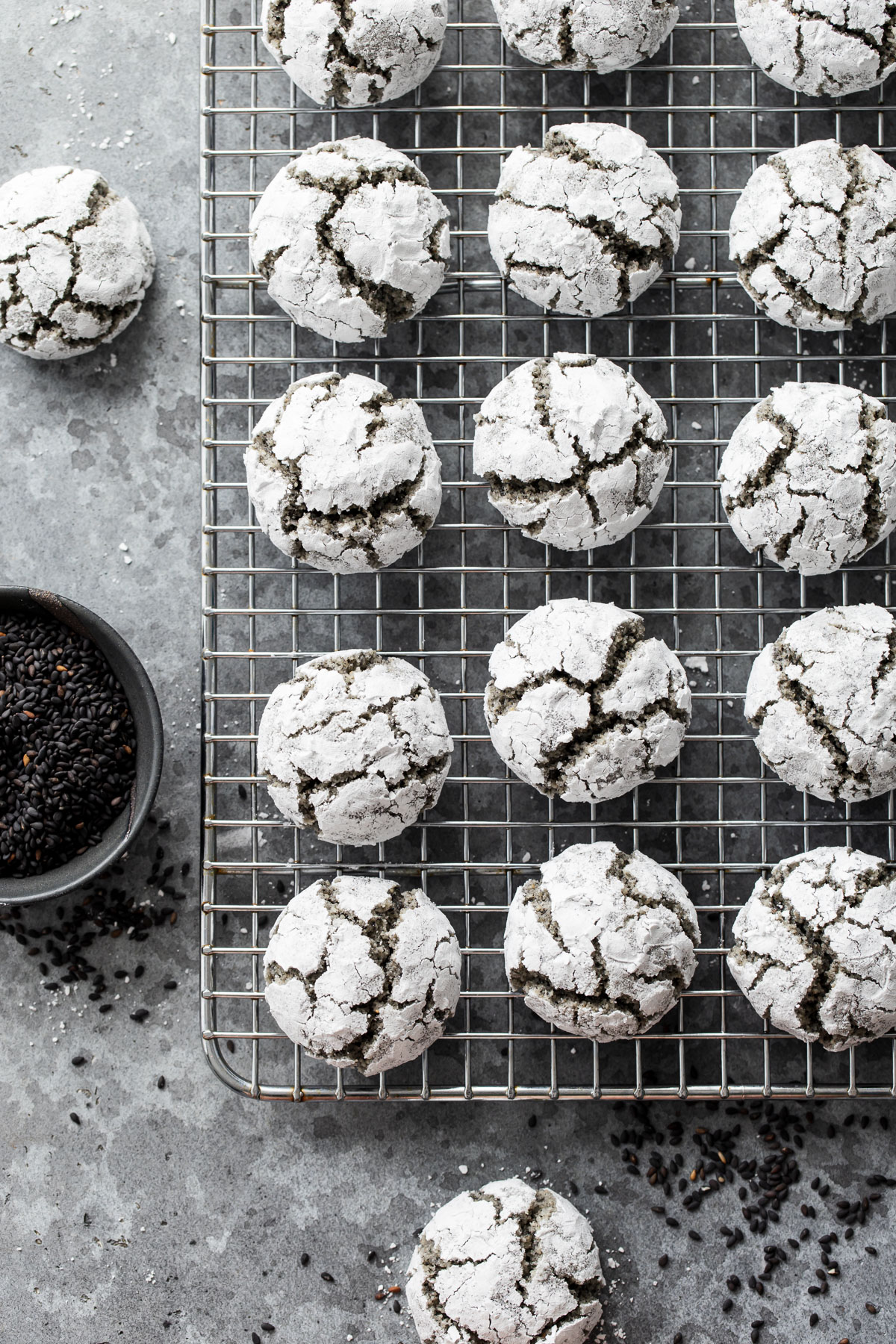
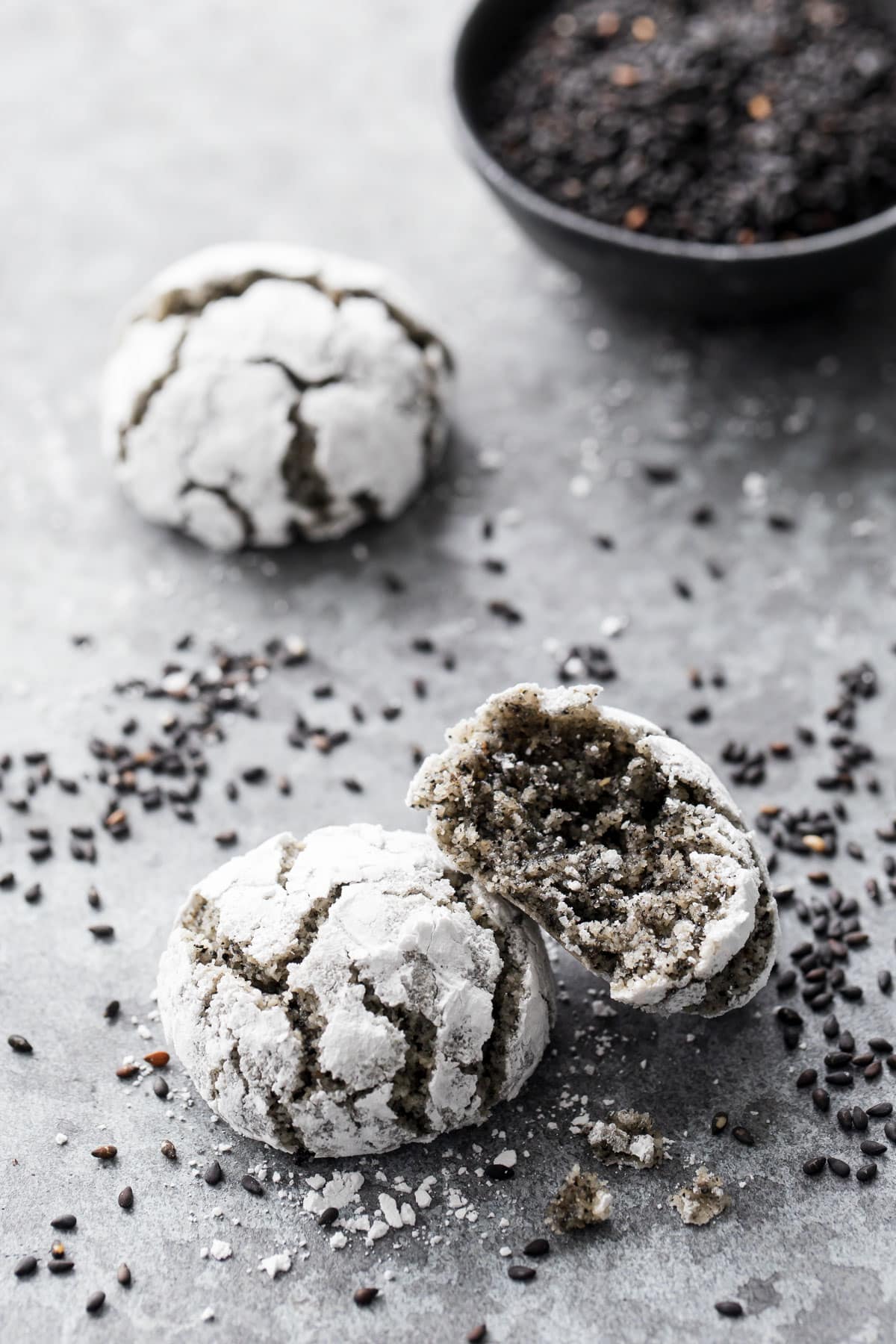
These eye-catching black sesame amaretti cookies might look colorless, but they are certainly not flavorless! With an intense roasted black sesame flavor that’s supported by the nutty almond, this Asian-inspired twist on a classic Italian cookie is both surprising and satisfying, not to mention visually stunning with dark gray crackles peeking through a snow white powdered sugar coating.
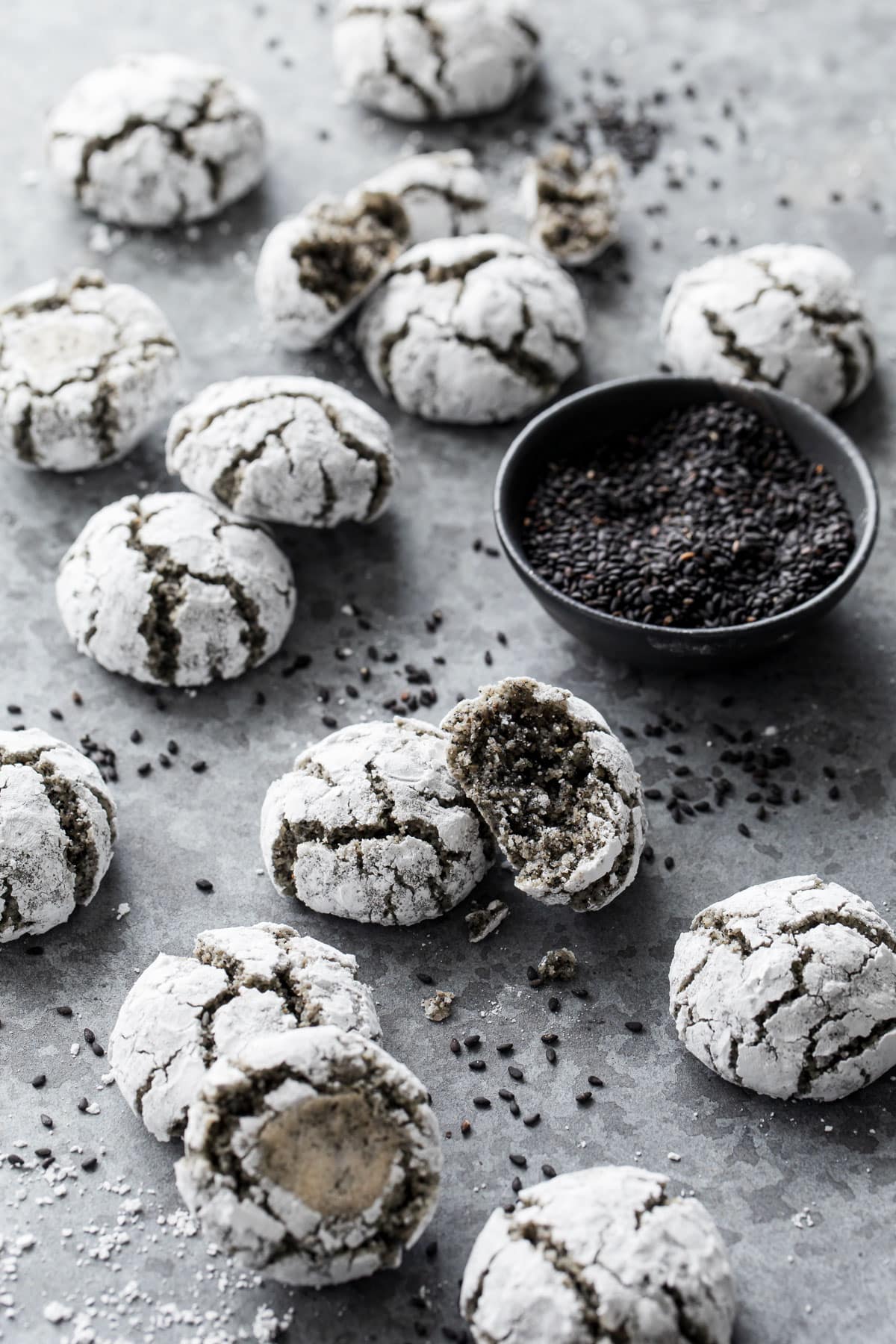
It’s been a hot minute since I’ve published a new amaretti flavor, and dare I say this one might be my favorite yet?
I’ll be honest I didn’t expect them to be quite so good the first time I made them. Usually my first go at any recipe is like throwing spaghetti at the wall, just to see what happens. It started with a spark of an idea that came to me while looking at the various nuts, seeds, and powders stashed in my pantry that made me think, “what if I swapped out some of the almond flour with finely ground black sesame seeds?” In this case that hunch that turned into a munch (we devoured the first batch in no time!)
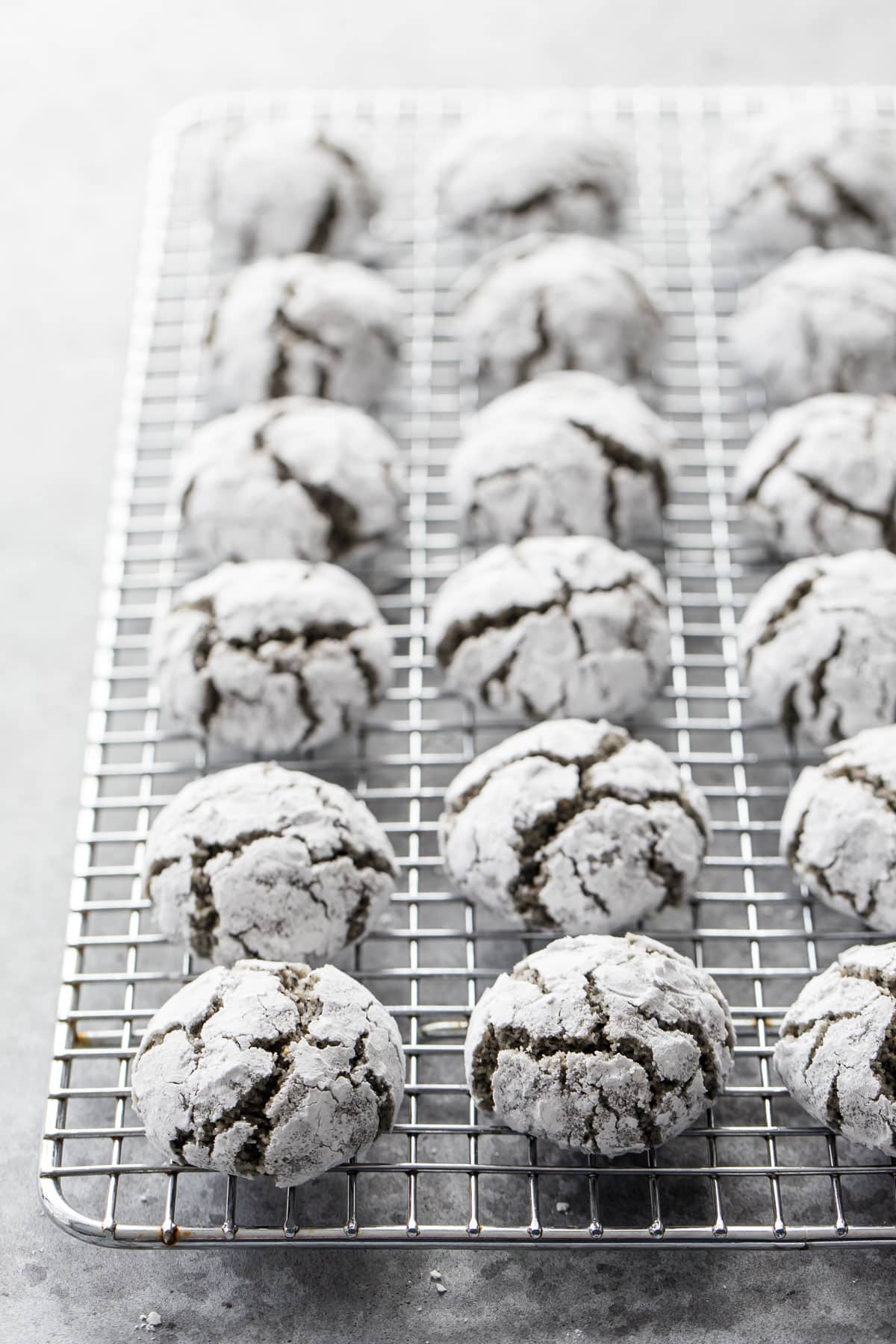
The black sesame flavor is, let’s just say, surprising. (After their first bite, some of my pottery classmates simply said, “woah,” and I think that describes them perfectly.)
Here in the US, we tend to associate sesame with more savory dishes like hummus and sesame noodles. Compare that to Japan and China where black sesame is the sweet star of many desserts (when we visited Japan 10 years ago I couldn’t get enough!) and where this recipe wouldn’t be nearly as surprising.
Black sesame—which is the same thing as white sesame but with the outer hull intact—has an intense roasted, nutty flavor and slight earthy bitterness that compliments the almond’s natural nuttyiess and cuts through the sweetness of the sugar, not unlike a bitter dark chocolate or roasted peanut butter would. The result is a delightful and deeply satisfying bite-sized cookie.
While you could technically use white sesame seeds, you’re not going to get the same depth and intensity of flavor. Similarly, I don’t recommend using raw black sesame seeds; the roasting brings out the best of the flavor without the underlying bitterness.
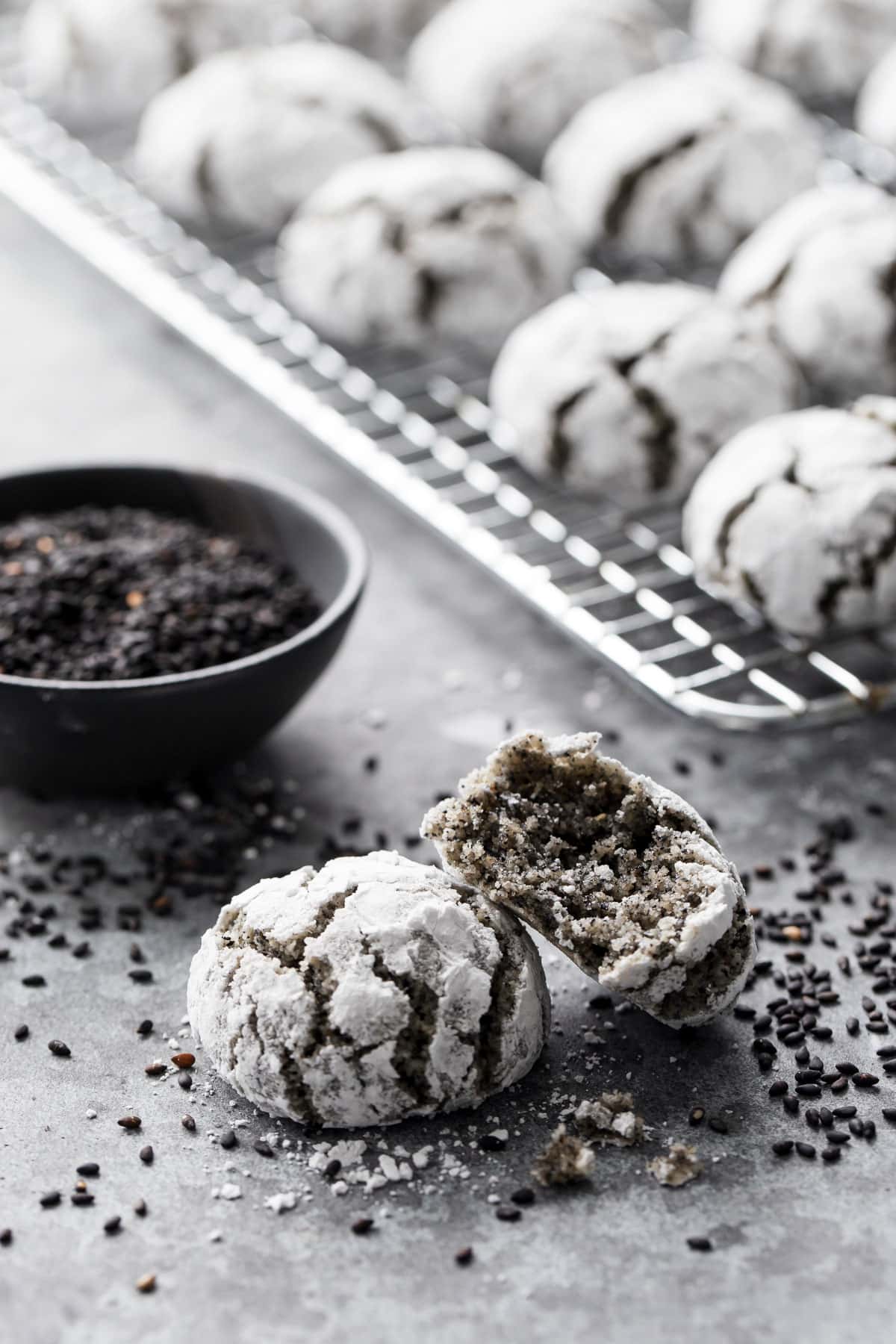
It’s crazy to me just how much these photos look like they were taken in black and white, but I assure you they are in full color! How cool is that?
You should probably go ahead and bookmark this recipe now for Halloween (hello spider web cookies!) or Christmas (lumps of coal cookies, anyone?) or even the next moon landing (because yes, they look like what I imagine moon rocks to be).
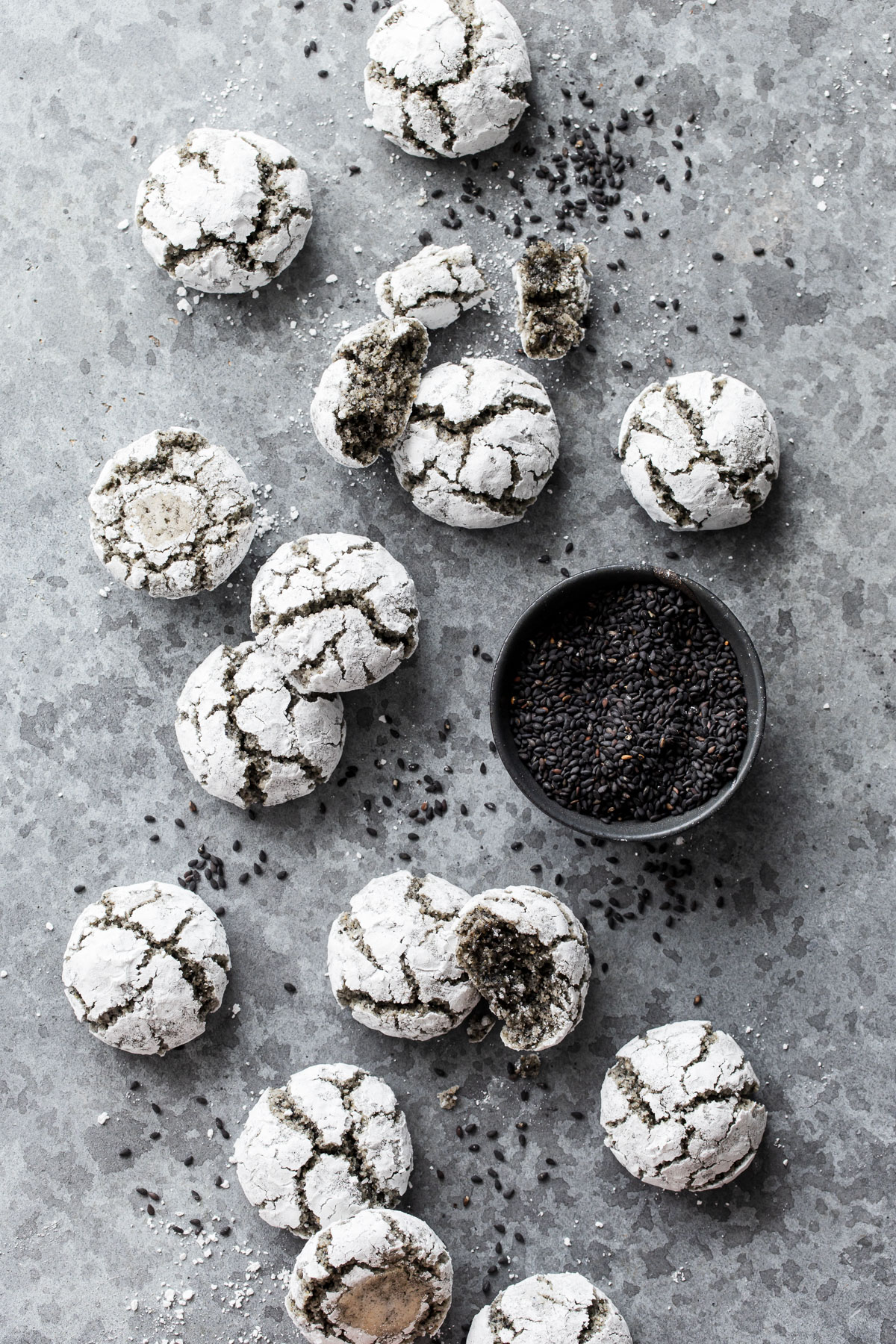
These are truly some of the easiest cookies to make. You do need an electric mixer since we are whipping egg whites, but if you’ve got the arm stamina you can certainly attempt it by hand. But from there it’s just a matter of mixing the whipped whites with the dry ingredients which takes mere minutes. I’d say that, even with the extra step of grinding the sesame seeds AND rolling 2 dozen dough balls in two layers of sugar, you’re still looking at under 30 minutes from start to finish.
Here’s how to make them:
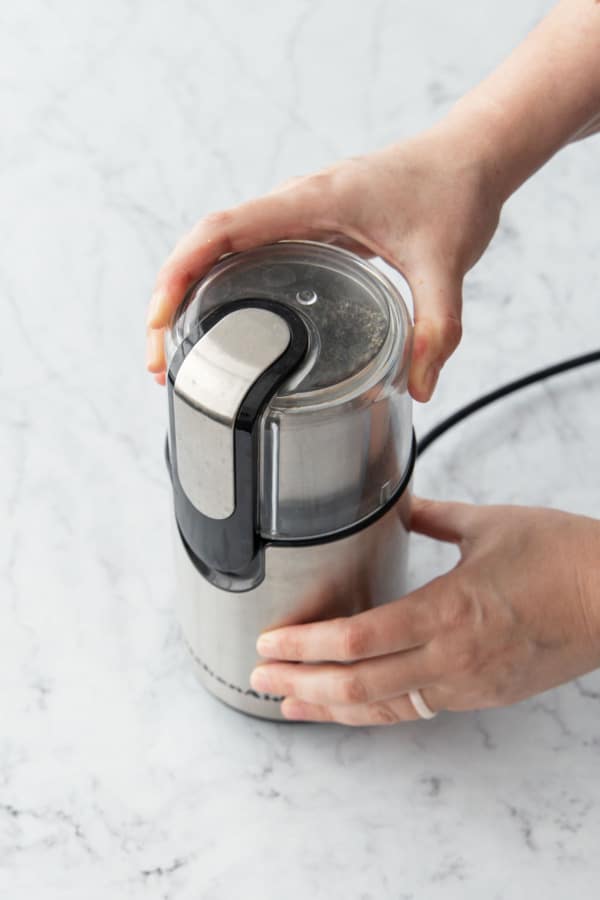 Grind your roasted black sesame seeds in a food processor or (clean!) coffee or spice grinder.
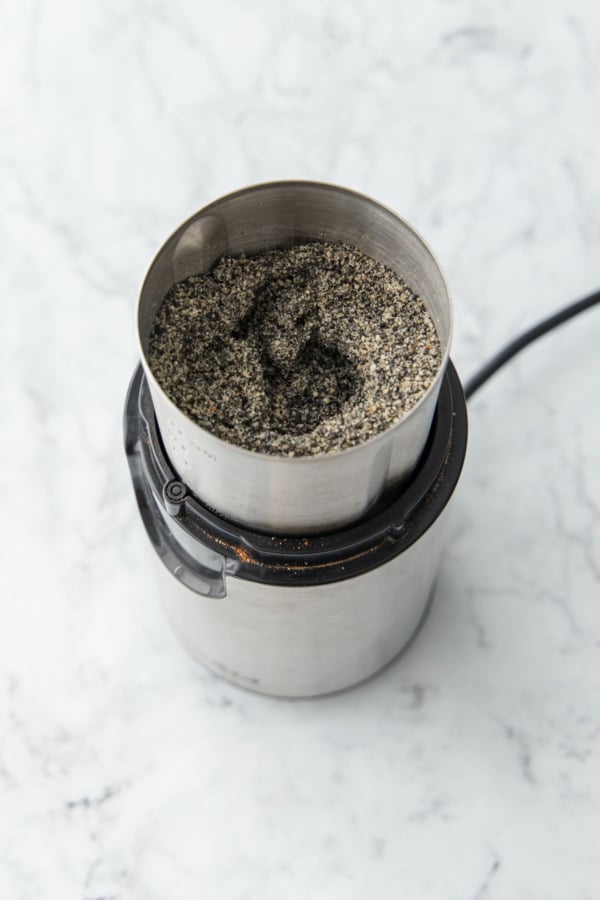 You may need to grind and sift a few times to get a total of 50 grams of finely ground black sesame.
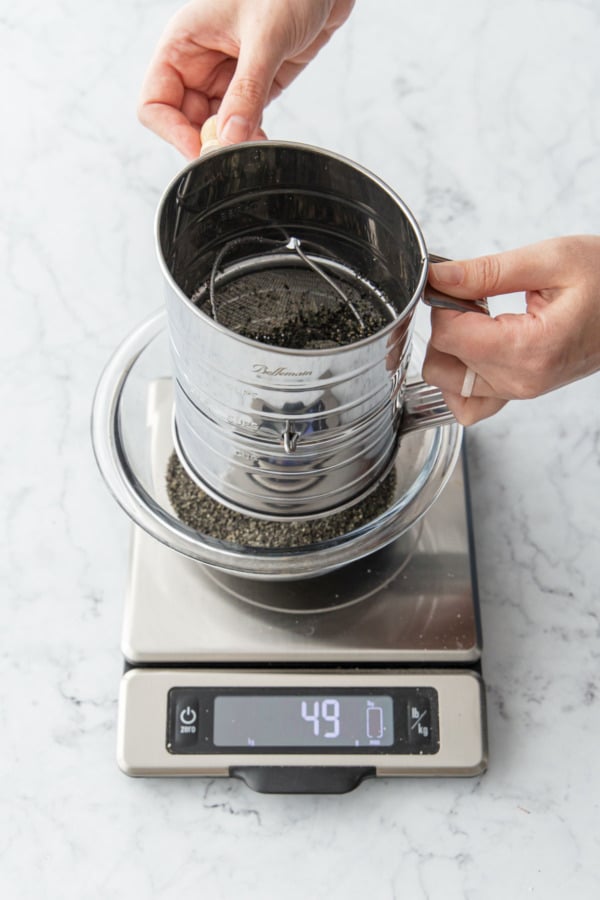 Sift the ground black sesame seeds into a mixing bowl (I set my bowl on a scale so I can measure exactly 50 grams worth).
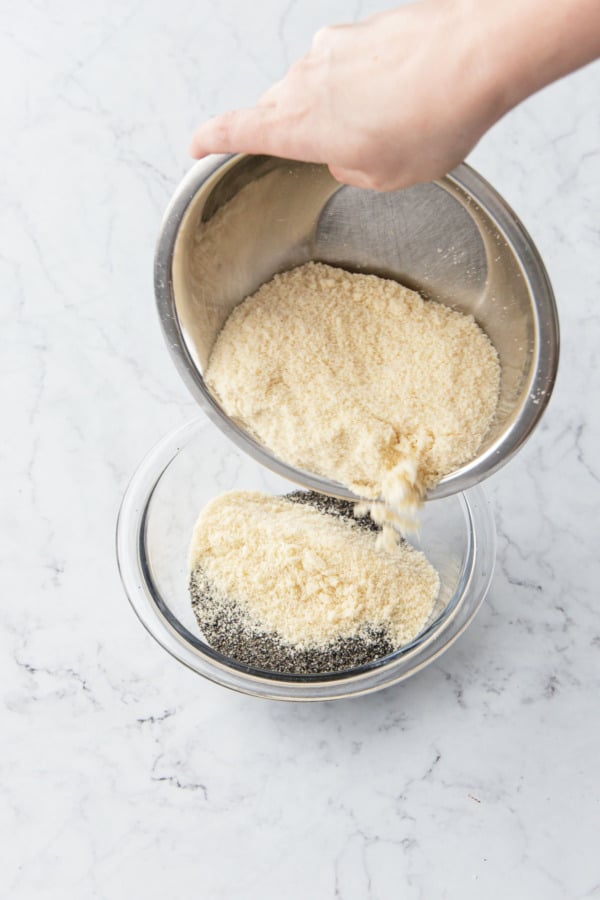 Add almond flour, along with sugar, baking soda, and salt to the bowl with the black sesame.
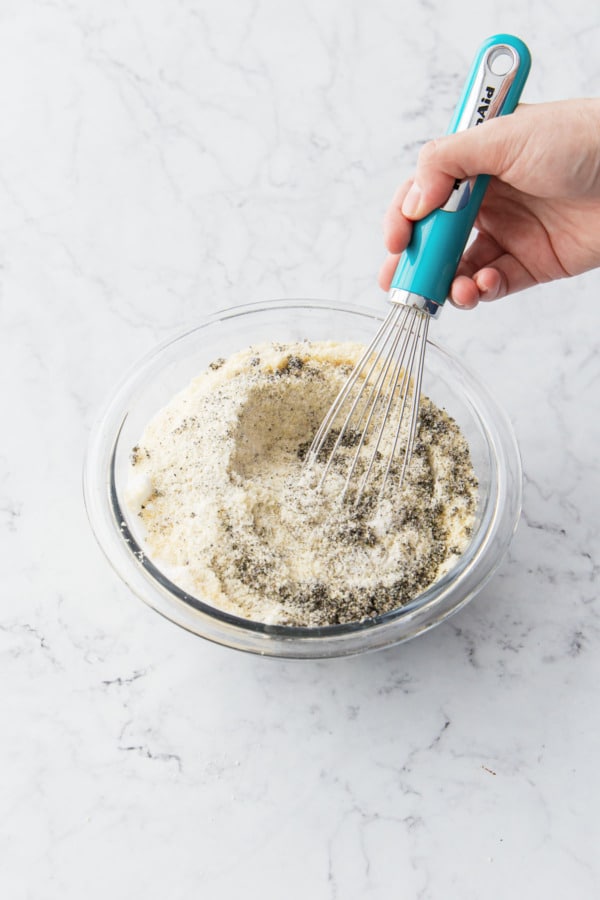 Whisk the almond and black sesame together until evenly distributed.
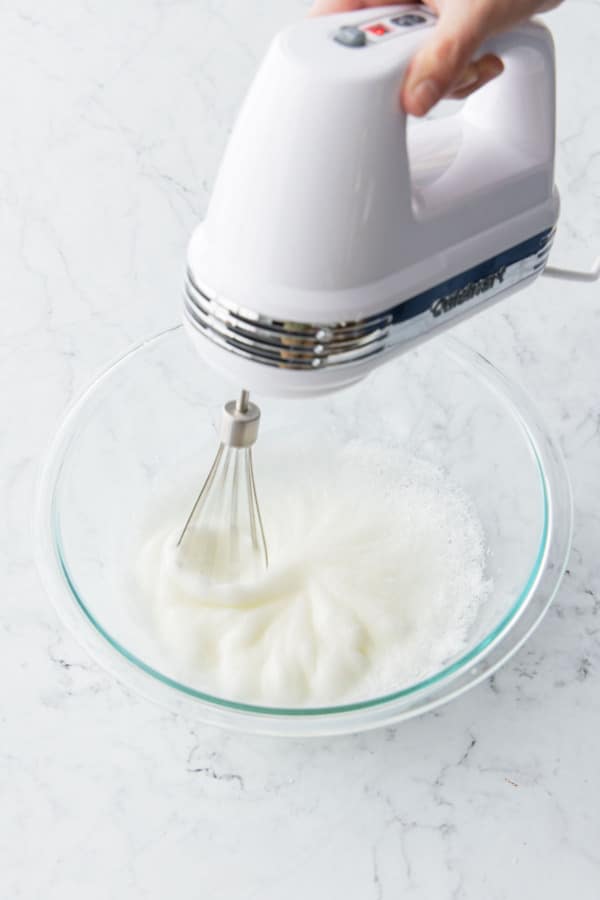 In a clean mixing bowl, whip the egg whites until they form medium-soft peaks.
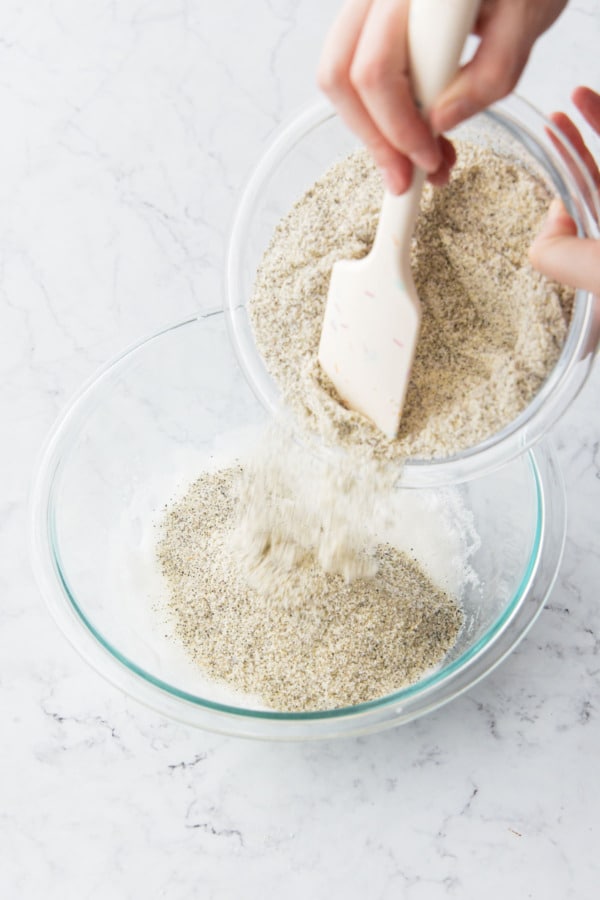 Add dry ingredients to bowl with egg whites.
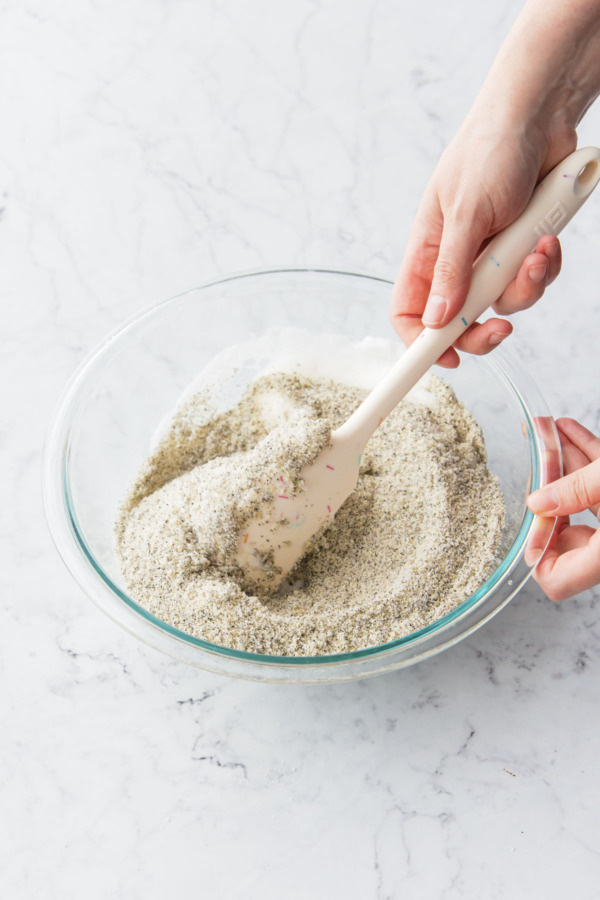 Using a spatula, mix the dry ingredients into the whipped egg whites. No need to be gentle about this, we’re not making macarons here!
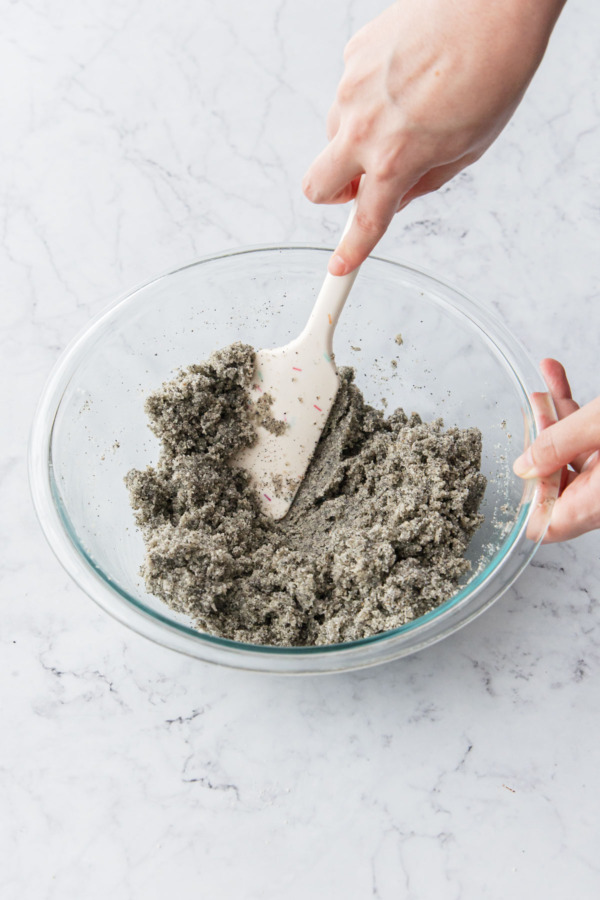 After mixing, the dough will be evenly moistened with no streaks of dry flour remaining.
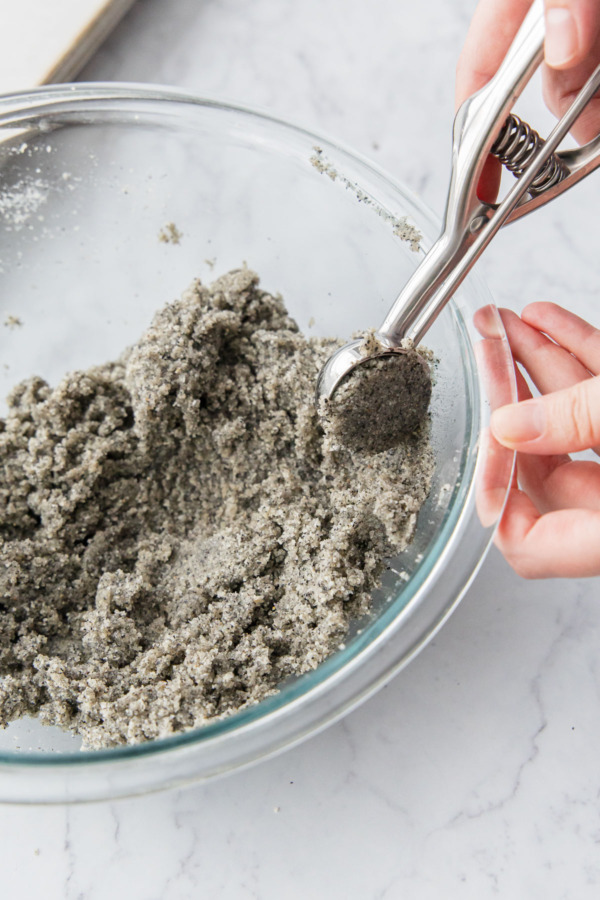 Using a small cookie scoop, scoop small balls of dough (approximately 18-20 grams per ball).
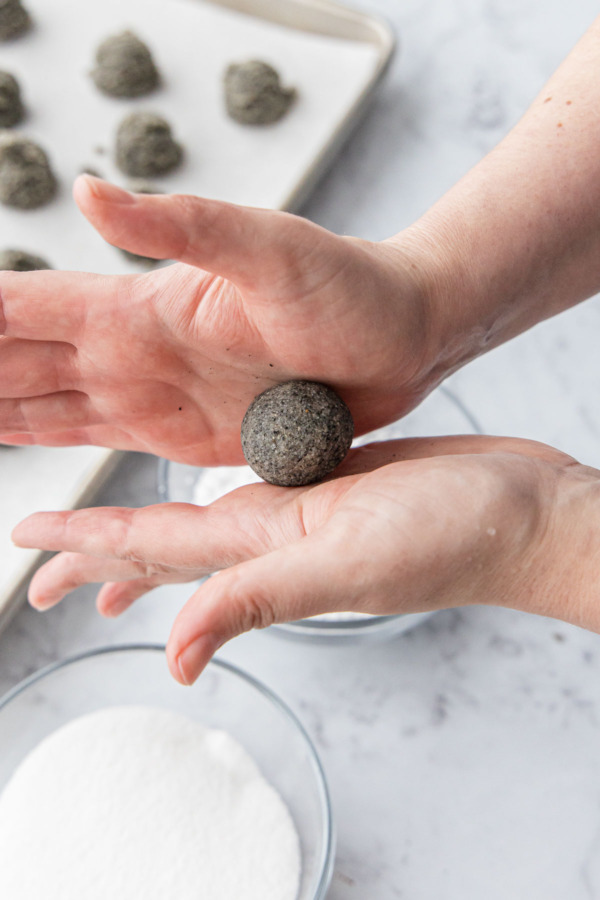 Roll the dough between your palms to form a smooth ball; it will be sticky but should still be workable.
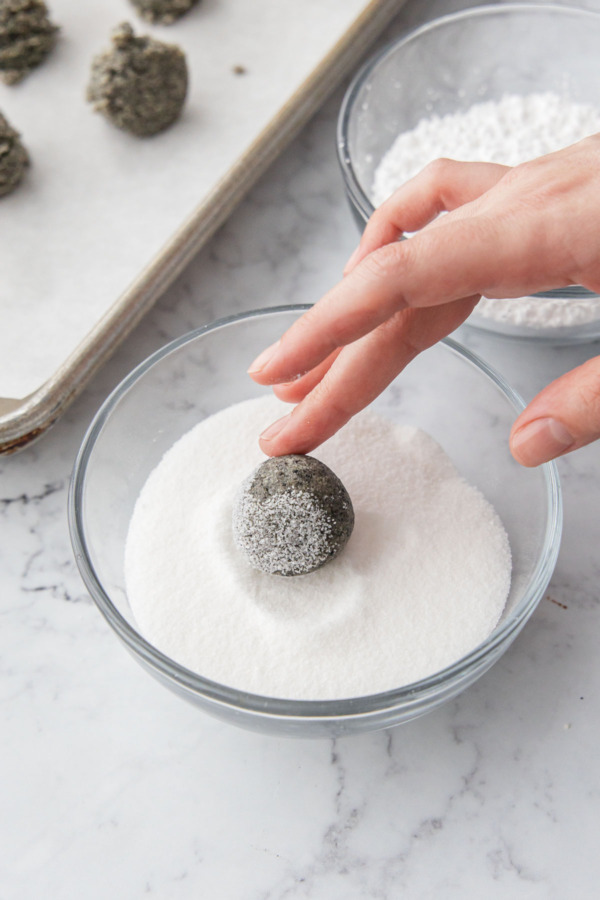 Roll the shaped dough ball in granulated sugar to coat if fully.
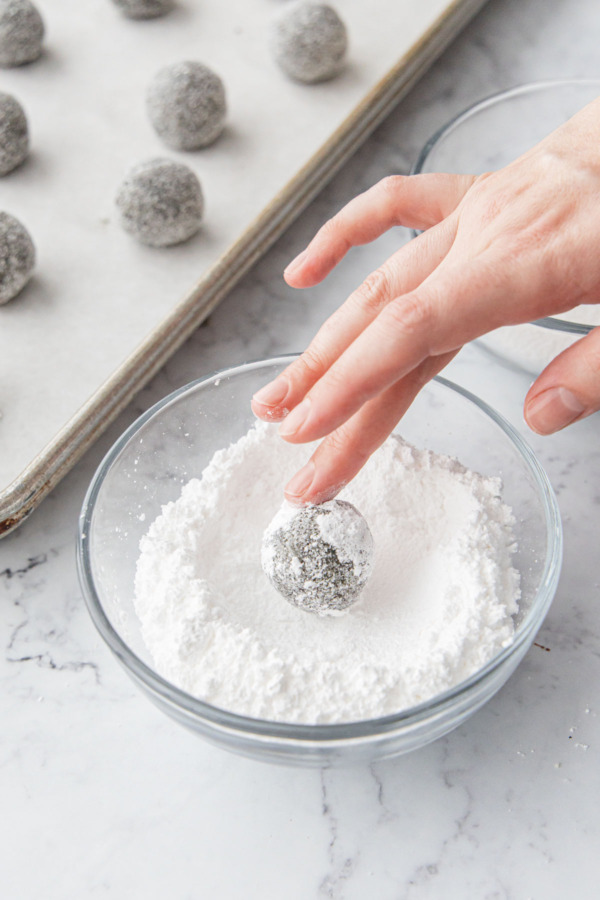 Then roll the ball in powdered sugar until coated; roll gently between your palms once more to knock off any excess.
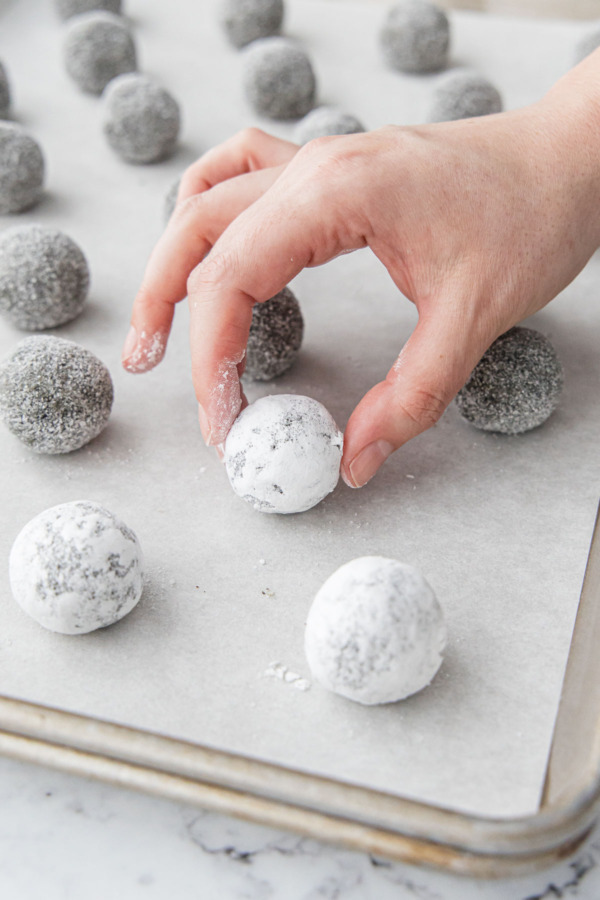 Arrange sugar-coated dough balls on a double-stacked, parchment-lined baking sheet, leaving an inch or so of space between them (they don’t spread much).
Why the whip?
I often get asked why we bother to whip the egg whites if we’re just going to mix the air right out of them (we are not making macarons here, folks, so you don’t have to be precious about “folding in” the egg whites in the least. I’d argue it’s virtually impossible to overmix this cookie dough).
The truth of the matter is that the whipping of the egg whites is not a huge deal, since, unlike macarons, we don’t need the air for our cookies to be successful. However, whipping does change the protein structure of the egg whites, which in turn affects the texture and appearance of the baked cookies.
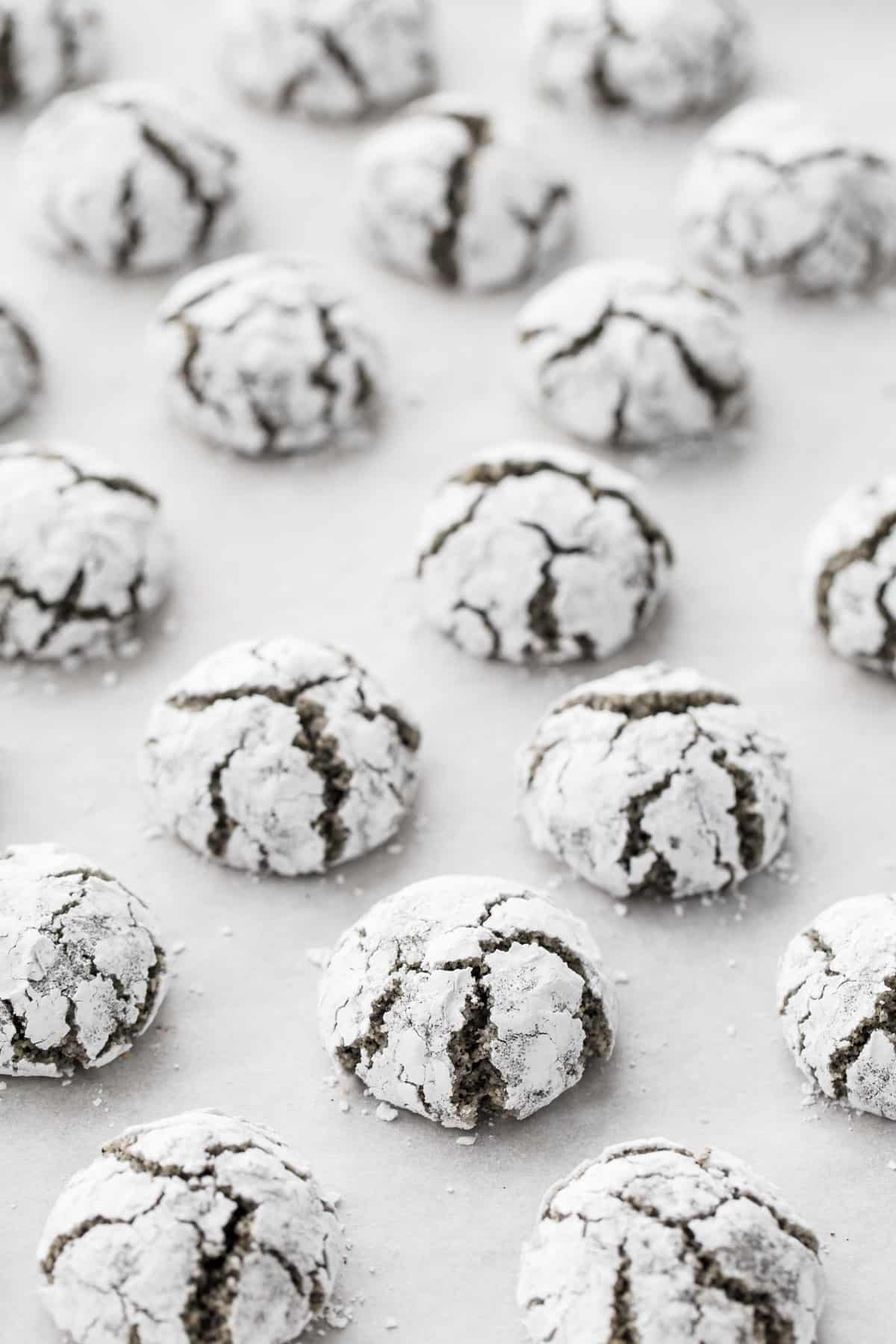
During multiple rounds of testing for the original soft amaretti cookies, the batches where I just stirred in straight egg whites without whipping them barely spread or cracked at all, and came out of the oven looking almost the same as when they went in. Even if you don’t care about appearances, the cracks are a clue to the soft and marzipan-like texture inside; cookies that don’t crack are going to be denser overall.
What this means is you don’t have to worry too much about how much you whip the egg whites. I’ve done soft, medium-soft, and medium peaks without issue; stiff peaks are a bit harder to mix in but should be just fine too. As long as you don’t drastically over-whip the egg whites you’ll be just fine (and honestly, you’d probably be ok even then, these are very forgiving cookies).
It also means you can mix the heck out of the dough without worrying that you’re knocking out the air. We don’t need it! So stir away. There shouldn’t be any spots of slightly wetter or dryer dough to be seen. I’ve even used my hands a time or two to really mix the dough together.
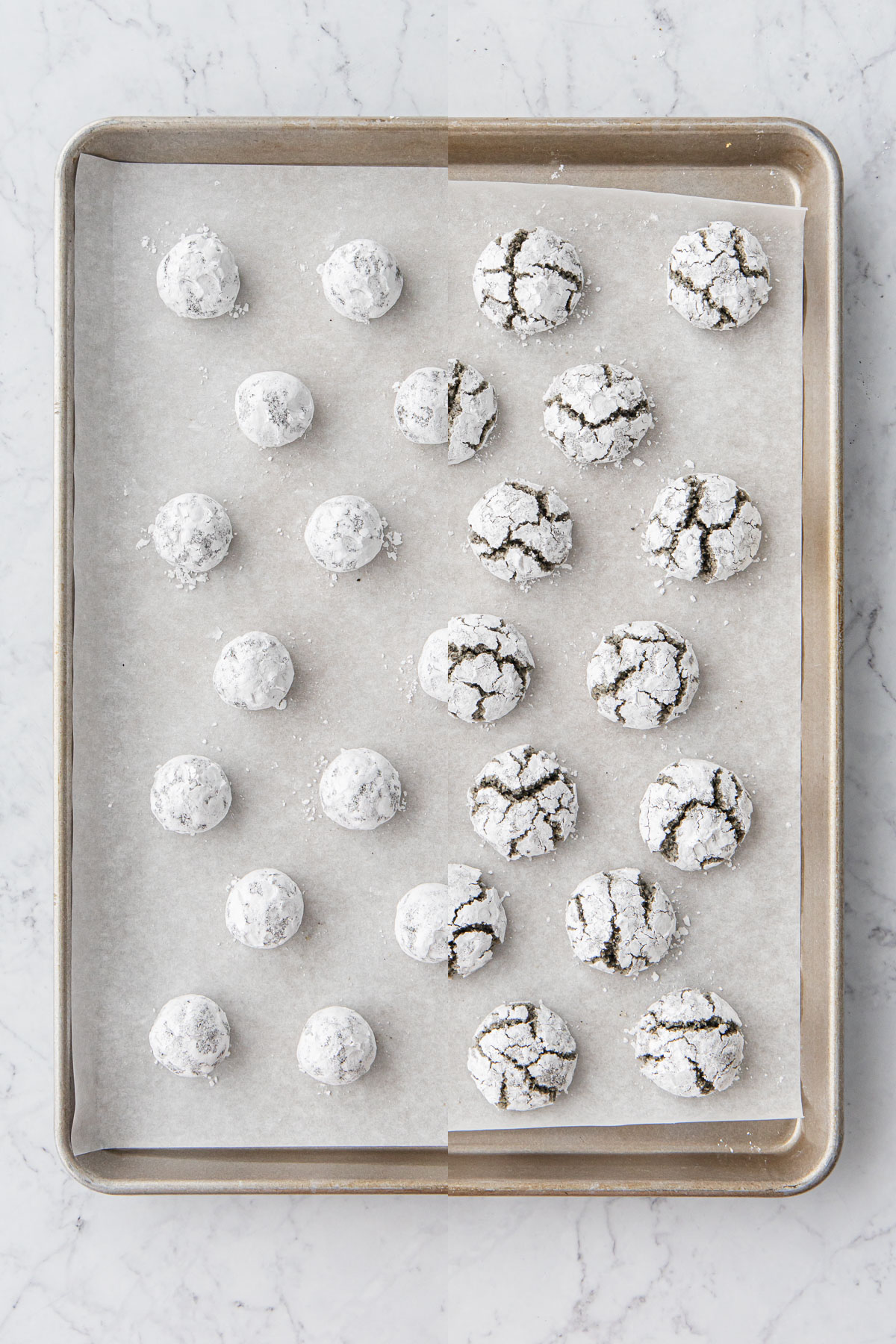
Stack your baking sheets.
The trick to evenly baking these cookies: double stack your baking sheets! I stack two identical, light or medium-colored sheet pans on top of one another, then line with parchment. Since the cookies don’t spread very much, so you can really pack them in (I fit all of them on one sheet which is good because I only have two good baking sheets anyway).
Stacking baking sheets adds an extra layer of insulation to the bottom, which is where these cookies brown the fastest. If you use a single cookie sheet, or a dark-colored cookie sheet, you’re going to end up with either dark brown bottoms, or if you take them out of the oven sooner, less chewy centers as they’ll be slightly underbaked.
Also make note of the baking temperature: 300º F (150º C). This is lower than the standard 350º bake temp. I know it’s incredibly easy to mistakenly preheat your oven to the wrong temperature (I’ve done it plenty of times), but the lower temperature allows the dense cookies to bake more evenly.
Give me some sugar.
Folks are always trying to reduce the sugar in my amaretti recipes, and while I’ve used slightly less than the original (175 grams versus 200 grams in the original), if you reduce the sugar much more than that your cookies will be hard round balls with a dry and dense texture. The sugar is integral to forming the perfect crackly outsides and chewy insides.
For the sweet-averse, you’ll be happy to know that the earthy and slightly bitter flavor of the black sesame really cuts the saccharine sweetness that often accompanies almond flavored things. Compared side by side, these cookies don’t taste nearly as sweet as the original version, despite using the same amount of sugar, which is kind of awesome.
You’ll also notice that this amaretti recipe, unlike some of my others, includes a scant 1/4 teaspoon of baking soda. It’s just a tiny bit, but it helps the cookies puff and crackle a little bit more than cookies made without baking soda. (You can certainly incorporate this little trick into the other flavors too if you find your cookies aren’t cracking as much as you’d like them to.)
Ingredient Notes & Substitutions
Black sesame: I used roasted black sesame seeds here, which have a noticeably richer, nuttier flavor with less bitter undertones than un-roasted seeds. If you can only find raw untoasted seeds, you can roast them yourself in a skillet or the oven.
To toast black sesame seeds, spread out sesame seeds in a single layer on a small baking sheet. Bake at 350 degrees F for 8 to 10 minutes, stirring once half way through. Seeds are done when fragrant and a single seed crumbles easily when crushed between your fingers. Take care not to over bake though as it can make the seeds taste bitter.
You can also buy pre-ground, pre-roasted black sesame seed powder if you want to save yourself 15 minutes.
Almond flour: The bulk of these cookies are still made of almond flour, which you can buy in the baking aisle of most grocery stores or health food stores these days, or online. Or make your own almond flour using just whole blanched almonds and a food processor or coffee/spice grinder.
Egg whites: I’ve used fresh and frozen egg whites with excellent results; carton egg whites often don’t whip up as nicely, though they do work in a pinch. If you are separating fresh eggs and need something to do with the yolks, a double batch of my banana bread chocolate chip cookies (which call for a single egg yolk) would be just perfect!
If you want to try a vegan version, I have had success using whipped aquafaba in place of the egg whites, and I think the same would be true of this variation. Note they spread a bit more than cookies made with egg whites, so just plan accordingly or use a little bit more almond flour to accommodate.
Almond extract: Optional, but I think the extra hit of almond flavor helps prop up the black sesame even more.
Granulated sugar: As mentioned in the post, I do not recommend reducing the sugar any further in this recipe as it will affect the texture and appearance of the final cookie (they will spread less and therefore crack less, and you’ll end up with hard little balls instead of soft and chewy cookies).
The double roll in granulated followed by powdered sugar helps establish a cracklier crust, but you can skip the first roll if you prefer and just do powdered sugar.
Powdered sugar: A final coating of powdered sugar makes the crinkles more visible in the final cookies. I used conventional powdered sugar here, as I’ve found organic varieties to ‘melt’ into the cookies more and the sugar coating won’t be quite as obvious in the final cookies.
Baking soda: A tiny bit of baking soda helps encourage the cookies to crack. All you need is a scant 1/4 teaspoon (by scant I mean slightly underfill the measuring spoon). Too much baking soda and they will spread quite a bit more, like my lemon crinkle cookies. However, if you want a flatter shape more like the lemon cookies, then use 1/2 teaspoon baking soda or 1/4 teaspoon of each soda and powder.
Black Sesame Amaretti Cookies
Prep Time: 30 minutes
Cook Time: 30 minutes
Total Time: 1 hour
With a nutty, roasted black sesame flavor, this Asian-inspired twist on a classic Italian cookie is both surprising and satisfying, not to mention visually stunning with dark gray crackles peeking through a powdered sugar coating. Even better, they're naturally gluten-free AND dairy-free.
Preheat oven to 300 °F.
Stack two matching, heavyweight, light to medium colored cookie sheets one inside the other (stacking two cookie sheets together keeps the bottoms of the cookies from getting too brown). Line with parchment paper or a silicone baking mat.
In a food processor or clean spice/coffee grinder, pulse black sesame seeds until finely ground. Sift out the fine flour into a bowl; return larger bits to the food processor to pulse a few more times, then sift again. I had to grind about 75 grams of seeds to get 50 grams of fine flour.
Sift almond flour into bowl with black sesame, then whisk in sugar, baking soda, and salt until evenly incorporated.
In a mixing bowl or the bowl of a stand mixer fitted with the whisk attachment, whisk egg whites until they hold soft peaks.
Add dry ingredients to mixing bowl with whipped egg whites; fold a few times to incorporate, then add almond extract and stir until mixture forms a soft, sticky dough. No need to be gentle, we're not making macarons here after all!
Use a small cookie scoop to portion dough into 1-inch balls (about 18-20 grams per ball). Roll between your palms, then coat in granulated sugar first, followed by powdered sugar. Dust of any excess by gently rolling it once more between your palms, then arrange on prepared baking sheet, leaving 1 inch of space between cookies. I was able to fit all 2 dozen cookies on one baking sheet, they don't spread very much.
Bake for 25 to 30 minutes until tops are crackly and bottoms are just barely golden (if you are NOT using doubled cookie sheets, check after 20 minutes). Remove from oven; let cool a few minutes, then transfer to wire racks to cool completely.
Cookies will keep at room temperature in an airtight bag or container, for up to 4 days.
All images and text ©
for Love & Olive Oil.
Let us know what you think! Leave a Review below or share a photo and tag me on Instagram with the hashtag #loveandoliveoil.
There may be affiliate links in this post. We are a participant in the Amazon Services LLC Associates Program, an affiliate advertising program designed to provide a means for us to earn fees by linking to Amazon.com and affiliated sites.