Bloodbath Or Buy-Zone? Bitcoin’s $66K Stagnation Hits The 25% Loss Threshold Historically Tied To Market Bottoms
Bitcoin has remained in a consolidation phase since its early February breakdown below the $70,000 threshold, oscillating around the mid-$60K region without establishing a clear directional bias. The loss of $70K marked a structural shift in short-term momentum, transitioning...
 Kass
Kass

Bitcoin has remained in a consolidation phase since its early February breakdown below the $70,000 threshold, oscillating around the mid-$60K region without establishing a clear directional bias. The loss of $70K marked a structural shift in short-term momentum, transitioning the market from trend continuation to range-bound stabilization. While volatility has moderated, underlying stress signals suggest that the correction may not be fully resolved.
According to a recent report by CryptoQuant analyst Darkfost, Short-Term Holders (STH) are still carrying substantial unrealized losses. With Bitcoin trading near $66,000, this cohort’s average unrealized loss stands at approximately 26.3%. Historically, periods in which STH losses exceed 25% tend to coincide with advanced phases of bear markets rather than early corrective pullbacks.
In previous cycles, these losses have occasionally expanded toward 40% during capitulation events before a durable bottom formed. The current reading, therefore, places the market in a zone of elevated psychological pressure. Short-term participants, who are typically more reactive to price fluctuations, remain underwater, increasing the probability of volatility spikes if key levels fail.
The current configuration of Short-Term Holder positioning reflects a classic late-correction dynamic. When STH cohorts begin to carry meaningful unrealized losses — particularly above the 25% threshold — market psychology shifts from optimism to stress.
Historically, these zones have coincided with attractive long-term accumulation windows, not because downside risk disappears, but because forced selling pressure gradually exhausts itself. Long-term investors deploying systematic DCA strategies have often benefited from entering during these compressed conditions.
 Bitcoin STH Averaged UPL (Coinbase Fix) | Source: CryptoQuant
The relationship between STH profitability and trend development is equally instructive. Sustained bullish expansions typically begin once the average unrealized profit of STH reclaims positive territory. That shift signals renewed structural demand strong enough to lift recent buyers back into profit. However, excessive profitability can also destabilize trends. In this cycle, readings near 20% average profit have coincided with overheated conditions and subsequent pullbacks, as profit-taking accelerates.
At present, with STH deeply underwater, the broader structure remains bearish from a cyclical standpoint. Momentum has not yet transitioned into expansion. Yet paradoxically, these stress phases often represent asymmetric positioning opportunities. The key distinction lies in timeframe: tactically fragile in the short term, but strategically constructive for disciplined capital deployment.
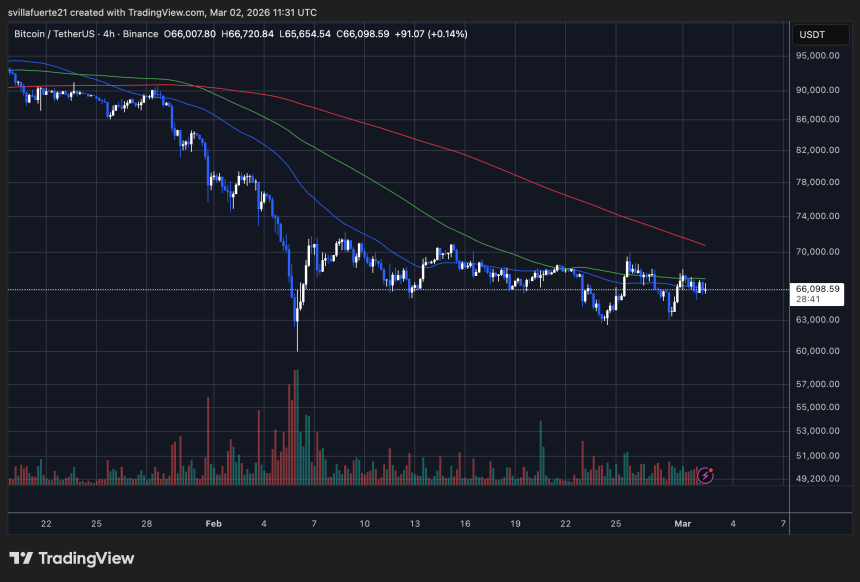 BTC testing critical price level | Source:










/cdn.vox-cdn.com/uploads/chorus_asset/file/25843386/rtx_5090_sean_hollister_verge_331A1028.jpg)