
December 2025 Digital Marketing Roundup: What Changed and What You Should Do About It
December made one thing clear: AI is no longer a feature layered on top of marketing. It is the system deciding what gets seen, what gets skipped, and what earns trust. Search pushed deeper into zero-click behavior. Paid ads...
 Fransebas
December made one thing clear: AI is no longer a feature layered on top of marketing. It is the system deciding what gets seen, what gets skipped, and what earns trust.
Search pushed deeper into zero-click behavior. Paid ads lost prime real estate. Influencer content matured into a full‑funnel channel. Platforms added tools while quietly tightening control. At the same time, security and data ownership became real business risks, not abstract concerns.
This roundup breaks down what actually mattered in December and how to adjust before these shifts harden in 2026.
Key Takeaways
Google accelerated AI-first search with Gemini 3, AI Mode, and AI-powered Search Console reporting. AI Overviews and AI Mode are pushing both organic and paid clicks down, reshaping SERP strategy. Influencer marketing expanded beyond Gen Z, pulling older, high-value audiences into creator ecosystems. LinkedIn doubled down on video and events, reinforcing its position as the B2B growth platform. Security threats like Google Ads MCC hijacks escalated, making account governance a priority.Search & AI
AI is now deciding what gets seen before a click ever happens. December’s updates show Google tightening its grip on discovery while pushing brands to earn visibility inside AI systems.
Search Console Gets AI-Driven Reporting
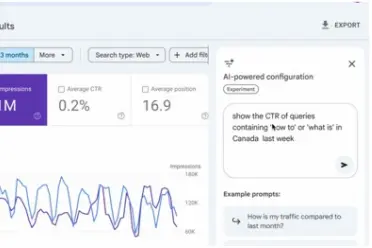
Google rolled out AI-powered configuration in Search Console, allowing users to request custom reports using natural language. Instead of manually stitching filters together, teams can now ask questions the way they think about performance.
Our POV: This changes who gets access to insight. Reporting no longer bottlenecks around technical SEO or analytics specialists. Strategy conversations can happen faster, and closer to the business question that triggered them.
What this unlocks: Faster pattern recognition across large sites, quicker validation of hypotheses, and fewer reporting cycles spent just getting the data into shape.
What to do next: Standardize a small set of executive-level prompts tied to growth questions (discovery, decline, opportunity). Use this to shorten the distance between signal and decision.
Gemini 3 Lands Directly in Google Search
Google deployed Gemini 3 straight into Search across 120 countries, delivering richer answers, visuals, and interactive elements without requiring users to leave the results page.
Our POV: This is Google asserting itself as the destination, not the doorway. Content that once earned traffic by being explanatory or comparative now competes with Google’s own synthesized answers.
Strategic impact: Informational content becomes less about volume and more about authority. If your content is interchangeable, it becomes invisible.
What to do next: Identify where your content overlaps with Gemini-style answers. Invest more heavily in insight, proprietary data, and perspective that AI cannot compress without losing value.
Google Embeds AI Mode Into the Search Flow
When users tap “show more” under an AI Overview, Google now routes them into a full AI chat experience rather than expanding citations.
Our POV: This confirms that Google is intentionally reducing outbound traffic in favor of guided, AI-mediated discovery.
Strategic impact: Attribution gets murkier. Influence matters more than visits. Brands that only measure success by clicks will underinvest in visibility where decisions actually form.
What to do next: Start treating AI inclusion as a visibility channel. Track brand mentions, citations, and presence inside AI responses alongside traditional KPIs.
AI Overviews Push Ads Below the Fold
Research shows that roughly a quarter of search results now place paid ads beneath AI Overviews, with mobile SERPs most affected.
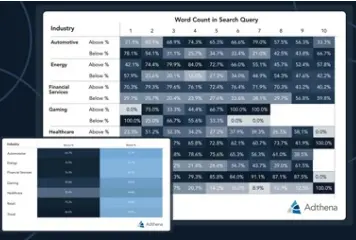
Our POV: Paid search is losing guaranteed prominence. Bidding harder no longer guarantees being seen.
Strategic impact: Paid media performance becomes dependent on how well it aligns with AI-generated context, not just auction dynamics.
What to do next: Re-evaluate high-value keywords where ads routinely fall below AI content. Coordinate paid and organic teams so messaging reinforces what users see first.
Branded Query Filtering and Chart Notes Arrive in GSC
Search Console now separates branded and non‑branded queries automatically and allows chart-level annotations.
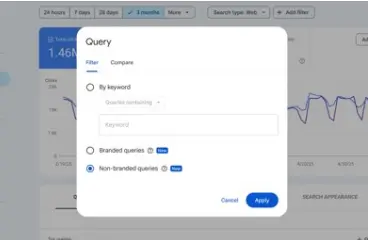
Our POV: This finally closes long-standing reporting gaps that distorted SEO performance narratives.
What to do next: Capture a baseline brand vs non‑brand split now. Add annotations for launches, migrations, PR wins, and algorithm shifts to preserve institutional knowledge.
Paid Media & Risk
Automation keeps increasing, but so does exposure. December highlighted how fragile performance can be without strong governance and clear safeguards.
OpenAI Pauses ChatGPT Ads
OpenAI halted its early test of native ads inside ChatGPT after users struggled to distinguish sponsored content from AI-generated answers.
Our POV: This pause is less about ads failing and more about timing. Conversational interfaces collapse the distance between advice and influence, which raises the bar for trust.
Strategic impact: Future AI advertising will not behave like traditional display or search ads. Brands will compete on usefulness, credibility, and contextual fit rather than interruption.
What to do next: Start pressure-testing what value-driven, answer-oriented advertising could look like for your category. Focus on scenarios where a brand genuinely helps a user decide, not just where it can appear.
Google Ads MCC Hijacks Surge
Phishing attacks targeting Google Ads manager accounts increased sharply, allowing attackers to drain budgets and lock out advertisers within hours.
Our POV: This is no longer an edge case. As accounts scale, risk compounds.
Strategic impact: Performance gains mean little if governance fails. Security lapses can erase months of optimization and undermine executive confidence in paid media.
What to do next: Treat access control as part of your growth strategy. Limit permissions aggressively, audit users regularly, and align security reviews with budget planning.
Product, Design & UX
Product and design updates are quietly shaping how fast teams can ship, test, and iterate. December brought one change that materially reduces friction between design and development.
Figma Introduces CSS Grid-Like Layout Controls
Figma rolled out a new grid system that more closely mirrors how CSS Grid and Flexbox behave in production. Designers can now edit rows and columns directly, reposition elements with keyboard controls, and build layouts that respond more like real front-end frameworks.
Our POV: This narrows the long-standing gap between design intent and shipped experience. Fewer handoff mismatches mean faster iteration and fewer compromises downstream.
Strategic impact: Design systems become more scalable when layouts behave predictably across breakpoints. Teams that rely on rapid experimentation benefit most.
What to do next: Revisit your design system and layout standards. Align designers and developers on grid conventions so prototypes map cleanly to production.
Social & Creator Economy
Creator content is no longer niche or youth-driven. Platforms are shaping social into a full-funnel, multi-generational influence engine.
LinkedIn Sees Another Video Surge
LinkedIn reported continued double-digit growth in video uploads and watch time, with short-form content driving disproportionate reach.
Our POV: LinkedIn has quietly become a daily content destination, not just a professional directory.
Strategic impact: B2B visibility increasingly depends on consistent, human-led storytelling. Brands that delay video adoption will find it harder to build authority as the feed fills up.
What to do next: Commit to a repeatable LinkedIn video cadence. Prioritize clarity and expertise over production polish, and measure engagement trends over time.
LinkedIn Upgrades Event Ads
New integrations with ON24 and Cvent allow LinkedIn Event Ads to capture and route leads directly into CRMs.
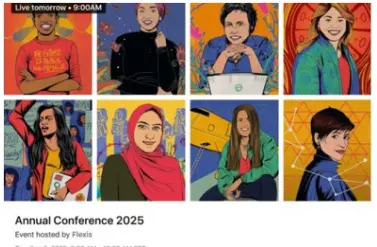
Our POV: Events are moving out of the brand bucket and into the revenue conversation.
Strategic impact: This blurs the line between awareness and pipeline, making events accountable in ways they historically avoided.
What to do next: Reframe events as performance channels. Align messaging, registration, and follow-up under a single measurement framework.
Influencer Content Expands Beyond Gen Z
New data shows that more than half of adults aged fifty-five to sixty-four now watch influencer content weekly, often via connected televisions.
Our POV: Influencer marketing has crossed into mainstream media behavior. This is no longer a youth or trend-driven channel.
Strategic impact: Influencers are shaping consideration and trust for higher-value purchases, not just discovery for impulse buys.
What to do next: Test creator partnerships that emphasize expertise and credibility. Treat influencer content as a mid-funnel and upper-funnel asset, not just awareness.
Meta Enhances the Creator Marketplace
Instagram expanded its Creator Marketplace with better discovery, AI recommendations, and stronger paid amplification tools.
Our POV: Meta is positioning creators as a scalable performance input, not just an organic reach lever.
Strategic impact: The line between influencer marketing and paid social continues to erode. Creative quality and creator trust now directly affect efficiency.
What to do next: Identify creators whose content already performs organically. Use paid support to scale what works instead of forcing performance from scratch.
PR, Media, and Trust
As AI pulls from third-party sources, brand credibility is being shaped outside your owned channels. Relationships and presence matter more than volume.
Journalists Push Back on AI Pitches
Surveys show most journalists still prefer human-led outreach, citing AI-written pitches as generic and misaligned with their coverage needs.
Our POV: Efficiency without judgment damages relationships.
Strategic impact: As AI-generated noise increases, thoughtful and relevant outreach becomes a stronger differentiator.
What to do next: Use AI for research and preparation, not substitution. Preserve human insight where trust and creativity matter most.
Discord Emerges as a Media Hub
PR teams are increasingly using Discord servers as live, on-demand press rooms.
Our POV: This flips traditional outreach from push to pull.
Strategic impact: Brands that make themselves accessible become resources journalists return to, not just sources they react to.
What to do next: Pilot a controlled Discord environment for media. Offer clear channels, real access, and timely updates without overwhelming participants.
Platform Playbooks
Smaller platform updates often hide the most practical gains. December delivered clear lessons on how context and native execution drive results.
Reddit Releases Dynamic Product Ad Guidance
Reddit published best practices showing that focused optimizations can lift Dynamic Product Ad performance meaningfully.
Our POV: Reddit rewards relevance over polish.
Strategic impact: Brands that adapt creative to platform norms outperform those that recycle ads from other networks.
What to do next: Speak directly to subreddit context, keep messaging tight, and test incrementally to isolate what actually moves performance.
Conclusion
December reinforced a hard truth: visibility is no longer owned. It is earned repeatedly across AI systems, platforms, and communities.
The brands that win in 2026 will build authority machines, not traffic hacks. They will secure their data, design for AI interpretation, and show up consistently wherever decisions are shaped.
If you want help translating these shifts into a durable growth strategy, the NP Digital team is already doing this work every day.





















.jpg&h=630&w=1200&q=100&v=c0f97a310e&c=1)


