Heart Dharani of Eleven-Faced Avalokitesvara — A Compassionate Journey Through Sacred Sound with Commentary and Chanted Song @3GemsBand
3Gems Band Presents: “Heart Dharani of Avalokitesvara Ekadasamukha” – A Journey Through Sacred SoundIn our latest chant, we delve into the profound layers of the Ekadasamukha Hridaya Dharani, a core mantra of the Bodhisattva of Compassion, Avalokitesvara. This isn’t just...
 MikeTyes
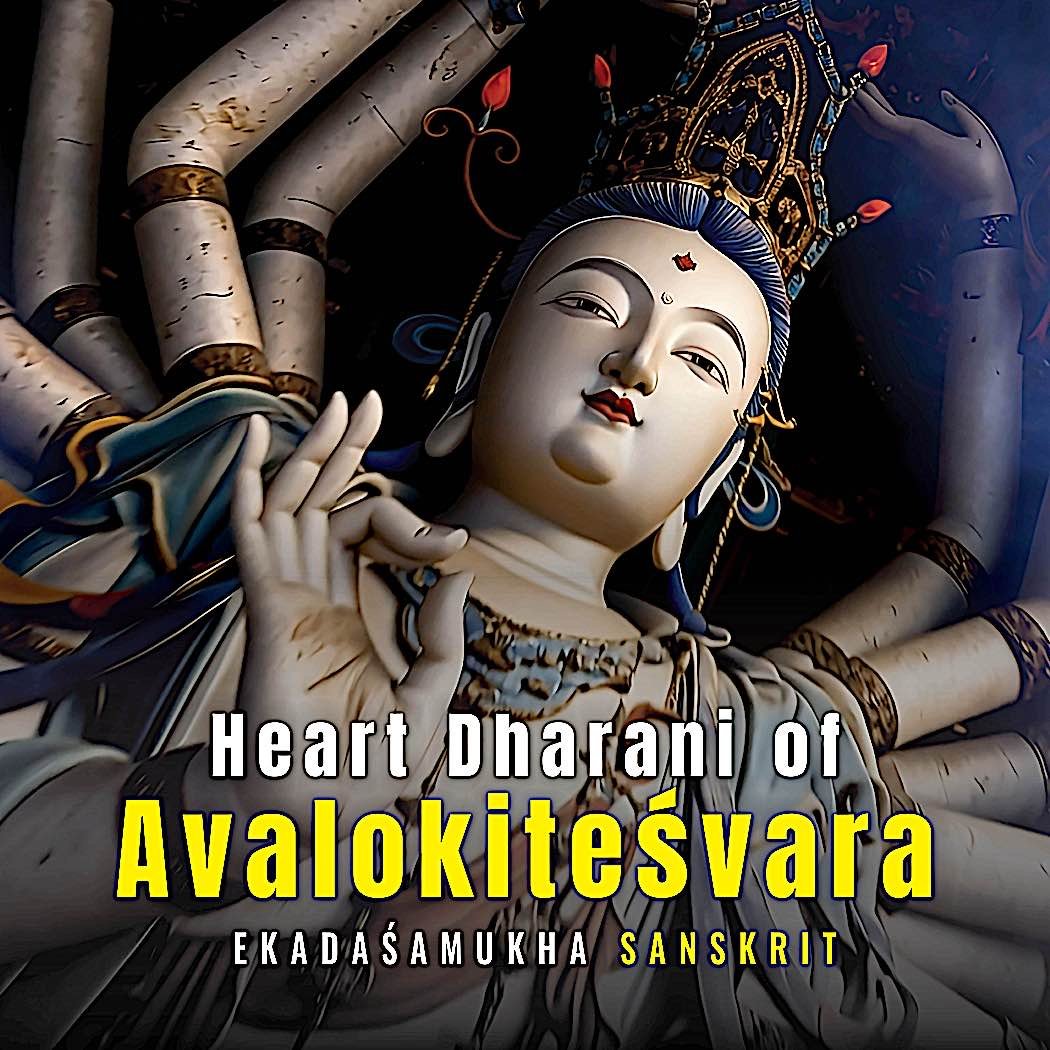
3Gems Band Presents: “Heart Dharani of Avalokitesvara Ekadasamukha” – A Journey Through Sacred SoundIn our latest chant, we delve into the profound layers of the Ekadasamukha Hridaya Dharani, a core mantra of the Bodhisattva of Compassion, Avalokitesvara. This isn’t just a song; it’s a sonic vehicle (vahana) designed to align the heart-mind with the vibration of boundless compassion and luminous wisdom.
Devangari Hindi and Chinese Translations below. 天城体印地文 देवनागरी हिंदी और चीनी अनुवाद नीचे दिए गए हैं।By Kongchok Namkha, @3GemsBand
When we chant this Dharani, we are not just listing names, praises and titles of Avalokitesvara. We are:
Taking refuge in the entire enlightened merit field. Invoking the luminous source of all compassion. Using vibrational seeds (dhara, dhiri, dhuru) to stabilize that energy within. Igniting and propelling (jvale, prajvale) the active force of compassion into motion. Asking for the blazing light (jvalam āpanaya) to transform our confusion into wisdom. Sealing and offering the entire practice to the Supremely Pure Being of Great Compassion.Here, we sing it with the sacred six seed syllables of the Mani Mantra: Om maṇi padme hūṃ (LYRICS BELOW — sung in Sanskrit):
LYRICS
Namo Ratna Trayāya (Homage to the Triple Gem)
Namaḥ Ārya Jñāna Sāgara (Homage to the ocean of noble wisdom)
Vairocana (The Luminous One or The Illuminator)
Vyūha Rājāya (To the King of the Manifestations.)
Tathāgatāya (To the Tathāgata)
Arhate (To the Arhat)
Samyaksam Buddhāya (To the perfectly awakened one)
Namo Sarva Tathāgatevyah (Homage to all Tathāgatas)
Arahatevyah (To the Arhats)
Samyaksam Buddhevyaḥ (To the fully and perfectly awakened ones )
Namo Arya Avalokiteśvarāya (Homage to Noble Avalokiteśvara )
Bodhisattvāya (To the Bodhisattva)
Mahasattvāya (To the Great)
Mahakarunikāya (To the Greatly Compassionate one)
Tadyathā. Ōṃ (Thus. Om)
Dhara Dhara, Dhiri Dhiri, Dhuru Dhuru (Sustain us , Sustain us, Sustain us, help us, help us )
Iṭṭe vatti ( May we have the strength )
Jvale Jvale (or some transliterate cale cale or Itte cale) ( To move forward, to move forward)
Prajvale Prajvala (some transliterate Prachale) ( To move forward further, to move further along the path )
Kusumē, Kusuma Dhare ( Where to pick the fruits)
Ili Mili Chitre Chite Jvalamapanaya. (Who bring the blazing understanding).
Parama Suddha Sattva (Pure Wholesome Perfection
Mahakarunikāya Svaha (To the Greatly Compassionate one I prostrate. Well said.)
Mani Mantra
The Mani mantra alone is the suject of countless great commentaries explaining how these six syllables purify the six defilements, the six realms, the six poisons and offfer the six wisdoms. The rest of our chant is the great compassionate heart Dharani of Avalokiteshvara in his 11-Faced, 1000-Armed form.
We offer this musical interpretation as a vessel for this profound meaning. May the sound support your journey of awakening the heart.
With Metta,
The 3Gems Band
For those who are interested, below is our expanded commentary on the more nuanced meanings of this great Dharani. May all beings benefit:
Part 1: The Homages (Namo…) – Establishing the Field of Refuge
The mantra begins with a series of homages, creating a sacred container and aligning the practitioner with the Three Jewels and Avalokiteshvara.
Namo Ratna Trayāya Traditional Translation: Homage to the Triple Gem. Deeper Nuance: This is an invocation of the ultimate refuge: the Buddha (the awakened nature), the Dharma (the truth/path), and the Saṅgha (the community of practitioners). It grounds the chant in Refuge. Namaḥ Ārya Jñāna Sāgara, Vairocana Vyūha Rājāya Traditional Translation: Homage to the ocean of noble wisdom, The Luminous One, To the King of Manifestations. Deeper Nuance: Jñāna Sāgara (“Ocean of Wisdom”) implies depth and boundlessness. Vyūha Rājāya (“To the King of the Array/Manifestation”) signifies that all enlightened forms and pure lands emanate from this fundamental luminous reality. Tathāgatāya Arhate Samyaksam Buddhāya Traditional Translation: To the Tathāgata, To the Arhat, To the perfectly awakened one. Deeper Nuance: These are three primary epithets of a Buddha. Tathāgata (“Thus-Gone” or “Thus-Come”) signifies one who has realized suchness (tathata). Arhat (“Worthy One”) is one who has conquered the enemies of the afflictions. Samyaksam Buddha (“Perfectly, Fully Awakened One”) is the complete, unsurpassed awakening. Together, they acknowledge the multifaceted perfection of Avalokitesvara’s perfect enlightenment. Namo Sarva Tathāgatevyah… (and the following lines) Deeper Nuance: This section pluralizes the previous homage—paying respect not to just one Buddha, but to ALL Tathāgatas, Arhats, and Perfect Buddhas throughout space and time. It universalizes the chant’s auspicious connections. Namo Arya Avalokiteśvarāya Bodhisattvāya Mahasattvāya Mahākaruṇikāya Traditional Translation: Homage to Noble Avalokiteśvara, To the Bodhisattva, To the Great Being, To the Greatly Compassionate one. Deeper Nuance: This is the direct invocation of Avalokiteśvara “The Lord Who Gazes Down (upon the world with compassion).” Mahasattva (“Great Being”) denotes a Bodhisattva of immensely high spiritual power and resolve. Mahākaruṇika is the heart of the mantra: “He of Great Compassion,” where “great” (mahā) implies it is active, unconditional, and limitless.Part 2: The Core Dharani (Tadyathā. Ōṃ…) – Transformative Power
Following Tadyathā ( which means more or less “It is thus!” or “Namely!”), the mantra proper begins with Ōṃ, the primordial sound symbolizing the universe’s essence.
Dhara Dhara, Dhiri Dhiri, Dhuru Dhuru Traditional Translation: Sustain us, Sustain us. Deeper Nuance: These are powerful, rhythmic seed-syllables (bīja) of stabilization and grounding. They evoke the energy of holding, supporting, and firmness (from the root √dhṛ). They are a plea for the compassionate energy to take hold in our being, to steady our minds, and to sustain the Dharma in the world. Think of them as sonic anchors. Iṭṭe Vatti / (Cale Cale) Traditional Translation: May we have the strength / To move forward. Deeper Nuance: This is a point of textual variation rich in meaning. Iṭṭe Vatti can imply “May it be so! May it prosper!”—an invocation for success. Cale Cale (from √cal, “to move”) invokes dynamic motion. In the context of compassion, it means: “Let the activity of compassion arise and proceed! Let it manifest in the world!” Prajvale / (Prachale) Traditional Translation: To move forward further. Deeper Nuance: The prefix Pra- intensifies the action. Prajvale can mean “Blaze forth brilliantly!” connecting to the wisdom-light of Vairocana. Prachale means “Set in motion completely!” Both imply a powerful, unstoppable activation of compassionate energy. Kusumē, Kusuma Dhare Traditional Translation: Where to pick the fruits. Deeper Nuance: Kusuma means “flower.” This line is profoundly poetic. It can be interpreted as: “O (you who are) in the flower, (you who) hold the flower!” The flower often symbolizes the blossoming of merit, wisdom, or the pure lotus of the heart. Avalokitesvara is both the source (in the flower of enlightenment) and the bestower (holder of the flower of blessings). It’s an invocation of flourishing purity. Ili Mili Chitre Chite Jvalam āpanaya Traditional Translation: Who bring the blazing understanding. Deeper Nuance: This is a cluster of resonant, almost onomatopoeic words. Ili Mili suggest gathering, pervading, or mingling (of light, compassion). Chitre Chite relate to variegated, splendid, or painted—perhaps indicating the manifold skillful means (upaya) of a Bodhisattva. Jvalam āpanaya is the key phrase: “Bring forth the blaze!” It is a direct prayer: “O Compassionate One, manifest here the blazing light of wisdom-compassion to destroy the darkness of ignorance!”Part 3: The Seal & Dedication (Svāhā) – Completion and Offering
Parama Śuddha Sattva Mahākaruṇikāya Svāhā Traditional Translation: Pure Wholesome Perfection, To the Greatly Compassionate one I prostrate. Well said. Deeper Nuance: Parama Śuddha Sattva is a majestic final epithet: “The Supremely Pure Being.” It affirms Avalokitesvara’s ultimate nature as the very embodiment of purified, awakened mind. Mahākaruṇikāya is repeated, sealing the mantra in the essence of great compassion. Svāhā! is far more than “well said.” It is a Vedic-derived exclamation meaning “Hail!” or “So be it!” It is an offering of the entire recited energy—a final release of the prayer into the universe, affirming its fulfillment.अवलोकितेश्वर एकादशमुख हृदय धारणी
Avalokiteśvara Ekādaśamukha Hṛdaya Dhāraṇī
3Gems बैंड प्रस्तुत करता है: “एकादशमुख अवलोकितेश्वर का हृदय धारणी” – पवित्र ध्वनि की एक यात्रा
हमारे नवीनतम कीर्तन में, हम करुणा के बोधिसत्व, अवलोकितेश्वर के एक मूल मंत्र, एकादशमुख हृदय धारणी की गहन परतों में उतरते हैं। यह केवल एक गीत नहीं है; यह एक ध्वनि वाहन है जिसे हृदय–चित्त को असीम करुणा और प्रकाशमय प्रज्ञा के कंपन के साथ संरेखित करने के लिए रचा गया है।
जब हम इस धारणी का जप करते हैं, तो हम केवल अवलोकितेश्वर के नामों, स्तुतियों और उपाधियों की सूची नहीं बना रहे होते। हम यह कर रहे होते हैं:
संपूर्ण ज्ञानोदय के पुण्य क्षेत्र में शरण लेना। समस्त करुणा के प्रकाशमय स्रोत का आह्वान करना। उस ऊर्जा को भीतर स्थिर करने के लिए कंपन बीजों का उपयोग करना। करुणा की सक्रिय शक्ति को प्रज्वलित करना और गति प्रदान करना। प्रज्वलित प्रकाश से हमारे भ्रम को प्रज्ञा में रूपांतरित करने का अनुरोध करना। संपूर्ण साधना को महाकरुणा के परम शुद्ध सत्त्व को समर्पित करना।यहाँ, हम इसे मणि मंत्र के पवित्र छह बीजाक्षरों के साथ गाते हैं: ॐ मणि पद्मे हूँ
बोल / मंत्र
नमो रत्न त्रयाय (त्रिरत्न को नमस्कार)
नमः आर्य ज्ञान सागर (आर्य ज्ञान के सागर को नमस्कार)
वैरोचन (प्रकाशमय)
व्यूह राजाय (व्यूहों के राजा को)
तथागताय (तथागत को)
अर्हते (अर्हत् को)
सम्यक्सं बुद्धाय (पूर्णत: जागृत को)
नमो सर्व तथागतेभ्यः (सभी तथागतों को नमस्कार)
अरहतेभ्यः (सभी अर्हतों को)
सम्यक्सं बुद्धेभ्यः (सभी सम्यक्संबुद्धों को)
नमो आर्य अवलोकितेश्वराय (आर्य अवलोकितेश्वर को नमस्कार)
बोधिसत्त्वाय (बोधिसत्त्व को)
महासत्त्वाय (महासत्त्व को)
महाकरुणिकाय (महा करुणावान को)
तद्यथा। ॐ। (अर्थात। ॐ।)
धर धर, धिरि धिरि, धुरु धुरु (धारण करो, धारण करो; स्थिर रहो, स्थिर रहो)
इट्टे वट्टि (या इट्टे चले) (सफलता प्राप्त हो; आगे बढ़ो, आगे बढ़ो)
प्रज्वले प्रज्वल (या प्रचले) (पूर्ण रूप से प्रज्वलित हो जाओ; पूरी तरह से आगे बढ़ो)
कुसुमे, कुसुम धरे (हे कुसुम में विराजमान, कुसुम धारण करने वाले)
इलि मिलि चित्रे चिते ज्वलमापनय (विभिन्न प्रकार से आकर्षित करके प्रज्वलित प्रकाश को ले आओ)
परम शुद्ध सत्त्व (परम शुद्ध सत्त्व)
महाकरुणिकाय स्वाहा (महा करुणावान को, स्वाहा।)
मणि मंत्र
अकेला मणि मंत्र ही असंख्य महान टीकाओं का विषय है जो बताती हैं कि कैसे ये छह अक्षर छह क्लेशों, छह लोकों, छह विषों का शुद्धिकरण करते हैं और छह प्रज्ञाएँ प्रदान करते हैं। हमारे कीर्तन का शेष भाग उनके एकादशमुख, सहस्रभुज रूप में अवलोकितेश्वर की महान करुणामय हृदय धारणी है।
हम इस संगीतमय व्याख्या को इस गहन अर्थ के लिए एक पात्र के रूप में अर्पित करते हैं। यह ध्वनि आपके हृदय को जागृत करने की यात्रा में सहायक हो।
मैत्री भाव से,
The 3Gems Band
जो लोग रुचि रखते हैं, उनके लिए नीचे इस महान धारणी के अधिक सूक्ष्म अर्थों पर हमारी विस्तृत व्याख्या है। सभी प्राणी लाभान्वित हों:
भाग 1: नमस्कार (नमो…) – शरण के क्षेत्र की स्थापना
मंत्र एक श्रृंखला के साथ शुरू होता है, एक पवित्र आधार का निर्माण करता है और साधक को त्रिरत्न और अवलोकितेश्वर के साथ जोड़ता है।
भाग 2: मूल धारणी (तद्यथा। ॐ…) – परिवर्तनकारी शक्ति
तद्यथा (जिसका अर्थ लगभग “अर्थात!” या “इस प्रकार!”) के बाद, मंत्र का मूल भाग ॐ, ब्रह्मांड के सार को प्रतीकात्मक रूप से दर्शाने वाली आदि ध्वनि, से शुरू होता है।
भाग 3: मुहर और समर्पण (स्वाहा) – पूर्णता और अर्पण
परम शुद्ध सत्त्व महाकरुणिकाय स्वाहा पारंपरिक अनुवाद: परम शुद्ध सत्त्व, महा करुणावान को, स्वाहा। गहन सूक्ष्मार्थ: परम शुद्ध सत्त्व एक राजसी अंतिम विशेषण है: “परम पवित्र सत्त्व।“ यह अवलोकितेश्वर की शुद्ध, जागृत चित्त के अवतार के रूप में उनकी परम प्रकृति की पुष्टि करता है। महाकरुणिकाय को दोहराया जाता है, मंत्र को महाकरुणा के सार में मुहरबंद करते हुए। स्वाहा! “शाबाश” से कहीं अधिक है। यह एक वैदिक–व्युत्पन्न उद्गार है जिसका अर्थ है “अभिवादन!” या “ऐसा ही हो!” यह संपूर्ण उच्चरित ऊर्जा का एक अर्पण है—प्रार्थना को ब्रह्मांड में अंतिम रूप से मुक्त करना, इसकी पूर्ति की पुष्टि करना।十一面觀音心咒
三寶樂團呈現:《十一面觀音心咒》—— 一段神聖音聲之旅
在我們最新的唱誦中,我們深入探究《十一面觀音心咒》的深邃層次,這是慈悲的化身——觀世音菩薩——的核心真言。這不僅僅是一首歌;它是一個音聲的載具,旨在讓心識與無盡慈悲和澄明智慧的振動頻率相契合。
當我們唱誦這個陀羅尼時,我們不僅僅是在列舉觀世音菩薩的名號、讚譽與稱謂。我們是在:
皈依 整個覺悟的功德福田。 召請 一切慈悲的澄明之源。 運用振動的種子字,將那份能量 穩固 於內在。 點燃並推動 慈悲的積極力量開始運轉。 祈請 熾盛光輝 將我們的迷惘轉化為智慧。 封印並迴向 整個修持予 至極純淨的大悲聖尊。在此,我們結合了瑪尼咒的六個神聖種子字一同唱誦:嗡 嘛呢 唄美 吽
唱詞
Namo Ratna Trayāya (皈依三寶)
Namaḥ Ārya Jñāna Sāgara (禮敬聖智海)
Vairocana (毗盧遮那)
Vyūha Rājāya (莊嚴王)
Tathāgatāya (如來)
Arhate (應供)
Samyaksam Buddhāya (正遍知)
Namo Sarva Tathāgatevyah (禮敬一切如來)
Arahatevyah (一切應供)
Samyaksam Buddhevyaḥ (一切正遍知)
Namo Arya Avalokiteśvarāya (禮敬聖觀自在)
Bodhisattvāya (菩薩)
Mahasattvāya (摩訶薩)
Mahakarunikāya (大悲者)
Tadyathā. Ōṃ (即說咒曰。嗡)
Dhara Dhara, Dhiri Dhiri, Dhuru Dhuru (住持,住持,堅住,堅住)
Iṭṭe vatti (願得成就 / 願得威勢)
Jvale Jvale (或有些轉寫為 cale cale 或 Itte cale)(熾燃,熾燃 / 進行,進行)
Prajvale Prajvala (有些轉寫為 Prachale)(極熾燃,極熾燃 / 大力進行)
Kusumē, Kusuma Dhare (於花中,持花者)
Ili Mili Chitre Chite Jvalamapanaya. (聚集照耀,令得熾盛光明)
Parama Suddha Sattva (最極清淨有情)
Mahakarunikāya Svaha (大悲者,娑婆訶)
瑪尼咒
僅是瑪尼咒這六字,便有無數偉大論釋闡明其如何淨化六垢、六道、六毒並賜予六種智慧。我們唱誦的其餘部分,則是觀世音菩薩示現十一面千臂形相時,其偉大的慈悲心咒。
我們將這音樂詮釋,獻作承載此深意的器皿。願此音聲護持您喚醒內心的旅程。
謹以慈心,
三寶樂團
為有意深入者,以下是我們對這偉大陀羅尼更細微意義的延伸解說。願一切眾生受益:
第一部分:敬禮部分(Namo…)—— 建立皈依的場域
此咒以一系列敬禮開始,創造一個神聖的容器,使行者與三寶及觀世音菩薩相應。
第二部分:核心陀羅尼(Tadyathā. Ōṃ…)—— 轉化之力
緊接 Tadyathā(意為「即說」或「所謂」),真言本身以象徵宇宙本源的原始音 Ōṃ 開始。
第三部分:封印與迴向(Svāhā)—— 圓滿與奉獻
Parama Śuddha Sattva Mahākaruṇikāya Svāhā 傳統譯義:最極清淨有情,大悲者,娑婆訶。 深層意涵:Parama Śuddha Sattva 是一個宏偉的最終稱號:「至極清淨的聖者」。它確認了觀世音菩薩作為淨化、覺悟之心本身化現的終極本性。Mahākaruṇikāya 被重複,將真言封印於大悲的本質之中。Svāhā! 遠不止「善哉」。這是一個源於吠陀的感嘆詞,意為 「敬禮!」或「圓滿成就!」。它是對整個誦持能量的迴向——將祈請最終釋放於宇宙之中,確認其圓滿實現。