Inside Celine Advertising: Campaigns That Feature “Nothing at All”
Celine advertising is, quite frankly, the ultimate example of the power of “nothing.” Yes, that’s an interesting way to begin a blog; however, if you’ve ever been scrolling through your feed paused on an impossibly chic black-and-white campaign image,...
 JaneWalter

Celine advertising is, quite frankly, the ultimate example of the power of “nothing.”
Yes, that’s an interesting way to begin a blog; however, if you’ve ever been scrolling through your feed paused on an impossibly chic black-and-white campaign image, there’s a good chance it was Celine. Very few luxury brands have figured out how to bottle “cool” quite like this Parisian powerhouse.
Even its official website says so much about its minimalistic approach:
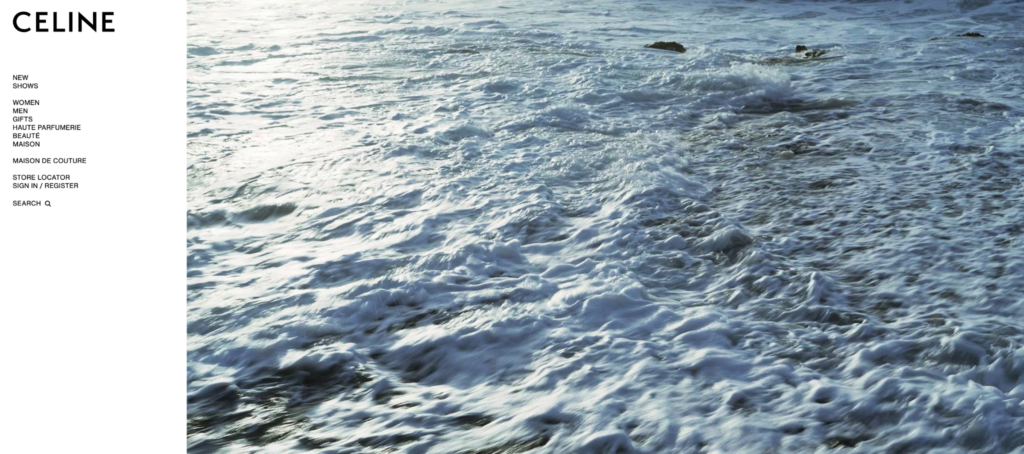
So, let’s be real: Celine’s advertising sells a vibe, a specific identity, and a minimalist way of looking at the world. They pull it off with such an “I woke up like this” energy that it feels completely effortless.
In this piece, we’re going to pull back the curtain on the Celine marketing strategy. We’ll look at how the brand has shifted from the edgy “Indie Sleaze” of the Hedi Slimane era to Michael Rider’s 2026 philosophy of “intuition over strategy.”
Also dig into why their newest campaigns seem to “feature nothing at all” (and why that’s actually brilliant), talk a little bit about the numbers behind their multibillion-dollar success, and see how they’re holding their own against the rest of the fashion heavyweights.
Celine Advertising in Details
Who Is Celine: A Quick Overview The 4P Marketing Mix of Celine Understanding the Celine Target Market SWOT Analysis of Celine Celine Advertising Campaigns: The Real-World Examples Social Media Management: How Celine Gets Around Online Influencer Marketing and Ambassador Strategy Celine vs. the Fashion Giants FAQ about Celine Advertising
Who Is Celine: A Quick Overview
Founded in 1945 by Céline Vipiana in Paris, Celine began as a made-to-measure children’s shoe business before evolving into one of the world’s most coveted luxury fashion houses.
The brand became part of the LVMH group in 1996, a pivotal moment that set the stage for its global expansion.
But it was two creative directors who truly shaped Celine’s advertising identity as we know it today: Phoebe Philo, who helmed the house from 2008 to 2018, and Hedi Slimane, who took over in 2018 and remains at the creative helm today.
These two figures, as you may know, designed entire visual universes that defined what Celine marketing looked and felt like.
Under Phoebe Philo:
Celine became the brand of quiet luxury before that term was even coined. Minimal, architectural, deeply intellectual.
Under Hedi Slimane:
The aesthetic shifted toward a more rock-and-roll, youth-oriented sensibility, and the marketing followed suit.
Today, Celine is a brand that simultaneously holds two very different audiences in tension (we’ll look at that in detail below), and navigating that is part of what makes its advertising so fascinating.
Revenue-wise, Celine is not a small player.
As part of LVMH’s Fashion & Leather Goods division, which generated approximately $42.2 billion in revenue only in 2023, Celine is estimated to contribute somewhere between $2.5 billion and $3 billion annually.
The 4P Marketing Mix of Celine
Celine actually is a great case study when it comes to the marketing mix. Let’s see closer:
Product: Less Is More, but Make It Perfect
Celine’s product strategy is built on the philosophy of restrained excellence.
The brand offers ready-to-wear collections, leather goods, shoes, accessories, and eyewear, but within each category, the product range is deliberately curated rather than overwhelming (remember “featuring nothing at all” philosophy). In other words, you won’t find a thousand SKUs of the same bag in forty colors; maybe you’ll find five.
The Celine bag advertisement ecosystem revolves around a handful of hero pieces: the Classic Box Bag, the Triomphe, the Cabas, and, more recently, the Ava and Cuir Triomphe.
These bags are positioned as “investment pieces,” which is a crucial distinction in how they’re marketed. When Celine advertises a bag, it rarely shows it being used casually. It’s presented as almost a sculptural object.
Celine sunglasses advertising follows a similar philosophy. Eyewear like the CL40063I and the Triomphe frames are advertised as signature accessories.
So, yes, the product and the advertising are inseparable in Celine’s world.
Price: The Economics of Exclusivity
Celine’s pricing strategy is premium, obviously.
The Classic Box Bag retails for approximately $3,300–$4,200 USD, depending on size and material. The Triomphe canvas tote starts at around $1,650. Ready-to-wear pieces range from $800 for basics to over $5,000 for outerwear. Celine sunglasses typically retail between $390 and $580.
Importantly, Celine rarely discounts. And, as you can predict, it maintains brand equity and signals to consumers that the product retains value.
Place: Selective Distribution as a Marketing Tool
Distribution for Celine is selective.
As of early 2026, Celine operates 178 boutiques globally, concentrated in premium retail locations, Rue Saint-Honoré in Paris, Bond Street in London, Madison Avenue in New York, and Aoyama in Tokyo.
The physical retail experience is itself a marketing tool: stores are designed as temples of minimalism, with architecture and display that reinforce the brand’s aesthetic values.
Ecommerce is present but managed carefully, Celine.com offers full access to the product range, but the online experience is curated to feel as exclusive as walking into a boutique.
There are no pop-up sale banners, no urgency messaging.
Promotion: Where Celine Advertising Gets Interesting
The brand uses a combination of editorial campaigns, celebrity endorsements, music partnerships, and increasingly sophisticated digital and social media strategies.
We’ll explore each of these in depth throughout this article.
Understanding the Celine Target Market
Who exactly is Celine talking to? This is a more nuanced question than it might seem, because the Celine target market is actually quite layered.
The Core Demographic
The primary Celine customer is a woman (or man, Celine’s menswear line has grown significantly) aged 28–45.
They are urban, highly educated, and style-conscious in a way that values quality over trendiness.
The Aspirational Younger Audience
Under Hedi Slimane, there’s been a deliberate outreach to a younger, more culturally plugged-in audience; the 22–32 demographic who follows musicians, skate culture, and indie cinema. These consumers might not be buying $3,500 bags yet, but they’re building brand awareness and loyalty that translates into purchase intent as their income grows.
This dual audience strategy creates some interesting tensions in the Celine advertising approach, and it explains why you’ll sometimes see campaigns that feel startlingly youthful next to ones that look like arthouse photography.
Geographic Distribution
Geographically, Celine’s core markets are France, the United States, Japan, China, and South Korea.
SWOT Analysis of Celine
Let’s get Celine under the microscope:
| Strengths Iconic Visual Language: Minimalist, high-contrast imagery distinctive across all digital/physical touchpoints. LVMH Powerhouse: Massive advertising budgets and logistical scale driven by LVMH resources. Parisian Heritage: Authentic roots since 1945 that provide a unique competitive moat. Cultural Alignment: High-impact associations with figures like BLACKPINK’s Lisa and top industry leaders. Product Anchors: Triomphe and Box Bag silhouettes maintain consistent brand recognition. | Opportunities Gen Z Engagement: Leveraging music and youth culture ties to capture the next generation of luxury spenders. Resale Market Synergy: Strong search volume in the secondhand market drives aspirational awareness. Experiential Marketing: Using cultural installations to deepen engagement beyond traditional ads. |
| Weaknesses Transition Friction: Past creative shifts (Philo-to-Slimane) created segments of alienated core fans. Sparse Social Presence: Intentional digital distance can limit organic reach compared to “louder” competitors. Menswear Gap: Underexploited marketing potential relative to dominant womenswear identity. Accessibility Gap: Large distance between brand desire and purchase due to high pricing barriers. | Threats Aggressive Competitors: Brands like Loewe and Jacquemus winning cultural buzz with innovative, viral campaigns. Algorithm Shifts: Changing social media dynamics affecting the efficiency of heavy paid-media investments. Logo Saturation: Risk of brand fatigue if the logo-heavy Triomphe aesthetic becomes over-exposed. |
Celine Advertising Campaigns: The Real-World Examples
In that section, we are getting into the actual Celine advertising campaigns that demonstrate the brand’s strategy in action.
These are the campaigns that have shaped conversations, driven sales, and cemented Celine’s cultural position; proving that, in a world of constant noise, the ultimate luxury is having absolutely nothing to say.
Campaign #1: Printemps 2026 with Taehyung
In the Printemps (Spring) 2026 imagery, Celine strips away the usual K-pop glitz.
There are no flashy stages or heavy makeup. Taehyung is captured in what looks like a series of private, unscripted moments, leaning against a stark wall or caught in mid-motion on a quiet Parisian street.
The best part?
The campaign feels like a high-fashion documentary rather than a commercial. Taehyung is positioned as a “Celine Boy,” an archetype that is aloof, artistic, and entirely self-assured.
Campaign #2: Hiver 2026
This advertising campaign & video This video is the purest form of the “nothing” strategy. By releasing a clip that is essentially just light and shadow, Celine is telling the audience that they don’t need to show a single product to get your attention.
It creates a vacuum of information that forces the viewer to lean in. The brand is so established that it can advertise a major winter collection without actually showing it.
In other words, the brand’s identity is now so potent, it can command the attention of the global fashion elite with little more than a shadow and a name
Campaign #3: Infinite Possibilities
While the title sounds massive and expansive, the campaign itself is surprisingly focused.
The Celine ad centers entirely on the Celine Charms collection, small, collectible pendants like the Triomphe logo and heritage symbols.
Even though there are more “things” in the frame, there is still no story. There is no background, no setting, and no complicated narrative. The “infinite possibilities” refer strictly to how you choose to style the pieces.
It’s, actually, a “build-your-own-identity” kit.
Campaign #4: CELINE Hiver 2026
Another strong “proof” that Celine is now playing a different game than its competitors and their fashion marketing companies, obviously.
While other luxury houses are busy fighting for attention with celebrity cameos and high-octane visual effects, this “Hiver 2026” clip is essentially a digital exhale. It features nothing but strobe-like light play, shadows, and the brand’s name in sharp, classic typography.
And yes, it’s a move that feels less like an advertisement and more like a transmission from a private club.
Campaign #5: CELINE Été 2026
By dropping the model into a stark “white box” with nothing but her own shadow, Celine is being minimalist and confident at the same time.
There’s no Parisian street or moody club to lean on for “cool.” It’s just the clothes, the light, and a very specific kind of attitude.
It forces you to actually look at the details, like that sharp gold hardware and the shock of the blue scarf, without any of the usual fashion-ad fluff getting in the way.
Campaign #6: The “Haute Parfumerie” Campaign
We saved the best for last.
The Haute Parfumerie campaign was a marketing masterstroke since it utilized the “entry-level luxury” strategy to bridge the gap between exclusivity and mass-market growth.
By teaming up with Lisa, a global icon with an enormous Gen Z following, as the face of a $250 perfume rather than just $3,000 leather goods, Celine created an accessible “gateway” for millions of fans to enter the brand’s ecosystem.
Beyond the numbers, the campaign succeeded by modernizing Celine’s “old world” Parisian identity through a lens of gender-neutral, rock-and-roll cool.
Social media for a luxury brand like Celine is an interesting challenge, no doubt.
On one hand, luxury thrives on exclusivity and scarcity, values that seem antithetical to the democratic, share-everything nature of social platforms. On the other hand, social media has become the primary discovery mechanism for luxury goods among younger consumers.
In these circumstances, Instagram is Celine’s primary channel; it has almost 8 million followers, as of 2026. The images are typically high-contrast, desaturated or black-and-white, and feature minimal text overlay.
Stories and Reels are used strategically, primarily around show season (Paris Fashion Week) and new collection drops. The brand resists using these formats for behind-the-scenes content or “authentic” unpolished footage, which is very different from how brands like Jacquemus approach social media.
What about TikTok?
The brand has a presence on the platform but is notably conservative in its posting strategy. As marketers already know, luxury brands have to be careful about TikTok’s democratic, mass-market energy.
The brand has a presence on TikTok, however, it is notably conservative in its posting strategy. As marketers already know, luxury brands have to be careful about TikTok’s mass-market energy.
But Celine generates enormous TikTok content indirectly. User-generated content featuring Celine products, Lisa-related Celine content, and fashion community analyses of Celine campaigns all drive awareness without the brand having to compromise its own feed aesthetic.
This is organic reach as a side effect of strong brand identity.
Influencer Marketing and Ambassador Strategy
Celine’s influencer strategy is selective and relationship-focused rather than volume-based.
The brand works with a small number of high-profile global ambassadors (Lisa being the most prominent) alongside a curated network of micro-influencers who are typically creative professionals, photographers, musicians, designers, whose aesthetic genuinely aligns with the brand.
This is a deliberate contrast with brands like Gucci or Balenciaga, which pursue higher volume influencer partnerships.
The estimated annual spend on Celine’s ambassador and influencer partnerships is not publicly disclosed, but industry estimates suggest a figure in the range of $15–$25 million annually for a brand at this tier.
So, we can say that Celine’s online success is a perfect example of why social media for fashion is shifting toward meaningful impact over sheer volume. By keeping their circle small, they maintain total control over their aesthetic.
What’s more, you won’t find a Celine ambassador doing a “get ready with me” in a messy bedroom; every photo is meticulously staged to look like a piece of film noir or a 1970s rock-and-roll portrait.
Celine vs. the Fashion Giants
Some extraordinary brands are competing for the same premium consumer attention, and understanding how Celine’s advertising and marketing strategy compares to its key competitors reveals a lot about its unique position.
Celine vs. Givenchy
Both Celine and Givenchy are LVMH-backed Parisian luxury houses, which creates an interesting internal competitive dynamic. However:
Givenchy leans more heavily into its couture heritage and celebrity dressing legacy. Think Lady Gaga, Audrey Hepburn’s iconic Breakfast at Tiffany’s associations, and high-profile red carpet moments.
It has been more aggressive with collaborations and streetwear crossovers (particularly during the Matthew M. Williams era), which creates a notably different brand voice. Celine’s advertising is more restrained and consistent.
Givenchy has approximately 16 million Instagram followers versus Celine’s 8 million. But Celine’s engagement rate tends to be slightly higher, suggesting deeper community connection.
Digital advertising wise, both brands invest heavily in paid social and search, but Celine’s brand identity consistency across platforms gives it a cohesive quality that Givenchy has struggled to maintain through multiple creative director transitions.
Celine vs. Maison Margiela
This is a fascinating comparison because Maison Margiela has taken a very different and arguably more innovative approach to advertising in recent years.
Margiela’s Artisanal and MM6 lines generate significant buzz through genuinely avant-garde advertising. The brand’s digital strategy is more culturally adventurous than Celine’s, with more experimental use of digital art, AR filters, and community-driven content.
Celine vs. Jacquemus
Jacquemus is the most interesting competitor in this list because it operates with a fraction of Celine’s resources but has arguably generated more cultural noise in recent years.
Jacquemus’s marketing strategy, led by Simon Porte Jacquemus himself, is characterised by maximally creative, often viral campaign moments: the miniature bags sent to influencers in oversized boxes, the runway show in a lavender field, the Jacquemus Citroën collaboration. These are campaign moments that generate tens of millions of earned media impressions.
Celine vs. Acne Studios
Acne Studios is an interesting benchmark because it occupies a similar cultural space to the Celine: intellectual, design-forward, beloved by a slightly more niche but intensely loyal audience.
Acne Studio’s advertising is distinctive for its quirky, often humorous approach: unexpected casting, strange scenarios, deliberately odd beauty references.
Where Celine’s advertising communicates aspirational cool with a degree of gravitas, Acne Studios injects a knowing irony into its advertising that appeals strongly to a design-literate audience.
Celine vs. Loewe
Loewe, under Jonathan Anderson, has produced campaigns that feel genuinely art-world significant: the collaborations with artists like Anthea Hamilton, the extraordinary Loewe Foundation Craft Prize communications, and the viral Loewe puzzle bag moment.
Loewe’s digital strategy is more experimental than Celine’s. As you may know, the brand has embraced cultural partnerships, independent publisher collaborations (their partnership with Apartamento magazine, for instance), and event-based storytelling in ways that feel more adventurous.
FAQ about Celine Advertising
What defines Celine’s advertising campaigns and visual identity?
Celine’s visual identity is defined by the “power of nothing,” utilizing a minimalist, “I woke up like this” energy that bottles “cool” through effortless, often monochromatic imagery. The brand has transitioned from Hedi Slimane’s edgy “Indie Sleaze” to Michael Rider’s 2026 philosophy of “intuition over strategy,” resulting in campaigns that feature stark backgrounds, light and shadow play, and a documentary-style aesthetic. This “vacuum of information” forces the viewer to lean in, positioning the brand as an aloof, artistic, and self-assured Parisian powerhouse.
How does Celine’s marketing strategy differ from other luxury fashion brands?
Celine distinguishes itself by favoring “restrained excellence” and a “repetition as prestige” approach, unlike competitors like Jacquemus or Balenciaga who chase viral, high-octane visual effects or avant-garde spectacles. While other houses fight for attention with celebrity cameos, Celine’s 2026 strategy involves “digital exhales”—releasing clips that may not even show a product, relying instead on the potency of the brand name and a specific “vibe.” Their social media strategy is notably conservative, resisting “authentic” or unpolished behind-the-scenes content to maintain a sense of impenetrable exclusivity.
Who is Celine’s target market and how is it reflected in their advertisements?
The brand targets a layered demographic consisting of a core group of urban, highly educated professionals aged 28–45, alongside an “aspirational” younger audience of 22–32-year-olds plugged into skate culture and indie cinema. This is reflected in their advertisements by pairing intellectual, architectural visuals with the casting of “Celine Boys” like Taehyung and global icons like Lisa. The ads bridge the gap between “old world” Parisian luxury and a youthful, androgynous rock-and-roll cool, building long-term brand loyalty across generations.
What makes Celine bag advertisements so recognizable and effective?
Celine bag advertisements are effective because they treat leather goods as “sculptural objects” rather than casual accessories, often isolating hero pieces like the Triomphe or the 16 in a “white box” or stark setting. By limiting the number of SKUs and rarely showing the bags in a casual context, the marketing reinforces their status as “investment pieces.” This minimalism strips away “fashion-ad fluff,” forcing the consumer to focus on the structural details and the prestige of the hardware, which cements the bags as icons of a specific social identity.
How does Celine approach sunglasses advertising within its overall brand strategy?
Sunglasses are positioned as “signature accessories” that are inseparable from the core product identity, often highlighted alongside hero leather goods. Advertisements for frames like the Triomphe or CL40063I emphasize their role as an entry point into the Celine “universe,” offering a high-fashion look that aligns with the brand’s wider minimalist philosophy. By treating eyewear with the same architectural reverence as their handbags, Celine ensures these items serve as accessible yet highly stylized symbols of the brand’s aesthetic.
What are the key elements behind the success of Celine’s marketing and advertising approach?
The success of Celine’s approach lies in its hyper-consistency, selective distribution, and the “Halo Effect” created by strategic global ambassadorships. By maintaining 178 “temples of minimalism” boutiques and a conservative social media presence, the brand preserves its high-barrier-to-entry allure. Furthermore, their “entry-level luxury” strategy (such as the Haute Parfumerie campaign with Lisa) successfully creates a gateway for younger fans to enter the ecosystem without compromising the brand’s core identity of “nothingness” and exclusivity.