‘Offering Incense’ and Other Poems
Four poems by the Song dynasty writer Li Qingzhao (1084–1151 CE) The post ‘Offering Incense’ and Other Poems appeared first on Tricycle: The Buddhist Review.
 Hollif
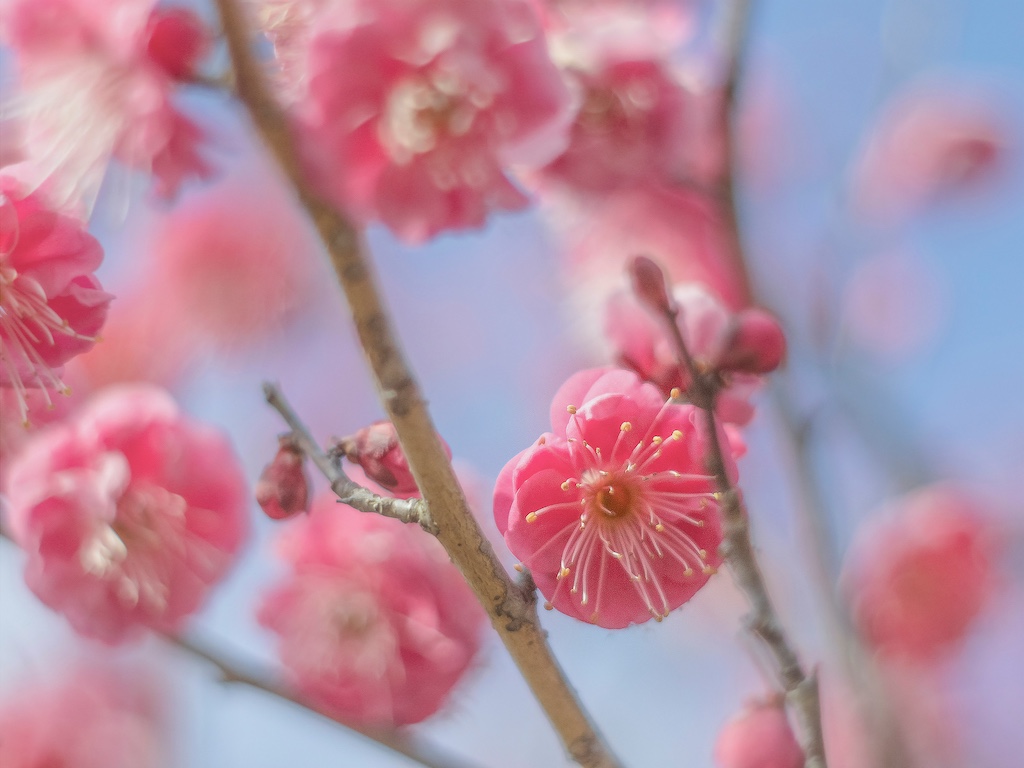
Four poems by the Song dynasty writer Li Qingzhao (1084–1151 CE)
Image by Lyricalcode Dusk
“The feelings I make into poems / are like the magpie at night, / circling three times, unable to settle,” writes Li Qingzhao in one of her surviving fragments. Though she is considered the greatest woman poet in Chinese history and has been hailed for her intense Dickinsonian clarity and vision, Li Qingzhao remains relatively unknown in the West.
When I first heard Li Qingzhao’s poetry recited to me by a family member, I was immediately arrested by the power of her imagery. In every line, the Song dynasty poet effortlessly offers up surprises to delight the reader. In one poem, she describes the self as being “thinner than a yellow flower” (“Drunk in the Shade of Flowers”). In another, she draws our attention to the moonlight falling on pear blossoms: “[t]he pear blossoms are dipped / in the moon’s first / slanting light” (“Complaint Against a Prince: Spring Ends (1)”). Her writings touch on the full range of human experience—from the joy and hopefulness of youth to the grief and despair of an elderly refugee who has lost her home and loved ones. Nothing is forbidden to her pen, not even the emperor’s politics—a bold move considered risky by most writers of her time, and even riskier for a woman writer who would not have had the same social protections as a male writer.
Li Qingzhao (1084–1151 CE) defied cultural expectations for women by mastering ci, which are lyrics set to music. She also composed scholarly wen, prose essays or articles, on a variety of subjects and wrote political shi, literary poems, critiquing government policies. Scholars and artists in the generations following her death have acknowledged her as a master at her craft—a status few women have ever achieved in Chinese history due to the lack of opportunity and encouragement for women writers. Moreover, the work of women writers was not preserved with the same care and attention given to that of their male contemporaries—and so it has often been lost to history. In a contemporaneous record by fellow poet Zhou Hui, he notes that “. . . at every snowstorm, [Li Qingzhao] would wear a bamboo hat and cloak of reeds and climb on top of the city walls, looking into the distance in search of poems.” While putting together this work, I have often imagined her standing on the edge of the city walls, braced against the fury of the storm, the snow swirling around her. It is this very spirit I have tried to capture in my translations.
When I began translating Li Qingzhao as a teenager, only one translation of her complete works in English remained in print: Li Ch’ing-chao: Complete Poems (1979), translated and edited by Kenneth Rexroth and Ling Chung. Gender plays no small part in this neglect; the field of translation in the United States has long been dominated by white men translating other men. I became interested in reclaiming English translation of Chinese texts as a space where Chinese and Chinese American voices can be heard and appreciated. I was compelled to translate her work not only to share the pleasure of its emotional intensity, but also to increase appreciation of Chinese women writers throughout history, and to show how Li Qingzhao’s work speaks to writers of every era.
Li Qingzhao herself wrote in a social context that dismissed voices like hers. As the daughter of a respected and prosperous family of scholar-officials, she was educated and encouraged in her literary pursuits by her parents—a rare phenomenon for women at the time. By the time she was a teenager, she was already a celebrated poet whose works were performed and memorized by established male poets.
During her lifetime she published several volumes of work under the pseudonym Yi’an Jushi (“the easily contented dweller”) and was recognized for her shi and wen, including a renowned essay on the ci form. Today, she is most celebrated for the elegant immediacy and freshness of her ci—lyrics that matched existing songs with predetermined meters and tones. The titles of ci were frequently the titles of the songs they were set to, with the result that many ci shared the same title. The actual musical scores of these songs have been largely lost to history. However, what is not lost in the lyrics of Li Qingzhao is the indomitable voice in her work, which still sings to us across the centuries.
Li Qingzhao’s illuminating vision of the world is evident in the confidence with which she subverts tradition while operating within it; in how she injects a real, lived persona into a formerly invented space of female interiority; and in the timelessness of her ability to use her creative powers to document a life marked by difficulty and grief. In “Butterflies Long for the Flowers: Parting Feelings,” Li Qingzhao asks, “Who will drink with me / from wine and poems?” Who indeed but us? Her oracular voice invites readers to sit down at the table with her and partake in her inner thoughts. Though she lived so many centuries ago, the revelations of her work and the way she saw the world make it feel as though her poems were written just for us—just yesterday.
–Wendy Chen
Silk-Washing Stream
In the small courtyard,
past the lattice window,
the colors of spring deepen.
The heavy unrolled curtains
sink the room into shadow.
Leaning against the railing,
I play wordlessly on my jade qin.
Clouds from distant caves
hasten the dusk.
A breeze blows in
misty rain.
The pear blossoms want
to wither.
I fear
I cannot stop them.
Fragrant Courtyard: Fading Plum Blossoms
My little house hides the spring.
Its windows fasten
the light of day.
The painted hall is dark,
endlessly deep.
The incense
has burned away.
Sunset falls
on the window latch.
The river plum tree
I planted by hand
is better.
Why should I
go down the river
or climb the tower?
No one visits.
I am lonely like He Xun
at Yangzhou.
We have always known the grace
of the plum blossoms.
Still, they suffer
against the relentless rain,
unable to bear
the raking wind.
And now, from whose house
blows over the sound
of the flute, blowing over
such heavy sorrow?
Do not resent their vanishing
fragrance, their falling
jade petals.
Have faith feelings will remain
when all traces are swept away.
It’s difficult to say—
Stirring against the beautiful window
and pale moon,
their scattered shadows
move me.
Offering Incense
In the grass, the crickets cry out—
startling the wutong leaves
into falling.
Longing saturates the human world,
the heavens.
A stair of clouds to the moon.
A thousand locked gates.
Even if a boat could come
or go,
they would not meet.
The magpies make a starry bridge
for the Cowherd and the Weaving Girl
to meet just once a year.
Imagine their feelings at separating,
their never-ending resentment.
Are they still apart?
Suddenly, it is clear.
Then rain.
Then wind.
The Fisherman’s Pride: Dream Notes
The clouds, like waves
across the sky, join
with the morning fog.
The River of Stars turns
and a thousand sails dance.
In a dream,
my soul stands before the Emperor of Heaven,
who kindly asks
where I will go.
My journey is long, I say,
and the sun setting.
I have studied poetry
and attempted startling phrases
to no use.
Let the roc raise a wind
of ninety thousand li.
Wind, move again.
Blow my boat
to the islands of immortals.
♦
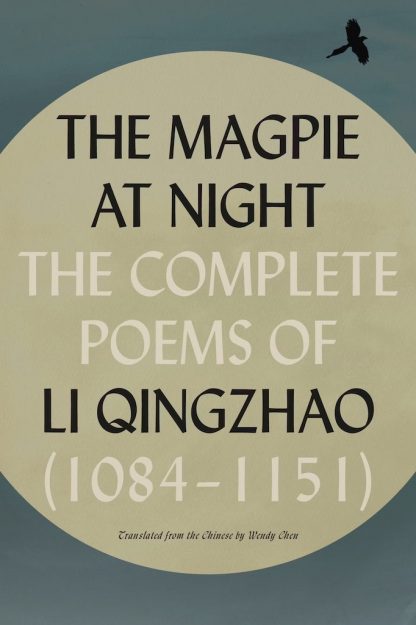
Excerpted from The Magpie at Night: The Complete Poems of Li Qingzhao (1084–1151) by Li Qingzhao; translated from the Chinese by Wendy Chen. Published by Farrar, Straus and Giroux. Translation, Introduction, and Notes copyright © 2025 by Wendy Chen. All rights reserved.

Thank you for subscribing to Tricycle! As a nonprofit, we depend on readers like you to keep Buddhist teachings and practices widely available.
This article is only for Subscribers!
Subscribe now to read this article and get immediate access to everything else.
Already a subscriber? Log in.