The role of citations in AEO: Why citations matter more than backlinks for AI visibility
For years, the SEO playbook was straightforward: earn backlinks, climb rankings, capture clicks. But as AI reshapes how traditional SEO works, a different mechanism is determining which content gets seen — and it’s not backlinks. It’s citations. The role...
 FrankLin
For years, the SEO playbook was straightforward: earn backlinks, climb rankings, capture clicks. But as AI reshapes how traditional SEO works, a different mechanism is determining which content gets seen — and it’s not backlinks. It’s citations. The role of citations in AEO is fundamentally different from link-building: instead of other publishers vouching for your page, AI answer engines are selecting your content as the direct source behind their generated answers. This shift matters because the stakes are tangible. When ChatGPT, Perplexity, or Google’s AI Overviews cite your page, that’s not a ranking boost in a list of blue links. It’s your content becoming the answer for a growing share of buyers who never scroll to traditional results. And with AEO tools and best practices now available to measure and optimize this visibility, citations in AEO are no longer theoretical. It’s trackable, improvable, and directly tied to the pipeline. In this guide, I’ll break down exactly how AI engines select citations, what type of content earns them, and how to build a citation strategy that drives measurable AI visibility using generative engine optimization tools and HubSpot’s integrated platform. Table of Contents: First, let me be direct: Citations aren’t the entire point of winning AEO. They are, however, one of the clearest signals that your content is working inside the systems that now shape how buyers find answers. The search landscape has fundamentally shifted. According to HubSpot’s 2026 State of Marketing Report, 49% of marketers agree that web traffic from search has decreased due to AI-generated answers. Yet, 58% note that AI referral traffic carries much higher intent than traditional search. As an Associate Content Writer and Marketer at HubSpot, I’ve witnessed this firsthand: while blog traffic has declined, leads from LLMs are up 1,850% and convert 3x better. That conversion gap is why citations deserve serious attention from every marketing team allocating resources right now. Meanwhile, 42% of CRM software buyers now use AI search as part of their evaluation process. When nearly half your potential buyers are asking ChatGPT or Perplexity instead of Google, being cited in those AI-generated answers becomes a direct pipeline driver rather than a vanity metric. AI answer engines select citations based on: When an LLM like ChatGPT, Gemini, or Perplexity generates a response, it draws on sources it considers trustworthy, well-structured, and semantically clear. A citation in that context means your content was the answer… or part of it. The role of citations in AEO becomes clearer when you compare how AI engines evaluate content versus how traditional search engines do: Both matter. But 41% of marketers say updating their SEO strategy for search changes is the top trend they’re exploring. The distinction is critical: You can have strong backlinks and still never appear in an AI-generated answer if your content isn’t structured for machine readability. A complete picture of AEO success includes multiple signals beyond citation counts: Citations serve as a proof point that your content strategy aligns with how AI engines discover, process, and surface information. AI answer engines select citations based on: Understanding this distinction is the single most important shift for teams moving from traditional SEO to an AEO-first strategy. When a user asks ChatGPT, Claude, or Perplexity a question, the underlying process differs significantly from how Google ranks a list of blue links. To help you understand how AI engines decide what to cite, I’ve broken down exactly what actually happens when an AI engine generates an answer and assigns sources: Each AI agent type handles this process slightly differently: But across all of them, the underlying selection criteria converge on the same core signals. The five signals AI engines weigh most heavily when selecting citations are: Pro Tip: You don’t need to guess which of these signals your content is hitting or missing. Run your priority pages through HubSpot’s AEO Grader to benchmark your AI visibility and identify specific structural or content gaps that may be costing you citations. Citations become especially clear when you compare what earns visibility across different engines. Below, I’ve created a chart that categorizes citations by type, AI engine, and what each citation style prioritizes. Take a look: However, structured data and schema markup increase the likelihood of being cited by AI. If your pages lack the following, you’re making it harder for AI engines to confidently extract and attribute your content, even if the written content itself is excellent: This is a best practice for AI search visibility that carries over directly from SGE optimization into broader AEO work. Overall, citations within AEO ultimately come down to this: AI engines aren’t counting who links to you. They’re evaluating whether your content is the most clear, structured, authoritative, and current answer to the question being asked. Pro Tip: Teams that internalize this shift and track it through tools like HubSpot AEO will capture the high-intent AI referral traffic that’s already reshaping how buyers discover solutions. The way people find information is splitting in two, and citations are the connective tissue between your content and AI-generated answers. Understanding citations in AEO starts with understanding just how fast this shift is happening, and why the old playbook of chasing backlinks alone no longer covers the full picture. Here’s what you need to know: The numbers paint a clear trajectory. Gartner projects that traditional search engine volume will drop by 25% by 2026, as search marketing loses market share to AI chatbots and virtual agents. That’s not a distant forecast. It’s happening right now, right before our eyes. On the consumer side, adoption is already mainstream. Here’s the data to prove it: In traditional SEO, backlinks function as votes of confidence. Other sites linking to yours signal authority to Google’s ranking algorithm. Citations in AEO work differently. They are direct attributions: An AI engine selecting your content as the source behind a specific claim in a generated answer. Citations in AEO differ from backlinks in SEO in several important ways: AEO citations matter because when ChatGPT, Perplexity, or Google’s AIO cites your page, the answer engine is telling the user: “This is where this information comes from.” That’s a trust signal with direct downstream impact on brand visibility, referral traffic, and conversion. Pro Tip: Use HubSpot’s AEO Grader to check whether your priority pages are currently being cited (or even surfaced) in AI-generated answers. Many teams assume their top-ranking SEO pages also perform well in AEO. They’re often not. 2026 Amsive data reveals a nuanced picture of how AIOs are changing search behavior: Here’s why this matters specifically for citations: “When an AIO lowers clicks to regular search results, the sources it cites are most likely to get the remaining clicks.” Citation concentration — the degree to which a small number of sources dominate AI-generated citations — is high (according to 2026 research from an Ahrefs study, the top 50 domains account for 28.90% of all AIO mentions). If your content earns a citation in an AIO, you’re capturing visibility that would otherwise be lost entirely. One of the biggest barriers teams face is the perception that AEO is vague or unmeasurable. However, I’d like to propose a different, perhaps controversial argument: It’s not. AEO citations connect directly to trackable outcomes, such as: Earning a citation once ain’t the same as keeping it. Regular content updates support freshness signals for AI citations, meaning stale content is replaced by competitors who publish more current data, frameworks, or examples. AI engines re-evaluate sources continuously. A page that was cited in March may lose that citation by June if a competitor publishes a more current, more comprehensive version of the same answer. (This is especially true for data-driven content, industry benchmarks, and anything tied to evolving best practices, which describes most B2B marketing content.) Citations in AEO depends on maintaining two things over time: This is where AEO diverges most clearly from traditional SEO maintenance. In SEO, a well-linked evergreen page can hold its ranking for years with minimal updates. Conversely, in AEO, FAQs and knowledge graphs help AI engines extract and cite accurate information, provided that the information reflects the current reality. That said, outdated statistics, deprecated tools, and old screenshots are citation killers. The reason citations in AEO deserve dedicated strategic attention comes down to a simple pipeline reality: A quarter of internet users already interact with AI-generated answers monthly. With traditional search volume declining, the AI answers replacing clicks reward a fundamentally different set of content attributes than those most SEO programs were built around. Citations are the mechanism through which your content earns visibility in this new layer of search. But they’re not the only AEO metric that matters. These other signals carry weight, too: These metrics all contribute to the full picture. But citations are the most tangible proof point that your content is structured, authoritative, and current enough to be selected as an AI engine’s source of truth. Here’s the thing: Hyper-specific content that demonstrates true expertise gets visibility across LLMs. Generic, AI-generated fluff won’t achieve meaningful visibility in the new search ecosystem, and the data backs this up clearly. You see, we’re entering a period in which the bar for “good enough” content has risen. When AI engines can generate passable surface-level answers on their own, they don’t need to cite your page for restating what they already know. They cite sources that add something they can’t generate independently, which happens to be: Citations reward depth, not volume. 2026 research from Search Engine Journal reveals a finding that should reshape how teams think about content strategy: across all AI platforms, earned content accounts for the largest share of citations, while user-generated content (UGC) is increasingly represented. (TLDR — “earned content” is content about your brand that other people create — press mentions, reviews, third-party coverage, and organic social posts you didn’t pay for or publish yourself..) This means the content most likely to be cited by AI engines isn’t just what you publish on your own domain. More specifically, it’s: Thus, the implication for citations in AEO is significant: Pro Tip: Earning mentions on trusted third-party sites may be even more valuable than optimizing your domain content alone. Invest in a mix of owned content, third-party coverage, and presence on relevant UGC platforms to increase the likelihood of being cited by AI search engines. Then, track which third-party mentions are driving AI visibility alongside your owned content performance in Marketing Hub. One of the most encouraging findings from Search Engine Journal’s quality distribution analysis is that AI engines cite across a wide quality spectrum — not just from elite publishers: The big takeaway here? AI engines prefer higher-quality sources, but they often cite middle-tier sources when those sources provide the clearest, most specific answers. So, here’s what this means for your team: If you’re not the New York Times or Harvard Business Review, you can still earn citations by producing content that is more specific, better structured, and more factually dense than what larger competitors publish on the same topic. Based on citation quality distributions and earned content data, a clear pattern emerges about the types of content LLMs actually select as sources. Here’s what separates content that earns AI citations from content that gets ignored: Citations within AEO depend on a deliberate strategy that spans owned, earned, and community-driven content. After all the data I’ve shared within this post thus far, here’s what to decipher from it and prioritize in your evolving AEO content strategy: AEO citations ultimately come down to whether your content adds to the knowledge landscape or just restates it. AI engines have access to the sum of published information; they cite sources that contribute something distinct. The teams that internalize this standard and build it into their editorial workflow will consistently earn citations, while those producing interchangeable content will remain invisible, regardless of how many backlinks they accumulate. No. Citations in AEO differ from backlinks in SEO. They serve different functions within different systems, and both remain valuable. Backlinks tell traditional search engines that other sites endorse your content, which influences your rank position in a list of results. Oppositely, citations tell AI answer engines that your content is the direct source behind a specific claim in a generated answer. But, you see, you need both because your audience is split across both discovery channels. That said, here’s how they work together: Citations in AEO are additive, not a replacement. Teams that abandon link-building in favor of citation-only strategies lose traditional search visibility. Teams that ignore citations while doubling down on backlinks become invisible in AI answers. The right approach is to run both in parallel. Pro Tip: Use Marketing Hub with HubSpot AEO simultaneously to track performance across both channels — organic search traffic from traditional rankings alongside LLM referral traffic from AI citations. That dual view prevents you from over-indexing on either signal. There’s no fixed timeline, but most teams can expect to see initial citation appearances within 4 to 8 weeks of publishing optimized content, with significant variation depending on three factors: In most cases, no. AI answer engines need to access and process your content to cite it, but hard paywalls block that access for both web crawlers and AI retrieval systems. Here’s how different content access models interact with AI citation: Citations in AEO depend on your content being accessible to the systems generating answers. If your highest-value content is behind a hard paywall, it will not earn AI citations regardless of its quality. Write for humans first. Always. The content attributes that AI engines reward are the same ones that make content genuinely useful to humans. Every one of those qualities also makes content better for the person reading it: The teams that try to “write for AI” are wasting their time by stuffing structured data, keyword-loading headers, and formatting content in ways that read awkwardly to humans, and end up producing pages that underperform with both audiences. AI engines are increasingly sophisticated at identifying content that prioritizes manipulation over genuine usefulness. Write naturally for your human reader, then optimize the structure (headings, schema, lead sentences, factual density) for machine readability. Pro Tip: Want a reliable gut-check test? Read your content aloud. If it sounds like a human expert explaining something to a colleague, it’s structured well for both audiences. If it sounds like a keyword list wearing a paragraph costume, AI engines will skip it just as quickly as human readers will. Tracking AI citations requires dedicated monitoring because they don’t appear in traditional SEO tools like Google Search Console or standard rank trackers. Here’s a full breakdown of what to track and how: Citations in AEO make this tracking essential, not optional. Build citation tracking into your monthly reporting cadence alongside organic keyword rankings and traffic metrics. Citations are the most direct proof that your content is structured, authoritative, and current enough to be selected as an AI engine’s source of truth. But citations alone don’t capture the full picture. Citations sit within a broader ecosystem of AI visibility metrics, which are: Together, they determine whether your content strategy is built for how buyers actually find answers today. The good news? You don’t have to build this from scratch. HubSpot’s AEO Grader enables measurement of AI citation visibility, Content Hub gives you the structural foundation to publish citation-ready content at scale, and Marketing Hub connects AI referral traffic to the actual pipeline so you can prove ROI, not just report impressions. The infrastructure exists. The shift is happening. The only question is whether your content strategy moves with it. Ready to see how your content performs in AI search? Get started with HubSpot’s AEO Grader today.
Why Citations Matter for Answer Engine Optimization (AEO)
What do citations actually do in AEO?
Citations are only one metric in the AEO era.
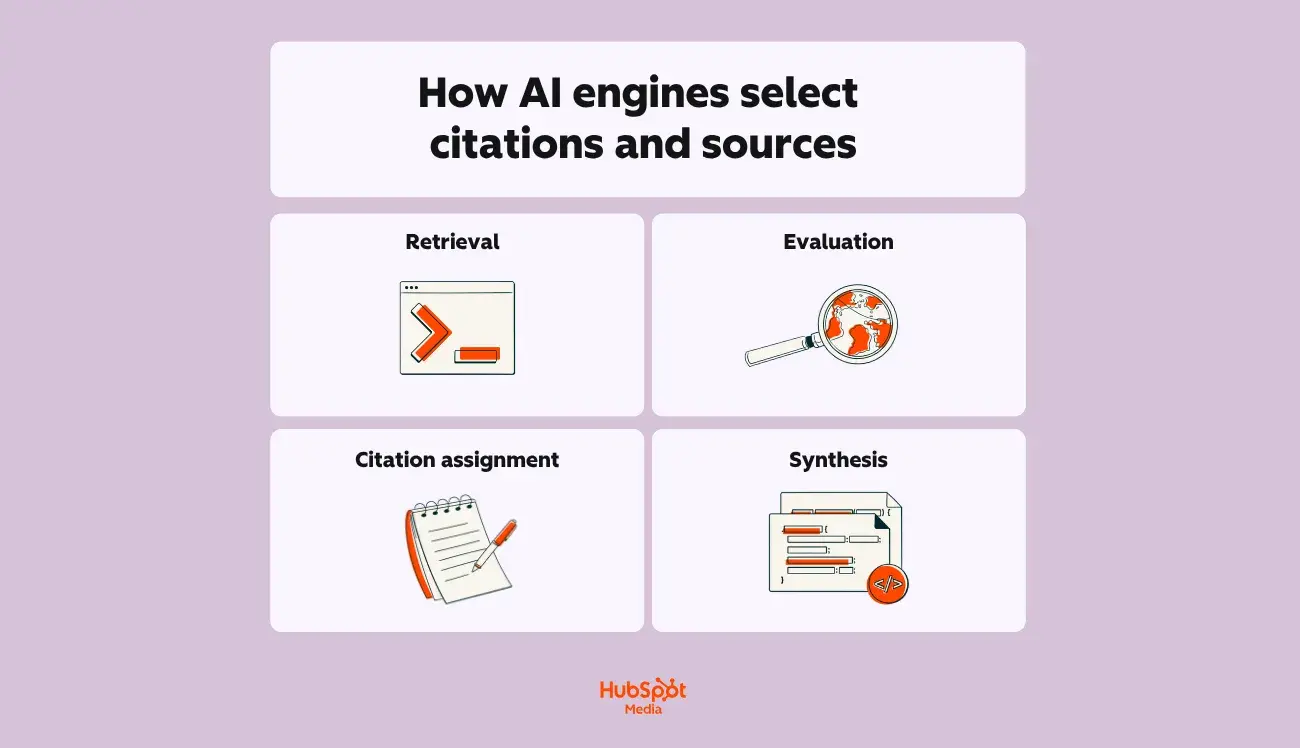
How AI Engines Select Citations and Sources
Citation Types and What They Prioritize
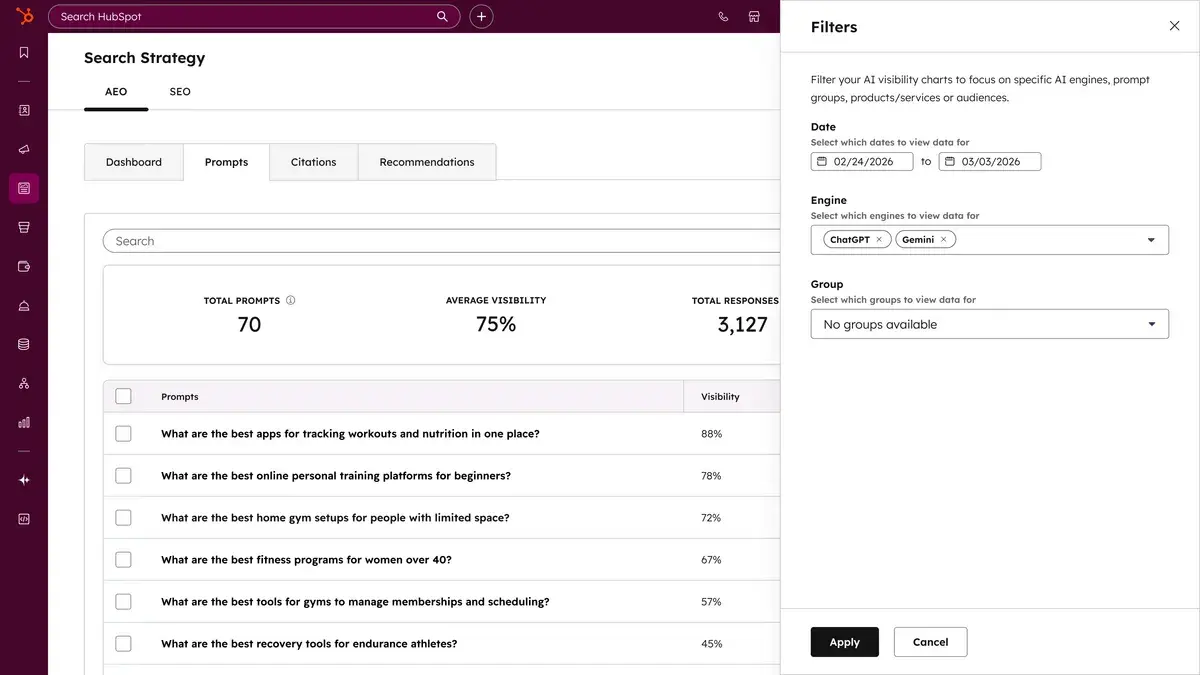
The Role of Citations in AEO
1. AI search adoption is accelerating faster than most teams realize.
2. Citations are your content’s entry point into AI answers.
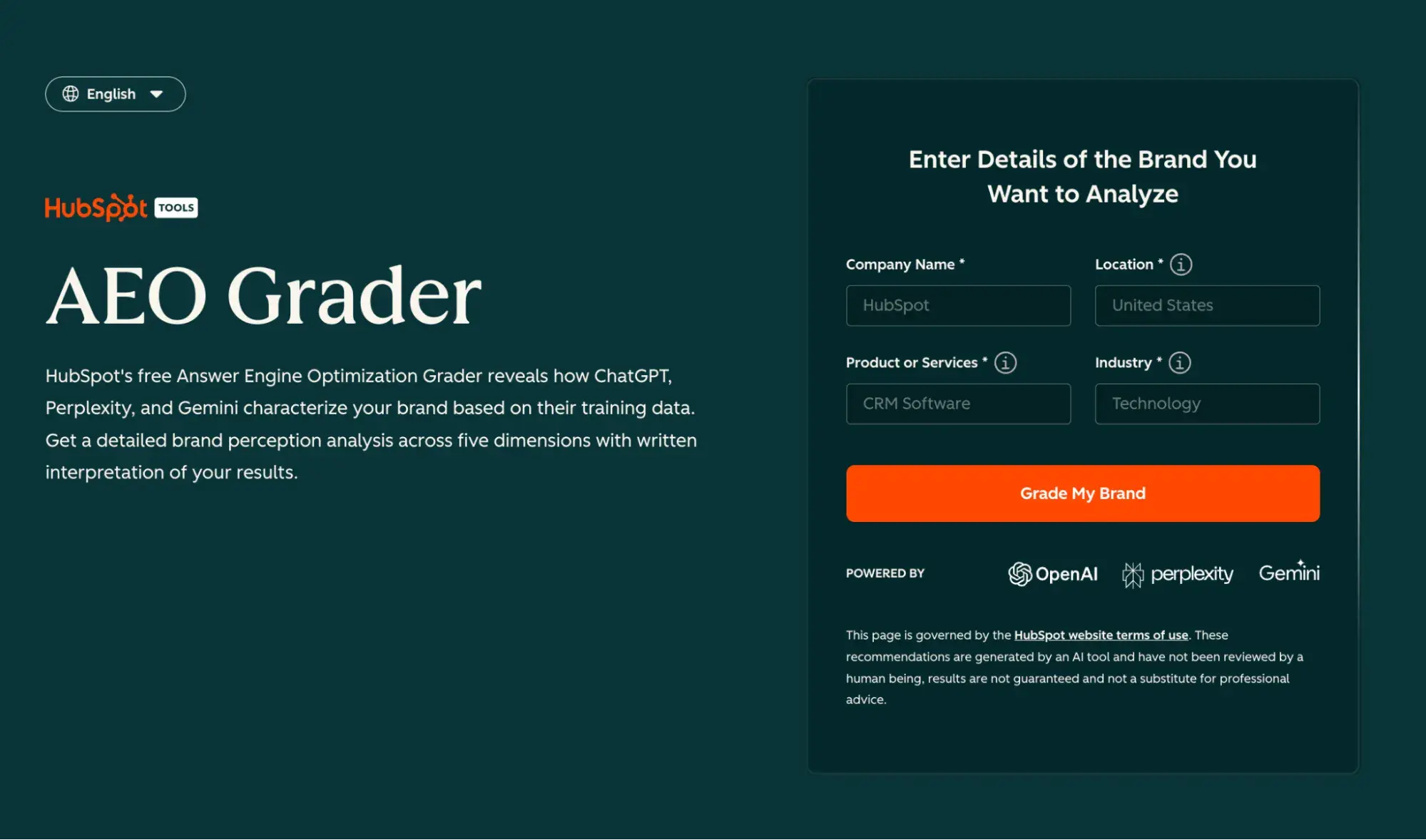
3. AI Overviews (AIOs) are reshaping click behavior, and citations are the new click-drivers.
4. The role of citations in AEO is measurable, not theoretical.
5. Freshness and depth determine citation durability.
Citation is the mechanism, visibility is the outcome.
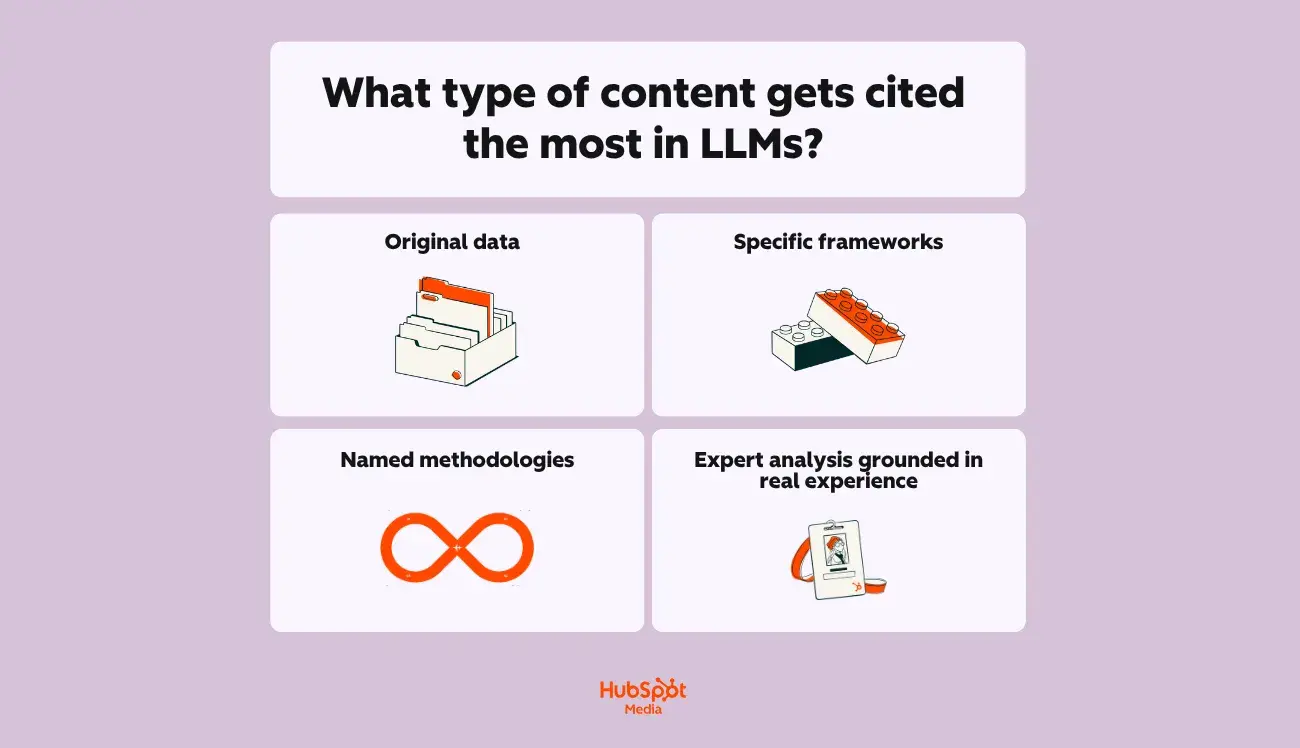
What type of content gets cited the most in LLMs?
1. Earned content dominates AI citations; owned content alone isn’t enough.
2. You don’t need to be a top-tier domain to earn citations.
3. The content attributes that earn citations vs. the ones that don’t.
Building a Citation-Earning Content Strategy
Frequently Asked Questions (FAQ) about the Role of Citations in AEO
Do citations replace backlinks?
How long does it take to earn AI citations?
Can AI cite content behind a paywall?
Should I write for AI or humans first?
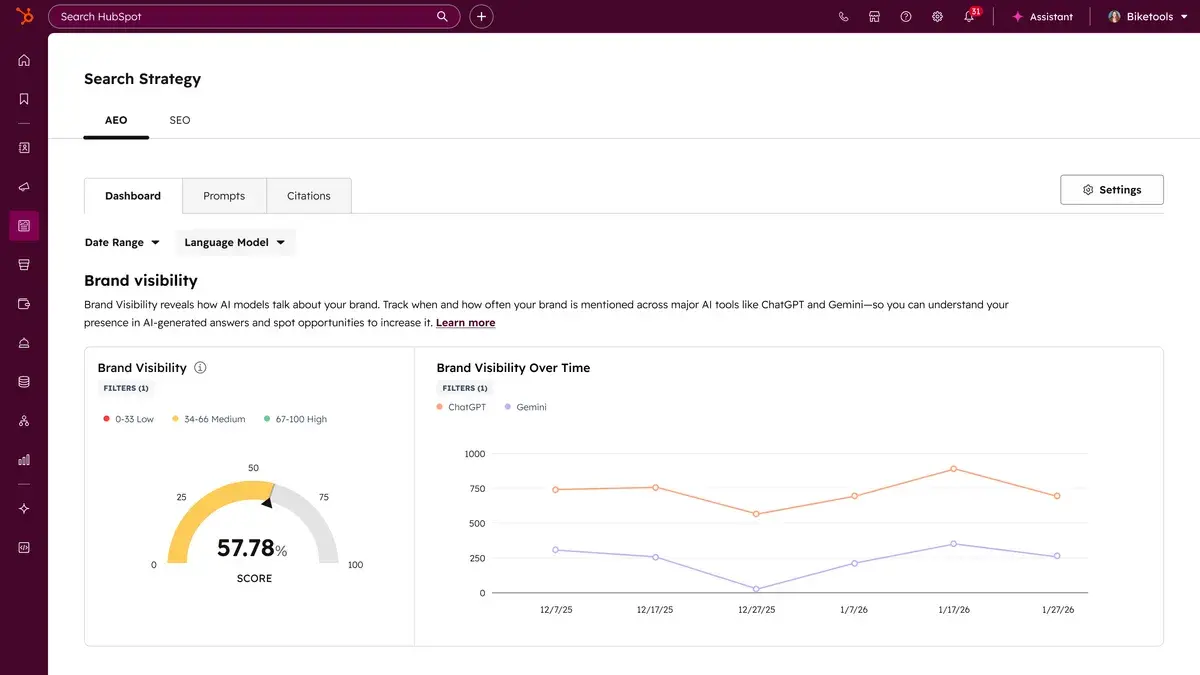
How do I know if an answer engine cited my brand?
Citations Are Just the Beginning of AEO Success