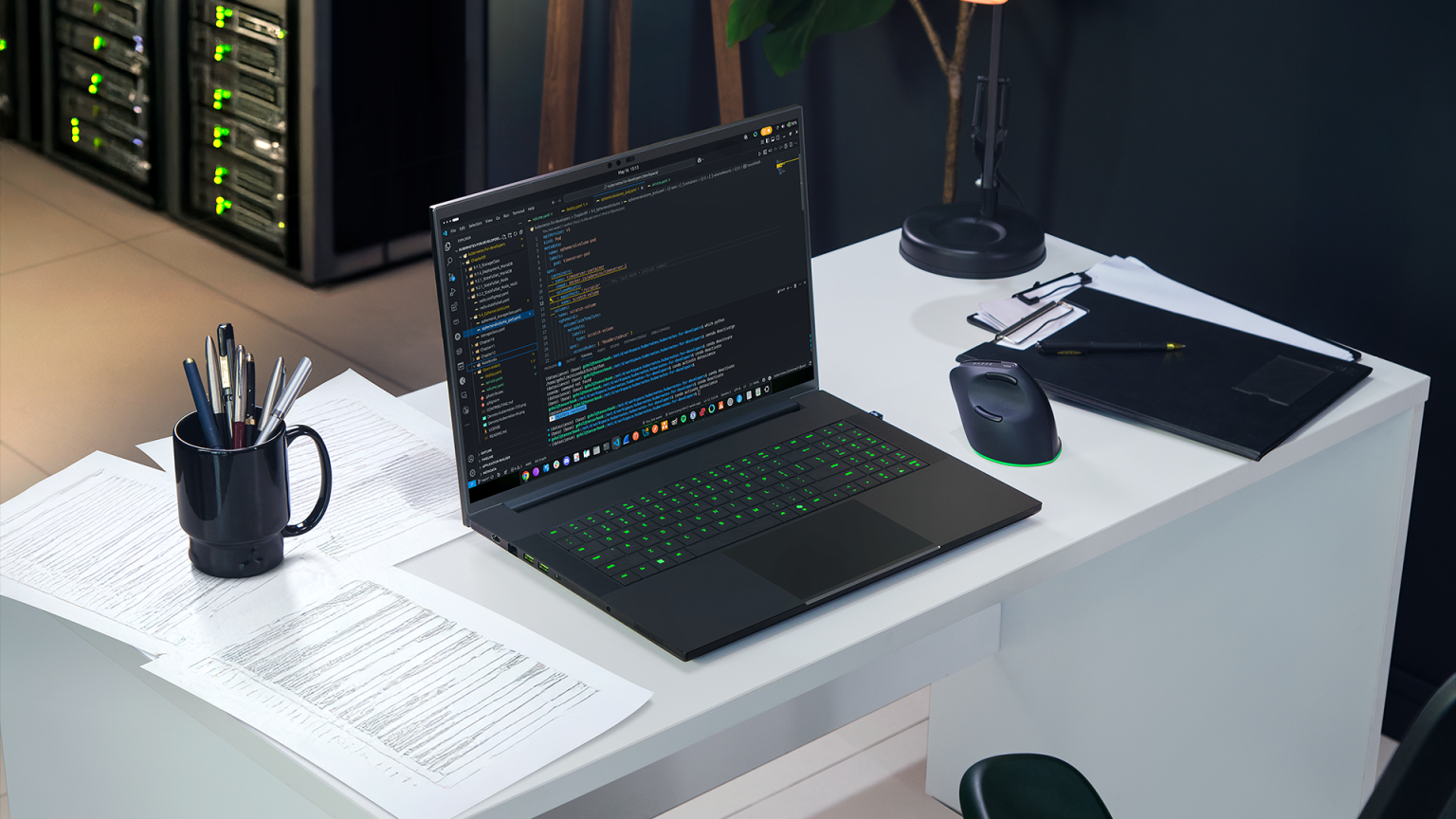
Razer’s new Blade 18 gets Arrow Lake refresh and a modest $3,999.99 starting price
Razer's 2026 Blade 18 arrives with Intel's Core Ultra 9 290HX Plus, a dual-mode display hitting 440Hz or 240Hz 4K, up to an RTX 5090 with 24GB GDDR7.
 Tfoso
Tfoso

Razer has officially unveiled the 2026 Blade 18 today, and at the heart of all three configurations is an Intel Arrow Lake processor.
I’m talking about the Core Ultra 9 290HX Plus, which features 24 cores, up to 5.5GHz clock speed (with boost), 36MB cache, and an onboard NPU that delivers up to 13 TOPS of compute power.
Meet the next-gen Razer Blade 18, our most powerful Blade ever, bringing desktop-class performance to a portable form factor: https://t.co/BWOuEtjGf9
Powered by the Intel® Core™ Ultra 9 290HX PLUS processor and up to NVIDIA® GeForce RTX™ 5090 Laptop Graphics with 24GB VRAM,… pic.twitter.com/UYaRxPk2Nj
How many GPU options do you get with the Blade 18?
The baseline variant pairs the Core Ultra 9 290HX Plust with the Nvidia RTX 5070 Ti (12GB GDDR7 VRAM, up to 140W TGP) graphics card and costs $3,999.99. For the price, the gaming laptop also offers 32GB of DDR5 RAM and a 1TB PCIe Gen 4 SSD.
Add $500 to that price, and you’ll get the same processor with a slightly upgraded GeForce RTX 5080 (16GB GDDR7 VRAM, up to 175W TGP) graphics processor. Other specifications, such as the total memory and storage, remain the same, though.
Stepping up to the top-tier RTX 5090 variant (24GB GDDR7 VRAM, up to 175W TGP), with 32GB of RAM and 2TB of storage, sets you back $5,130. Maxing out the memory to 128GB increases the asking price to $6,999.99, which, to be honest, sounds like a fortune to me.
Take a look at the full specs sheet below:
| Operating System | Windows 11 Home |
| Processor | Intel® Core™ Ultra 9 Processor 290HX Plus (24 Cores / 24 Threads, up to 5.5 GHz) |
| Graphics (GPU) | RTX 5070 Ti (12GB GDDR7) / RTX 5080 (16GB GDDR7) / RTX 5090 (24GB GDDR7) |
| Neural Processor | Intel® AI Boost NPU (up to 13 TOPS) |
| Display | 18″ UHD+ 240 Hz / FHD+ 440 Hz Dual Mode, 100% DCI-P3, Calman Verified |
| Memory | 32 GB DDR5-6400 MHz (Upgradable to 128 GB) |
| Storage (Installed) | 1 TB PCIe Gen 4 (5070 Ti & 5080 models) / 2 TB PCIe Gen 4 (5090 model) |
| Expansion Slots | 2x M.2 NVMe (1x PCIe Gen 5 x4 & 1x PCIe Gen 4 x4) |
| I/O Ports | 1x Thunderbolt™ 5, 1x Thunderbolt™ 4, 3x USB 3.2 Gen 2 Type-A, HDMI 2.1, SD Card Reader, 2.5 Gb Ethernet |
| Audio | 6-speaker system (dual-force woofers) with THX® Spatial Audio |
| Camera | 5 MP IR webcam with privacy shutter and Windows Hello |
| Connectivity | Wi-Fi 7 (802.11be) and Bluetooth® 5.4 |
| Battery & Power | 99 WHr battery with 400 W AC Power Adapter |
| Dimensions | 15.74″ x 10.84″ x 0.86″–1.1″ (399.96 mm x 275.4 mm x 22.79–28.7 mm) |
| Weight | 3.20 kg / 7.06 lbs |
Dual-mode 18-inch display, desktop-grade connectivity, and a massive battery
All the models share the same excellent 18-inch dual-mode display, which manages UHD+ resolution at 240Hz or FHD+ at 440Hz. The screen has a peak brightness of 600 nits, covers 100% of the DCI-P3 color space, and has a 3ms response time.
Connectivity is quite excellent as well. You’re getting Thunderbolt 5, Thunderbolt 4, HDMI 2.1, 2.5Gb Ethernet, UHS-II SD card reader, and Wi-Fi 7 with Bluetooth v5.4. Whether it’s high-speed memory cards, pro-grade flash drives, or ultra-fast wireless networks, the Blade 18 can handle them all.
Then there’s the 99WHr battery, which charges to 50% in 30 minutes, though the company hasn’t specified how long it is expected to last. Everything sits inside a CNC-milled aluminum unibody that weighs 3.20 kilograms.
 Razer
Razer
Razer is also offering a 400W AC adapter in the box, which, if you ask me, is a testament to how far gaming laptops have stretched as a category.
How does the laptop compare with the competition?
While the spec sheet looks impressive in isolation, zoom out a bit, and you’ll realize that Razer is asking more for the same GPU tier than most of its rivals.
The Asus ROG Strix Scar 16, with an RTX 5080, comes in around $3,300, while the MSI Titan 18 HX, which is the Blade 18’s most direct competitor with an 18-inch screen, runs significantly higher. The Alienware Area-51 16 brings an OLED display to the fight, if that’s what you’re looking for.