Red Bull Marketing Strategy & Campaigns: Target the Edge for Maximum Impact!
When it comes to energy drinks, Red Bull stands out as one of the most successful and well-known brands in the market. Redbull, which is known for its revolutionary advertising campaigns and strategies, has undoubtedly used its slogan to...
 UsenB
UsenB

When it comes to energy drinks, Red Bull stands out as one of the most successful and well-known brands in the market. Redbull, which is known for its revolutionary advertising campaigns and strategies, has undoubtedly used its slogan to forge a strong brand identity, win over millions of admirers, and maintain customer loyalty.
But how did they become this successful? What exactly did Redbull do so well? In this blog, we’ll be exploring the secret behind Red Bull’s marketing strategy!
Inside Red Bull Marketing Campaigns
Marketing Mix Strategy of Red Bull Your Brand Can Soar Like Red Bull Red Bull’s Advertising Strategy Maximizing the Potential of Their Slogan Maintaining Consistent Visual Branding Developing a Strong Core of Content Social Media Strategy Sponsorships and Events Red Bull’s Advertising Campaigns Red Bull’s Stratos: An Extraordinary Marketing Campaign! Red Bull Art of Motion Red Bull Flugtag Red Bull Gives You Wings Red Bull Dance Your Style The Most Extreme Flying Obstacle Course Humans Have Ever Attempted Red Bull’s Guerrilla Marketing Campaign Red Bull’s Digital Marketing Strategy What Can We Learn From Red Bull’s Marketing Strategy?Marketing Mix Strategy of Red Bull
The brand’s strategy revolves around creating engaging content and experiences that resonate with its target audience, even when they are not interested in energy drink brands. The company has been known to use a number of unconventional strategies to get their message across. They’ve sponsored extreme sports events, created viral videos, and even launched a record label. All of these strategies are designed to make the most of their slogan ‘’RedBull Gives You Wings,’’ and create an emotional connection with their customers.
Combining the mix of 4 Ps: Product, Price, Place, and Promotion, the marketing mix strategy of Red Bull is a strong example for many brands; however, this long-term success wasn’t achieved overnight. If you want to achieve similar success for your brand and understand this approach better, you can explore and find expert agencies in various digital marketing marketplaces. With these platforms, you can streamline your connection between your brand and top-tier agencies who can help you build your brand and engage with your audience effectively.
Product
Red Bull is known for its unique flavor, high caffeine content, and energizing effects, making it the go-to energy drink for many people. Besides 110 calories, 27 grams of sugar, and 80 grams of caffeine, Red Bull also contains taurine, an amino acid that boosts antioxidant activity in the body. Red Bull’s packaging features two bulls facing each other, with red and orange colors that evoke passion, aggression, and action.
Price
Since Red Bull is aimed at young people from 15 to 35, the brand relies heavily on strong values such as energy, power, and fun. This strategic move subtly affects the pricing, indicating that Red Bull customers aren’t searching for a price but rather a quality product. Because the “product costs what it is worth,” customers purchase it. Therefore, the cost is consistent with the premium reputation and influence that the beverage itself conveys.
Place
Red Bull can be found in supermarkets in individual cans or packs of 4, 6, 12, or 24, in bars, on the Internet, in cafeterias, hotels, etc.and it is sold in 171 different countries. Along with distribution, the Red Bull brand has created a whole universe of sponsorship.
Promotion
Red Bull is also well-known for its unique approach to marketing and advertising. The company has adopted a number of unconventional strategies to promote their brand, from sponsoring extreme sports events to setting up a record label. The slogan “Red Bull Gives You Wings” is one of the most iconic slogans in the world. It was first introduced in 1987 and has been used consistently ever since. The slogan perfectly captures the essence of the brand – that Red Bull gives you the energy and confidence to take on any challenge. It’s a powerful message that resonates with people, and has helped the brand establish a strong identity in the market.
The slogan has also been used in a number of different ways to promote the brand. It’s been used in advertisements, on merchandise, and even on the can itself. It has become so iconic that it’s now closely associated with the brand, and is instantly recognizable to millions of people around the world.
Red Bull, in fact, invests millions of dollars in advertising and marketing efforts to keep their products at the forefront of consumers’ minds.
Now, let’s talk about your brand.
We believe you’re looking for inspiration and new ways to grow your brand, and we want to help.
Your Brand Can Soar Like Red Bull
We’ve handpicked these two agencies for their proven success in FMCG. After reviewing their case studies and client feedback, we’ve seen how their data-driven strategies and creativity drive real results.
Red Bull’s Advertising Strategy
A key factor that contributed to Red Bull’s success was their commitment to consistently presenting their brand and values.
Maximizing the Potential of Their Slogan
As mentioned above, Red Bull’s messaging strategy centers on their tagline, “Red Bull Gives You Wings,” emphasizing the idea that their product provides people with the energy and power to pursue their goals and desires.
Maintaining Consistent Visual Branding
Red Bull’s visual branding has been a significant factor in the brand’s success as well. Red Bull conveys the idea “we give people the energy to do anything” through the brand’s vibrant colors, logo, and extremely creative visual content, which includes warm and energizing hues, intriguing experiments, and frantic shows.
Developing a Strong Core of Content
Red Bull’s content covers extreme sports, festivals, and a fast-paced lifestyle, aligning with their product’s ability to provide energy. Their content also covers a wide variety of interests, such as music, art, dance, and nightlife, making it accessible to a wide range of viewers.
Red Bull is also successful in its use of social media, particularly on platforms like Facebook. Their Facebook page features artistic videos that combine stunning visuals, music from their record label, and coverage of sports and events that their audience enjoys.
One of the keys to Red Bull’s marketing strategy is its sponsorship and event strategy. They use a variety of tactics to engage with their audience, including publicity stunts, events that they create, and sponsorship of other events and experiences.
Another key element of Red Bull’s marketing strategy is it’s their contributions to events as the main sponsor. The brand creates events of its own as well as becomes sponsor of highly important events such as Formula 1 races to engage with its audience and to create brand awareness.
Red Bull’s Target Audience
Demographic and Psychographic Characteristics of Red Bull’s Target Audience
Red Bull’s mastery in understanding its target audience is particularly noteworthy. Just imagine a vibrant and youthful crowd, predominantly aged between 15 and 35. These are individuals who thrive in urban and suburban settings, often found juggling the demands of education or kick-starting their professional journeys. But it’s more than just demographics, we must say. It’s their zest for life that sets them apart. They’re the spirited souls who embrace extreme sports, are attuned to the latest in music and gaming, and relish the nightlife. Their personalities? Think energetic, ambitious, and thrill-seeking – always on the lookout for the next adrenaline rush. This audience values individualism and experiences, often influenced by social media trends and innovative marketing strategies. Red Bull, with its finger firmly on the pulse of this vibrant group, crafts marketing strategies that resonate deeply, creating a brand experience that’s as exhilarating as their lifestyle.
This synergy is no coincidence. It’s a deliberate, well-crafted approach to ensure that every campaign, every event, and every social media post echoes the spirited lifestyle of their audience.
Brand Perception Among Red Bull’s Target Audience
There’s no doubt that to its target audience, Red Bull is more than a beverage. It’s, in fact, a symbol of audacity and the relentless pursuit of one’s passions. This perception shows us Red Bull’s branding prowess, where each can is seen as a ticket to heightened experiences, be it in sports, creativity, or simply powering through a challenging day. This image captures the pulse of a generation pushing boundaries and setting new trends, fueled by a relentless energy and a thirst for something more.
Impact of Sponsorship and Events on Red Bull’s Target Audience
We all know by now that Red Bull’s approach to sponsorships and events is nothing short of a strategic masterpiece. Red Bull doesn’t just appear at events; on the contrary, it becomes synonymous with the very spirit of those events. The brand’s foray into sponsoring extreme sports, music festivals, and high-energy competitions is a direct reflection of its audience’s pulse.
This synergy brings out a deep sense of connection and loyalty, transforming customers into devoted fans. The impact? It’s profound. Red Bull’s events become experiences that their audience eagerly anticipates, discusses, and cherishes.
This engagement goes beyond traditional brand loyalty. It’s a shared journey of excitement and adventure.
Red Bull’s Advertising Campaigns
While Red Bull sells energy drinks, there are other things consumers remember; marketing campaigns that involve extreme sports and music. It’s no secret that Red Bull has launched a number of successful campaigns over the years, a few of them being the greatest campaigns of all time.
Red Bull’s Stratos: An Extraordinary Marketing Campaign!
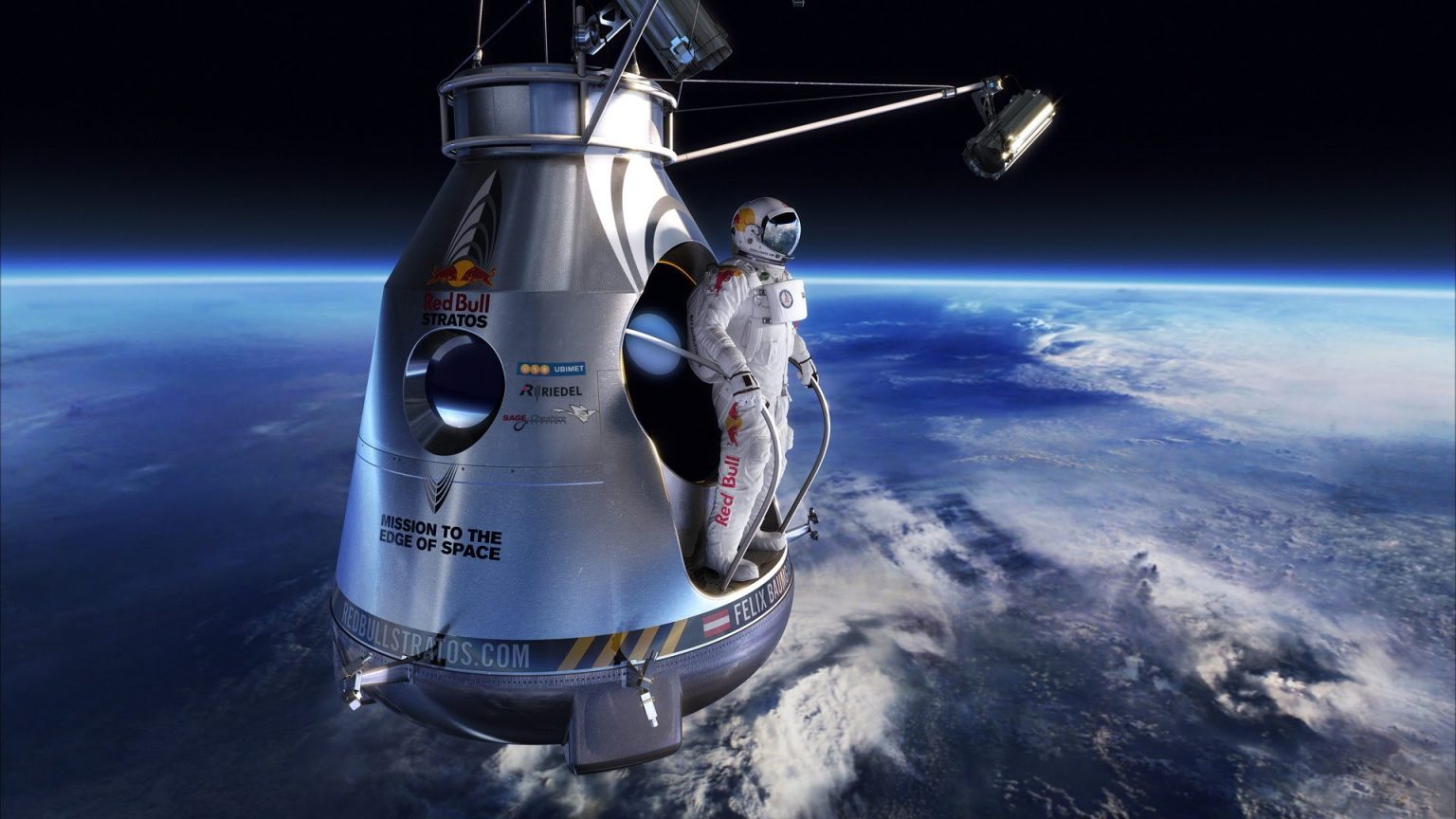
The ‘’Red Bull Stratos’’ campaign was one of the most iconic Red Bull campaigns that the brand has ever launched, gaining global recognition and a huge success with over 8 million views on YouTube.
A 3-minute ad has never achieved the Austrian skydiver Felix Baumgartner’s feat of diving from near-space (23 miles high) back to Earth’s surface. It was an extraordinary display of human endurance, ambition, investment, and dedication. The fact that this mission was funded and created by a brand is remarkable.
Like we said, Red Bull’s Stratos project was a major success, generating significant media attention and estimated media coverage worth tens of millions of dollars.
Why that Red Bull campaign worked:
No competitor could replicate it without looking like a copycat, and no amount of media buying could purchase that kind of collective breath-holding. They didn’t tell the world Red Bull is for people who push limits. They showed a man literally fall from space.
Red Bull Art of Motion
A freerunning and parkour competition, Red Bull Art of Motion set in stunning locations. Attracting top athletes and fans of extreme sports, this event features high-quality visuals and live streams. It emphasizes creativity and athleticism, drawing in a young audience looking for inspiring content. Red Bull reinforces its adventurous and boundary-pushing brand image by highlighting extraordinary physical feats.
Why Red Bull Art of Motion worked:
When Art of Motion launched, parkour was barely a mainstream concept in the West; it was raw, underground, and visually unlike anything in traditional sports. Red Bull planted their flag there early, which meant that as freerunning grew into a global phenomenon, Red Bull’s name was already woven into its DNA. It made the content inherently shareable long before “shareable content” was a marketing idea.
Red Bull Flugtag
Red Bull is also known for the successful use of experiential marketing to build its brand. With events, the company is adept at connecting storytelling, brand building, and customer experiences. Red Bull’s participation in events such as the Flugtag Race is another example of how a company can engage and connect with consumers while also promoting its brand identity. Red Bull’s experiential marketing has helped the company to build a loyal customer base and establish itself as a leader in the energy drink market.
Red Bull Flugtag made a big comeback with participants piloting homemade flying machines off a pier. It appeals to adventure seekers and DIY enthusiasts who enjoy fun and unique experiences.
Why that Red Bull campaign worked:
It made Red Bull feel generous and playful rather than corporate. The product wasn’t even really the point; the point was that Red Bull was the kind of brand that throws a party where humans try to fly. That identity is worth more than any product claim.
Red Bull Gives You Wings
Famous! Directed like a cartoon, the tone is humorous, and they are pleasant to watch, given their short duration. Moreover, the company has also adopted a striking slogan: “Red Bull gives you wings.” A phrase that evokes the energy that is supposed to accompany a drink of this Austrian brand is easily associated with the company.
The “Red Bull Gives You Wings” slogan has had a huge impact on the brand’s success becoming synonymous with it and is instantly recognizable to millions of people around the world. According to an analysis of Red Bull’s popular marketing strategies, the firm sold 300 million cans as a result of this campaign between 1996 and 2006.
The slogan has also been used in a number of different ways to promote the brand. It’s been used in advertisements, on merchandise, and even on the can itself. All of these strategies have helped the company reach a wider audience and build a strong following.
Why that Red Bull campaign worked:
In an industry obsessed with refreshing creative every quarter, they ran essentially the same format for twenty years, and that consistency compounded. The slogan stopped being a tagline and became part of everyday language (something money alone cannot buy) only time and nerve can.
Red Bull Dance Your Style
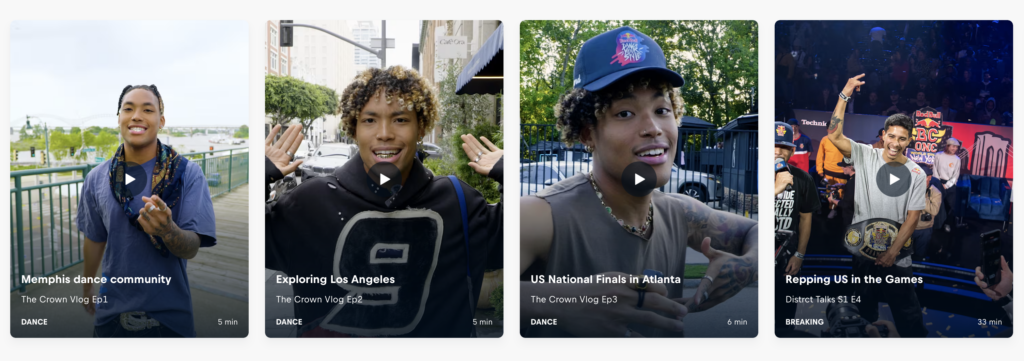
Red Bull Dance Your Style is an exciting international street dance competition where freestyle battles take center stage. Promoted heavily through social media and live streaming, this campaign targets dance enthusiasts and hip-hop fans. The unique twist? The audience votes for the winners, making it highly interactive. By celebrating diverse dance styles and engaging directly with fans, Red Bull strengthens its brand presence in the dance community.
Why that Red Bull series worked:
Marketers should pay close attention to the voting mechanic here because. The moment a brand picks a winner, the result feels rigged and the credibility collapses. By handing that decision entirely to the audience, Red Bull removed themselves from the outcome while keeping their name on the front door. From a social media strategy standpoint this is also extremely efficient. Audience members who voted have a personal stake in sharing the result, which drives organic distribution without a paid amplification budget. The campaign essentially gamified word-of-mouth, which is something most brands attempt and almost none execute cleanly.
The Most Extreme Flying Obstacle Course Humans Have Ever Attempted
The Red Bull campaign presents a surreal 15-stage flight line looping across open skies, mountain ranges, and city skylines, involving 34 athletes across multiple disciplines — wingsuiters, skydivers, paramotor pilots, jet aircraft, and drone engineers. Nobody watches this because Red Bull told them to. They watch it because it’s extraordinary.
The world’s best aerial athletes joined forces to create an epic flight challenge – featuring jaw-dropping feats like launching into the sky with human catapults.
Why it worked:
The concept came from the athletes themselves, combining their own project ideas into one, which gives it an authenticity that top-down brand campaigns never achieve. The logo doesn’t intrude; it’s literally an obstacle people are thrilled to fly through at 200kph. No voiceover tells you Red Bull gives you wings. It just shows you 34 humans doing things that look physically impossible, and lets you feel the brand promise in your gut.
Red Bull’s Guerrilla Marketing Campaign
People follow the majority and want to consume what is popular. The brand, therefore, made an effort to leverage this fact through its guerrilla marketing strategy.
Engaging Red Bull’s marketing strategy of empty cans is a definite example of how they amplified this strategy. Empty cans were scattered around to give the impression that everyone was consuming Red Bull; and yet again, the campaign was a success.
The energy drink company @redbull's marketing was completely garbage 🗑️
Yeah, you read that right.
When @redbull entered the energy drink market, no one knew what it was or who they were.
They had to build up a brand identity 📈
So over the span of a few of months, their… pic.twitter.com/88c1vf92Iu
Red Bull’s global marketing strategy succeeds because it includes the emotions that move people.
Red Bull’s Digital Marketing Strategy
Red Bull’s digital marketing strategy revolves around creating engaging and immersive experiences for their audience through various digital channels, such as social media, their website, and mobile apps.
An important aspect of Red Bull’s digital marketing strategy is that they focus on two main things. First, their target audience is young, active individuals interested in extreme sports and adventure. The second is to create high-quality content that resonates.
This content includes videos, articles, and social media posts featuring extreme sports athletes and events sponsored by Red Bull.
What Can We Learn From Red Bull’s Marketing Strategy?
With its unique approach to marketing, Red Bull marketing plan is definitely debated by people all over the world, even if they don’t consume the energy drinks the brand produces. Red Bull is everywhere, from our refrigerator to outer space!
Make sure to check out food and beverage marketing agencies to get an idea about more successful campaigns created specifically for their valuable customers.








_3.jpg)
![LinkedIn Provides Thought Leadership Tips [Infographic]](https://imgproxy.divecdn.com/sGPjK1VM5eAOI_l-OTkmJTV2S8dHIfUwFmDwPWjhfjg/g:ce/rs:fit:770:435/Z3M6Ly9kaXZlc2l0ZS1zdG9yYWdlL2RpdmVpbWFnZS9saW5rZWRpbl90aG91Z2h0X2xlYWRlcnNoaXBfaW5mbzIucG5n.webp)


_1.png)