RNO1 on Agentic Workflows: Why Human Judgment Remains the Ultimate Quality Gate
How RNO1 combines agentic AI with strategic oversight to eliminate repetitive work while ensuring every meaningful decision remains human-led. “We’re not trying to remove humans from the loop. We’re trying to remove unnecessary work from humans.” Michael Gaizutis, CEO...
 Koichiko
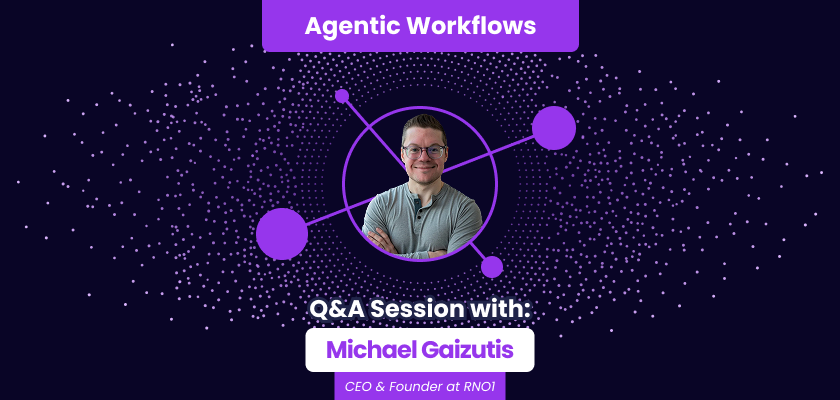
How RNO1 combines agentic AI with strategic oversight to eliminate repetitive work while ensuring every meaningful decision remains human-led.
“We’re not trying to remove humans from the loop. We’re trying to remove unnecessary work from humans.”
One of the biggest misconceptions about agentic AI is that success is measured by autonomy.
For RNO1, the opposite is true.
The agency believes the goal isn’t to build workflows that eliminate people. It’s to build workflows that eliminate repetitive work, allowing strategists, creatives, and consultants to spend more time making the decisions that shape business outcomes.
As intelligent systems become increasingly capable of executing operational tasks, RNO1 sees human judgment becoming even more valuable—not less. Rather than replacing expertise, the agency is redesigning workflows so that AI handles execution while people remain responsible for strategy, creativity, and accountability.
Agency Snapshot
🧠 Agentic Maturity
Human-guided, semi-autonomous workflows embedded across creative production, research, and strategic delivery.
⚙️ Primary Use Cases
Content production, research, campaign planning, creative support, and internal workflow automation.
🌍 Industries
SaaS, fintech, and B2B services.
🧩 Core Tech Stack
OpenAI (GPT-4o), Claude, Gemini, custom workflow integrations
How Autonomous Are Today’s Agentic Workflows?

Across participating agencies, fully autonomous systems remain uncommon. Most organizations—including RNO1—continue to combine AI-driven execution with structured human oversight to ensure quality, accountability, and strategic alignment.
How Agentic Workflows Are Structured at RNO1
RNO1 approaches agentic AI as a collaborative operating model rather than a replacement for human expertise.
Instead of asking AI to complete entire projects independently, the agency distributes repetitive operational work across intelligent workflows while deliberately reserving strategic checkpoints for experienced team members. Research, drafting, analysis, and content preparation can all be accelerated through automation, but every meaningful recommendation ultimately passes through human evaluation before reaching a client.
This philosophy reflects a simple belief: automation should remove friction, not responsibility.
By separating execution from judgment, the agency creates workflows that are both scalable and accountable.
Inside the Workflow: From Input to Output
Each engagement begins with AI-supported discovery.
Specialized workflows gather information, organize research, generate initial concepts, and prepare structured recommendations that provide teams with a comprehensive starting point.
Once operational work has been completed, strategists review every output through the lens of brand positioning, business objectives, customer expectations, and long-term growth.
Rather than accelerating every decision, AI accelerates the preparation behind every decision.
This distinction allows RNO1 to reduce production time while maintaining the level of strategic rigor clients expect.
The Role of Human Oversight
Human judgment is not simply a review stage at RNO1. It is the foundation of every workflow.
The agency believes AI excels at generating possibilities, identifying patterns, and processing information at scale, but it cannot independently determine which creative direction best represents a brand or which strategic recommendation will deliver the strongest business outcome.
Those decisions require experience, context, and accountability.
For RNO1, the quality of an agentic workflow is measured not by how many decisions AI makes, but by how effectively people are empowered to make better ones.
A Real-World Use Case
One example of this philosophy can be seen in RNO1’s collaboration with Rezolve AI, where intelligent systems were integrated into a broader innovation strategy designed to improve digital customer experiences rather than simply automate isolated tasks. The partnership demonstrates how AI becomes significantly more valuable when embedded within a well-defined strategic framework rather than deployed as a standalone technology initiative.
Throughout the engagement, AI accelerated operational execution while strategic teams continued guiding product direction, user experience, and implementation decisions.
The result was not simply faster delivery, but a workflow where automation increased the capacity for higher-value thinking.
Key Advantages of Agentic Workflows
For RNO1, the greatest advantage of agentic AI lies in giving specialists more time to do the work only humans can do.
By automating repetitive production tasks, teams can dedicate greater attention to strategic planning, creative exploration, and solving complex client challenges.
Rather than measuring success by the volume of work automated, the agency measures success by the quality of thinking automation enables.
This shift transforms AI from a productivity tool into a strategic multiplier.
The Biggest Challenges Holding Back Agentic AI
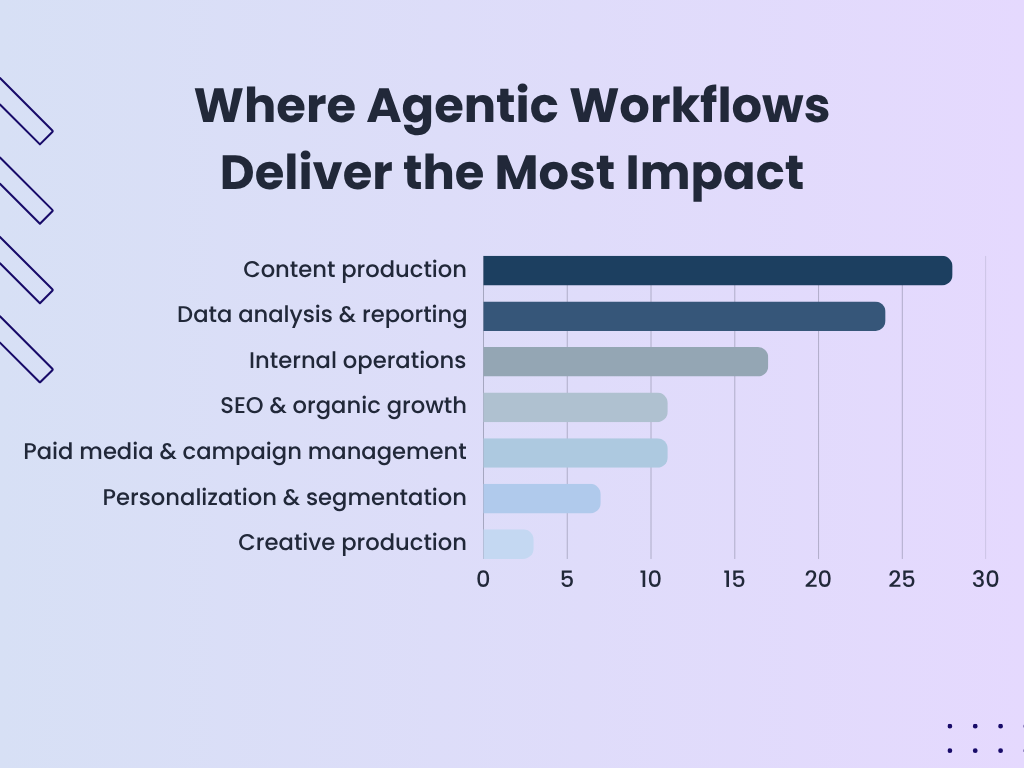
While agencies continue embracing agentic workflows, leaders consistently identify governance, quality control, organizational readiness, and maintaining trust in AI-generated outputs among the most significant barriers to broader adoption.
Challenges and Limitations
Despite its enthusiasm for agentic AI, RNO1 recognizes that automation introduces new risks alongside new opportunities.
Without clearly defined governance, review structures, and strategic ownership, organizations risk producing outputs that appear technically impressive while failing to reflect brand identity or business priorities.
As AI systems become increasingly capable, the agency believes leadership becomes even more important.
Technology scales execution.
Governance scales trust.
How Agentic AI Is Reshaping Agency Models
RNO1 believes agencies are entering a period where execution becomes increasingly accessible while strategic judgment becomes increasingly scarce.
Clients will adopt their own AI tools.
They will automate production.
They will accelerate internal workflows.
But they will continue relying on trusted partners to define strategy, challenge assumptions, identify opportunities, and guide transformation.
Rather than competing against AI, agencies will increasingly compete on the quality of their thinking.
In this future, judgment becomes the ultimate differentiator and the final quality gate that no intelligent system can fully replace.
Conclusion
For RNO1, agentic AI is not about building autonomous agencies. It’s about building more intelligent ones.
By removing repetitive work while strengthening strategic oversight, the agency demonstrates that the future of marketing isn’t defined by how much work AI performs.
It’s defined by how effectively human expertise directs that work toward meaningful business outcomes.
Because the most valuable part of an agentic workflow isn’t the automation itself. It’s the judgment behind it.











![How I Use Landing Page Split Testing to Find Untapped Marketing Potential [+ 12 Places to Start]](https://knowledge.hubspot.com/hubfs/landing-page-split-testing-1-20250121-3573417.webp)