Singapore’s ‘City in Nature’: How rainforest trails, urban gardens and skyline views are redefining the city break
From tropical greenery and treetop walkways to wildlife-rich islands and technicolour illuminated supertrees, discover how Singapore has effortlessly woven nature into city life
 Fransebas
There's a moment, somewhere between spotting a gliding colugo in the rainforest canopy of MacRitchie Treetop walk and sipping a cocktail above the glittering Marina Bay skyline, when Singapore stops feeling like a city and starts feeling like something else entirely. Something harder to categorise, and far more exciting.
That energy is everywhere here. It pulses through the luminous waterfront of Marina Bay, through the steam rising from hawker centres, and the clink of cocktail coupes at some of the best bars in the world. But what makes Singapore genuinely unlike anywhere else is how seamlessly you can step from skyline into the green.
Because despite being a city, Singapore is, quietly and ambitiously, one of the most biodiverse places on earth. Old-growth rainforest still cloaks its hillsides. Mangroves fringe its islands. Rare pangolins cross its expressways via dedicated wildlife bridges. And throughout the city, nature doesn't just survive, it co-exists, harmoniously – it's been woven, deliberately and beautifully, into the urban fabric. This is Singapore's 'City in Nature' vision: an overarching commitment to integrating lush biodiversity with world-class infrastructure, so that the wild and the urban don't merely coexist but genuinely enhance each other.
The result is a city break that’s completely unique. You can hike through jungle in the morning and still make it to a rooftop bar for golden hour. It feels effortless, but then the most impeccable cities usually do.
For the ultimate Singapore getaway, look no further than the long-haul travel specialists at Travelbag, whose travel specialists have curated the equivalent of a multi-centre trip in this diverse destination. Driven by personal recommendations and local expertise, Travelbag’s Singapore, Nature & Outdoors itinerary showcases the city’s cultural and culinary brilliance interwoven with wildlife and natural beauty – often surprising and always beguiling. Every adventure is tailormade, focusing on Singapore’s most incredible and enriching experiences.
Singapore's urban nature: Gardens, wildlife and green spaces in the city
Perhaps the most iconic expression of this vision is the Singapore Botanic Gardens, right next to the Orchard Road shopping district. Established in 1859, the gloriously green, bloom-brightened grounds make up the country’s first UNESCO Heritage Site – and the first tropical garden to receive the designation. Wandering past thousands of orchids and around lakes fringed by Nibong palms, with sculptures dotted throughout, you’ll soon get a sense of how nature and art make perfect partners. Make time to dine at 1-Michelin star restaurant, Pangium, for an exquisite taste of Peranakan cuisine, all while enjoying the sweeping views of the lush surrounds.
For those looking to deepen that sense of relaxation, Singapore's garden spas offer a deeply tranquil complement. Aramsa is a sanctuary of open-air treatment pavilions surrounded by tropical greenery, where therapies draw on botanical ingredients and ancient Asian healing traditions. Similarly, Natureland's garden spa experiences bring the outside in, blending lush surroundings with traditional techniques for a sense of renewal that feels entirely in keeping with Singapore's City in Nature spirit.
Singapore’s wildlife: Where to spot monkeys, lemurs and rainforest species
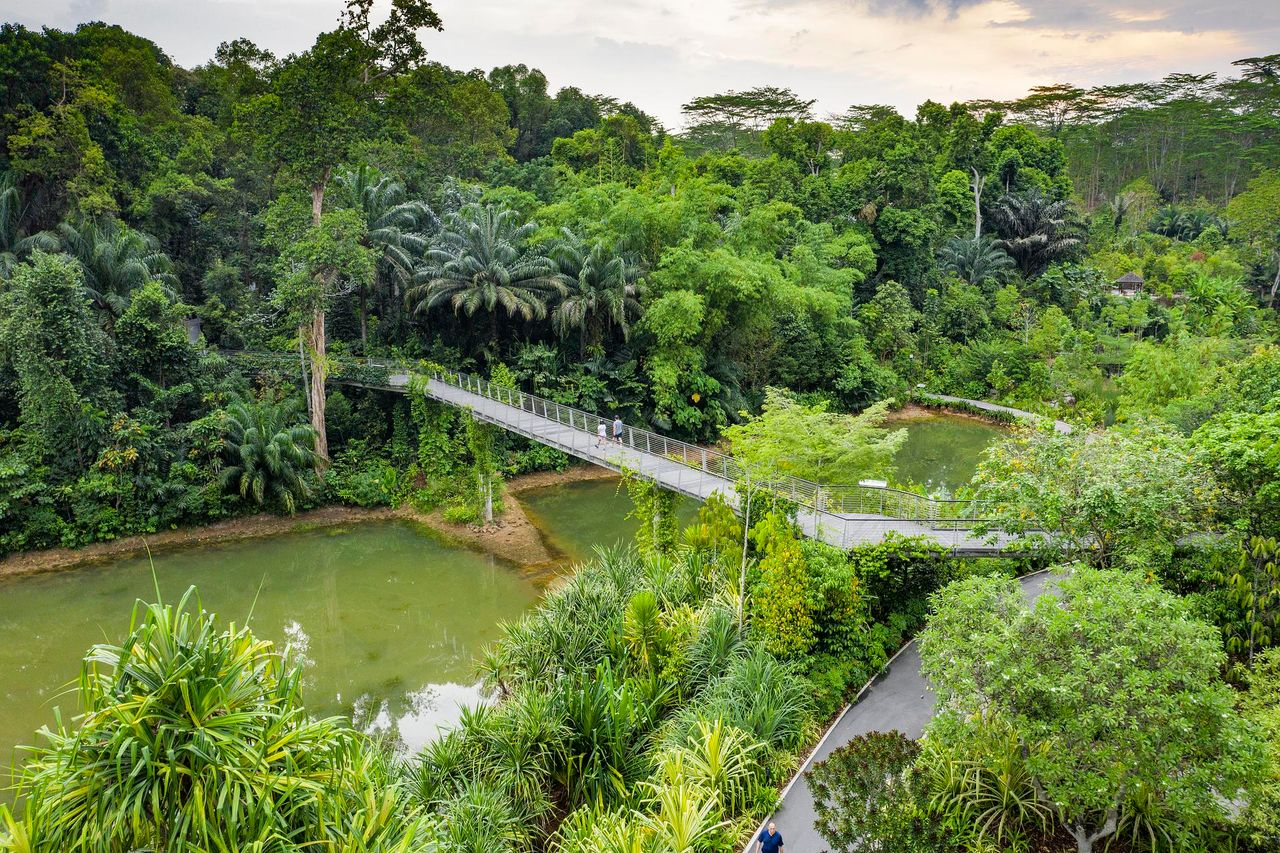
Naturally, incredible wildlife experiences are never far away. At MacRitchie Treetop Walk, a 250-metre suspension bridge between two of the highest points in Central Catchment Nature Reserve in the heart of Singapore, scour the forest for plantain squirrels, long-tailed macaque monkeys and clouded monitor lizards. This area, and the reserve’s MacRitchie Reservoir, are among the best places to spot another enchanting animal: Sunda colugos, known as flying lemurs because they glide from tree to tree. Though nocturnal, they’re surprisingly easy to spot in the daytime when they cling, motionless, to tree trunks.
For a deeper immersion in Singapore's wild north, the Mandai Wildlife Reserve cluster offers something altogether more elemental. Nestled alongside the Upper Seletar Reservoir, this verdant corner of the island is where secondary rainforest, freshwater wetlands and open green space converge in a way that feels genuinely removed from the city. Walking trails wind through the forest edges, herons pick their way along the reservoir banks, and the canopy hums with birdlife – a perfect reminder that in Singapore, the wild and the urban are never far apart.
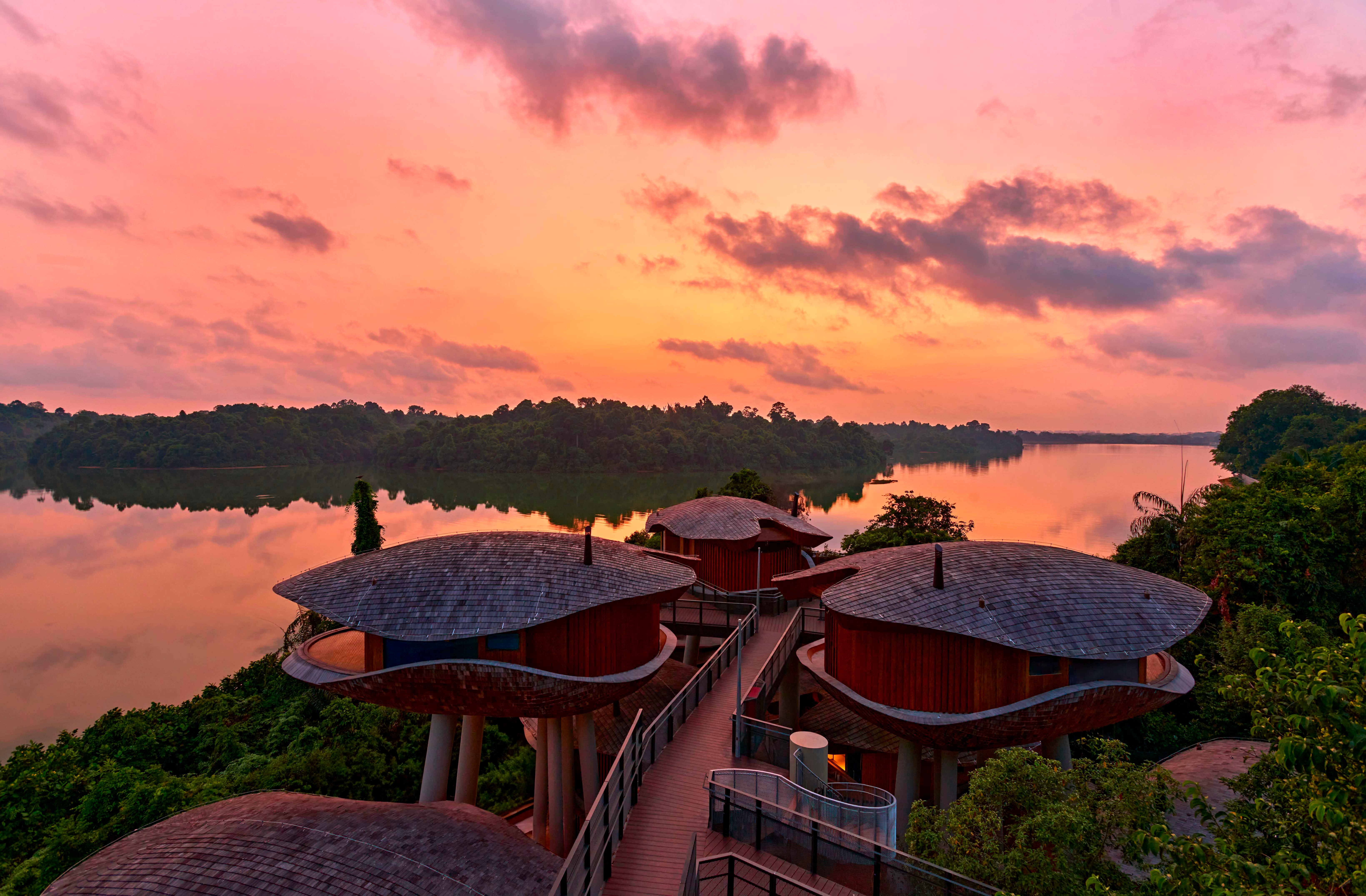
For a stay that reflects the area's deep connection with the natural world, the nearby Mandai Rainforest Resort by Banyan Tree is an inspired choice, with architecture that takes its cues from the surrounding forest. Among its most eye-catching accommodations are elevated, seed pod-inspired treehouses that appear to emerge from the canopy, creating a seamless dialogue between design and landscape.
Singapore's rivers, islands and waterways: Nature beyond the city centre
.jpeg)
Singapore’s relationship with nature extends well beyond its forests. Take a bumboat, or water taxi, along the Singapore River, which flows from the centre of the island to its urban hub, the Marina Bay. Along the way, see Singapore’s lush gardens, skyscrapers and preserved, pastel-hued shophouses – some dating from the 1840s – from a different perspective. The river is also one of the best places to spot one of Singapore's most beloved wild residents – smooth-coated otters, who can often be seen frolicking along the riverbanks and waterways in playful family groups.
Singapore is made up of more than 60 islets, many of which form their own perfectly preserved pockets of nature. The most well-known one is Sentosa, easily reached via road, cable car or the pedestrian boardwalk. While it’s hugely popular for its theme parks and world-class attractions, including the newly opened Singapore Oceanarium, you can also walk through rainforests and coastal woodland edged by burnished-gold beaches.
By contrast, on Pulau Ubin, you can kayak through mangroves and tidal rivers, and spend time with local people who live in traditional kampong houses. Lazarus Island has some of the country’s whitest and most pristine beaches, while tiny Kusu Island has a tortoise sanctuary, home to hundreds of rescued turtles and tortoises.
Gardens by the Bay: Supertrees, tropical blooms and Singapore's skyline
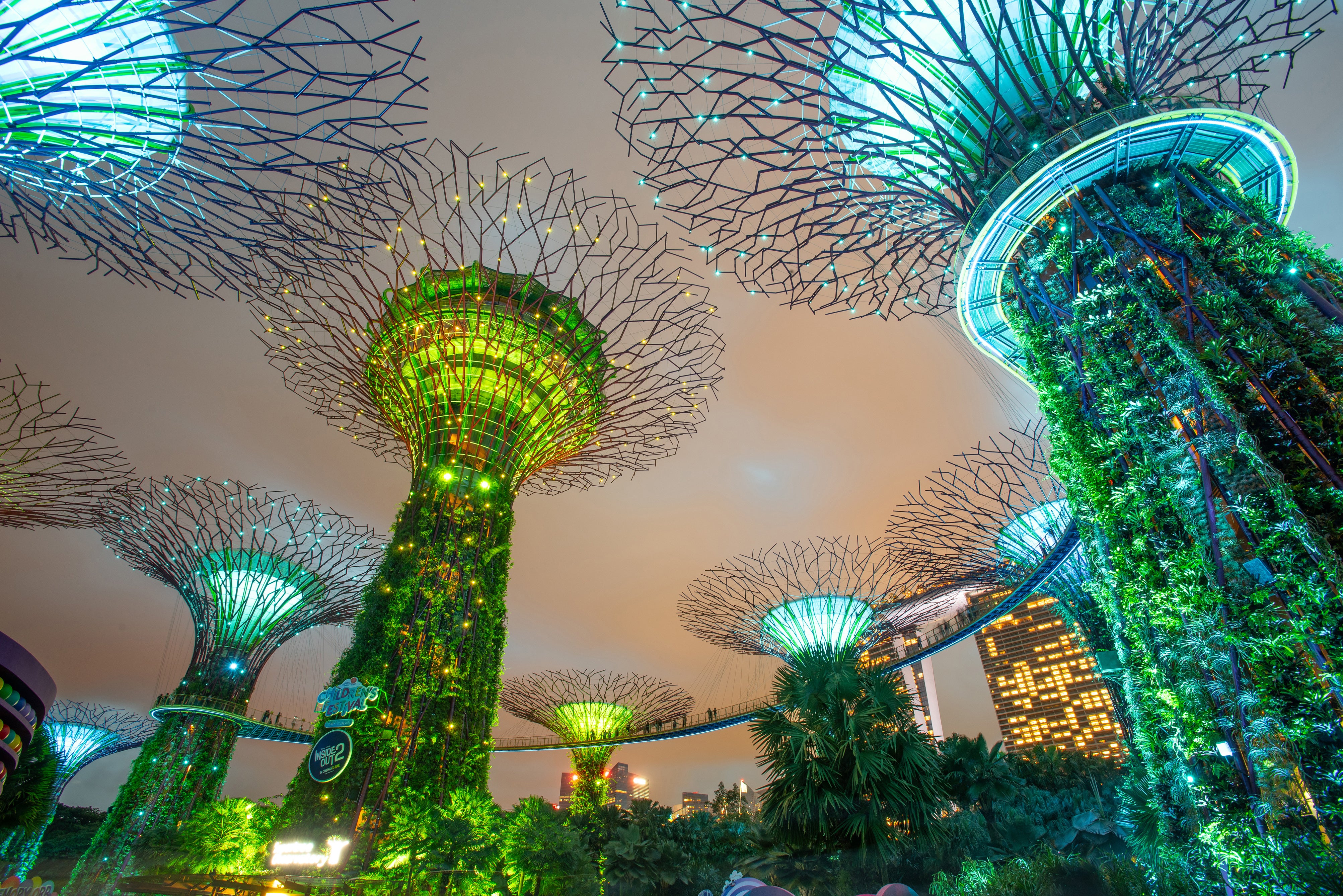
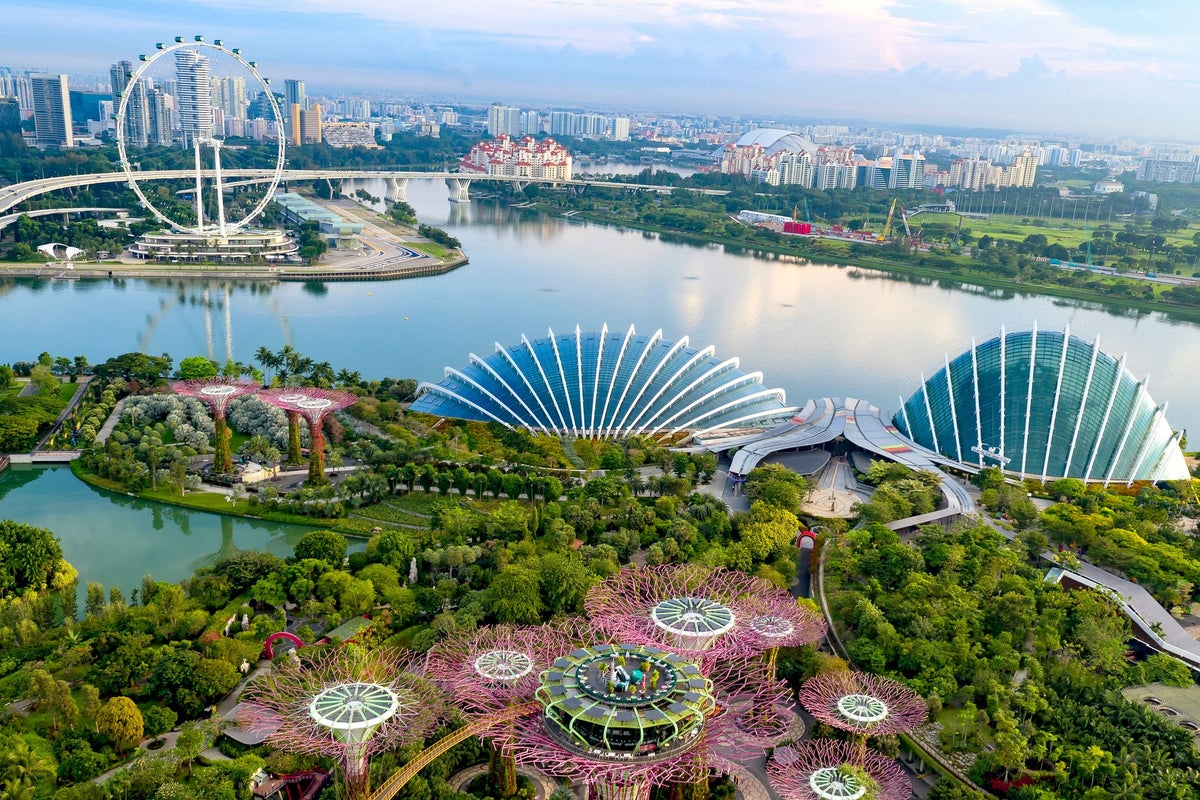
If one place captures Singapore’s extraordinary ambition, it’s Gardens by the Bay. Here, futuristic conservatories, sparing observatories and sweeping walkways share the stage with some of the most spectacular botanical displays on earth. Architecture and flora share equal billing, and blend together beautifully.
Its ‘Supertree Grove’ has 16 ‘supertrees’ that rise dramatically up to 50 metres tall. By day they're extraordinary, after dark, when they're illuminated for the nightly Garden Rhapsody light and music show, they become something close to magical.
The tallest tree is topped with an observatory for views of Marina Bay’s waterfront skyline. It’s also the perfect place to soak in the extraordinary way Singapore infuses nature with dynamic, urban energy – beautifully blending lush greenery and gleaming, innovative design.
Here, you can truly take stock of what Singapore has achieved: a city that has not just made room for nature but made nature its defining idea. Come for the skyline, the food, the culture but stay for the nature that envelops you at every turn.
To discover more curated Singapore recommendations, explore the Singapore, Nature and Outdoors itinerary and to book your trip, visit Travelbag