The Future of the Space Battery Market: Technologies, Trends & Growth Outlook Through 2035
The global space industry is entering one of its most transformative decades yet—and at the center of this evolution is a component most people never see: the space battery. As spacecraft become more advanced, satellites launch at unprecedented rates,...
 Fransebas
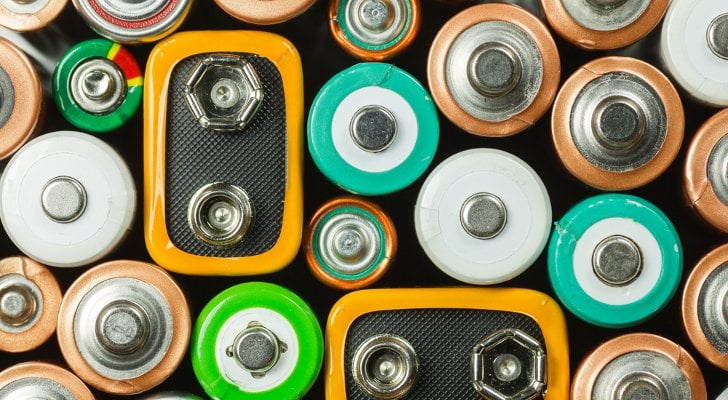
The global space industry is entering one of its most transformative decades yet—and at the center of this evolution is a component most people never see: the space battery. As spacecraft become more advanced, satellites launch at unprecedented rates, and deep-space missions become routine, the demand for highly reliable, intelligent, and long-lasting energy storage is skyrocketing. Space batteries are no longer passive backup systems. They are now software-defined, AI-supported, mission-critical power assets that keep spacecraft alive during high-stress maneuvers, eclipse periods, and operations where sunlight is limited or nonexistent. Their performance directly influences mission success, payload capacity, and spacecraft longevity. This blog breaks down the current state of the space battery market, key growth drivers, challenges, segmentation insights, and the technologies shaping the future—from solid-state chemistries to AI-enabled battery management. The global space battery market reached $851.8 million in 2024 and is projected to hit $1.42 billion by 2035, growing at a 4.81% CAGR. This growth reflects three converging trends: As agencies, commercial operators, and new-space startups scale their spacecraft fleets, batteries are shifting from commodity hardware to strategic, differentiating technology. Modern missions require batteries that can support: Higher energy density and modular pack designs are giving operators more usable power without increasing spacecraft mass—a major win for payload budgets and launch economics. Innovations in pack architecture and thermal management now allow some systems to be: This accelerates build cycles and reduces program risk. Export controls (ITAR, ECSS), mineral scarcity, and geopolitical dynamics influence how suppliers source cells, separators, and electronics. Vendors who can certify across regulatory environments without redesigning hardware hold a major competitive advantage. The space battery value chain spans everything from raw materials to end-of-life retrieval: North America and Europe are investing heavily in lithium processing and high-purity cathodes, while Asia (Japan, South Korea, China) maintains leadership in separators, anodes, and electrolyte innovation. Recycling, still nascent, is expected to expand sharply—boosted by circular-economy initiatives and increasing launch cadence. Solid-state systems promise: Adoption is limited today but expected to accelerate by the early 2030s. Modularity reduces: For mega-constellations and responsive launch, plug-and-play battery architecture is becoming a requirement. AI-driven BMS capabilities include: This transforms batteries into active, intelligent subsystems rather than passive storage units. Growing from $605.8M (2024) to $962.8M (2035) LEO constellations dominate demand, requiring high-cycle, fault-tolerant packs. Require fast-cycling, high-power batteries optimized for electric propulsion. Need long-life, fault-tolerant, thermally optimized systems. Satellites will remain the largest and most stable source of demand. Lithium-based batteries dominate and will rise from $776.1M in 2024 to $1.31B in 2035. Why lithium leads: Nickel-based and silver-zinc systems will continue on legacy programs but will not capture the bulk of future growth. The 1–10 kW range is the workhorse of the industry. It powers: While >100 kW systems will grow with lunar bases and large orbital platforms, 1–10 kW will continue to dominate revenue through 2035. North America leads with a projected rise from $710.5M (2024) to $1.17B (2035). Key accelerators: Europe and Asia-Pacific are rapidly scaling capacity, but North America remains the strongest in flight heritage and commercialization. Innovation is no longer optional—it is foundational to mission success. These pressures concentrate the market among experienced aerospace suppliers. Organizations that can innovate safely—while scaling production—are best positioned for long-term success. The space battery market is undergoing a profound transformation. As spacecraft become more autonomous, all-electric propulsion scales, and private investment accelerates, next-generation batteries will define what’s possible in orbit and beyond. From solid-state chemistries to AI-enabled diagnostics, the technologies emerging today will shape mission architectures for decades. Organizations that understand these shifts—and invest accordingly—will hold a critical advantage in the new space economy. For more insights, check out the full report. Market Overview: A Rapidly Expanding Power Backbone
Why Space Batteries Matter More Than Ever
1. Mission Flexibility & Performance
2. Qualification Efficiency
3. Strategic Sourcing & Supply Chain Resilience
Industrial Impact: A Reconfigured Global Supply Chain
Technology Outlook: The Three Vectors Shaping the Future
1. Solid-State Batteries
2. Smart Modular Battery Systems
3. AI-Enabled Battery Management Systems (BMS)
Market Segmentation: What’s Driving Growth?
By Platform
Satellites (Leading Segment):By Battery Type
By Power Rating
By Region
Demand Landscape: Drivers, Challenges & Opportunities
Key Market Drivers
Mega-constellation expansion (projected 50% YoY growth in 2025)
Deep-space exploration (lunar bases, Mars prep, asteroid missions)
Advancements in solid-state & Li-S chemistries
AI-driven battery intelligence
Key Challenges
Extreme qualification burden for space hardware
High development costs (tens of millions per cycle)
Material supply constraints
Export control limitations (ITAR, ECSS)
High-Growth Opportunities
Private investment in space-power startups
Hybrid energy systems (solar + batteries + fuel cells)
Recycling loops to reclaim lithium, nickel, and cobalt
Modular, repeatable battery packs for responsive space
How This Report Adds Value to Organizations
Product & Innovation Strategy
Understand next-gen battery chemistries (solid-state, Li-S)
Prioritize qualification paths for LEO, GEO & deep space
Design modular systems that reduce cost and risk
Growth & Marketing Strategy
Identify partnership opportunities with agencies & launch providers
Position products around safety, energy density, and reliability
Strengthen credibility through heritage and advanced R&D
Competitive Strategy
Benchmark against leaders like GS Yuasa, Saft, EnerSys
Evaluate competitive differentiation based on chemistry, BMS intelligence, and certification capability
Target high-growth segments (LEO, lunar infrastructure, OTVs)
Conclusion








.jpg)