The safari that taught me to step out of the Land Rover
As convoys of cars follow big cats across the Maasai Mara, Natalie Wilson crossed the equator to find out why the Borana Conservancy is turning off its engines
 MikeTyes
.jpeg?trim=508,0,1,0&width=1200&height=800&crop=1200:800)
I’m confident I could redirect a great white shark. I’ve watched Shark Whisperer. And I’ve practised my “hey bear” in the event I encounter a grizzly in the Rockies. But Netflix has a horn-shaped hole for its rhino deterrent advice.
So I’m dancing with death on Kenya’s Laikipia Plateau. Well, that’s how it feels on horseback in the Borana Conservancy’s protected rhino lands, a decade after a riding fall landed me in a hypnotist's chair.
Saddled up on Pippin, a bay from Borana’s stables, it appears the trance has worn off. Legs already trembling from an early morning CrossFit session with the rangers, I can’t blame the altitude for my fixation on every crunch under hoof.
.jpeg)
Read more: Why now is the time to visit Uganda for the ultimate gorilla encounter
As I spook at a jackal jumping through the grasslands, I’m forced to look up at the 32,000 acres of wilderness we’re hacking at the foot of Mount Kenya.
Borana’s equatorial landscape is scattered with herds of elephants in their hundreds. Brooklyn Beckham’s infamous photo had already been eclipsed by my iPhone by the time we’d pulled up to the lodge. Now, calves and their matriarchs waved trumpeting trunks not 200m away from Pippin’s mane.
Until now, zebras – I assumed the easy-to-spot Z-listers of African wildlife – had evaded me in Kenya. It’s hard to believe the first time I get up close to the striped equines is while riding one of their distant cousins. A silent sighting. No camera clicks. No engines, just the occasional tweet of a pink-breasted bird. The zebras, unbothered, stared with a tail swish at our herd of homo sapiens a metre away.
Dazzled, I forget about the big cats and horned herbivores that could cause my peril and melt into the saddle for the rest of the ride.
Truth be told, I couldn’t have been safer on my trot over the rugged terrain, and I eventually stopped missing the secure sides of head guide Lawrence’s indomitable Land Rover.
As ethical debates rumble just the other side of the equator, Borana operates a more intimate safari experience.
The construction of the controversial Ritz Carlton, believed to be blocking a vital wildebeest migration corridor, was recently disputed in Kenya’s courts following a petition by a Maasai leader against its opening.
Though the case was dismissed, concerns surrounding overtourism in one of the world's most renowned ecosystems remain.
In 2025, up to 300 vehicles were reported at a single river crossing during peak season in southern Kenya’s safari hotspot.
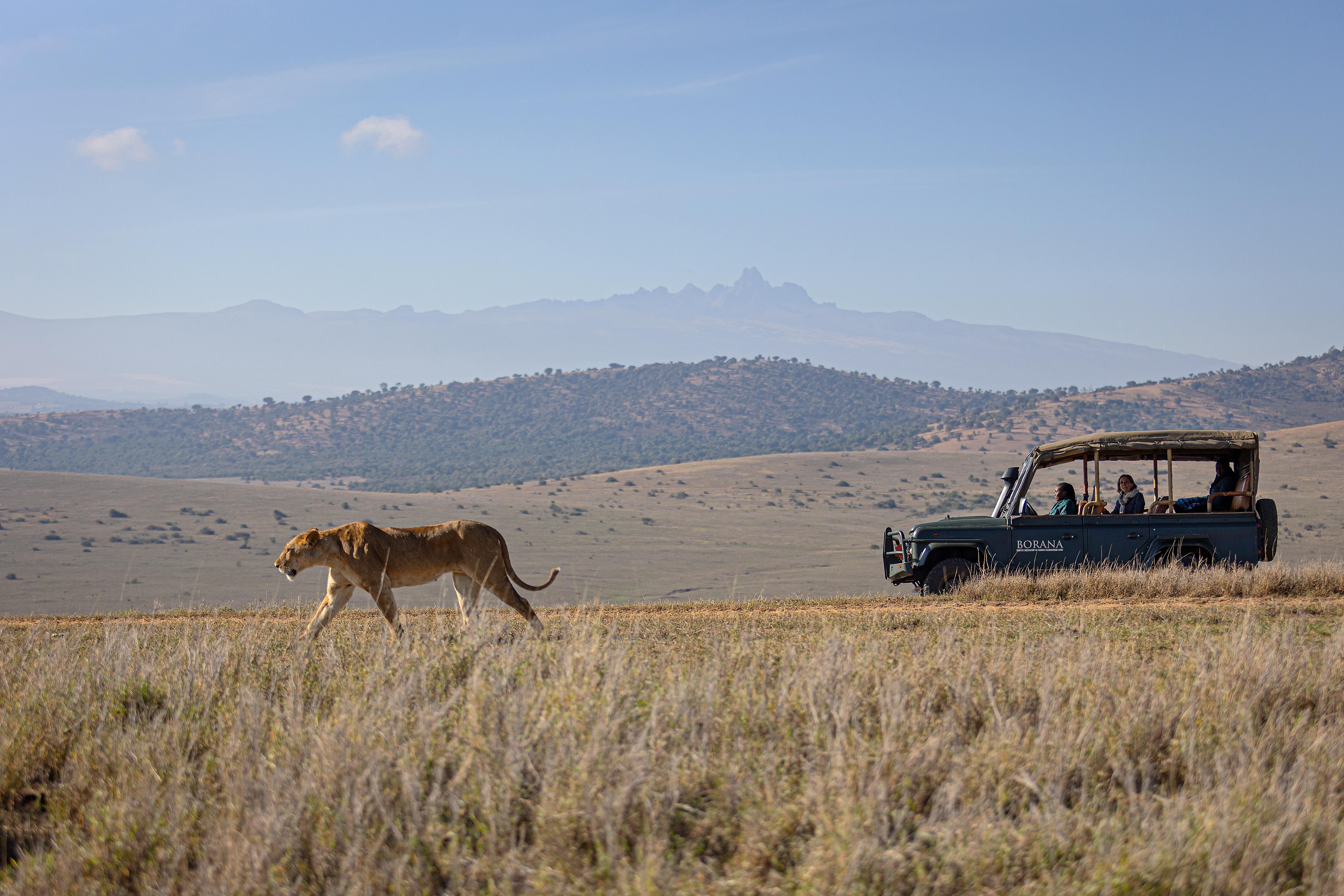
On Borana, “Ferrari safaris” aren’t a thing – wildlife always has the right of way.
Read more: What I learned about fear and feminism from a bush guide in Botswana
Lawrence, a guide with 12 years of experience at Borana, explains that a maximum of four vehicles can game drive at once on the conservancy, with houses on the land restricted to a maximum of two vehicles per property.
As for those coveted sightings of the Big Five, no more than two vehicles are allowed to view a group of animals at any one time, with guides coordinating responses to stagger engine-off viewings.
According to Lawrence, elephants see vehicles as “one big object”, with calves taught by their elders not to be scared.
“When elephants live in the conservancies, and lots of people are not shouting at them, they feel safer,” he said.
Bull elephants or “notorious bulls” tend to be the exception to the unphased tree munching I observe around vehicles. These are the elephants pushed back by the Kenyan wildlife service when they “break fences and go to farming areas to eat their crops.”
Mitigating human and wildlife conflict doesn’t mean cutting interactions completely. Like many preservation areas, at Borana the financial engine fuelling the conservancy is tourism.
However, tourism isn’t exclusive to guided drives on established dirt tracks. Guests of Borana Lodge can bush walk, horse ride, mountain bike and e-bike on low-impact safaris that engage with local people.
It’s quickly clear that ditching the game drives in favour of going it on foot is the best way to experience central Kenya’s untamed wildlife.
-(1).jpeg)
I’m not sure why I was worried about a rhino encounter with Pippin. A day earlier, our rhino trek had passed distinctive paw prints and splashes of blood – casual signs of a hungry lion on the hunt – before running into Steve, one of Borana’s black rhino.
In 2013, Borana committed to providing additional habitat to neighbouring Lewa Wildlife Conservancy’s rhino programme, hosting over 255 black and white rhinos between them. This amounts to around 12 per cent of Kenya’s endangered population. Dropping their fences in 2016 to create a 93,000-acre wildlife corridor across East Africa, wildlife now moves freely across the connected conservation areas.
On Borana, the team set out each day to account for each rhino in the conservancy, logging every animal sighting on dedicated mobile devices. Rhinos are identified using ear notches with correlating codes and names, as operational manager Elizabeth explained in the ranger centre.
As of February 2015, the leader in rhino conservancy has seen 10 years without poaching, thanks in part to crucial engagement from the local community.
Still, while walking the wilderness, ranger and rhino expert Kiloku says with a smile: “Being a ranger, we expect the unexpected”.
.jpeg)
Reassuringly, the wind is on side for a peaceful sighting of Steve. Apparently, I should have been more worried about a close-up with snakes, as Ruth, one of Borana’s female guides, laughed when I questioned Borana’s snake population.
In my information booklet, I learned that squirrels tend to frequent the rooms and have “been known to steal biscuits”.
Alas, the whistle hanging on the wall of my Borana Lodge cottage was sadly not there to summon Dawa cocktails – a refreshing vodka, lime, honey and sugar combination. Instead, this whistle was for squirrels or hyrax “guinea pigs” to be removed from my room in the event they attempt to reclaim the hut, as a travel companion discovered on our final night.
Other than this handful of cottages on Borana Lodge, tourism efforts generally try to leave the conservancy land alone.
Nowhere was this more obvious than on a bush walk for sundowners on “Pride Rock”. Yes, that one. The original animators for Disney’s The Lion King are believed to have stayed on Borana in the 1980s.
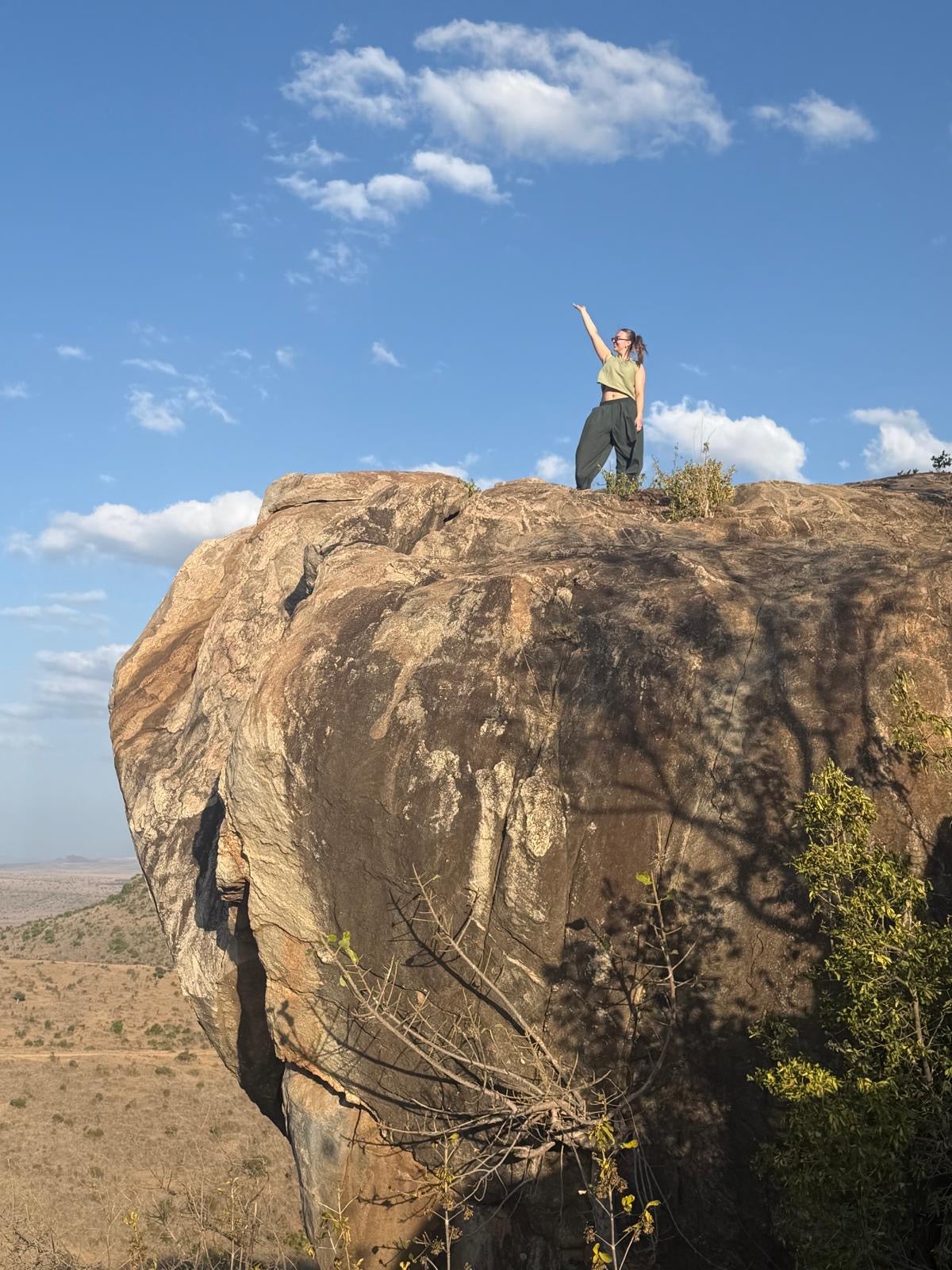
As set jetting dictates travel trends, the icon of The Lion King remains an empty setting for an uninterrupted Tusker lager and Circle of Life sing-along. Access is limited to the guests staying within the conservancy’s handful of lodges and camps: a maximum of around 25 people.
It turns out there is a rhino documentary, narrated by Tom Hardy, following Kiloku’s efforts to protect Borana’s black rhino. I recommend watching before you step out of the car to prepare for your cycle, ride or stride with the big five.
How to do it
Packages at Borana Lodge start at £4,283 per person, based on two people staying for four nights. This includes a three-night stay at Borana Lodge and one night fly camping on a full board basis and including all guided e-biking excursions, local airstrip transfers, day and night game drives, horse riding, mountain biking, bush walks, behind the scenes of conservation experiences, tours of Waitabit Farm, return international flights, internal flights with Scenic Wilderness, transfers and 24 per cent contribution to conservation. Children under five stay free.
Natalie travelled as a guest of Borana Lodge and The Ultimate Travel Company, with flights supported by Scenic Wilderness.

















![How Are Enterprise SEO Pros Measuring AI Overviews & LLMs? [Webinar] via @sejournal, @lorenbaker](https://cdn.searchenginejournal.com/wp-content/uploads/2026/09/ai-search-measurement-webinar-stat.png)