This West Papua cruise takes you to one of the most remote places in the world
Far from the bright lights of Bali, Laura French takes the journey of a lifetime on an expedition cruise of Indonesia, taking in rarely-visited Asmat villages and the Coral Triangle
 Koichiko
“Until a few weeks ago, this village hadn’t seen tourists in 10 years,” says our local guide, Viktor, as we tread across a stilted log platform, bright green sago palms flanking the surrounding swamp water. “The only way to get here is by boat. There are no roads. But we’re happy to see tourists coming again.”
I’m in Yuan Yufri, a secluded village in the Asmat region of West Papua – the western half of New Guinea, set next to and on the same island as Papua New Guinea but belonging to Indonesia (one of 17,508 islands that make up this huge, diverse country, according to official figures).
To say this little talked-about corner of the country is remote is something of an understatement; it has taken two flights from Jakarta, two full days of sailing the Arafura Sea and a final boat ride navigating the jungle waterways to get here.
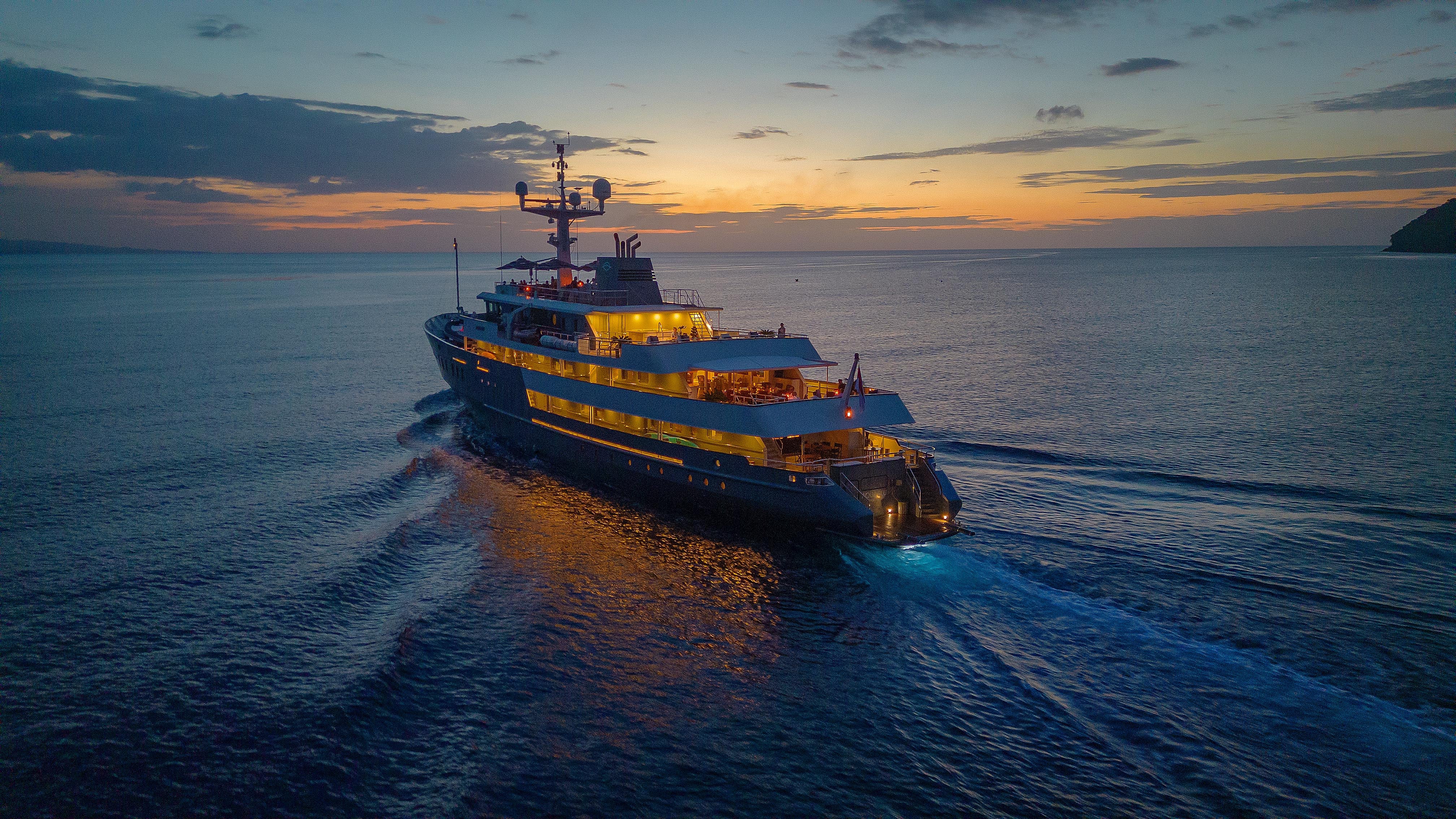
Boutique, ultra-luxury cruise line Aqua Expeditions began offering occasional sailings to the region in October 2025, bringing guests to one of the most remote places in the world. Sailing aboard Aqua Blu, my fellow passengers and I had travelled 320 nautical miles from the Papuan port town of Kaimana without passing another ship. Our vessel is a sleek, intimate yacht with just 15 suites that started life as a working navy vehicle.
Read more: The best river cruises in Europe, from the Douro to the Danube
The route has an intriguing history. Back in the early 1960s, Michael Rockefeller – the son of the then-New York governor – notoriously disappeared while exploring the Asmat territory in search of the region’s acclaimed wood carvings. While Dutch authorities said he’d drowned (West Papua was part of a Dutch overseas territory until 1962), American author Carl Hoffman later theorised he was attacked and eaten as revenge against violent colonial conflict; the Asmat tribe were once known for cannibalistic practices, believed to be a way to maintain balance between life and death.
To get access to the region now is an incredibly rare privilege, and I arrive intrigued to learn more about modern Asmat culture. We’re given an insight into ongoing traditions and beliefs from Viktor, who grew up in a nearby village. “Ceremonies are important to us as a way to connect with our ancestors,” he says. “Nature is at the heart of our beliefs.”
I get a glimpse into these customs as soon as we arrive. Members of the community paddle by on canoes, singing in a powerful synchronised welcome ceremony, while others line the riverbank to greet us.
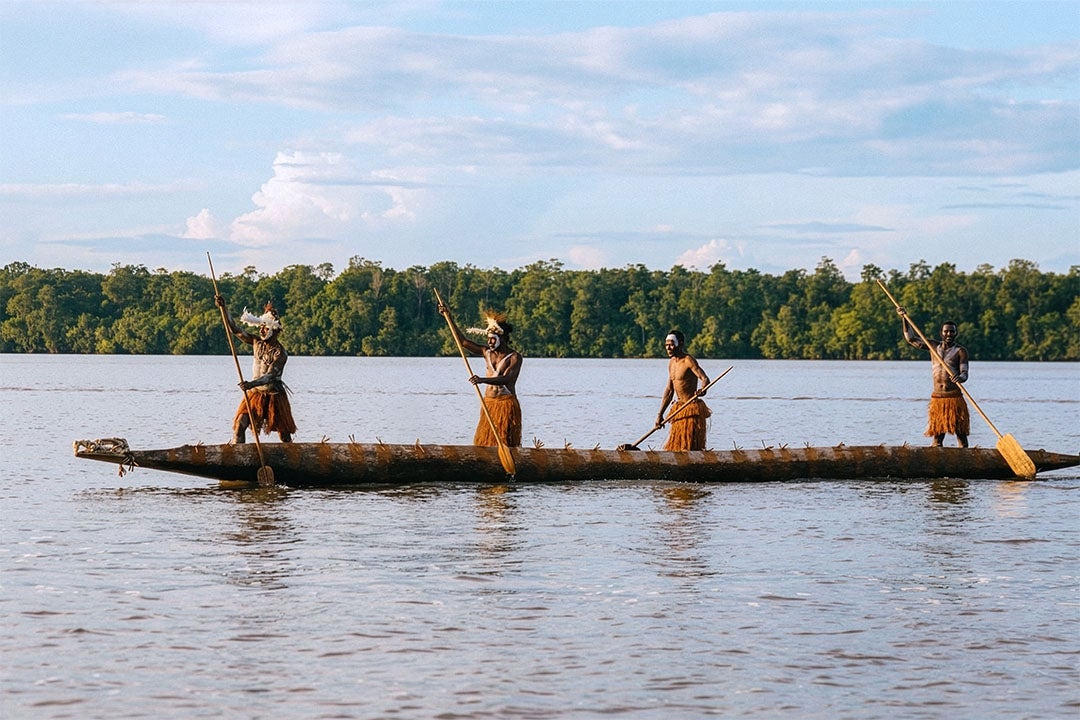
As we’re introduced to the village chief, Sylvester, Viktor explains that the group’s ceremonial dress comprises etchings applied with black and white chalk made from burnt sago and crushed shells, and skirts made from sago leaves.
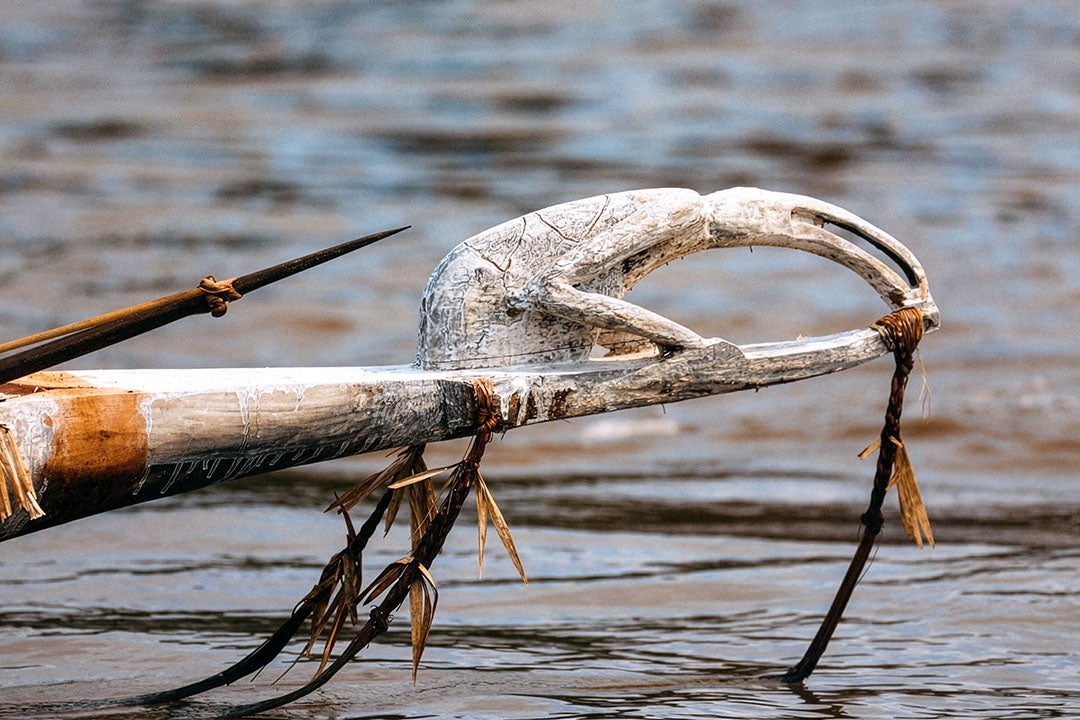
It’s the intricate wood carvings and art for which the Asmat are best known, though. “Wood is considered sacred,” says Viktor. “Legend says the Asmat were born from wood carvings of figures that were made by our first ancestor and then sprung to life.”
On a tour of the jeu house – a sheltered, stilted structure made from tree bark and palm leaf, considered the hub of the community – we browse huge tifa drums produced from a single piece of softwood alongside other pieces of intricate woodwork. They sit beside necklaces embellished with boars’ teeth, headdresses made from cassowary bird feathers and noken bags woven from palm leaves, which were listed in 2012 as a Unesco Intangible Cultural Heritage in Need of Urgent Safeguarding.
Preserving these crafts and customs is one of the main goals of bringing small-scale tourism to the region, Viktor tells us. The income from visitors’ purchases is spread evenly among the tribe, we’re told. “We hope tourism here will keep our wood carving traditions alive and encourage young people to keep doing it,” he says. Our cruise director, Dean, explains how Aqua Expeditions provides books, school equipment and other items to the community, from football equipment to volleyball nets.
Read more: The best Med cruise holidays to book now
We learn more the following day, when we sail further south, meandering along a serene stretch of river between lush, leafy riverbanks to reach the village of Biwar Laut. Here we experience a spirit mask ceremony, considered one of the most important rituals in Asmat culture, where selected members of the tribe wear full-body rattan masks to represent ancestral spirits. A crowd gathers around us, singing and dancing to an energetic drumbeat, as Viktor explains how the ceremony is designed to commemorate the passage of the deceased to the spirit world.
It’s a fascinating insight into Asmat and wider Papuan culture, where villages are largely self-sufficient and life centres around fishing, hunting and gathering sago, a staple food. “Schooling is in Indonesian, but each sub-tribe has its own language,” Viktor explains. “We want to keep this heritage, but we are modernising at the same time,” he says, pointing to his smartphone.
As we’re waved off from our final village visit, I leave with an appreciation for an entirely different way of life and a greater understanding of the importance of preserving traditions like these.
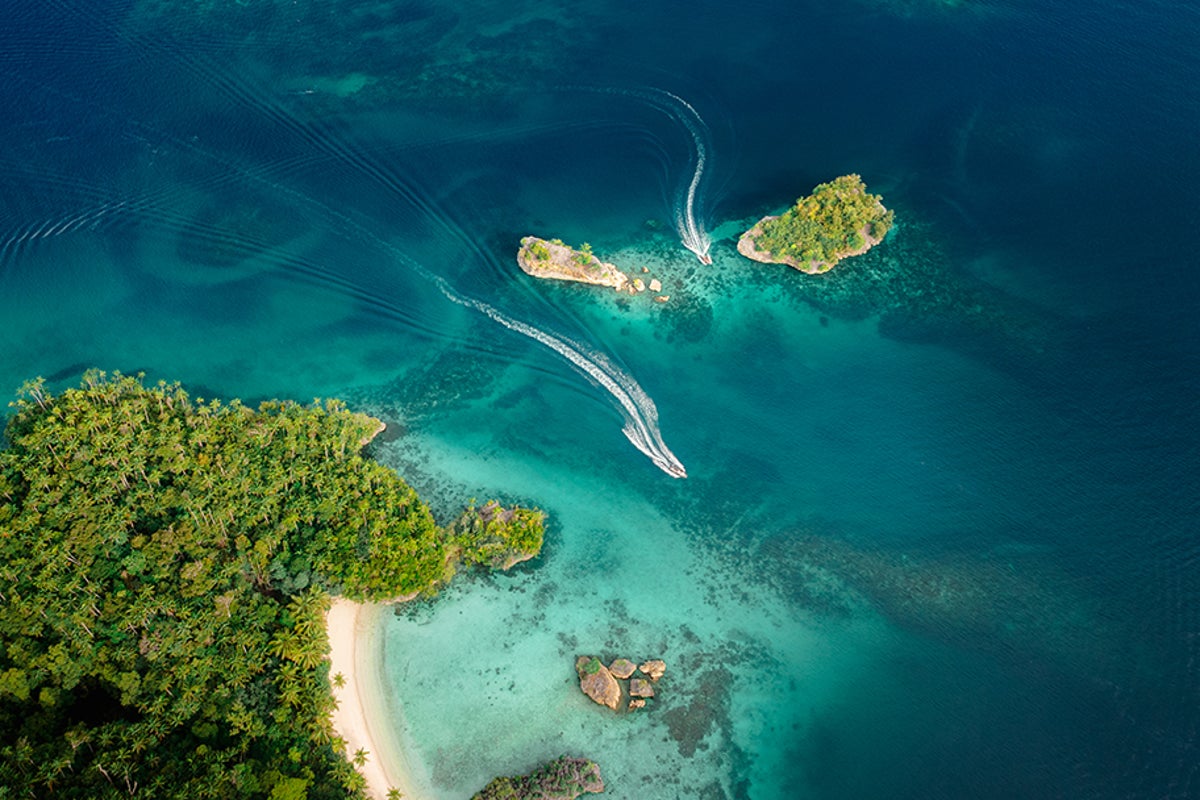
But we aren’t only here to see life on land; beyond its swathes of rainforest and remote, rural villages, West Papua boasts one of the highest levels of marine diversity on the planet. This is the home of Raja Ampat – an archipelago of 1,500 islands, atolls and cays that sits at the heart of the Coral Triangle (which boasts 76 per cent of all known coral species and more than 3,000 species of fish), and is regularly named one of the world’s best places for diving.
While our itinerary doesn’t go to Raja Ampat (some other Aqua Expeditions cruises do), we get a glimpse of the Coral Triangle when we head to Momon, a secluded region south of the Papuan coast. Here we glide across water the colour of Blue Curacao before dipping in for a snorkel, floating above an underwater forest of sponges and corals, which jut up like giant vases in flashes of fiery orange, burgundy, electric blue and violet.
Vibrant groupers, colourful snappers and medusa jellyfish dance past in glittering schools, and it’s a surreal, spectacular scene, made all the more memorable when we visit the nearby Kiti-Kiti Waterfall. Here a sheet of luminescent-white water pours down a forested cliff, the ocean glowing aquamarine beneath.
But it’s Triton Bay, located another 150 nautical miles south, that provides the most memorable underwater show of all. This isolated spot has been named the “next frontier” in Indonesian diving, with its soft coral reefs still largely untouched, providing a rarely visited alternative to Indonesia’s better-known (at times overtouristed) regions.
On a dive here, I spot lemon and blue-striped angelfish, tiny pufferfish, pygmy seahorses and an eagle ray, before a green turtle swoops past in the distance.
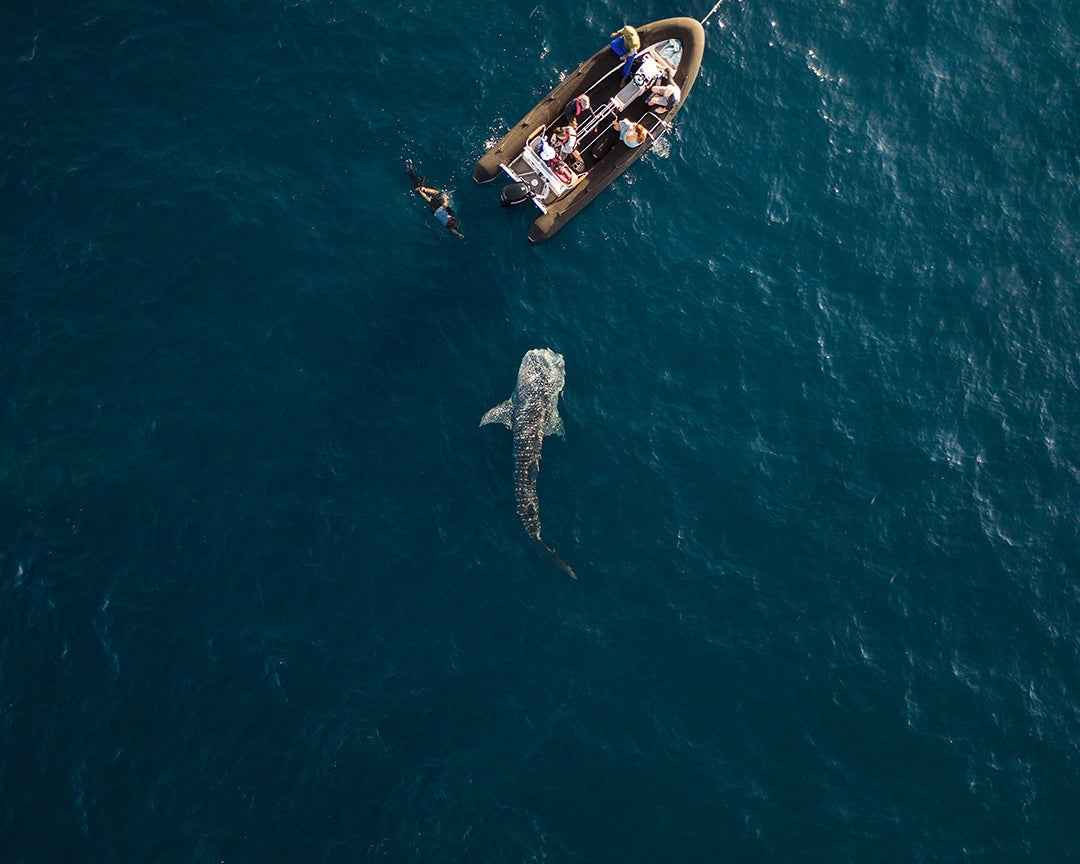
The bay’s crowning glory, though, is its population of whale sharks – the world’s largest fish species, reaching up to 14 metres long. It’s estimated there are more than 80 are resident in the area year-round, and on a snorkelling excursion in search of these colossal, endangered creatures, we get our grand finale.
I’m greeted by one as soon as I enter the water, and it’s extraordinary; an immense, silver-grey body glides gently beneath me, the size of an actual minibus and covered in white polka dots. Its head, shaped in a rounded rectangle, is larger than all of me (their mouths alone average one and a half metres wide, apparently – the size of a small car).
Soon there are four surrounding us, stretching up to nine metres long, and they aren’t our only companions; dolphins drift by simultaneously, forming a spectacle unlike anything I’ve seen before – and we’re the only humans here.
But by now, that’s a feeling I’ve got used to. Nature rules the roost here, as it does in the Asmat rainforest – and after a week sailing these rarely-trodden waters, sunset painting the sky magenta every evening, I feel like I’ve found total peace.
There are few places in the world that still feel truly off the beaten track, and this, for me, was one of them. I’m still reminiscing about the total seclusion and quietness I found there, and I’m already dreaming of my next trip to explore more of Indonesia’s myriad vast, lesser-known regions.
Laura was a guest of Aqua Expeditions
Read more: The best Caribbean cruises
How to do it
Aqua Expeditions will be sailing a 12-night Spice Island & Asmat Tribe Expedition on Aqua Blu in 2027 and 2028, combining the Asmat villages and Triton Bay with the rarely visited Spice Islands.
Prices start from $21,450 (around £16,000) per adult, including all on-board meals, twice daily excursions with expert local guides, transfers, kayaks, stand-up paddle boards, and snorkelling and diving equipment, plus complimentary laundry and high-speed wifi. Guests can also expect a one-to-one staff to guest ratio, with menus prepared in partnership with acclaimed chef Benjamin Ross.
The ship departs from Ambon, where Garuda Indonesia and Batik Air fly from Jakarta in around 3.5 hours. Flights can be arranged via Aqua Expeditions.