Three Haiku
US Poet Laureate Arthur Sze discusses the emotional power and depth of Kobayashi Issa’s poetry. The post Three Haiku appeared first on Tricycle: The Buddhist Review.
 FrankLin
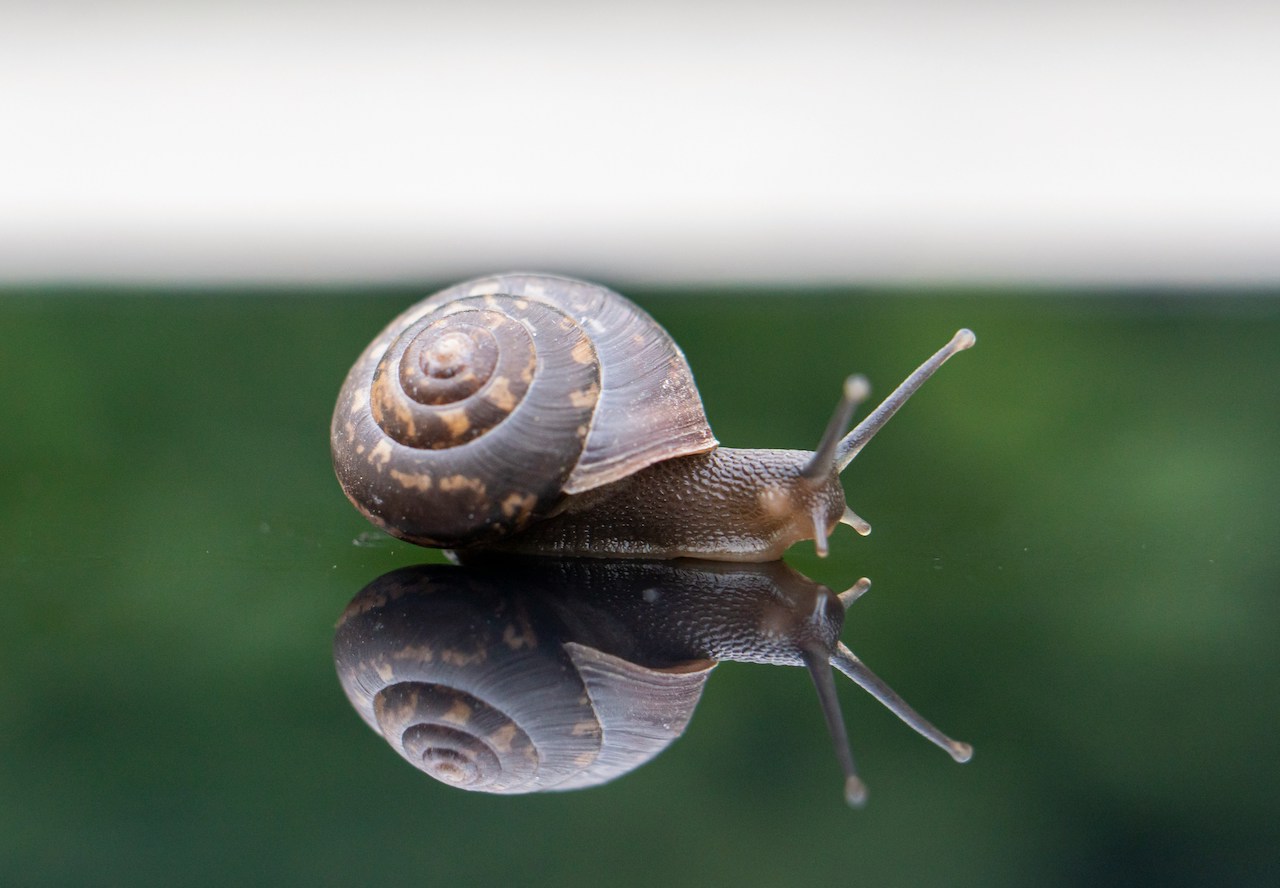
US Poet Laureate Arthur Sze discusses the emotional power and depth of Kobayashi Issa’s poetry.
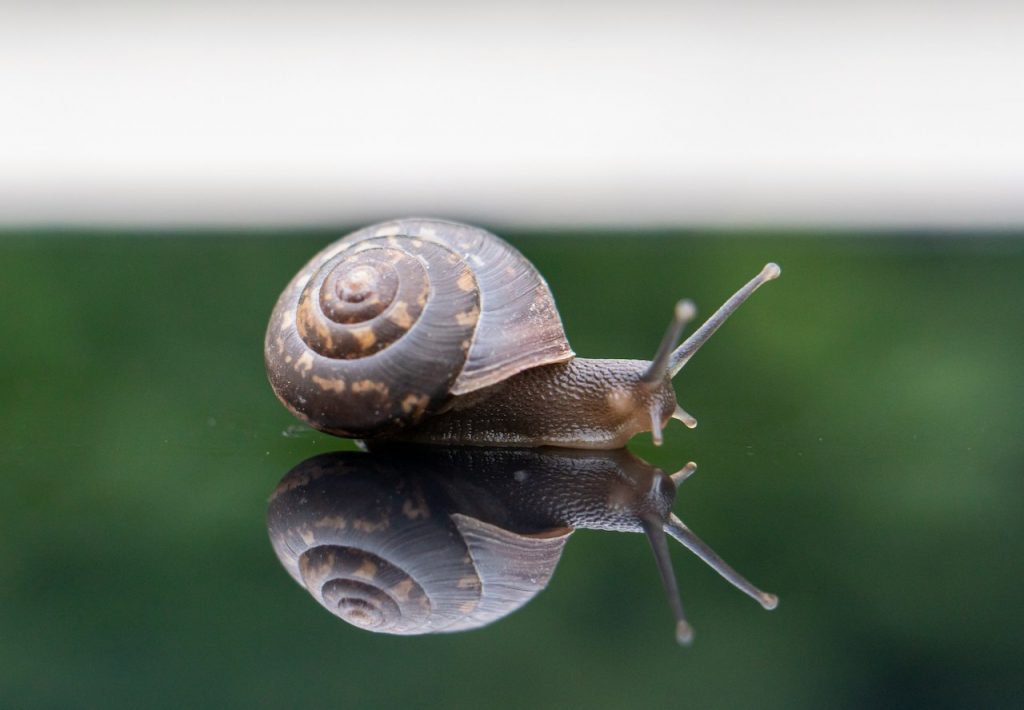 Image by amirali mirhashemian
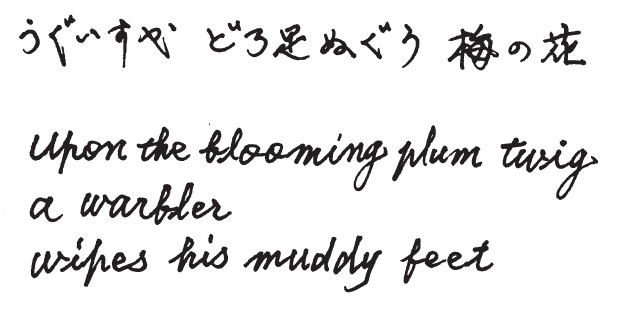
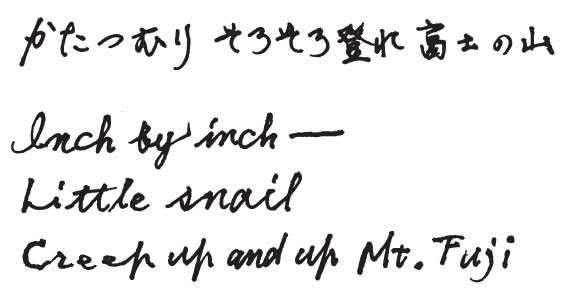
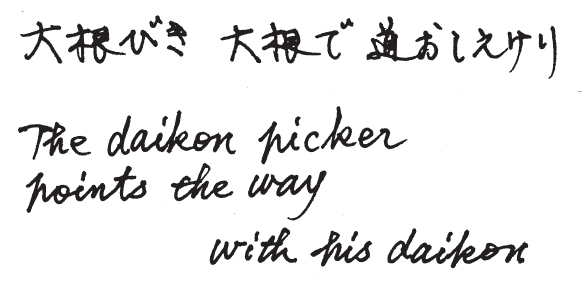
Translations by Nanao Sakaki
Kobayashi Issa (1763–1828) was born in Kashiwabara, Shinano, Japan to a family of middle-class farmers. His pen name, Issa, means “one cup of tea,” and he wrote over twenty thousand haikus in his lifetime, including fifty-four featuring snails.
The haiku has roots in the 15th century, when it was part of a tradition of linked verse, renga. In accord with contemporary Japanese usage, the haiku is an independent verse written in 5-7-5 syllables, and today eight to ten million people in Japan write haikus. In the United States, the haiku is also very popular, and, in schools, too much emphasis has probably been placed on the syllabic count as a method to write in this form.
I’d like to foreground the importance of a seasonal reference, kigo, in a haiku. The issue of transience, of a single moment, is fundamental, haiku’s immediacy, its present tense, its focus on deep noticing—these are all essential features that give strength to one of the world’s shortest poetic forms. Also, there is some debate as to whether a haiku is best translated in three short phrases or in one continual motion. Hiroaki Sato points out that haikus in Japanese are printed in one continuous line, and he asserts that haikus, translated into English, are better rendered as such. In translating haikus into English, I suggest it’s worth trying to make them in three lines and then in one line to see what works best.
My interest in Issa’s haiku came through a personal connection with the poet and translator Nanao Sakaki. At one point, Nanao lived in Taos, New Mexico, and we once and only once had the pleasure of having lunch together in Santa Fe. Nanao told me that during the Second World War he was a draftee in the Japanese navy and worked as a radar specialist. On the morning of August 6, 1945, he saw a single plane on his radar approach the coast of Japan. He looked outside and saw an enormous eruption in the sky and thought Mount Fuji had erupted. It turned out to be the atom bomb dropped on Hiroshima. I mention this incident, because it was life-changing for Nanao. He became an itinerant poet and pursued a life of ecological consciousness; he also translated forty-five haikus by Issa into English. Over lunch, Nanao praised Issa’s humility and humanity, and when I read Nanao’s translations of Issa, I too became an admirer of Issa’s work.
In the first haiku, I want to point out how Issa uses juxtaposition. Sakaki chooses to translate Issa’s haiku in three lines, and each line adds to what comes before to make one image. The opening image of the “blooming plum twig” embodies the kigo, the seasonal reference. The second line places a warbler on that twig, and the third line completes a juxtaposition, contrasting the beauty of the blooming plum twig with the muddy feet of the warbler.
Issa uses contrast of scale to empower the second haiku. The snail embodies the kigo. I’m not sure what month snails tend to emerge in Japan, but I take the little snail as a seasonal reference to spring. In spring, nature is emerging and flourishing, and Issa focuses attention on a little snail that creeps up and up—not a tree trunk or stone wall, but Mount Fuji. Mount Fuji, which has spiritual weight in Japan, gives surprise and emotional power to the ending of this haiku. Some commentary likes to overlay an interpretation, where the snail can be seen as perseverance. In Spanish one might say, “Poco a poco se anda lejos.” Little by little once goes far, but to read this poem in praise of perseverance is, I think, a disservice to the poem. The snail does what it does, it creeps along, and the context, the scale of creeping up Mount Fuji, is best experienced as part of a deep surprise.
I may have embellished Nanao’s commentary, but I believe he told me over lunch that in the third haiku Issa is traveling and is looking for a village. Along the countryside road, Issa sees someone picking daikon, Japanese radishes, in a field. When Issa asks the way to this village, the daikon picker does not use words. Staying in sync with what he is doing, he pulls a daikon out of the earth and points the way, without stopping. In this fluid motion, the daikon picker not only gives directions to the village, he also follows the Dao 道 and shows how to live. In support of this reading, you can see in the kanji, the Chinese character incorporated into the Japanese language, the character Dao 道 in the one line of Japanese; so layering of meaning is another powerful technique employed in haikus to create depth and emotional power. When a particular word has meanings on two or more levels, it deepens the experience of the poem.
Interestingly, Nanao has chosen to use three lines in English for each of his Issa translations, and I suggest the three lines work well by accretion. In the third translation, he uses a dropped line to create a tiny moment of suspense before showing how the daikon picker “points the way.” In all three translations, Nanao makes the foreign accessible, and the visual images become vehicles that move us emotionally and touch the universal.
♦
From Transient Worlds: On Translating Poetry, copyright 2026 by Arthur Sze. Used by permission of Copper Canyon Press. “Three Haikus” appeared in Inch by Inch, translated by Nanao Sakaki (La Alameda Press, 1999). Text courtesy of La Alameda Press and the publication Inch by Inch.

Thank you for subscribing to Tricycle! As a nonprofit, we depend on readers like you to keep Buddhist teachings and practices widely available.
This article is only for Subscribers!
Subscribe now to read this article and get immediate access to everything else.
Already a subscriber? Log in.
























.jpg&h=630&w=1200&q=100&v=c0f97a310e&c=1)