‘Toward Temple Risshaku’
Two poems from Japan’s “far north poet” on pilgrimage, return, and the “afterdeath” The post ‘Toward Temple Risshaku’ appeared first on Tricycle: The Buddhist Review.
 Troov
Troov
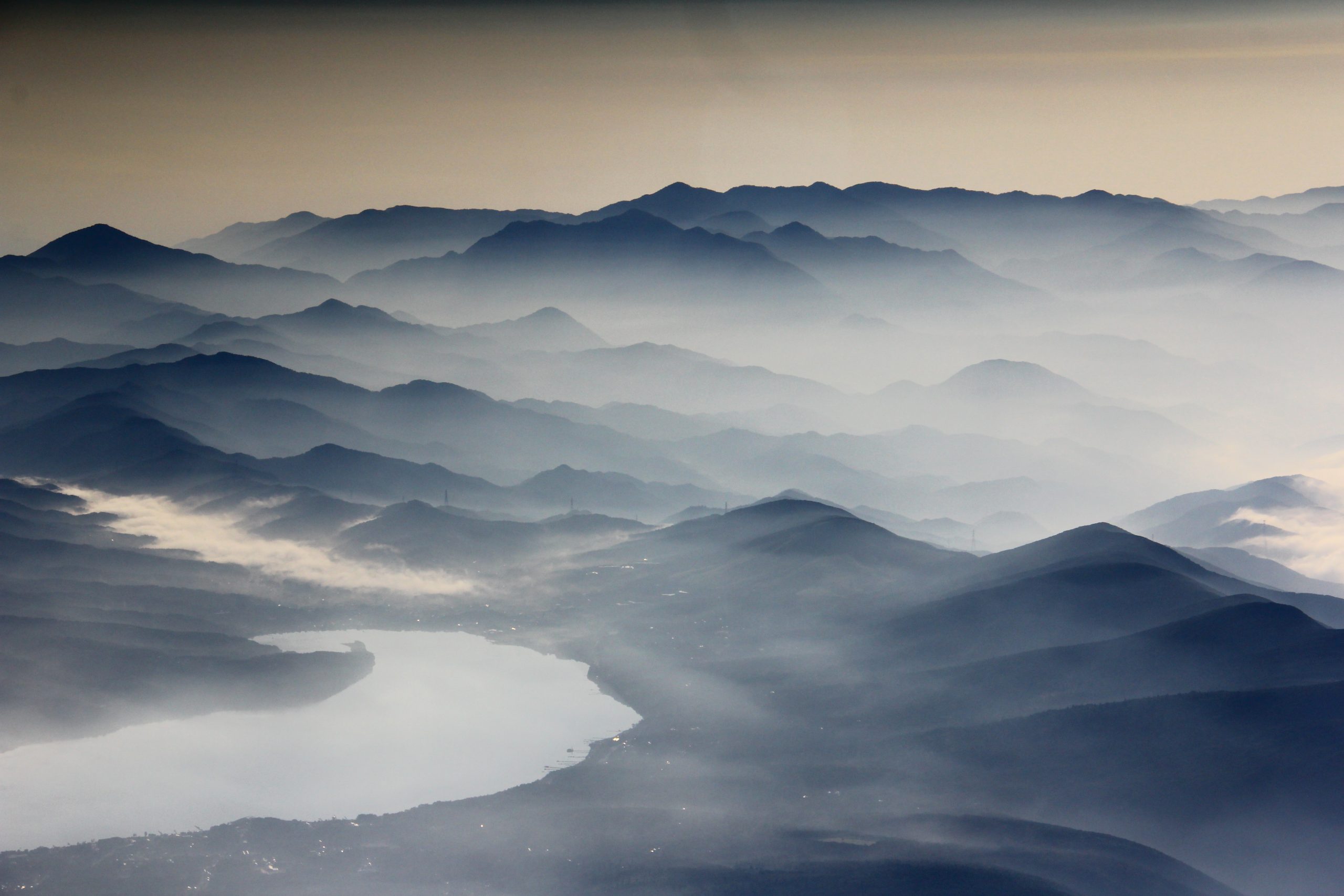
Two poems from Japan’s “far north poet” on pilgrimage, return, and the “afterdeath”
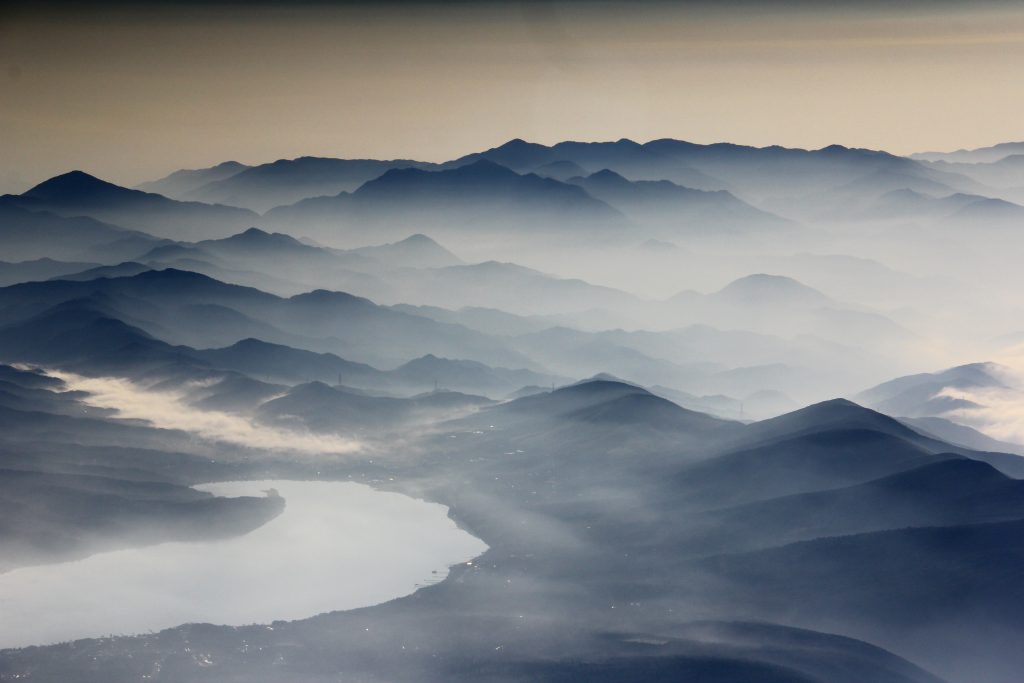 The view at the summit of Mt. Fuji. | Image via Cesar I. Martins / Wikimedia Commons
Shuri Kido is one of the most prominent contemporary poets in Japan. Yet up until recently, his work remained largely untranslated into English. With Names and Rivers, translators Tomoyuki Endo and Forrest Gander bring Kido’s verses into English for the first time, presenting his poems side by side in English and Japanese.
Known as Japan’s “far north poet,” Kido was born in 1962 in Morioka, a small city situated between two mountain ranges, and his poems are deeply rooted in the geography of his birthplace. Drawing upon what Endo calls a “geographical imagination,” Kido’s poems probe the relationships between ritual and place, geology and myth, and pilgrimage and return. His writing dwells in spaces of ambiguity and paradox, questioning the relationship between naming and knowing—as he writes in “The Title Lost,” “When the name of the place is lost. / That’s what ‘poem’ is.”
In their translations, Gander and Endo honor these complexities and unknowns: In his introduction, Gander writes that they aim to “avoid the kind of translation that tries to forcibly stuff the glorious difference of another language’s features into the polished shoe of conventional English,” opting instead to preserve the irregularities and idiosyncrasies of Kido’s syntax and style. The resulting collection is fluid, expansive, and at times koan-like—a searching pilgrimage through space and silence that never arrives at an answer but instead invites deeper listening to the language of the earth.
–Sarah Fleming
Toward Temple Risshaku
(Toward Temple Risshaku . . .
For now, swallow back down what your throat coughs up.
The ascetic pilgrimage, crossing the boundary to the sacred place
and wavering there—
your life has been lived among the stony mountains
of voices,
getting your tasks done ((or failing to)),
trembling as the gong resounds through a forest of bones,
meandering.
As scarlet flowers shallowly breathe.)
Wandering Birds
A thousand countries in myself—
There’s something that precipitates to the very bottom of such a feeling.
Is everything just an image,
or is this only a wasteland where images overflow
and become a language?
There is a sound you can hear
only when your body grows older and more tranquil.
And yet, can it be called “a sound”?
It’s more a smell
than a sound.
People die,
just as the dead die,
and then, those who died twice
die three times,
and they seem to fill “afterdeath.”
As such, in regions where water is abundant,
human life and death aren’t separated out.
Odor of snow.
In the margin, going paler and paler,
where not even one line has been written,
an empty sky has already collapsed.
(After that, 500 years pass.)
And in the second line, not yet written,
a water rail begins to chirp.
Where the chirp merges with the sky
(another 300 hundred years pass)
a river begins,
offering the gods an entrance,
as if remaining in place,
you stop where you are,
reflecting on yourself,
dancing,
going mad.
And the gods are already gone.
The breastlike mountains
sink below the misty, gloomy air.
The mountains are so low,
clouds, like a dog’s tongue, lap at them.
The skies are so low,
the river gets much colder.
Sticking your hand into the flow
you cleave the stream into two
currents that come clear as life and death.
Around here,
when you ask the name of a tree,
what you’ll hear is, “It’s a tree.”
Yes, that’s a tree.
Yes, that’s a mountain.
Yes, and this is water.
“Here in this place,
there are more badgers and foxes than people.
You may see a human
who is not human,
who is some hirsute creature
disguised,
and if you see some part of its body
is transparent,
you’ll know for sure it was once human.”
Well, is that a human?
It may be I miss the living.
The thousand countries within me—
appearing from nowhere
and uttering nothing: this is my father.
Sitting upright with her legs folded
and smiling unselfconsciously,
my mother.
Every night, the illusion passes,
leaving a sliver of pain;
wandering birds chirp sadly,
not given to flying anywhere else.
The birdsong carries up to the clouds,
tomorrow it will snow.
♦
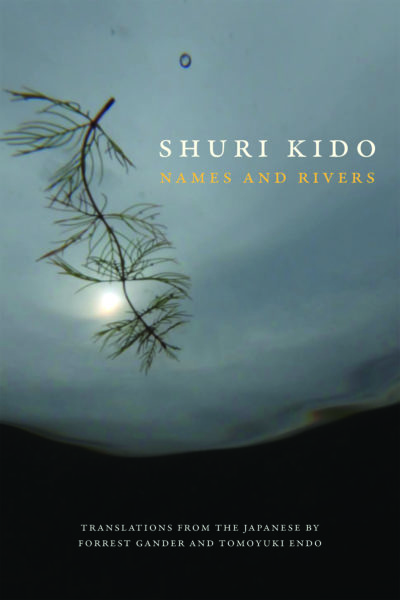
From Names and Rivers, copyright 2022 by Shuri Kido, used by permission of Copper Canyon Press, www.coppercanyonpress.org.

Thank you for subscribing to Tricycle! As a nonprofit, we depend on readers like you to keep Buddhist teachings and practices widely available.
This article is only for Subscribers!
Subscribe now to read this article and get immediate access to everything else.
Already a subscriber? Log in.