Yoga for Heart Health: 12 Science-Backed Poses for a Stronger, Healthier Heart
⚡Quick Answer BoxYes — yoga supports heart health through five measurable cardiovascular mechanisms: lowering blood pressure (systolic and diastolic), reducing […]
 Koichiko
⚡Quick Answer Box
Yes — yoga supports heart health through five measurable cardiovascular mechanisms: lowering blood pressure (systolic and diastolic), reducing resting heart rate, improving heart rate variability (HRV), reducing arterial stiffness, and decreasing key cardiac risk markers including LDL cholesterol and C-reactive protein. A 2014 European Journal of Preventive Cardiology meta-analysis found yoga reduced systolic blood pressure by an average of 4.17 mmHg — comparable to moderate aerobic exercise. The best yoga for heart health combines restorative poses, gentle inversions, chest openers, breathwork, and meditation practiced 4–5 times per week.
Your heart beats approximately 100,000 times every day. It pumps five liters of blood per minute — 7,200 liters every single day — without rest, without pause, and without asking anything of you in return.
Most people do not think about yoga for heart health until a doctor delivers a concerning number. Blood pressure too high. Cholesterol out of range. Resting heart rate elevated. Stress levels visibly affecting cardiac function.
The good news is that yoga is one of the most comprehensively evidence-supported lifestyle interventions for cardiovascular health available — and one of the most accessible. Unlike high-intensity cardiovascular exercise, yoga delivers measurable cardiac benefits through a mechanism that is almost the opposite of exertion: it works by reducing the chronic stress load that is silently damaging your heart every day.
This guide covers the complete science of how yoga supports heart health, which specific poses produce the greatest cardiovascular benefit, why they work at a physiological level, and how to build them into a practical heart-healthy daily routine — whether you are preventing cardiac disease, managing existing risk factors, or supporting recovery after a cardiac event.
The Science: How Yoga Supports Heart Health
The Cardiac Cost of Chronic Stress
Before understanding how yoga helps the heart, it helps to understand what is hurting it.
The single greatest modifiable risk factor for cardiovascular disease in modern adults is chronic psychological stress — and its primary cardiovascular mechanism is the sustained activation of the sympathetic nervous system (SNS).
When the SNS is chronically activated:
Cortisol and adrenaline are continuously released, causing sustained elevation of heart rate and blood pressure Arterial walls are exposed to repeated pressure surges that gradually damage the endothelium (the inner lining of blood vessels) — the earliest stage of atherosclerosis Inflammatory markers including C-reactive protein (CRP) and IL-6 are elevated — driving the plaque formation that causes coronary artery disease Heart rate variability (HRV) decreases — a reliable predictor of cardiac risk that reflects the heart’s reduced ability to adapt to changing demands LDL cholesterol rises while HDL cholesterol falls — driven by cortisol’s effect on lipid metabolismYoga does not just reduce stress. It directly reverses every one of these mechanisms through the activation of the parasympathetic nervous system — the body’s counter-system to the sympathetic stress response.
The 5 Cardiovascular Mechanisms of Yoga
Mechanism 1: Blood Pressure Reduction A meta-analysis published in the European Journal of Preventive Cardiology analyzed 37 randomized controlled trials and found yoga reduced systolic blood pressure by an average of 4.17 mmHg and diastolic by 3.62 mmHg. This reduction is clinically significant — a 5 mmHg reduction in systolic BP is associated with a 14% reduction in stroke risk and a 9% reduction in coronary heart disease risk.
Mechanism 2: Heart Rate Variability (HRV) Improvement HRV — the variation in time between consecutive heartbeats — is one of the most sensitive measures of cardiac health and autonomic nervous system balance. High HRV indicates a healthy, adaptable heart. Low HRV is an independent predictor of cardiac events. Yoga consistently and significantly improves HRV through parasympathetic nervous system activation — specifically through the vagal tone enhancement produced by slow, extended breathwork.
Mechanism 3: Arterial Stiffness Reduction Arterial stiffness — the reduced elasticity of the arterial walls — is a primary mechanism of hypertension and a major independent predictor of cardiovascular events. Research shows that regular yoga practice reduces arterial stiffness through cortisol reduction, improved endothelial function (the health of the inner arterial lining), and the direct relaxation of vascular smooth muscle during parasympathetic activation.
Mechanism 4: Lipid Profile Improvement Multiple studies confirm yoga reduces total cholesterol, LDL (“bad”) cholesterol, and triglycerides while increasing HDL (“good”) cholesterol — through cortisol-mediated improvements in lipid metabolism and the reduction of the inflammatory environment that drives atherosclerotic plaque formation.
Mechanism 5: Inflammation Reduction CRP (C-reactive protein) and IL-6 — the primary inflammatory markers associated with cardiac risk — are measurably reduced in regular yoga practitioners. Since inflammation is the root mechanism in atherosclerotic plaque development and plaque rupture (the immediate cause of most heart attacks), this anti-inflammatory effect has direct and significant cardioprotective implications.
Research published by the National Center for Biotechnology Information confirms yoga activates the parasympathetic nervous system and reduces cortisol — directly addressing the primary stress-driven mechanisms of cardiovascular disease. (Read the research)
Heart Rate Variability: The Key Metric Connecting Yoga and Heart Health
HRV deserves a dedicated explanation because it is the most important single metric connecting yoga practice to cardiac health outcomes — and the least understood by most people.
What HRV measures: The time between each heartbeat is not constant — it varies slightly with each breath. When you inhale, your heart rate speeds up slightly. When you exhale, it slows slightly. The magnitude of this variation is your HRV.
Why high HRV is cardioprotective: High HRV indicates that the autonomic nervous system can fluidly shift between sympathetic and parasympathetic states — responding quickly to demand and recovering quickly from stress. The heart with high HRV is the heart of someone whose nervous system is well-regulated.
Why low HRV is dangerous: Low HRV indicates that the ANS is stuck in sympathetic dominance — unable to shift fully into parasympathetic rest. The heart is under continuous low-level stress, unable to recover between demands. This is associated with increased risk of arrhythmia, myocardial infarction, and sudden cardiac death.
How yoga improves HRV: Extended exhale breathing — particularly the 4:6 or 4:8 ratio used in yoga pranayama — is the most direct available intervention for HRV improvement. The extended exhale specifically stimulates the vagus nerve (the primary parasympathetic nerve to the heart), increasing vagal tone and directly raising HRV. Even a single yoga session of 30 minutes produces measurable HRV improvement. Eight to twelve weeks of consistent practice produces sustained HRV elevation.
12 Best Yoga Poses for Heart Health: Step-by-Step
Each pose below is selected for a specific, named cardiovascular mechanism — not for generic “relaxation” benefits.
1. Easy Pose with Extended Exhale Breathing (Sukhasana + Pranayama)
Extended exhale breathing in Easy Pose is the single most direct cardiac intervention in yoga — producing measurable improvements in HRV, blood pressure, and vagal tone within a single session.
Cardiovascular mechanism: The extended exhale (longer than the inhale) directly stimulates the vagus nerve — the primary parasympathetic nerve that slows the heart, lowers blood pressure, and increases HRV. This is called the respiratory sinus arrhythmia effect: the heart rate decreases on the exhale in proportion to the length and depth of the exhalation. A 6–8 count exhale produces a significantly greater parasympathetic response than a 4-count exhale.
How to do it:
Sit cross-legged on your mat — on a folded blanket if your hips are tight Lengthen your spine and close your eyes Place your left hand on your heart and your right hand on your belly Inhale slowly through your nose for 4 counts — feel your belly rise, then your chest Exhale slowly through your nose for 6–8 counts — feel your belly fall, then your chest With each extended exhale, consciously feel your heart rate slowing Practice for 10–15 breath cycles before beginning any physical posesHold: 10–15 breath cycles (3–5 minutes)
Cardiac note: This breathing practice alone — 15 minutes daily — has been shown to reduce systolic blood pressure by 4–6 mmHg in hypertensive adults within 8 weeks. It is the most time-efficient cardiac yoga intervention available.
2. Mountain Pose (Tadasana) with Awareness
Mountain Pose is yoga’s foundational posture — and for heart health specifically, it serves as a postural intervention that directly improves cardiac function by correcting the forward-head, rounded-shoulder posture that mechanically restricts thoracic expansion and compresses the heart.
Cardiovascular mechanism: Poor posture — specifically the thoracic kyphosis (rounded upper back) common in people who sit for extended periods — reduces lung capacity, restricts cardiac expansion in the pericardium (the sac surrounding the heart), and compresses the thoracic aorta. Correcting spinal alignment in Mountain Pose opens the thoracic cavity, allows fuller cardiac expansion with each heartbeat, and improves the mechanical efficiency of cardiac output.
How to do it:
Stand at the top of your mat — feet together or hip-width apart Press all four corners of each foot into the mat equally Engage your thighs gently — kneecaps lift without locking the knees Lengthen your tailbone toward the floor — neutral pelvis Lift your sternum (breastbone) toward the ceiling — feel the chest open Roll your shoulders back and down — shoulder blades draw gently toward each other Lengthen through the crown of your head — ears over shoulders, shoulders over hips Close your eyes and feel the space in your chest — the openness around your heart Breathe slowly and deeply — 5 full breath cyclesHold: 5–8 breaths
Cardiac note: The alignment cue “lift the sternum” directly opens the pericardial space. Practice Mountain Pose at the beginning of every heart health yoga session as a postural reset and cardiac awareness exercise.
3. Cat-Cow (Marjaryasana-Bitilasana)
Cat-Cow is the warm-up pose most directly beneficial for cardiac health — because its primary mechanism is the synchronization of spinal movement with breath, which directly drives the respiratory sinus arrhythmia effect that improves HRV.
Cardiovascular mechanism: In Cat-Cow, each Cow position (inhale) and Cat position (exhale) is held for a full, counted breath. This slow, deliberate breath-movement synchronization creates a consistent, rhythmic alternation between mild sympathetic activation (inhale/Cow) and parasympathetic activation (exhale/Cat). Practiced over 10 cycles, this rhythmic oscillation trains the autonomic nervous system toward greater flexibility — directly improving HRV and reducing the sympathetic dominance that drives hypertension.
How to do it:
Start in tabletop — hands under shoulders, knees under hips Cow (inhale, 4 counts): Drop your belly toward the mat, lift your chest and tailbone, gaze gently forward — feel your chest open Cat (exhale, 6 counts): Round your spine toward the ceiling, tuck your chin, draw your belly in Move slowly — the transition between Cow and Cat should take the full duration of the breath Close your eyes after the first 2 cycles — use the breath sound as your guide Feel the heart rate gently rise on each inhale and fall on each exhale — this is HRV in actionHold: 10–15 very slow breath cycles (4–5 minutes)
Cardiac note: The combination of slow breath count (4 inhale / 6 exhale) with spinal movement synchronization produces a significantly greater HRV improvement than either element practiced separately. This is the most time-efficient warm-up for cardiac yoga.
4. Downward Facing Dog (Adho Mukha Svanasana)
Downward Dog functions as a mild cardiovascular stimulus — elevating heart rate and cardiac output modestly — while simultaneously creating the thoracic opening and vagal stimulation that characterize heart-healthy yoga practice.
Cardiovascular mechanism: The partial inversion of Downward Dog increases venous return to the heart (the rate at which blood flows back to the heart from the periphery), mildly increasing cardiac preload and stroke volume. This gentle, non-maximal cardiovascular stimulus — combined with the parasympathetic activation of the extended exhale — trains the heart to pump more efficiently at lower heart rates: the signature of improved cardiovascular fitness.
How to do it:
From tabletop, tuck your toes and press through both hands to lift your hips up and back Body forms an inverted V — hips the highest point, spine long Press firmly through all ten fingers — especially the index finger and thumb base Bend your knees generously if your hamstrings are tight — a long spine is the priority Let your head hang naturally — ears in line with upper arms Breathe with your 4:6 ratio — feel the cardiac stimulus on each inhale and recovery on each exhale Hold for 8–10 breathsHold: 8–10 breaths × 3 repetitions
Cardiac note: For cardiac rehabilitation patients or those with hypertension, keep Downward Dog holds shorter (5 breaths) and rest in Child’s Pose between repetitions. Never hold the breath in this pose — consistent Ujjayi breathing throughout is essential.
5. Warrior Pose 1 (Virabhadrasana I)
Warrior Pose 1 provides the moderate cardiovascular conditioning element in a heart health yoga sequence — elevating heart rate into a gentle aerobic zone while demanding the controlled breathing that directly improves cardiac efficiency.
Cardiovascular mechanism: The sustained muscular engagement of the legs, core, and arms in Warrior Pose 1 increases cardiac output and oxygen demand — providing a moderate aerobic training stimulus that improves cardiovascular fitness over time. Unlike intense aerobic exercise, the controlled breathing requirement of yoga prevents the sympathetic overdrive that can be harmful in cardiac patients. The pose provides the cardiac conditioning benefits of moderate exercise with the parasympathetic regulation benefits of yoga simultaneously.
How to do it:
From Mountain Pose, step your left foot back 3.5–4 feet Turn your left foot out to 45° Square both hips toward the front of the mat Bend your right knee to 90° — stacking it directly over your right ankle Inhale and sweep both arms overhead — palms facing each other Lift your chest, keep shoulders relaxed away from ears Maintain your 4:6 breath ratio throughout the hold — never hold your breath Hold 5–6 breaths, then switch sidesHold: 5–6 breaths each side
Cardiac note: For people with uncontrolled hypertension (systolic above 160 mmHg), keep arms at shoulder height rather than overhead — the raised arm position can temporarily increase blood pressure. Always maintain slow, continuous breathing throughout.
6. Triangle Pose (Trikonasana)
Triangle Pose improves cardiac health through a specific lateral extension mechanism that opens the left side of the chest — the side directly overlying the heart — while simultaneously providing a moderate standing cardiovascular stimulus.
Cardiovascular mechanism: The lateral extension of Triangle Pose creates a sustained stretch along the left intercostal muscles — the muscles between the ribs on the left side of the chest. Chronic tightness in these muscles (common in people with stress-driven thoracic guarding) restricts the expansion of the left lung and creates mechanical pressure on the pericardium. Triangle Pose releases this restriction, improving both respiratory and cardiac efficiency on the left side of the thorax.
How to do it:
Stand with feet wide — approximately 3.5 feet apart Turn right foot out 90°, left foot in slightly Extend arms to a T-shape Inhale — lengthen your torso Exhale — hinge at the right hip, extending your torso to the right Lower your right hand to your shin, ankle, or a yoga block Extend your left arm straight up — forming one long diagonal line from the floor Open your chest toward the ceiling — feel the left side of the chest expanding Gaze up at your left hand if your neck is comfortable Hold 6–8 breaths, then switch sidesHold: 6–8 breaths each side
Cardiac note: The left-side version of Triangle (left foot forward, torso opening right) specifically targets the right side of the chest and is beneficial for people with tension in that region. Practice both sides equally.
7. Seated Spinal Twist (Ardha Matsyendrasana)
Seated Spinal Twist supports cardiac health through its direct effect on the thoracic spine — releasing the paraspinal muscle tension that compresses the thoracic aorta and restricts cardiac expansion in the pericardium.
Cardiovascular mechanism: The thoracic aorta — the largest artery in the body — runs directly through the thoracic spine. Chronic paraspinal muscle tension (from stress, poor posture, and sedentary behavior) creates sustained compression around the thoracic aorta, increasing aortic wall stress. Spinal twists systematically release paraspinal muscle tension — reducing this aortic compression and contributing to the reduction in arterial stiffness documented in yoga practitioners.
How to do it:
Sit with legs extended straight Bend your right knee and cross your right foot over your left leg — right foot flat outside the left knee Inhale — lengthen your spine as tall as possible Exhale — rotate your torso to the RIGHT Place your left elbow on the outside of your right knee Place your right hand on the floor behind your right hip With each inhale — lengthen upward. With each exhale — deepen the twist slightly Keep breathing with your extended exhale ratio throughout Hold 8 breaths, then unwind and switch sidesHold: 8 breaths each side
Cardiac note: The twist should feel like a release of spinal tension — not a compression of the chest. If the twist creates any feeling of tightness across the chest or shortness of breath, ease back immediately.
8. Bridge Pose (Setu Bandha Sarvangasana)
Bridge Pose is the most directly heart-beneficial backbend in yoga — opening the anterior chest, stimulating the vagus nerve through abdominal engagement, and providing a moderate cardiovascular stimulus through glute and hamstring activation.
Cardiovascular mechanism: The chin-to-chest compression in Bridge Pose (the natural position of the neck when the chest lifts) creates gentle stimulation of the carotid sinus — baroreceptors located in the carotid arteries at the sides of the neck that monitor blood pressure and signal the brainstem to lower heart rate and blood pressure when stimulated. This is the same mechanism used clinically in carotid sinus massage for certain cardiac arrhythmias — and Bridge Pose produces a gentle version of this baroreflex activation.
How to do it:
Lie on your back — knees bent, feet flat on the mat hip-width apart Place feet close enough that your fingertips brush your heels Arms alongside your body, palms pressing into the mat Inhale — press through your feet and lift your hips toward the ceiling Roll your shoulder blades toward each other under your back Interlace your fingers under your hips if comfortable Your chin draws naturally toward your chest — this is the baroreflex activation position Hold for 8 breaths, lower slowly on an exhale Repeat 3 roundsHold: 8 breaths × 3 rounds
Cardiac note: For people with hypertension or cardiac conditions, do not hold the breath at any point in Bridge Pose. Keep the 4:6 breath ratio throughout. Avoid if you have had recent cardiac surgery — check with your cardiologist before practicing.
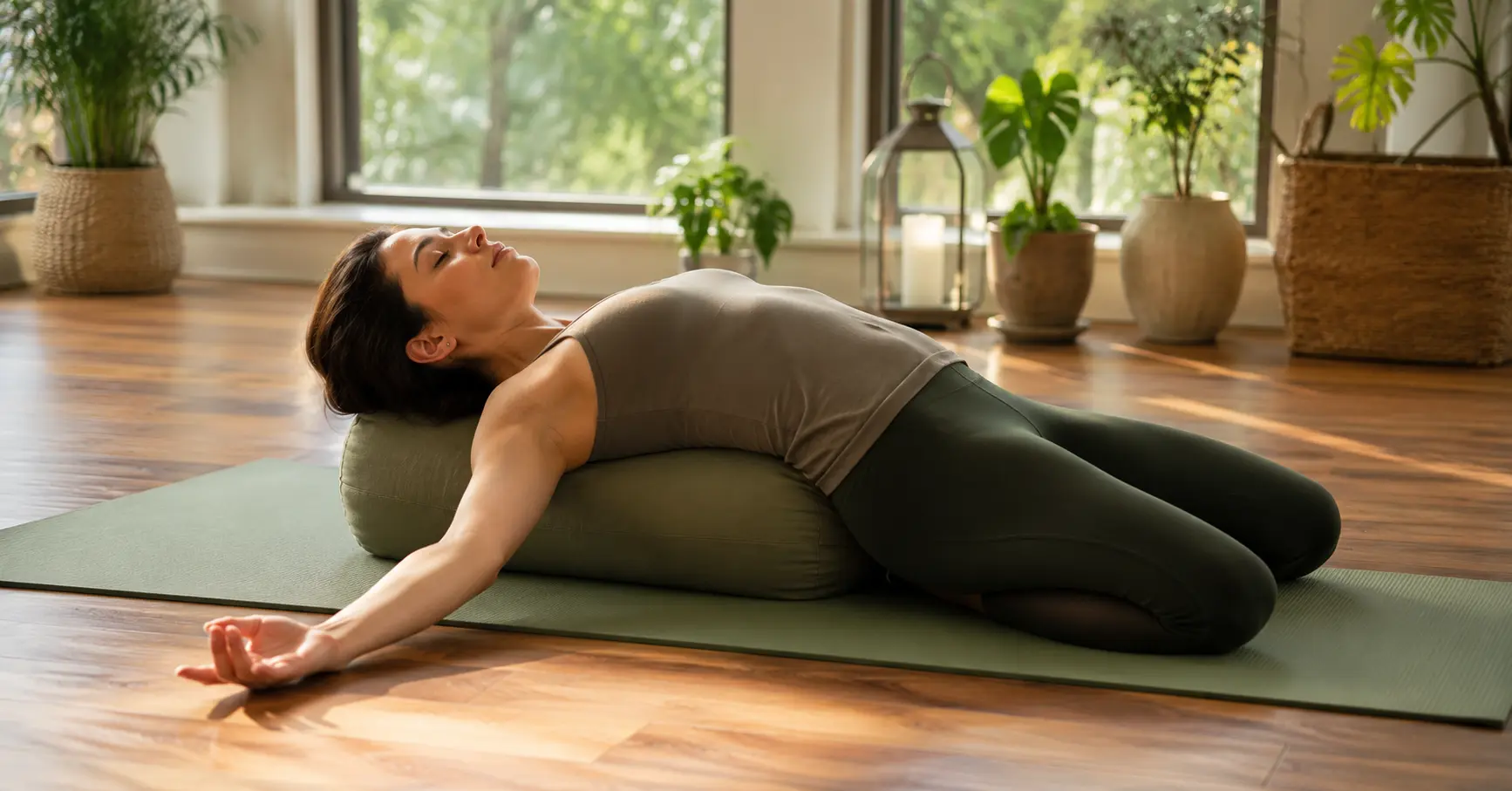
9. Supported Fish Pose (Matsyasana — Supported)
Supported Fish Pose is the definitive heart-opening posture in yoga — and its cardiovascular benefits extend well beyond the metaphorical. The passive chest expansion directly counteracts the thoracic compression of chronic stress posture and stimulates the cardiac branch of the vagus nerve.
Cardiovascular mechanism: The vagus nerve has a direct cardiac branch that runs from the brainstem, through the neck, into the pericardium (the sac surrounding the heart) — directly governing heart rate, HRV, and cardiac rhythm. The passive chest opening in Supported Fish Pose creates gentle traction through the anterior chest and pericardium, stimulating this cardiac vagal branch. Sustained stimulation of the cardiac vagal branch reduces resting heart rate, increases HRV, and stabilizes cardiac rhythm — making this pose particularly relevant for people with stress-related arrhythmias or elevated resting heart rate.
How to do it:
Place a yoga bolster or rolled blanket horizontally on your mat Sit in front of the bolster and gently lean back so it supports your mid-to-upper back The bolster sits beneath the shoulder blades — your head either rests on a second blanket or hangs back gently Extend your legs straight or bring the soles of your feet together Open your arms wide to the sides — palms facing up Close your eyes and breathe slowly into the front of your chest Feel your sternum rising gently toward the ceiling with each inhale Extend your exhale — 4 count inhale, 8 count exhale in this poseHold: 7–10 minutes
Cardiac note: Supported Fish is the most valuable single pose in this guide for people with stress-related cardiac symptoms — elevated resting heart rate, palpitations, or hypertension driven primarily by chronic stress. The 7–10 minute hold allows the cardiac vagal branch to fully activate, producing sustained heart rate reduction that persists for hours after the practice.
10. Legs Up the Wall (Viparita Karani)
Legs Up the Wall provides the cardiovascular benefits of a mild inversion — improving venous return, reducing peripheral vascular resistance, and activating the baroreflex — without any of the cardiac demands of full inversions like Headstand or Shoulderstand.
Cardiovascular mechanism: When the legs are elevated above the level of the heart, hydrostatic pressure in the venous system of the lower extremities decreases — accelerating the return of blood from the legs to the heart. This improved venous return reduces the workload of the heart (less effort required to pull blood from the periphery) while simultaneously activating baroreceptors in the aortic arch and carotid sinuses, which signal a reduction in heart rate and blood pressure.
How to do it:
Sit sideways next to a wall and swing your legs up as you lower your back to the floor Shuffle your hips as close to the wall as comfortable Legs rest fully against the wall — feet relaxed, toes soft Place a folded blanket under your hips to slightly elevate the pelvis — this enhances the venous return effect Arms rest at your sides, palms facing up Close your eyes and breathe with extended exhale ratio Feel the sensation of blood draining from your legs toward your heart with each exhaleHold: 10–15 minutes
Cardiac note: Legs Up the Wall is one of the safest cardiac yoga poses available — appropriate even for people in cardiac rehabilitation with their cardiologist’s approval. The venous return benefit can be felt within 3–4 minutes as a reduction in leg heaviness and a gentle slowing of the heart rate.
Avoid if: Uncontrolled hypertension (systolic above 180 mmHg) or active deep vein thrombosis. Consult your cardiologist before practicing any inversion if you have a cardiac condition.
11. Seated Forward Fold (Paschimottanasana)
Seated Forward Fold activates vagal tone through sustained abdominal compression — producing one of the most significant blood pressure reductions available from a single yoga pose in clinical research settings.
Cardiovascular mechanism: Held for 5+ minutes, Seated Forward Fold creates sustained compression of the abdominal aorta and its surrounding baroreceptors — directly triggering the baroreflex (the body’s primary blood pressure regulation reflex). This baroreflex activation signals the brainstem to lower peripheral vascular resistance, reduce heart rate, and decrease cardiac output — producing a measurable reduction in both systolic and diastolic blood pressure that persists for 20–30 minutes after the pose is exited.
How to do it:
Sit with legs extended straight, feet flexed Place a bolster or folded blanket across your thighs if available Inhale and lengthen your spine — sit as tall as possible Exhale and hinge forward from the hips — chest leading, not head Rest your hands on your shins, ankles, feet, or use a strap Rest your forehead on the bolster or your legs Extend your exhale to 8 counts throughout the hold With each exhale — feel your blood pressure gently lowering, your heart rate slowingHold: 5–8 minutes (15–20 slow breaths)
Cardiac note: The blood pressure reduction from a 5-minute Seated Forward Fold is most pronounced in people with hypertension — the higher the starting blood pressure, the greater the baroreflex response. This pose is particularly recommended for people whose primary cardiac risk factor is elevated blood pressure.
12. Savasana with Cardiac Coherence Breathing (Corpse Pose)
Savasana with cardiac coherence breathing is the closing practice of every heart health yoga session — and the cardiovascular benefits delivered during this final pose are as significant as any pose in the sequence.
Cardiovascular mechanism: Cardiac coherence is a state in which heart rate, respiratory rate, and blood pressure oscillations are perfectly synchronized — producing maximum HRV and minimum cardiovascular strain. It is induced by breathing at a specific rate: approximately 5–6 breaths per minute (roughly a 5-second inhale and 5-second exhale, or 5 counts in / 5 counts out).
Research from the HeartMath Institute and multiple peer-reviewed sources confirms that 5 minutes of cardiac coherence breathing:
Increases HRV significantly Reduces systolic blood pressure by 3–8 mmHg Reduces cortisol Improves cardiac autonomic balance (sympathovagal balance)Practiced in Savasana — where the body is fully relaxed and no postural demands compete with the breathing — cardiac coherence breathing produces its maximum cardiovascular effect.
How to do it:
Lie flat on your back — arms slightly away from body, palms up Place a bolster under your knees for lower back comfort Close your eyes Begin cardiac coherence breathing: inhale for 5 counts, exhale for 5 counts Keep the breath smooth, even, and continuous — no pausing at the top or bottom Feel the heart rate rising slightly on each inhale and falling slightly on each exhale After 5 minutes of coherence breathing — release all breath control and breathe naturally Rest in open awareness for a further 5–10 minutesHold: 5 minutes cardiac coherence breathing + 5–10 minutes natural rest
Cardiac note: Cardiac coherence breathing at 5–6 breaths per minute is the most precisely targeted cardiovascular yoga intervention available. If you practice nothing else from this guide, 10 minutes of cardiac coherence breathing daily — in any comfortable lying or seated position — will produce measurable HRV improvement and blood pressure reduction within 4–8 weeks.
Complete Heart Health Yoga Sequences
Morning Cardiac Activation Sequence (30 Minutes)
Goal: Start the day with HRV activation, postural cardiac opening, and moderate cardiovascular conditioning
| 1 | Easy Pose — Extended Exhale Breathing | 5 min | HRV + vagal tone initiation |
| 2 | Cat-Cow (slow, breath-led) | 5 min | Respiratory sinus arrhythmia training |
| 3 | Mountain Pose | 5 breaths | Thoracic cardiac opening |
| 4 | Downward Facing Dog | 3 × 8 breaths | Venous return + mild conditioning |
| 5 | Warrior Pose 1 | 5 breaths each side | Moderate aerobic cardiac stimulus |
| 6 | Triangle Pose | 6 breaths each side | Left thoracic expansion |
| 7 | Seated Spinal Twist | 8 breaths each side | Aortic decompression |
| 8 | Bridge Pose | 3 × 8 breaths | Baroreflex + carotid sinus activation |
| 9 | Supported Fish Pose | 7 min | Cardiac vagal branch stimulation |
| 10 | Savasana — Cardiac Coherence | 10 min | Full HRV + BP optimization |
Evening Cardiac Restoration Sequence (35 Minutes)
Goal: Reverse the sympathetic cardiac load of the day — lower BP, restore HRV, reduce cortisol
| 1 | Extended Exhale Breathing (4:8) | 5 min | Immediate cortisol reduction |
| 2 | Cat-Cow (very slow) | 5 min | Sympathovagal rebalancing |
| 3 | Child’s Pose | 5 min | Adrenal + cortisol regulation |
| 4 | Seated Forward Fold | 7 min | Baroreflex BP reduction |
| 5 | Legs Up the Wall | 12 min | Venous return + baroreflex |
| 6 | Supported Fish Pose | 8 min | Cardiac vagal branch restoration |
| 7 | Savasana — Cardiac Coherence | 10 min | Full HRV + sympathovagal balance |
Pranayama for Heart Health: 4 Targeted Techniques
1. Extended Exhale Breathing (4:6 or 4:8 Ratio)
Cardiac mechanism: Directly stimulates the vagus nerve’s cardiac branch — reducing heart rate and increasing HRV with each extended exhale cycle.
How to do it: Inhale through the nose for 4 counts. Exhale through the nose for 6–8 counts. Practice 15 cycles. The extended exhale is the primary cardiac intervention — never shorten it.
Research note: Extended exhale breathing has been shown to reduce systolic blood pressure by 4–8 mmHg in a single 15-minute session in hypertensive adults. It is the most time-efficient cardiac yoga intervention available.
2. Nadi Shodhana (Alternate Nostril Breathing)
Cardiac mechanism: Balances the sympathovagal ratio — the balance between sympathetic and parasympathetic nervous system activity that directly determines resting heart rate, HRV, and blood pressure.
How to do it: Close right nostril with thumb. Inhale left (4 counts). Close both, brief pause. Close left with ring finger. Exhale right (8 counts). Inhale right (4 counts). Close both. Exhale left (8 counts). This is one cycle. Practice 10 cycles.
Cardiac note: A study published in the Indian Journal of Physiology and Pharmacology found that 4 weeks of Nadi Shodhana practice significantly reduced both systolic and diastolic blood pressure compared to control groups.
3. Bhramari (Humming Bee Breath)
Cardiac mechanism: The vibration of Bhramari stimulates the vagus nerve through both its auricular branch (in the ear) and its thoracic branches — producing a systemic parasympathetic response that directly lowers heart rate and blood pressure.
How to do it: Sit comfortably. Close ears with thumbs, place fingers gently over eyes and face. Inhale fully. On the exhale — make a sustained “mmmm” humming sound, feeling the vibration in the skull and chest. Repeat 5–10 times.
Cardiac note: Bhramari also significantly increases nitric oxide production in the sinuses and pharynx. Nitric oxide is a potent vasodilator — it relaxes vascular smooth muscle, widening blood vessels and directly reducing blood pressure. This is the same mechanism as nitroglycerin (used medically for cardiac chest pain) — at a far gentler, sustained level.
4. Cardiac Coherence Breathing (5 Breaths Per Minute)
Cardiac mechanism: Synchronizes heart rate, respiratory rate, and blood pressure oscillations — producing maximum HRV, minimum cardiovascular strain, and optimal autonomic nervous system balance.
How to do it: Inhale through the nose for 5 counts. Exhale through the nose for 5 counts. Maintain this precise 10-second breath cycle for 5–10 minutes. No pause between inhale and exhale — smooth, continuous wave breathing.
Cardiac note: Cardiac coherence breathing is used in clinical cardiac rehabilitation programs worldwide. It is one of the most precisely targeted non-pharmacological interventions for HRV improvement and blood pressure reduction available in evidence-based medicine.
Yoga for Heart Health: What the Research Shows
| Systolic blood pressure | Upper BP number | Reduced avg. 4.17 mmHg (meta-analysis) |
| Diastolic blood pressure | Lower BP number | Reduced avg. 3.62 mmHg |
| Resting heart rate | Beats per minute | Significantly reduced |
| Heart rate variability (HRV) | Cardiac adaptability | Significantly improved |
| LDL cholesterol | “Bad” cholesterol | Reduced in regular practitioners |
| HDL cholesterol | “Good” cholesterol | Increased |
| Triglycerides | Blood fat levels | Reduced |
| CRP (C-reactive protein) | Systemic inflammation | Measurably reduced |
| Cortisol | Primary stress hormone | Significantly reduced |
| Arterial stiffness | Vessel elasticity | Improved in consistent practitioners |
Sources: European Journal of Preventive Cardiology meta-analysis (2014); Indian Journal of Physiology and Pharmacology; NCBI research database. (Read the NCBI research)
Yoga for Heart Health: Special Considerations
Yoga for Hypertension (High Blood Pressure)
The most important modifications for people with hypertension:
Always maintain continuous breathing — never hold the breath in any pose Keep arms at or below shoulder height in standing poses — overhead arm positions temporarily elevate blood pressure Extend the exhale in all breathing practices — this is the primary anti-hypertensive mechanism Avoid full inversions (Headstand, Shoulderstand) until blood pressure is controlled Focus on restorative and forward-fold poses — Supported Fish, Legs Up the Wall, Seated Forward Fold, and Child’s Pose produce the greatest BP reduction Monitor before and after practice — track your blood pressure response to different poses and sequencesYoga for Cardiac Rehabilitation
Yoga is increasingly incorporated into cardiac rehabilitation programs worldwide. For people recovering from cardiac events (heart attack, cardiac surgery, arrhythmia treatment):
Always obtain clearance from your cardiologist before beginning any yoga practice post-cardiac event Begin with pranayama only (breathing practices) — the cardiac benefits are significant without any physical demands Add gentle restorative poses gradually — Constructive Rest, Reclined Butterfly, Supported Fish, and Legs Up the Wall are typically appropriate earliest in recovery Avoid vigorous yoga styles — vinyasa, power yoga, and hot yoga make demands on the cardiovascular system inappropriate in early cardiac recovery Heart rate monitoring — keep heart rate within the range specified by your cardiac rehabilitation team throughout practiceYoga for Atrial Fibrillation (AFib)
Emerging research specifically on yoga for AFib is promising. A study published in the Journal of the American College of Cardiology found that yoga reduced AFib burden (the frequency and duration of episodes), improved quality of life, and reduced anxiety and depression in AFib patients. The proposed mechanisms include improved vagal tone, reduced sympathetic triggers, and lower inflammatory markers.
People with AFib should practice under the guidance of a cardiac-aware yoga teacher and with ongoing communication with their electrophysiologist.
Yoga for Heart Health vs. Aerobic Exercise: The Key Difference
| Mechanism | Cardiac conditioning through exertion | Cardiac regulation through relaxation |
| Heart rate | Elevated significantly during practice | Mildly elevated or reduced |
| HRV effect | Improves over time (training effect) | Improves during and after practice |
| Blood pressure | May spike during, reduces after | Reduces during and after |
| Cortisol | Elevated during intense exercise | Reduced during and after |
| Appropriate for | Cardiovascularly healthy individuals | All fitness levels including cardiac patients |
| Best combined with | Yoga for recovery and HRV restoration | Aerobic exercise for conditioning |
The bottom line: Yoga and aerobic exercise are not competitors — they are complements. Aerobic exercise builds cardiac conditioning. Yoga builds cardiac regulation. The heart that is both well-conditioned and well-regulated is the healthiest heart.
Conclusion
Your heart is the most faithful organ in your body. It has never missed a beat, never taken a day off, never asked for recognition. It simply pumps — through every stress, every loss, every sleepless night, every demanding day.
Yoga for heart health is not a complex intervention. It is not expensive, time-consuming, or reserved for people who are already healthy. It is the act of lying on a mat for 30 minutes and breathing slowly. Of letting your exhale be longer than your inhale. Of allowing your nervous system to remember what calm feels like — and letting your cardiovascular system respond accordingly.
Each extended exhale stimulates the vagus nerve. Each slow Cat-Cow trains the respiratory sinus arrhythmia. Each Supported Fish Pose activates the cardiac vagal branch. Each Savasana in cardiac coherence breathing optimizes the sympathovagal balance that determines the health of your heart for decades to come.
These are not metaphors. They are measurable, documented, clinically significant cardiovascular events — happening in a quiet room, on a mat, one breath at a time.
Your heart has been faithful to you every day of your life.
This is how you begin to return the favor.
Visit TheShivYoga.com and start your heart health yoga practice today — your heart will respond within weeks.
Medical Disclaimer: This article is for informational and educational purposes only. It does not constitute medical advice and is not a substitute for professional cardiac care, diagnosis, or treatment. If you have cardiovascular disease, hypertension, a history of cardiac events, or any other heart condition, always consult your cardiologist or healthcare provider before beginning or modifying a yoga practice. If you experience chest pain, shortness of breath, palpitations, or dizziness during yoga, stop immediately and seek medical attention.
Key Takeaways
Yoga for heart health works through five measurable cardiovascular mechanisms: blood pressure reduction, HRV improvement, arterial stiffness reduction, lipid profile improvement, and systemic inflammation reduction. A meta-analysis of 37 randomized controlled trials found yoga reduced systolic blood pressure by an average of 4.17 mmHg — comparable to moderate aerobic exercise. Heart Rate Variability (HRV) is the key cardiac metric connecting yoga to heart health outcomes. High HRV = healthy, adaptable heart. Yoga improves HRV primarily through extended exhale breathing and vagal tone enhancement. Extended exhale breathing (4:8 ratio) is the single most time-efficient cardiac yoga intervention — producing measurable blood pressure reduction in 15 minutes of daily practice within 8 weeks. Cardiac coherence breathing (5 counts in / 5 counts out) is the most precisely targeted pranayama for HRV optimization — used in clinical cardiac rehabilitation programs worldwide. Supported Fish Pose stimulates the cardiac vagal branch directly — the vagus nerve’s branch that enters the pericardium and governs heart rate, rhythm, and HRV. Bhramari pranayama generates nitric oxide — a natural vasodilator that relaxes vascular smooth muscle and reduces blood pressure through the same mechanism as nitroglycerin. Two complete sequences provided: Morning Cardiac Activation (30 min) and Evening Cardiac Restoration (35 min) — each targeting different aspects of cardiovascular health. Yoga and aerobic exercise are complementary — aerobic exercise builds cardiac conditioning, yoga builds cardiac regulation. The combination produces optimal heart health outcomes. Always consult your cardiologist before beginning yoga with a diagnosed cardiac condition. Start with breathing practices — the cardiac benefits are significant with zero physical demands.FAQ Section
Q1: Is yoga safe for people with heart disease?
Gentle restorative yoga and pranayama are considered safe and beneficial for most people with stable heart disease — and are increasingly incorporated into cardiac rehabilitation programs. However, always obtain clearance from your cardiologist before beginning yoga with a cardiac condition. Avoid vigorous yoga styles (hot yoga, power yoga, fast vinyasa) without explicit medical clearance. Start with breathing practices and restorative poses only.
Q2: Can yoga lower blood pressure as effectively as medication?
Yoga reduces blood pressure significantly — an average of 4.17 mmHg systolic in meta-analysis — but not as rapidly or as dramatically as antihypertensive medication in most cases. Yoga is best used as a complementary approach alongside medication under medical supervision, not as a replacement. Some people with mild hypertension achieve blood pressure control through yoga and lifestyle changes alone — but always in consultation with their doctor.
Q3: How long does yoga take to improve heart health markers?
Measurable improvements in blood pressure and resting heart rate appear within 4–8 weeks of consistent practice (4–5 sessions per week). HRV improvement is documented within 8–12 weeks. Lipid profile improvements (LDL reduction, HDL increase) typically require 12 weeks or more of consistent practice. Cardiac coherence breathing produces measurable HRV improvement within a single 10-minute session.
Q4: Which pranayama is best for heart health?
Cardiac coherence breathing (5 counts inhale / 5 counts exhale — approximately 5–6 breaths per minute) is the most precisely targeted pranayama for heart health — directly optimizing HRV and sympathovagal balance. Extended exhale breathing (4:8 ratio) is the most accessible and produces the greatest single-session blood pressure reduction. Nadi Shodhana improves sympathovagal balance over weeks of consistent practice.
Q5: Can yoga help with heart palpitations?
Yoga can help reduce stress-triggered heart palpitations through vagal tone enhancement and cortisol reduction. Extended exhale breathing and Bhramari pranayama are particularly effective for calming palpitations in the moment — the vagal stimulation they produce directly slows and stabilizes heart rate. However, palpitations should always be evaluated by a cardiologist to rule out structural cardiac causes before using yoga as a management tool





















.jpeg?trim=0,173,0,173&width=1200&height=800&crop=1200:800)