YouTube’s AI Slop Problem And How Marketers Can Compete via @sejournal, @MattGSouthern
"AI-generated slop” now accounts for 21% of Shorts shown to new users. Here’s what the data says about monetization, trust, and long-term organic strategy. The post YouTube’s AI Slop Problem And How Marketers Can Compete appeared first on Search...
 AbJimroe

One in five Shorts that YouTube recommends to new users is low-quality, mass-produced AI-generated video, often described as “AI slop.” YouTube CEO Neal Mohan used that label himself in his January 2026 annual letter, pledging to build on YouTube’s spam and clickbait-detection systems to combat it.
A Kapwing study of 15,000 trending channels identified 278 channels producing nothing but content classified as AI slop. Those channels had collectively amassed 63 billion views, 221 million subscribers, and an estimated $117 million in annual ad revenue as of October 2025.
The threat is real but unevenly distributed, and the data shows which formats are worth investing in. Search Engine Journal has tracked YouTube’s policy responses to AI content since the platform first required AI disclosure, through the monetization crackdown and the enforcement questions that followed. This article pulls together what the data, the platform’s own moves, and the trust research tell us about where organic video strategy goes from here.
How Big The AI Slop Problem Is
The scale crossed from curiosity to structural problem sometime in early 2025.
A Guardian analysis of Playboard data confirmed that nearly 10% of YouTube’s 100 fastest-growing channels worldwide published exclusively AI-generated content, featuring what the paper described as zombie football stars, cat soap operas, and babies trapped in space.
Among channels The Guardian identified as AI slop, India’s Bandar Apna Dost, which publishes AI-generated videos of a realistic monkey in dramatic human situations, earned an estimated $4.25 million annually from 2.4 billion views, according to Kapwing’s revenue estimates. Singapore-based Pouty Frenchie, featuring an AI-animated French bulldog in candy forests set to children’s laughter, pulls nearly $4 million per year.
Why Shorts Is The Blast Zone
AI slop doesn’t distribute evenly across YouTube’s two formats.
Kapwing’s study tested what YouTube actually shows to new accounts. Of the first 500 Shorts served to a fresh account, 104 were pure AI slop (21%) and 165 qualified as “brainrot” (33%), a broader category that includes AI slop and other low-quality engagement-optimized content. In a separate peer-reviewed study published in PMC, researchers screening over 1,000 biomedical education videos across YouTube and TikTok found that 57 (5.3%) were identifiable as AI-generated. That study measures one topic area and one query set, so the comparison is directional rather than definitive. But even treated as an imperfect benchmark, the gap suggests AI content pressure hits the two formats differently.

Shorts operates as a swipe-based feed where videos auto-play without requiring a click. The algorithm optimizes for immediate retention, specifically whether viewers watch past the first two to three seconds or swipe away. AI tools excel at generating attention-grabbing visual hooks that stop the thumb for those opening seconds. The content doesn’t need to deliver value or satisfaction. It just needs to prevent a swipe for 15 seconds.
Long-form video requires an active click based on a thumbnail and title. That click introduces a trust variable. Users investing 10 or more minutes exercise more judgment, and the algorithm penalizes poor retention curves more severely. YouTube’s recommendation system also increasingly weights viewer satisfaction signals gathered through surveys, likes, dislikes, and “Not Interested” feedback. That tilt toward satisfaction helps content that generates genuine engagement and hurts content that baits a click but delivers filler.
The economics reinforce this split. Shorts revenue is pooled and distributed based on total views, rewarding volume above all else. Long-form revenue is tied to ads served on individual videos, with higher CPMs and stricter brand safety controls. AI farms concentrate on Shorts because the pooled revenue model rewards exactly what they do best. High volumes at near-zero cost.
One risk worth noting for channels that mix formats is that building an audience primarily through Shorts can shape how the algorithm categorizes your viewers. If the algorithm identifies your audience as low-attention Shorts consumers, it may push your long-form content to those same viewers, who don’t click or watch through. One creator reported a 98% algorithmic drop after heavy Shorts investment on a hybrid channel. The sample size is anecdotal, but the data aligns with how YouTube’s recommendation system segments audiences.
The Niches Getting Hit Hardest

AI slop isn’t limited to kids content and fake movie trailers. The flooding has reached niches directly relevant to SEO practitioners and digital marketers.
Business, marketing, and finance explainers are among the most aggressively targeted categories. A peer-reviewed CHI study analyzing 68 YouTube videos teaching generative AI use found that marketing was the second-largest domain at 19.4% of sampled content. Examples included using ChatGPT and Pictory to produce review videos for Amazon affiliate products, and tutorials on earning money through AI-generated content on YouTube. Creator playbooks for “faceless finance” channels describe using AI heavily to scale output, though outcomes vary, and public examples are inconsistent. Finance creator Charlie Chang, who runs 50 or more YouTube channels generating $3-4 million in annual revenue, told the LA Times he’s concerned YouTube’s own AI tools will eventually undercut his business.
Educational and explainer content is being industrialized. Fortune profiled 22-year-old Adavia Davis, who runs a network of faceless AI-generated YouTube channels. His most lucrative property, a “Boring History” channel, publishes six-hour history documentaries narrated by a faux-Attenborough AI voice. The production pipeline automates nearly every step using AI, with per-video costs of about $60. Fortune reviewed analytics and AdSense payouts showing the network generates roughly $40,000-60,000 per month with 85-89% margins and about 2 million daily views.
News and event commentary are already seeing event-driven flooding. One analysis found that during the trial of Sean “Diddy” Combs, 26 channels produced roughly 900 fake AI-generated news videos that accumulated nearly 70 million views in a matter of days. The fake true crime channel True Crime Case Files published over 150 AI-generated murder stories presented as fact, including a fake Colorado crime that reached nearly 2 million views before 404 Media exposed it.
Children’s content and music discovery are heavily affected, with channels Kapwing and The Guardian classified as AI slop, including Bandar Apna Dost and Pouty Frenchie, accumulating billions of views through AI-generated scenarios targeting kids. Cooking and recipe content have seen AI-narrated networks like Super Recipes and SuperYummy grow past 1 million subscribers and 400 million views using AI voiceover narration over recipe footage.
The pattern across all these niches is the same. AI slop floods categories where templated formats work, production costs are the primary barrier, and the content doesn’t require proven on-camera expertise.
YouTube Is Building The Flood And The Dam At Once
YouTube’s most visible policy action came in July 2025, when it renamed its existing “repetitious content” monetization guideline to “inauthentic content.” We covered both the initial announcement and the clarification that followed when creators worried it would catch reaction channels and commentary formats. YouTube Head of Editorial & Creator Liaison Rene Ritchie confirmed that AI itself isn’t banned. YouTube “welcomes creators using AI tools to enhance storytelling,” and channels using AI remain eligible for monetization. Meta followed with its own unoriginal content crackdown days later, suggesting the platform industry saw the same problem at the same time.
Enforcement has been reactive. YouTube demonetized fake movie trailer channels Screen Culture and KH Studio after Deadline published an investigation in March 2025. The Guardian’s August 2025 inquiries prompted removal of three channels. By December, we were reporting creator complaints about YouTube’s AI-driven moderation system terminating channels and rejecting appeals with templated responses. In January 2026, YouTube escalated further. Dexerto reported, citing Kapwing’s updated findings, that YouTube terminated 11 channels and wiped content from six others. A YouTube spokesperson told Yahoo Finance that the platform “doesn’t allow spam, scams, or other deceptive practices that take advantage of the YouTube community.”
YouTube also introduced mandatory AI disclosure requirements, joined C2PA for content credentials, and launched a likeness detection tool giving creators the ability to find and remove deepfakes of their face and voice.
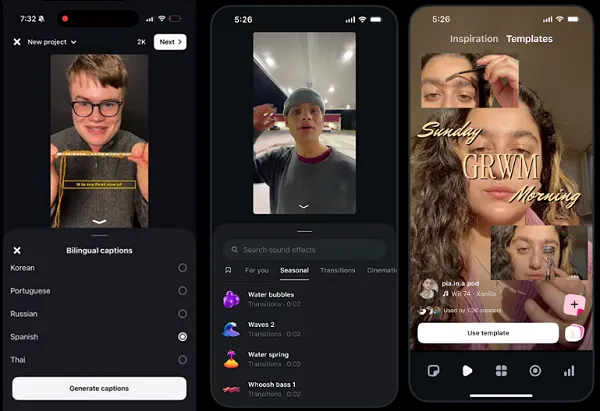
The tension is that YouTube was shipping its own AI creation tools at an aggressive pace at the same time. In September 2024, YouTube launched Dream Screen powered by Google DeepMind’s Veo model, the Gemini-powered Inspiration Tab for idea generation, and expanded Auto-Dubbing to 27 languages. In September 2025, YouTube announced Veo 3 Fast for near-instant video generation in the Shorts camera, Edit with AI for automated editing of raw footage, and Speech to Song using DeepMind’s Lyria 2 music model.
Provenance is the point where these two tracks come together. Google DeepMind says Dream Screen creations will be watermarked using SynthID, and YouTube will apply a label indicating the content was generated with AI. Content uploaded from external AI tools may not include SynthID watermarks or other provenance signals YouTube may be able to verify. High-volume uploads from external pipelines may resemble the patterns of content farms. Whether YouTube’s classifiers treat externally generated content differently is unconfirmed, but the absence of provenance tracking could create higher demonetization risk even for legitimate creators. YouTube hasn’t confirmed differential treatment.
For AI-assisted production, YouTube’s native tools may carry less risk than third-party pipelines because of SynthID provenance tracking, though YouTube hasn’t stated this as policy. Expect the line between “acceptable AI assistance” and “inauthentic AI content” to keep tightening.
Industry experts are skeptical that enforcement will keep pace with the problem. Jim Louderback, editor of the Inside the Creator Economy newsletter and former VidCon CEO, called the July update “only a baby step” and posed the harder question: “Soon, mass-produced AI stories will rival today’s ‘authentic’ content. What happens then?” Paul Bannister, chief strategy officer at Raptive, was blunter: “Google is dealing with the edge of the problem to say ‘hey, look, we did something,’ but it’s much deeper than that.”
When Viewers Stop Trusting What They See

The data on how viewers react to AI content matters more for organic strategy than any of the growth numbers above.
Raptive’s survey of 3,000 U.S. adults, published in 2025, found that consumer trust drops approximately 50% when content is perceived as AI-generated, regardless of whether it actually is. Perception alone drives the collapse. Participants who believed content was AI-made rated it lower across trust, authenticity, and emotional connection, regardless of whether it actually was. The effect extended to adjacent ads, which saw 17% less premium perception and 11% lower trustworthiness. Adjacent advertisements suffered, too. Purchase consideration fell 14% alongside perceived AI content.
Animoto’s State of Video report 2026, backed up those numbers. Nearly 68% of consumers said featuring real people in videos supports authenticity, and 36% said an AI-generated brand video would lower their perception of the brand. A Checkr report found 88% of Americans say it’s harder now than a year ago to tell what’s real online.
YouTube’s own algorithm appears to reflect this trust environment. Some analysts claim YouTube has reduced emphasis on click-through rate and increased emphasis on satisfaction signals in its recommendation weights. YouTube has not confirmed specific weighting percentages, but the direction aligns with what we covered in January when Todd Beaupré, YouTube’s senior director of Growth and Discovery, described the system’s emphasis on satisfaction and long-term viewer value over raw clicks. That change, whatever its precise magnitude, favors content that generates genuine engagement over content that games initial attention.
What We Don’t Know Yet
There is currently zero public, platform-scale data linking AI slop to specific CPM or RPM declines for human creators in any niche.
Epidemic Sound’s survey of 3,000 creators from its community found that algorithm complexity and discoverability (34%) are among the top daily challenges, alongside time pressure (36%) and burnout (35%), but those are self-reported and not tied to AI content specifically.YouTube’s total creator payouts continued growing through 2024. YouTube’s commissioned impact study with Oxford Economics reported that the platform’s U.S. creator economy contributed $55 billion to GDP and supported 490,000 full-time equivalent jobs.
The threat from AI slop is visible in recommendation share (21% of Shorts), growth velocity (10% of fastest-growing channels), and revenue potential ($117 million per year). But the direct revenue impact on human creators hasn’t been quantified. Anyone claiming CPMs for human channels fell by a specific percentage because of AI channels is extrapolating from anecdotes, not from shared panel data.
This matters for how you plan. The trajectory is clear enough to act on, but the current impact may be less dramatic than headlines suggest. Plan for where AI content is headed, not just where it is today.
How To Compete When AI Content Is Everywhere
The data points toward specific competitive advantages.
Long-form, search-optimized content faces the least pressure. AI slop concentrates overwhelmingly in Shorts (21% of recommendations to new users), while available research suggests search results see far less. Search-optimized long-form builds authority that drives views for years, while AI slop cycles through algorithmic attention and disappears.
On-camera presence is the hardest thing for AI to replicate. AI can generate a plausible six-hour history documentary for $60. It can’t replicate a practitioner walking through their own dashboard data or an expert explaining what they learned from a failed campaign. Personal storytelling and real expertise create content that’s difficult to mass-produce at equivalent quality.
Community signals are hard to fake at scale. YouTube’s algorithm can respond to engagement patterns like live Q&As, community polls, active comment sections, and memberships. AI slop channels don’t have those. These signals increasingly factor into how YouTube’s recommendation system evaluates channel health.
Shorts work best as a discovery tool, not a foundation. Rather than broad-appeal Shorts designed to compete with AI content on volume and visual stimulation, niche-specific Shorts that filter for your ideal long-form viewer tend to convert better. Heavy Shorts investment can shape how the algorithm categorizes your audience in ways that undermine long-form performance, as the 98% drop case illustrates.
Most professional creators already use AI in production. Epidemic Sound’s 2025 survey found 84% integrate AI into their workflows. The pattern that works uses AI for scripting assistance, thumbnail generation, auto-captions, and editing efficiency while keeping human creativity and presence at the center. YouTube’s native tools (Dream Screen, Auto-Dubbing, the Inspiration Tab) may carry less demonetization risk than external automation pipelines due to SynthID-provenance tracking, though YouTube has not confirmed this.
Disclosure of human creation is becoming a differentiator. YouTube’s disclosure framework creates an implicit two-tier system. With viewer skepticism rising and 88% of Americans saying it’s harder to tell what’s real online, channels that communicate their content is human-created, through verbal statements, channel descriptions, or community posts, are positioning themselves on the premium side of a market that’s actively splitting.
Looking Ahead
Jim Louderback’s own analysis projection that AI content could account for up to 30% of YouTube viewing by the end of the decade is the most specific expert forecast available. His financial analysis is worth walking through. If 75% of YouTube’s current views come from YPP-eligible creators who receive roughly $41 of every $100 in video ad revenue, and 30% of views move to AI content that doesn’t qualify for revenue share, YouTube’s creator payout drops to $29 per $100. More money stays with YouTube. “From a financial perspective, the more AI pulls viewers away from YPP-eligible creators, the better it could be for YouTube’s bottom line,” Louderback wrote.
Omdia Research reported YouTube reached 29 billion videos as of December 2025, with Shorts representing over 90% of all new uploads. The top 1% of videos still generate 91% of total viewing time, suggesting that while AI slop inflates the content supply enormously, viewing concentration remains high for now.
The platform profits whether viewers watch human creators or AI slop. Dexerto, citing Kapwing, reported that YouTube removed 11 channels and wiped videos from six others. That represents a fraction of the 221 million subscribers AI slop channels have accumulated globally.
I’ve covered YouTube’s content quality policies through several cycles now, from misinformation visibility reduction back in 2019 to the AI enforcement disputes last December. The pattern is consistent. YouTube acts after external pressure, the enforcement catches a fraction of the problem, and creators who build on genuine expertise and audience relationships outlast each wave. Plan for AI content as a permanent and growing part of the platform. Differentiation through trust is the only advantage that scales.
More Resources:
YouTube CEO Announces AI Creation Tools, In-App Shopping For 2026 YouTube CEO Reveals Your Video Marketing Strategy For 2026 YouTube SEO: How To Rank Higher On YouTubeFeatured Image: Tero Vesalainen/Shutterstock