Adaptive Yoga: How Inclusive Teaching Creates More Accessible and Empowering Yoga Experiences for Every Body
Through working with individuals with intellectual and developmental disabilities (IDD), I have seen how powerful yoga can be when the practice is adapted to the person rather than asking the person to adapt to the practice. The post Adaptive...
 JaneWalter
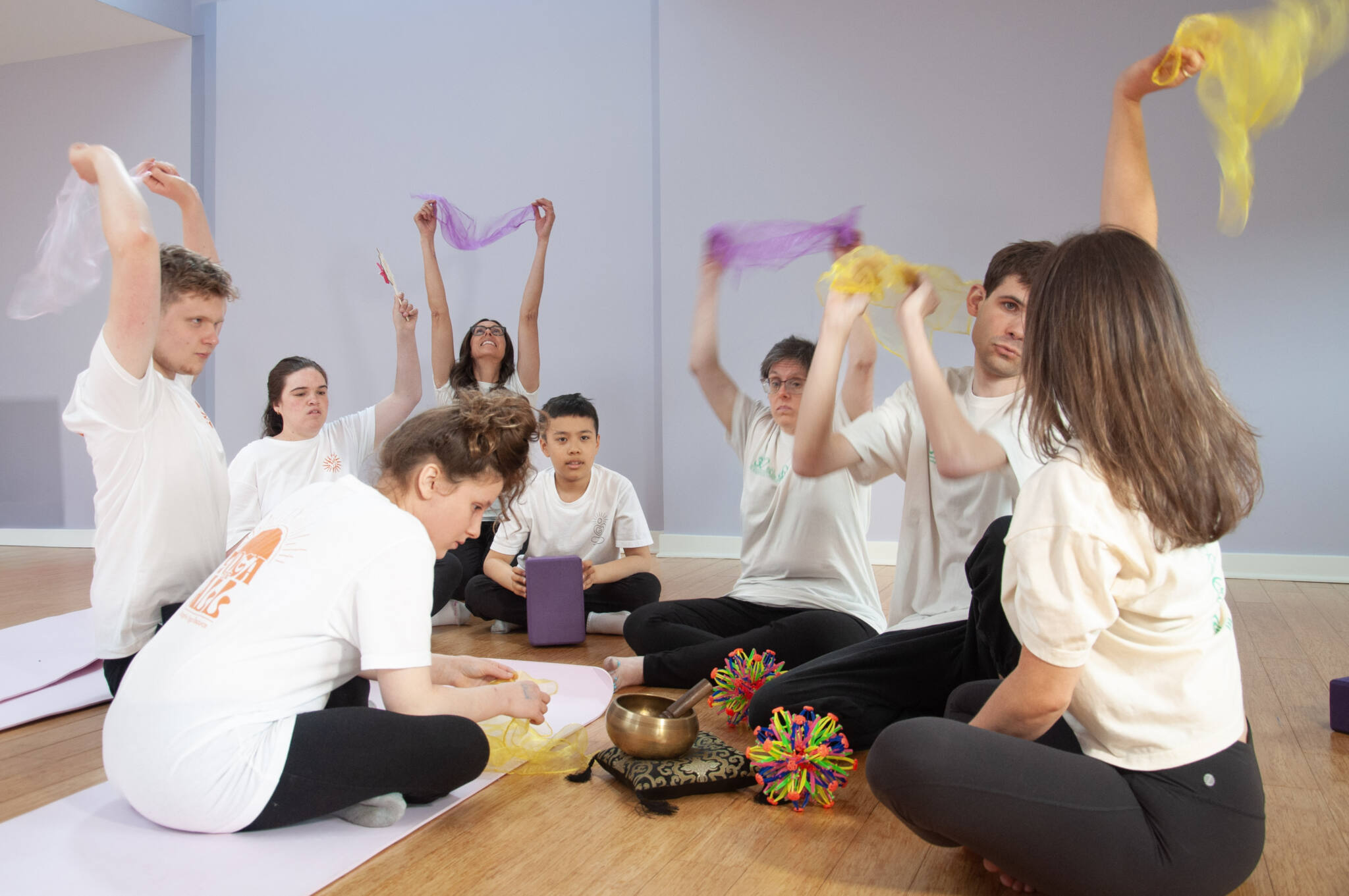
Adaptive Yoga for those with IDD (intellectual, developmental, and physical disabilities)
Through working with individuals with intellectual and developmental disabilities (IDD), I have seen how powerful yoga can be when the practice is adapted to the person rather than asking the person to adapt to the practice.
IDD can include, but is not limited to, autism, neurodivergence, cerebral palsy, down syndrome, processing differences, and more. Individuals with IDD may also have co-occurring diagnoses or physical disabilities.These varied diagnoses can impact functional movement, mobility, emotional regulation, communication, speech, and many other aspects of daily life.
Because every individual has different needs, it is important that we have a toolbox of adaptations we can draw from in the moment to best support our clients. Three (of so many!) aspects to consider are:
Taking sensory considerations into account:
Offering a variety of props and considering their textures.Being mindful of scents, such as incense or sage.Considering lighting and lighting quality.Being aware of sounds and noise levels with music.Supporting different learning and communication styles:
Support students who communicate without spoken language by using visual supports, AAC devices (allows users to communicate by pressing pictures, symbols, or words that generate speech), pictures, and other communication tools.Demonstrate postures in both seated and standing variations.Provide a visual schedule or photo sequence to support predictability and transitions.Use empowering, choice-based cues, and avoid limiting language such as, “If you can’t, you can…”Most importantly: Safety comes first.
Before teaching, ask yourself:
Is the physical space accessible for my students? Please note- just because something is ADA compliant does not mean it is suited for your population!Do I have enough support staff or other teachers available?Are there any behavioral, medical, or mobility considerations I should be aware of?When these supports are taken into account, our students have the opportunity to explore emotional regulation, functional movement, confidence, independence, and empowerment through yoga.
One way to better support diverse populations is by following the ADAPT Approach, which provides practical strategies for creating yoga experiences that are more inclusive and empowering.