Asus and Gigabyte just made your next RTX 50 GPU even more expensive
Asus and Gigabyte confirmed fresh price hikes on RTX 50-series and Radeon GPUs, and it’s getting ugly.
 KickT
KickT

One canceled order shows exactly how brutal the current market has become for buyers.
 Asus
Asus
After weeks of rumors around another round of hikes, Asus and Gigabyte have pulled the plug. They’ve made the impending price hike official, increasing prices across their entire RTX 50 lineup, and even AMD’s Radeon RX 9000 cards.
It’s worth mentioning that both companies already raised prices in January, blaming the ongoing DRAM and NAND memory shortage and surging costs. From what it looks like, things have only gotten worse since.
 NVIDIA
How bad is the price hike?
According to a VideoCardz report, the latest price hike affects the best Nvidia GPUs in the worst possible manner. The Nvidia GeForce RTX 5090D V2 has received a channel price increase of $592 and $666 from Gigabyte and Asus, respectively.
Similarly, the Nvidia GeForce RTX 5080 and RTX 5070 Ti have received price revisions of $207 to $222 and $222 to $252 by Gigabyte and Asus, respectively. Moving down the ladder, the GeForce RTX 5060 Ti has received a channel price revision of $96 to $104 and $74 to $96 by the companies.
Do you see the pattern? Setting the price hikes aside for the moment, Gigabyte appears to be cutting its customers some slack here, while Asus seems to be passing on the increase in component costs more aggressively.
 Mariia Shalabaieva / Unsplash
Just how widespread is this?
Entry-level cards like the GeForce RTX 3050 and RTX 3060 have also seen a revision of $44 and $141, respectively. In fact, the prices of the AMD cards with Asus, including the Radeon RX 9070 XT and RX 9060 XT, have also been revised by $170 and $74-$96, respectively.
One buyer’s story shows just how ugly the GPU market’s situation is right now. A Reddit user’s $4,429 Asus ROG Astral RTX 5090 order, placed through Nvidia’s own marketplace, got canceled outright, simply because Asus told Nvidia it couldn’t supply the hardware at that price anymore.
And guess what the same card is now listed for — $4,982, which is nearly 2.5 times Nvidia’s original Founders Edition price.
If this feels familiar, it should. Prices on this generation of GPUs have been steadily creeping toward doubling their launch cost. The latest round of hikes just confirms that trend has nowhere to go but up for now. If you’ve been waiting to build your PC, the situation doesn’t look good at all, and the best time to get a new GPU was yesterday.

For more than five years, Shikhar has consistently simplified developments in the field of consumer tech and presented them…
Huawei made an utterly sleek laptop that’s 35% lighter than MacBook Air. Too bad you don’t need it.
The MateBook Pro S weighs less than 800 grams but runs HarmonyOS instead of Windows

Huawei has made one of the most tempting ultralight laptops most people will probably never consider buying. The new MateBook Pro S weighs just 798 grams in its lightest configuration, making it around 35% lighter than the 13-inch MacBook Air. It is slightly thicker at 11.9mm, but Huawei still managed to fit a larger display and a 54Wh battery inside its magnesium-alloy chassis.
Its color options are pure eye candy, too. The soft pastel finishes immediately reminded me of the MacBook Neo and give the laptop far more personality than the usual sea of silver, gray, and black ultrabooks.
Wispr Flow launches an AI note-taker that works without joining calls
The new Wispr Flow tool called Notetaker creates live transcripts, summaries, and follow-up notes
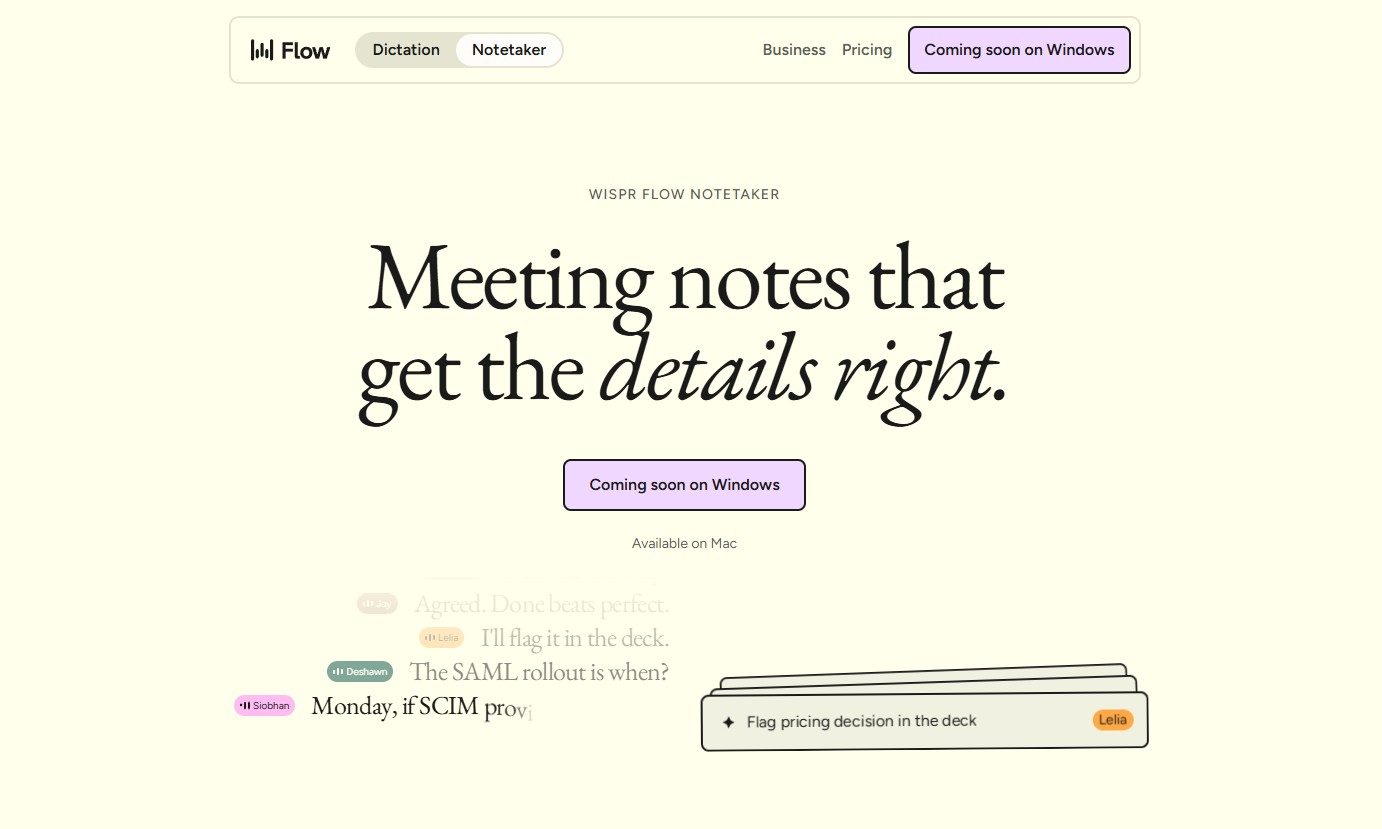
Wispr Flow has launched Notetaker, an AI meeting assistant built into its existing Mac app. It can record conversations, show a live transcript, and prepare notes covering decisions, deadlines, assigned work, and unresolved issues.
Wispr Flow is best known for its dictation tool, which turns spoken thoughts into edited text wherever the user is working. Notetaker takes the company beyond voice typing and applies its transcription technology to meetings, interviews, and in-person conversations.
Google Assistant finally has a shutdown date, and it’s only weeks away
Google Assistant starts shutting down September 4 as Gemini takes over.

Google Assistant’s long goodbye now has a firm date. Google says it will begin discontinuing the voice assistant on eligible mobile devices on September 4, 2026, according to an email sent to users and shared publicly on Reddit.
The transition may take several weeks, so Assistant won’t vanish from every device at once. Once the change reaches an eligible Android device, Gemini will replace Assistant with no option to switch back.