Chikungunya virus: Expert gives travel advice as France reports summer cases
Health authorities have urged people to take precautions against mosquito bites when travelling
 Fransebas
.jpeg?trim=0,0,0,0&width=1200&height=800&crop=1200:800)
French authorities are promoting mosquito-borne disease prevention after identifying an uptick in August of cases of chikungunya, a virus that causes a sudden onset of fever and joint pain.
Three towns in France have reported cases of locally acquired chikungunya this year, with the latest one recorded as recently as 12 August, bringing the total cases up to 25 – however, this is significantly lower than the number recorded last year.
The yearly total number of French cases remained at 15 until August, when 10 new cases were identified, according to the European Centre for Disease Prevention and Control (ECDC).
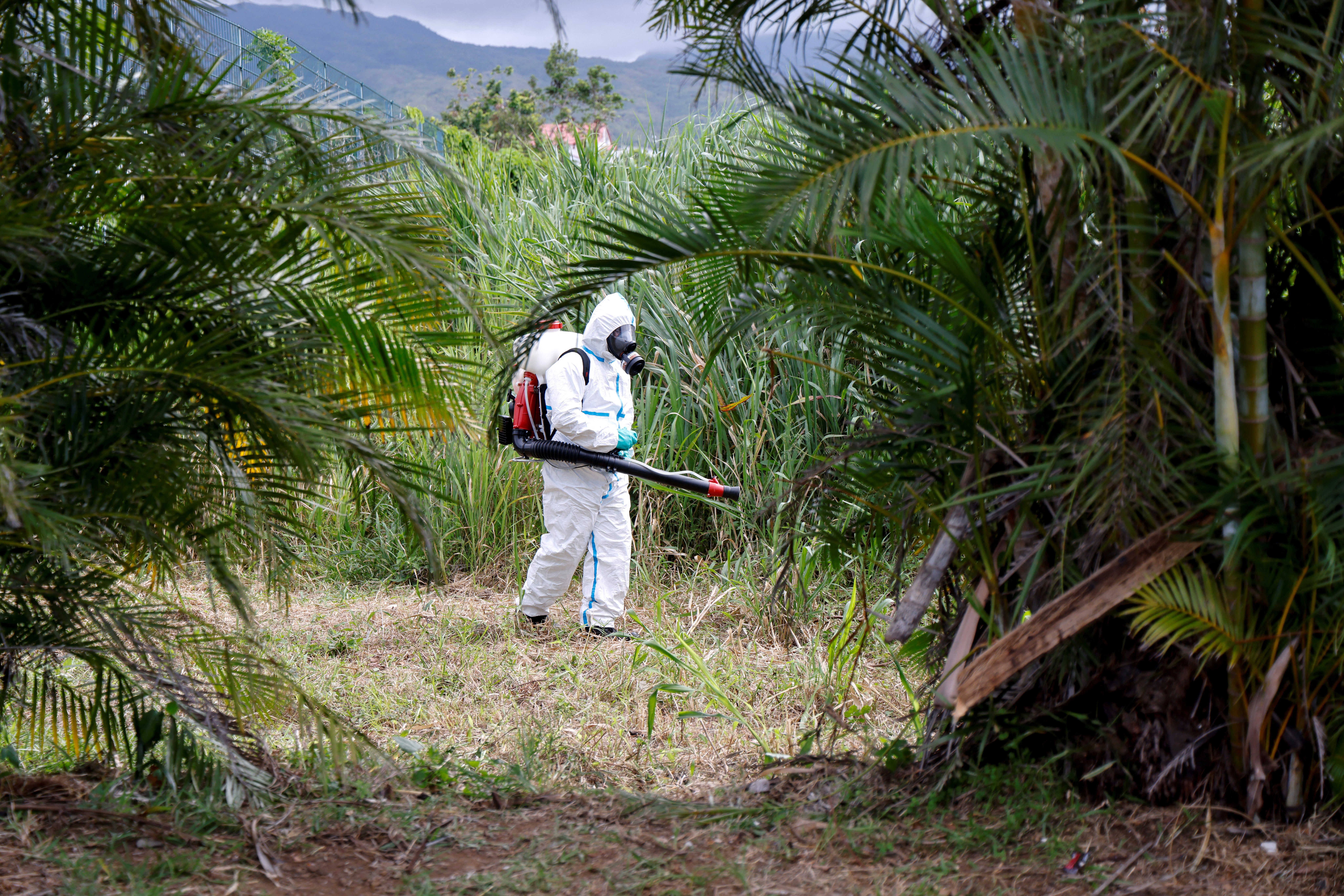
In response, affected French towns such as Prignac-et-Marcamps have deployed mosquito control teams to try to treat potential stagnant water breeding sites, and the mayor has temporarily banned outdoor sports activities. Other towns in the Paris, Toulouse, Gironde and Tarn regions have also carried out mosquito-control operations, such as spraying areas with insecticide mist.
While France is the only country in Europe with locally acquired cases, other destinations across the world are still tackling larger outbreaks.
Here is what travellers need to know about the virus, plus advice from a medical specialist on how to best prepare for travelling overseas.
What is chikungunya and how is it spread?
Chikungunya virus disease (CHIKVD) is a mosquito-borne disease that is found across tropical and sub-tropical regions.
It is spread to humans by a bite from an infected mosquito. It cannot be passed from human to human. For cases to become locally acquired, an uninfected mosquito usually feeds on a person who has chikungunya circulating in their blood, usually someone who caught the virus and then returned to their country. The virus then replicates in the mosquito and can be transmitted to a new human when the mosquito bites them.
Cases have been found in the Americas, Africa, Asia and Europe. Brazil has had the most cases in 2025 and in 2026.
Where are the chikungunya cases?
Since the start of 2026, France is the only EU country that has reported local acquired cases of chikungunya, with 25 cases. This is relatively low compared to the same period last year, which saw 154 locally acquired cases by August, and 809 locally acquired cases in mainland France throughout 2025.
As of 19 August, 16 of the locally acquired cases were identified in Gironde’s Prignac-et-Marcamps, with the cluster still “active”. The latest case was recorded as recently as 12 August.
One case was recorded in Saint-Médard-en-Jalles, also in Gironde, but this cluster was closed after it was deemed an isolated event in June, with no more people reporting having the disease.
The other eight cases have been recorded in Saint-Amans-Soult in Tarn, with the cluster still active despite the last case being recorded on 25 July.
There have been 110 imported cases to France so far this year, too.
Outside the EU, there have been 219,522 confirmed chikungunya cases and 81 associated deaths detected in 25 countries in 2026.
What are the symptoms?
Chikungunya originates from a word used by the Makonde people in Tanzania, where the disease was first discovered in the 1950s. It means “that which bends up”, describing the contorted posture of infected people who experience severe joint pain.
Alongside joint pain, people can also experience an abrupt onset of fever, joint swelling, muscle pain, headaches, nausea, fatigue and rashes.
The joint pain can be debilitating and usually lasts for a few days, but it has been known to last for weeks, months or even years.
If an infected person does not experience joint pain, the symptoms will be mild and can go unrecognised as chikungunya.
Most people will recover fully from the infection. There have been some occasional cases of eye, heart, and neurological complications, while newborns and older people with underlying medical conditions are at a higher risk of severe disease.
Patients with severe disease should be hospitalised because of the risk of organ damage or death.
Once someone has recovered from chikungunya, they are likely to be immune to future chikungunya infections.
Is there a vaccine?
Two chikungunya vaccines are available in the UK, containing a form of the virus that has been weakened so it cannot multiply.
It works by training the immune system to recognise the virus, which will then produce specific antibodies to attack it.
It can only be obtained via a prescription and given to those who plan to travel abroad where the virus is present.
One vaccine is available for individuals aged 18 to 59 years, and another for those over 12.
Hilary Kirkbride, head of travel health at UKHSA, says: “Simple steps, such as using insect repellent, covering exposed skin and sleeping under insecticide-treated bed nets, can effectively reduce the risk.
“Before you travel, check the TravelHealthPro website for the latest health advice on your destination. A chikungunya vaccine may also be considered for those travelling to higher-risk regions.”
A travel doctor’s guide to being prepared
Dr Richard Dawood, a travel medical specialist at Fleet Street Clinic, explained to the Independent how the vaccination can help travellers prevent getting sick from the chikungunya virus.
He said: “This is a new situation for us. Until a very short time ago, we had no vaccine, and the only approach to prevention was to make careful use of insect repellents and insect precautions.
“So now we've got this extra tool in the armoury, and because the vaccine gives long-lasting protection, it’s something that could be considered if you are planning to travel over a period of time.
“It's a fairly expensive vaccine, but if you’re going to be travelling over a period of years to southern Europe and beyond, it may be something that could be considered.”
Wherever you are travelling, Mr Dawood advised holidaymakers to “do your homework”.
He said, “If there's an actual outbreak at your destination, then I would say no hesitation, definitely have the vaccine.
“Taking a bit of time and getting some really focused travel health advice for your particular trip is very worthwhile because it can save you from getting a vaccine that you don't need or that may not be sensible for you, and it can help prioritise the really important things for your trip.”
Travel clinics can also offer advice on insect bite precautions and reducing the risk in other ways, he added.
Read more: US issues travel warning to island hotspot



























.jpg&h=630&w=1200&q=100&v=c0f97a310e&c=1)