Equipment for Living
On the liberatory potential of Black movement and music and an embodied understanding of awakening The post Equipment for Living appeared first on Tricycle: The Buddhist Review.
 BigThink
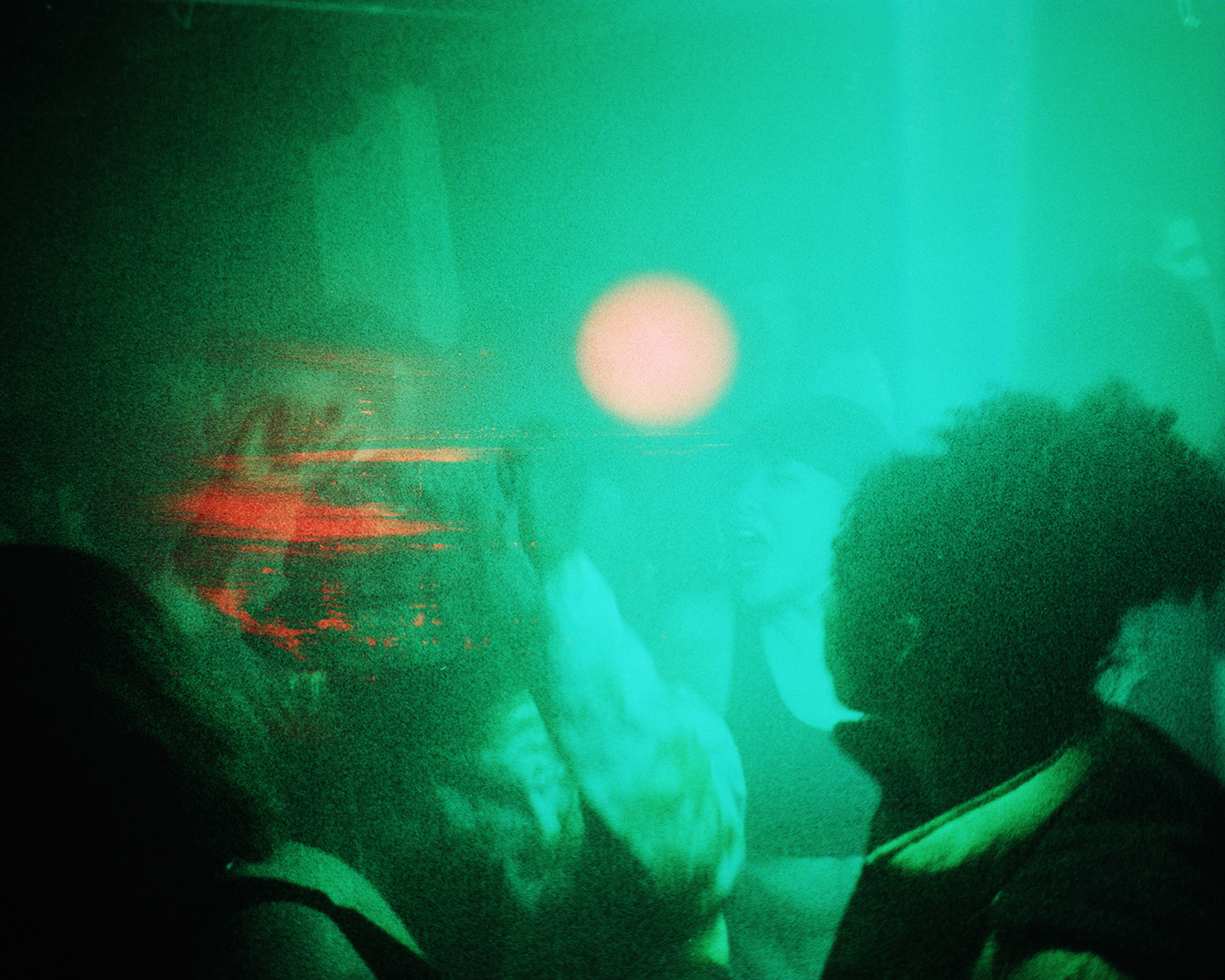
On an unseasonably warm spring day, I meet a friend and queue in line. We traverse a long, wood-paneled hallway that empties into a cool, dimly lit space. An elevated deck is revealed through a slim line of windows. Here at Nightmoves, a tucked-away bar and music venue in Williamsburg, Brooklyn, 50-plus of us have gathered for the final program in “Living Equipment,” a series of conversations, listening sessions, and performances dedicated to the radical resonances of Black electronic music. The series treats Black music and speech as “equipment for living,” quoting the critic Albert Murray, as “stylistic codes for representing the most difficult conditions, but also . . . a strategy for living and triumphing over those conditions with dignity, grace, and elegance.”
In that room, the program’s curator, Ryan C. Clarke, joined by Yulan Grant and Jesús Hilario-Reyes (who DJ as Shyboi and MORENXXX, respectively), speak about the diasporic transmissions of Black music, how the body speaks across geographies that span from the African continent to the Caribbean to the Mississippi River Delta, even to the dance floor we find ourselves on in that moment, obscured by bodies on stools, leaning forward in deep listening and careful attention.
In that listening, I receive an insight about my experience of the dharma: Awakening is an inheritance I hold within my body. That no matter how intellectually I might understand the concepts of awakening we’re taught through the dharma, the understanding must also be embodied. This embodied knowledge, the awakening that arises from deep within my bones and sinews, is my buddha-nature, my inherently free and liberated essence. This is a knowing that no amount of meditation or sutta study can get me closer to. Listening to the speakers on this dance floor turned lecture hall, I am called to reflect on movement of the body as an entryway to awakening and freedom, and the Black musical production that gets me closer to knowing in this way.
*
Whether on the dance floor or the parquet floor of my apartment, I never feel more transcendent than when I am moving my body in rhythm. Whenever I need to work some anger through my body, I put on Kendrick, and thrash (currently, “TV off” fits the bill). Whenever I need to lean into the more unhinged aspects of my nature, I put on SZA (of the SOS Deluxe: LANA release, “Kitchen” featured heavily in my winter listening). When I am feeling myself, in need of a confidence boost (or any mood, really), I put on any given track from Beyoncé’s discography. None of these is music passively listened to. It’s music that asks you to be in relationship with it. The bass, tones, and beats move me into an altered state of sorts, a conjuring of the ancestral knowledge that provides a certain excavation of feeling. It’s something akin to nibbana (Pali; Skt.: nirvana), the unconditioned, or the joy of completely extinguishing our ideas and concepts.
It is a relief to be in touch with my body in this way, where movement facilitates the extinguishing of thought, allowing my body to guide me closer to what is true. It also feels hard-fought. Over years of therapy and meditation practice, I’ve been told ad nauseam of the importance of “being with the body,” an instruction that felt nebulous—what does it mean to “be in the body”? I understood the cerebral aspects of meditation practice—the ones where you notice a thought and practice not getting captured by it, instead, returning to the breath again and again. But every time a dharma teacher instructed me to do a body scan, I felt my anxiety spike, an internal tremor of discomfort coming into my awareness at the thought of attempting to really feel into each part of my body.
In the Satipatthana Sutta, the foundational teachings on meditation practice in the Pali canon, mindfulness of the body is the first foundation of mindfulness (followed by mindfulness of feeling tones, the mind, and the objects of our mind). This teaching instructs one to contemplate the body in breathing, in posture, in the body’s activities, and in its anatomical parts, as well as to see the body as elements, and, ultimately, the passing away of the body, the body as a corpse, the elements returning to their source. This teaching is an invitation to build intimacy with our bodies, in all their quirks and aches, in their consistencies, and in their anomalies. These practices help us to make peace with the fact that though the body may taunt us in its inability to find stasis, these temporary vessels are indeed our homes.
With access to the wisdom body, the body no longer becomes a vessel that we need to transcend but an instrument through which to experience the raw beauty of the present moment.
But in this current condition, where the toils and tribulations that Black bodies endure at times seem insurmountable, the body doesn’t always feel like a refuge. In my Black body, a body of the African diaspora, witnessing the brutality our nation enacts locally and abroad through policies exemplifying the three poisons of greed, hatred, and delusion, I’ve often felt the need to minimize my body. My body holds a painful understanding of absolute and relative truth. Though my true nature is unbounded, joyful, and interdependent (absolute truth), my Blackness requires a constant reorientation to my actual lived experiences (relative truth). My conditioning in this Black, female body orients me toward checking for safety in my surroundings. It can be hard to extinguish ideas and concepts when dualistic thinking is a reflex that keeps me safe. Often, Blackness means yielding to our actual experience rather than the dharmic principles we often do not have the privilege to explore safely.
In this way, we’ve been taught to cut off access to the power of embodied knowledge. The poet Audre Lorde speaks about this in her seminal essay The Uses of the Erotic, in which she describes the erotic not as relating to sex or the pornographic but as a life force, an acknowledgment of our deepest feelings, that once felt cannot be ignored, that once felt, will guide us in all our actions. Those forces enacting greed, hatred, and delusion benefit from suppressing this life force. Lorde writes:
“This is one reason why the erotic is so feared, and so often relegated to the bedroom alone, when it is recognized at all. For once we begin to feel deeply all the aspects of our lives, we begin to demand from ourselves and from our life-pursuits that they feel in accordance with that joy which we know ourselves to be capable of.”
When we can access the wisdom of the deepest feelings within our bodies, we will no longer be able to accept less from life, to make ourselves small in order to live. With access to the wisdom body, the body no longer becomes a vessel that we need to transcend but an instrument through which to experience the raw beauty of the present moment, to access the marrow of our life, living it to the fullest extent possible.
*
So Kendrick, SZA, and Beyoncé—and other sounds of hip-hop, soul, electronic, and Black musical production as a whole—offer me another way to practice mindfulness of the body and to be in experience with the embodied knowledge, the erotic, the wisdom that is held within my body that is my buddha-nature. These alternative transmissions are essential pathways for the dharma and the understanding of our deep-rooted potential for awakening and liberation.
Inspired by the provocations of the “Living Equipment” program, I reached out to Clarke to delve deeper into how specific dance movements or expressions contribute to the embodiment and transmission of Black cultural awakening. Clarke, who, in addition to curating “Living Equipment,” produces work as a “tonal geologist” and coeditor of Dweller Electronics, a festival and platform for Black electronic artists, spoke with me about how Black people have created a system of passing information through the only thing we’ve been able to carry with us, our bodies. “Black movement, by cosmic luck and unspeakable necessity of fugitive invention, became our most developed system of advancement, and it’s been music that activates this embodied knowledge,” Clarke says.
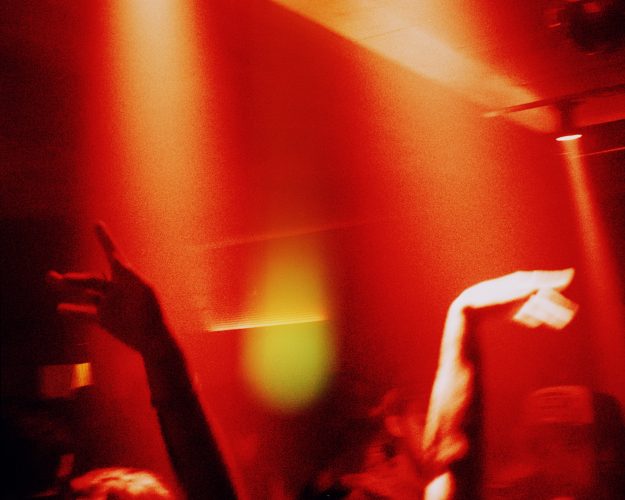 The crowd at Public Records in Gowanus, Brooklyn. Photo by Guarionex Rodriguez, Jr.
There is a specificity to the experience of merging with a beat so thoroughly that it must be expressed through moving the body; that a feeling must move out and through you via the swinging of hips, the throwing back of the head, or the stomping of feet, conveying something being communicated that might rarely be expressed in words, or the thinking mind. In the music and the movement it provokes in the Black body, there is a pure awareness, stamping out thoughts, clearing away doubts and questions of the moment, and leaving in that emptiness the space for a deeper consciousness to arise, an ancestral coming home.
And it’s not a coincidence that our bodies instinctively move to these forms of expression. Clarke, again: “In many churches in the Antebellum South, stomping on hardwood floors became the predominant percussive instrument due to the drum being banned due to its relationship to the riot or revolt. A hardwood dance floor triggers such an ancestral knowledge due to the amplification of another drum moving the room and the crowd. Maybe people don’t know that technology’s history, but they can feel it.”
We feel this. And what if we allowed ourselves to feel into our knowing, liberating our knowledge from the translation we’ve been given? How much more open would the dharma be if we could see it beyond the words that have been offered to us—in Western dharma primarily by white men of European descent—and shifted toward seeing the dharma as the embodied knowledge of our buddha-nature? What a greeting it would be to be met in this space, resisting the single-view intellectualism that proliferates in Western dharma in favor of an invitation: Let me show you what you already know—offering a way of understanding to those who might otherwise not be seen.
The Samyutta Nikaya, for example, offers thirty-three synonyms for nibbana, providing alternatives like “. . . the island . . . the shelter . . . the asylum . . . the refuge” to describe the state of being free from lust, hatred, and delusion. These alternative translations offer another entry point to understanding the path of contemplative practice and the destination toward which we are heading when we apply the Buddha’s teachings skillfully. The thirty-three synonyms for nibbana feel like a revelation—like a Thesaurus to awakening. Where the teachings may lack clarity, this creative expression provides a deeper translation, an illumination of the many paths toward awakening. If I could, I’d add Lorde’s “erotic” to this list, honoring her invitation to awakening at the deepest level of our beings: “. . . the feeling deeply. . . the all-aspecting . . . the joy aligning.”
Clarke shared a couple of pieces of music that provoke a kind of ecstatic release: “Amazon” by Underground Resistance, “The Struggle of My People (Mr. G’s There’s Hope Mix)” by Mike Grant, “Got to Give It Up” by Jamerson, and “Phase 4” by Jeff Mills. On a Sunday afternoon, I put on these tracks, with the intention of breaking them down, analyzing how particular sounds build or sequence with each other to aid in an emancipation of the body. Instead, I find myself moving, gesturing, unwinding. Once more, thinking back to the words of Lorde, who knew the experience of leading with the body’s capacity for joy: “In the way my body stretches to music and opens into response, hearkening to its deepest rhythms, so every level upon which I sense also opens to the erotically satisfying experience, whether it is dancing, building a bookcase, writing a poem, examining an idea.”
In all of these, there is this: this dharma, this path leading to an unconditioned.