From pickle stores to Michelin stars: Exploring Istanbul through its rich and unique food
Turkey’s largest city is stepping confidently into the global fine-dining scene in 2026 with its highest number of Michelin stars to date – but Josephine Price finds that culinary creativity thrives in even the quietest corners of the city
 ValVades
.jpg?trim=351,0,1,0&width=1200&height=800&crop=1200:800)
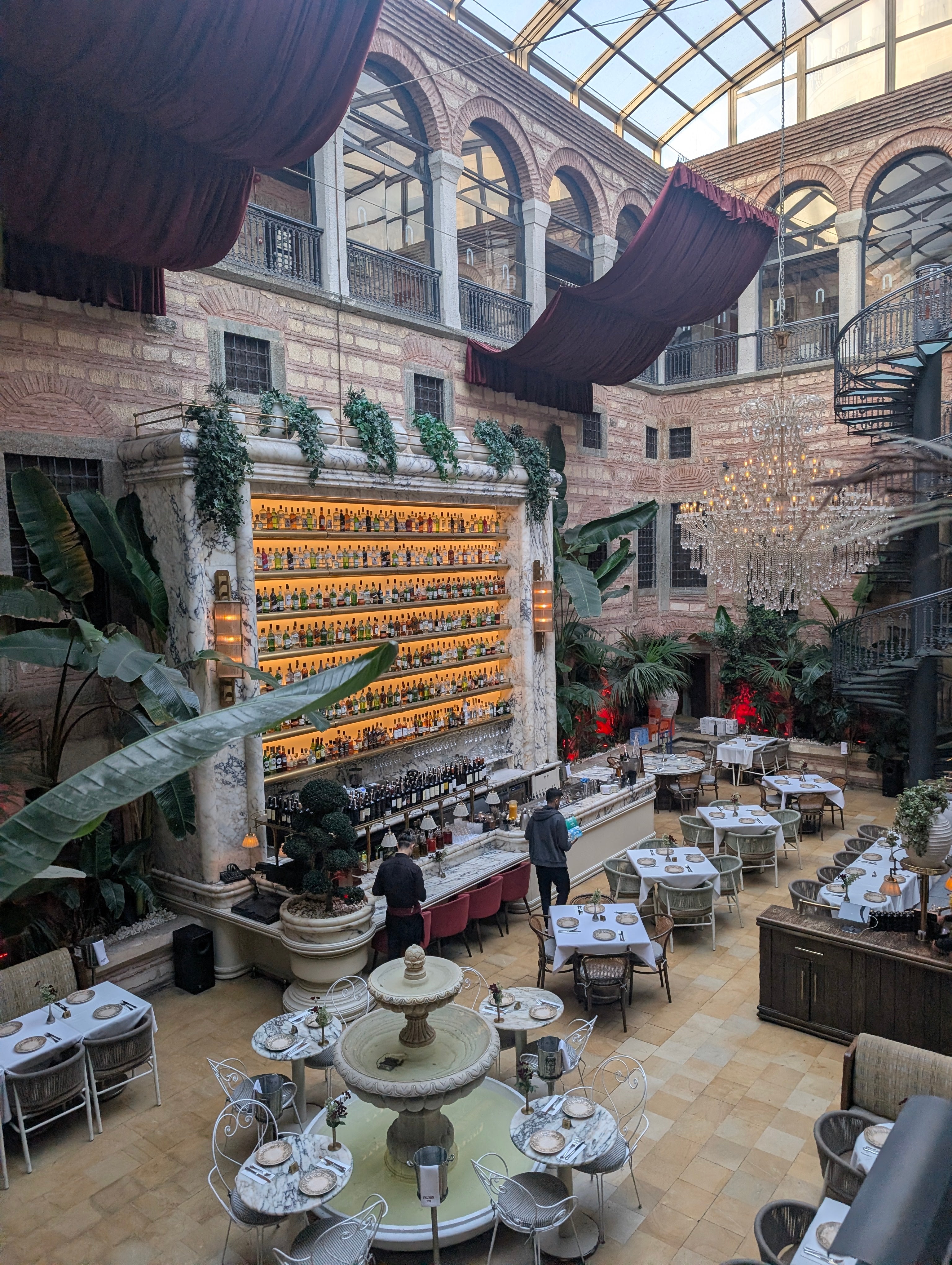
We’re starting our first day in Istanbul where any exploration of the city should begin: at the table. This is a city that knows how to put on a culinary show and the table is the stage. Set in the middle of the former caravanserai in the Fatih neighbourhood, the historical heart of Istanbul, breakfast is served. Colours dance across the table in a kaleidoscope of flavours. Smoky murhamma, unctuous menemen (scrambled eggs with tomatoes and peppers), kaymak cream and honey, sesame-crusted simit bread and the rich red of the Turkish sausage. It’s a plated performance of tangled hands swapping, tasting and exhaling.
This caravanserai has welcomed travellers and merchants since the 18th century on their Silk Road journeys. Today the space has been transformed into Olden 1772, a smart restaurant drenched in sunlight and framed by plants and a towering marble bar. We’re sat in what would’ve been the inn’s central courtyard, a location that has soaked up influence and inspiration for centuries. It’s a fitting place to start in Istanbul, a seated introduction to the city and its embrace of food, trade and tradition.
The waiters are in on the act, knowing what a big deal breakfast is as they bring out the star performers. It’s a midweek morning and every table is full by the time we leave. Food, and breakfast most importantly, is a steadfast touchpoint of life in modern-day Turkey , a ritual for locals and a joy for visitors. (£50 for two for the full Turkish breakfast experience).
Read more: Turkey’s best budget train ride is an 800-mile journey east
We drag ourselves away from the breakfast spectacle and into the neighbouring historic Spice Market, also known as the Egyptian Bazaar, to inhale the heady concoctions of coffee and pyramids of paprika and other ground spices, sitting alongside delicacies from aged pastrami and Iranian caviar to stringy cheeses and healing salep tea. Treasures and trinkets from the Turkey of today sit alongside the culinary riches that were sourced along the route from China to Persia and beyond. It’s one of the largest of its kind in the city and a place to pair with a visit to one of the caravanserais to knit together the story of the city’s strategic, trading location and geographical history.
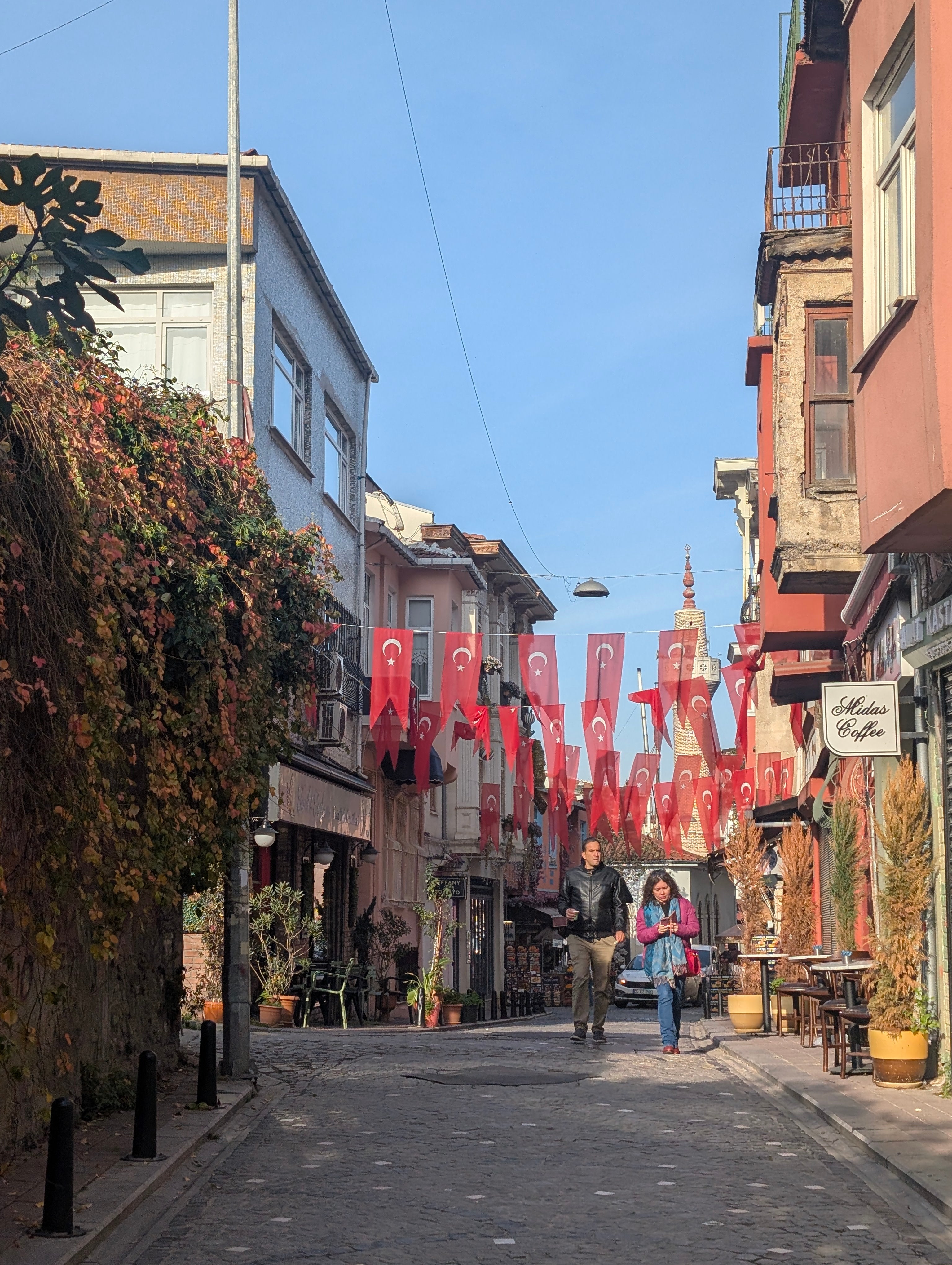
From ancient spices to modern creations, our voyage takes us to the nearby Balat neighbourhood to discover more of the unmissable tenets of Turkish cuisine. It’s a colourful place of small shops and restaurants tumbling up and down the hilly landscape: think historic soda shops, pickle emporiums and everything in between.
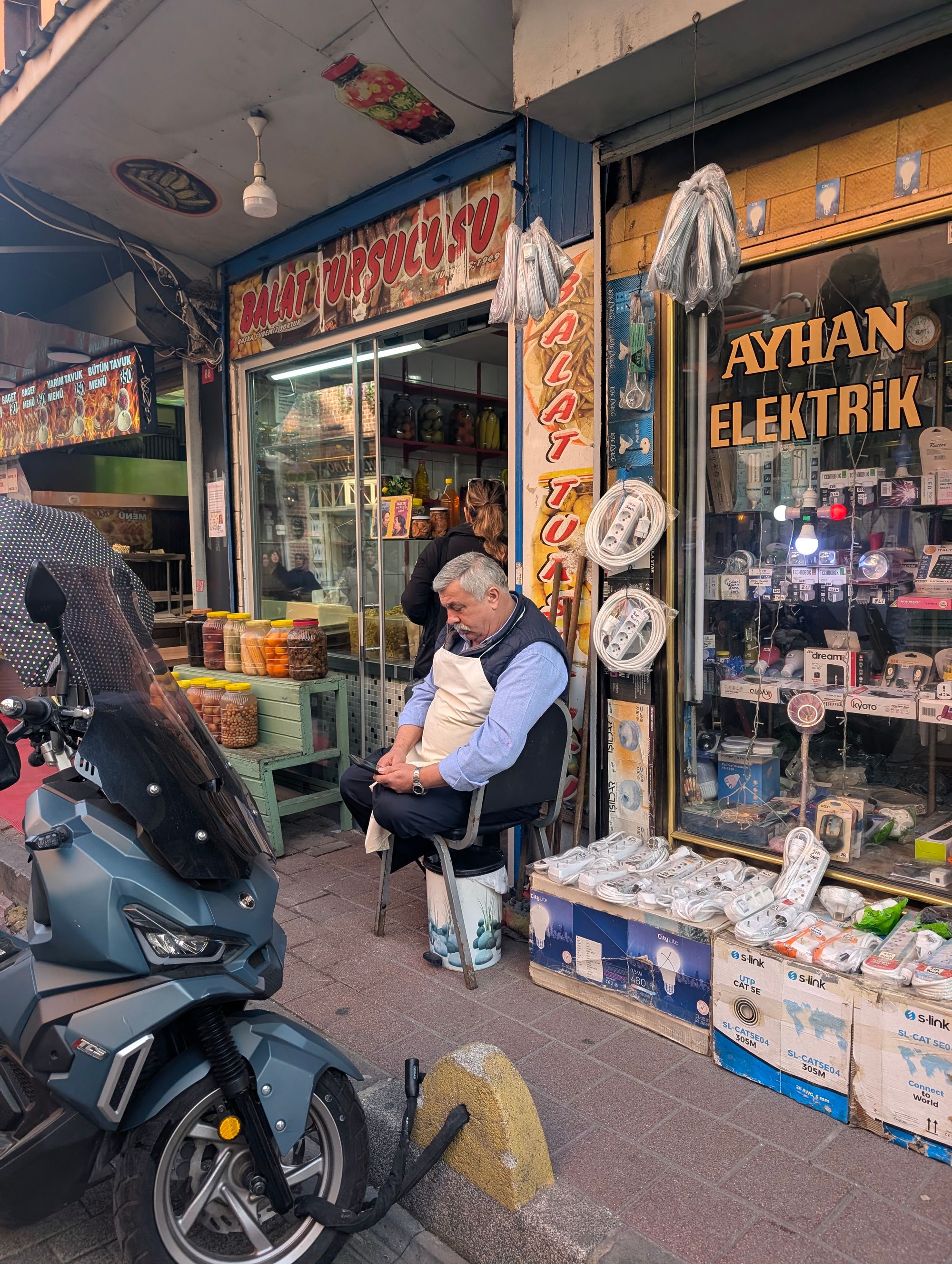
“Hazelnut! I am the first in the world to make this pickle,” Mustafa Çukur pauses from chatting on his phone to make his big claim and point his pride and joy out of the pick’n’mix style assortment of pickles before him. We’re in his dedicated pickle shop, Balat Tursucusu, that’s been serving up these creations since 1949.
The plastic vessel he’s pointing to, full of spiky hazelnut husks in a murky brine, is his favourite, but I’m drawn to the bright purple of the beetroot, the lurid green of the okra, the brown of the mushroom brine, all possessing the microbiome-boosting properties that have moved from tradition to trend in recent years. This collection is as luminescent as childhood sweet shops, but the ingredients are somewhat more beneficial: bright fuchsia turnip in beet juice, lime-green pepper, gleaming yellow cauliflower and mustard-hued plums. Pickles take pride of place in Turkey as a cultural staple and the brine is as important as the ingredients themselves. The selection is delivered to me in a plastic cup, topped up with extra brine and chilli. It’s an invigorating way to pause on the kerb and appreciate the hum of the bustling street.
On Galata Bridge, the fisherman’s bridge, I’m met with a sea of dancing rods, like a gaggle of drumsticks tapping out their rhythm on the river below. On the bridge’s lower level, casual snack bars sell the city’s iconic fish sandwich, the balik ekmek. And just ten minutes down the road, on the rooftop of the JW Marriott hotel in Karaköy on the European side of the city, I try an elevated interpretation of the classic sando with a view of the fishermen once again. Here, Chef Şafak Erten works with produce sourced from women’s cooperatives and local farmers, reimagining dishes rooted in memory.
Read more: The best hotels in Antalya, picked by a travel expert
I’m told the stories of Turkish childhoods through the plates that are set down in front of me. And Safak looks proud to be serving up food from home. “This tarhana is my mother’s recipe. I mixed it with cranberry to make it a little bit different,” he tells me as the fermented soup is served. Everyone has their own tarhana story. Oznur, my guide, explains the soup’s incredibly long process that involves sun-drying a vegetable paste and letting it ferment with yoghurt and flour to become a store-cupboard essential. “Every house has this in its kitchen,” she tells me, confessing that she’s finally made her own after years of borrowing from her mother and mother-in-law. “I call this [my] tarhana age,”: a rite of passage in the form of a fermented soup stock. This neighbourhood may be full of impressive hotels, but it's inside them where you’ll find chefs doing interesting things with the classics.
Over on the Anatolian side of the city, we’re the first ones through the door at Araf, the evening after they’ve earned their first Michelin star. It’s very well tucked away from the road at the foot of a high-rise apartment building in a residential area in the Kadiköy neighbourhood on the Anatolian side of Istanbul. Araf is tiny and impressive.
In December, the Michelin Guide awarded 54 more restaurants across Turkey with accolades ranging from Bib Gourmands (the more affordable on the spectrum) to the highest two Michelin stars in a dazzling ceremony at the Four Seasons Hotel on the Bosphorus. After celebrating until the early hours of the morning, chef owners and husband-and-wife duo, Pinar and Kenan Çetinkaya were back in the kitchen to dish up their first Michelin-starred meal.
Their mission is clear: “We want people to love offal,” Pinar tells me. It’s a bold pledge, but she tells me: “Araf is a good starting point. Every night, half of the guests say they don’t like it.” But she looks triumphant, clearly used to winning them over.
Pinar and Kenan were classmates at university and dreamt up this space during their studies together. The open kitchen concept is their way to elevate offal; to place it on a stage. The kidneys are the most popular dish on the menu, but the brain is their favourite. It’s something they’ve loved and eaten since childhood.
“In my childhood, my mum would always boil the brain. There’s a belief in Turkey that if small children consume brain then they will be clever in their next life,” Pinar tells me as I’m about to dig into their signature dish.
The deep-fried brain croquette on the plate in front of me wouldn’t be something I’d choose, but that’s the beauty of the tasting menu here. The element of choice has been replaced with their confidence and expertise. They’ve paired the croquette with a yuzu aioli and a pickled red pepper jam, which punches through the deep savoury flavour of the brain. It’s not a flavour combination I thought I’d let myself enjoy. Against expectation, it works. They know how to make you fall for it.
And neighbourhood by neighbourhood, plate by plate, Istanbul reveals itself. The dishes and creations here tell stories of mothers, trade routes, modern ambition, produce and purpose. Whether it’s a plastic cup of pickle juice or a star-laden feast, the city is offering the full spectrum. And serving it with flair.
Josephine’s trip was supported by Go Turkiye.
How to get there
Return Turkish Airlines flights to Istanbul run daily from London Heathrow and London Gatwick from £137. The number of daily flights varies throughout the season. Turkish Airlines also operates flights from Manchester, Birmingham and Edinburgh airports. British Airways and Wizz Air also depart from London Heathrow, Gatwick and Luton. Flight time from London is four hours.
Where to stay
Double rooms at the Four Seasons at the Bosphorus, set on the riverbank with incredible views of the city, start at £580 per night.
Nearby Witt Istanbul Suites offer rooms in the Cihangir neighbourhood from £89 per night.
Read more: The best hotels in Istanbul