Hiking in Kyrgyzstan’s Tien Shan mountains is a TikTok trend without any wifi
Fast becoming one of the planet’s trendiest trekking destinations, James Draven finds that the ‘Alps of the East’ are still a whole world away from your average walking holiday
 Tekef
Tekef
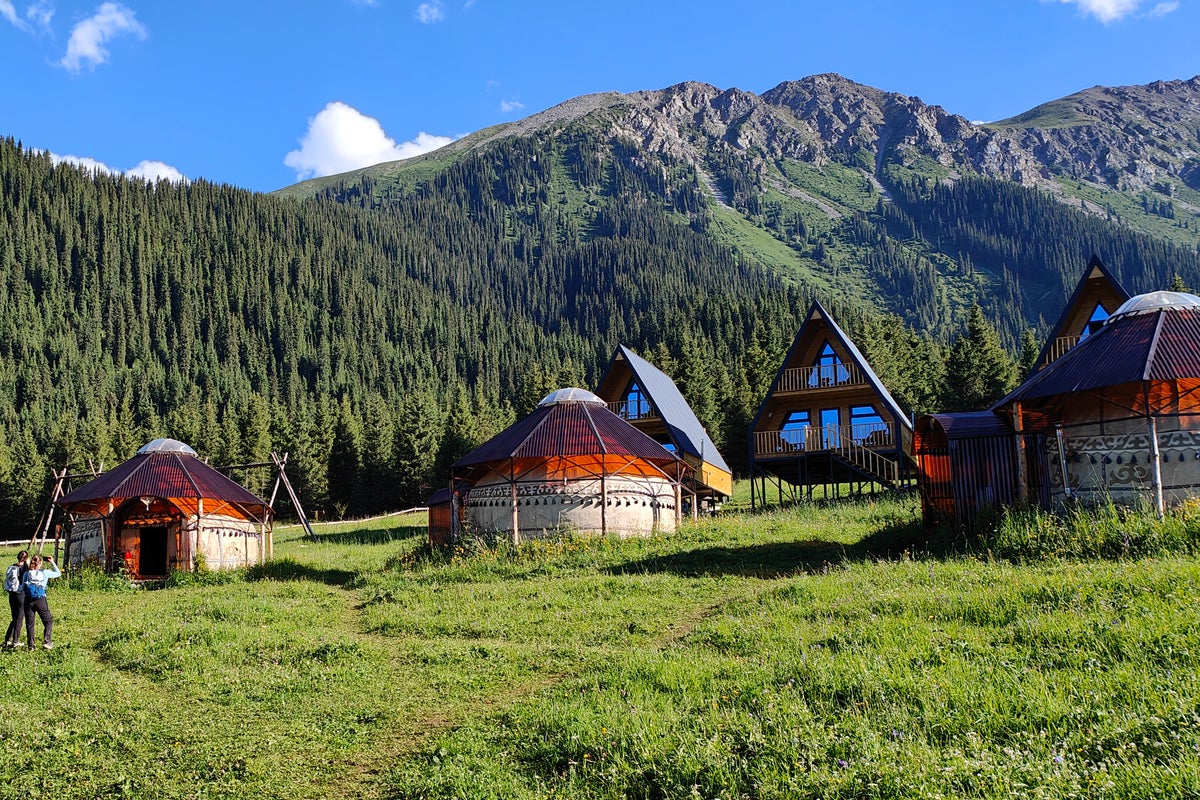
The fog descends like a sledgehammer, bringing darkness and disorientation. Minutes earlier, we’d been slathering on sunscreen and snapping selfies by the side of an alpine lake, its looking-glass waters reflecting landscapes redolent of the Swiss Alps – except our photos were dotted with distant yurts and the occasional nomad on horseback, herding cows with the aid of bright-eyed Alsatians. Eagles soared on thermals, silhouetted by the fierce glare of sunlight. Our hiking shirts were bibbed with sweat, due to the blazing heat and the strenuous trek to get there.
Now, scrabbling back down the mountain to tonight’s campsite, we’re instead slick with cloud vapour. The fog rolls through the landscape with the speed and intensity of a malfunctioning dry-ice machine, deleting unnamed snow-capped peaks, smothering the surrounding trees – and enveloping our guide, Vadim, who has vanished into the mist far ahead of us.
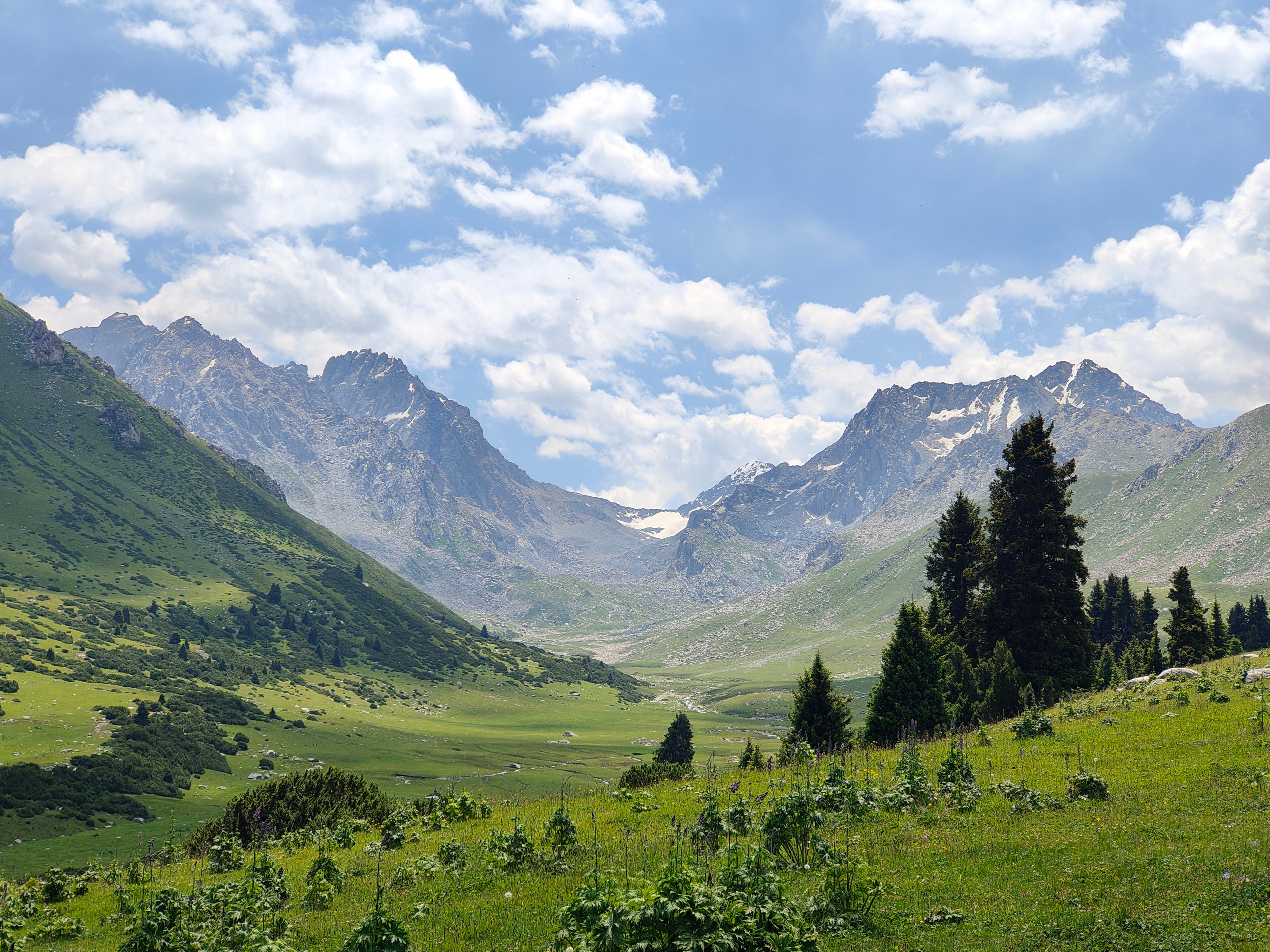
Myself, my partner – and our hiking group of five other guests from the UK, US and Canada – are on day four of our seven-day hike through Kyrgyzstan’s stretch of the Tien Shan mountains: the Terskey Ala-Too Range. After three days of glorious sunshine, we’ve suddenly been forced to abandon an extended trek up to the third lake of the day.
Back at our pre-trip briefing in our hotel in the country’s capital, Bishkek, Vadim had warned us that the weather can turn in an instant. “Weather report means nothing,” he said, shrugging. “You won’t be able to go online to check it anyway in the mountains. You’ll know it’s raining when you’re wet.”
This is tour company Intrepid’s first foray into the mountains and perhaps the trip that most lives up to the company’s name. On my packed flight into the capital, I chatted to a young woman sitting beside me, wearing immaculately manicured nails and meticulously contoured make-up, who assured me that pony-trekking in Kyrgyzstan is the hottest new travel trend, thanks to TikTok and Instagram.
While she would be spending her time meeting nomads from a horseback vantage point and glamping in exquisitely decorated yurts, however, most of my days on my Intrepid trip would involve hiking each morning up the mountains on the eastern shores of Lake Issyk-Kul – the world’s second largest alpine lake – and then straight back down them again to my tiny, six-foot-long tent each afternoon (I’m six foot, two inches). And I do mean straight back down.
Sinuous trails are routinely eschewed in favour of marching directly down 45-degree gradients and – once my partner, Deej, has recovered from tumbling over on loose shale and we’ve caught up with Vadim in the fog – today’s hectic descent involves wading calf-deep through swamps and making impromptu white-water river crossings, clambering over recently fallen trees still bristling with spear-like limbs and slick with river spray.
“What’s that mountain called?” I call to Vadim, as the fog clears a little and is replaced by driving rain, which soaks through my waterproof jacket in minutes. I point to the tallest snow-capped peak I can see. The highest mountain in the Tien Shan range is in Kyrgyzstan, and while I don’t really believe the one I’m pointing at will turn out to be Jengish Chokusu, I am hoping my question will slow Vadim down and allow us a moment’s respite to stop, shelter and take a sip of water.
“Doesn’t have a name,” he replies, glancing up as he hikes onward. Our desiccated guide seems to regard drinking water as a sign of weakness, instead racing back to the vodka bottle that our support crew, Masha and Illya, will have waiting back at the dining tent – along with delicious meals from okroshka (a soup of fermented milk, cucumber, radish, boiled potatoes and eggs) on hot days to warming noodle stews on cold ones.
When Vadim notes the look of doubt creeping across my face, he adds: “Around 95 per cent of the mountains in Kyrgyzstan don’t have names. 90 per cent of the country is mountains, so it’s tricky to name them all.”
I’m sceptical that anywhere on Earth remains unnamed, unmapped or uncategorised in the 21st century, but – when I studied the loose itinerary back in Bishkek and compared it with online maps – I frequently found multiple spellings of the very same valley or lake, or places we were going that simply did not appear on Google Maps. That was back when I had phone signal, of course. Since setting off, there has been none whatsoever – and each day we have walked at least 5km farther than the itinerary promised.
Kyrgyzstan may be on everyone’s bucket-list right now, but the country is only just gearing up for mainstream tourism and – cut off from cities and social media – huge parts of it remain wonderfully remote.
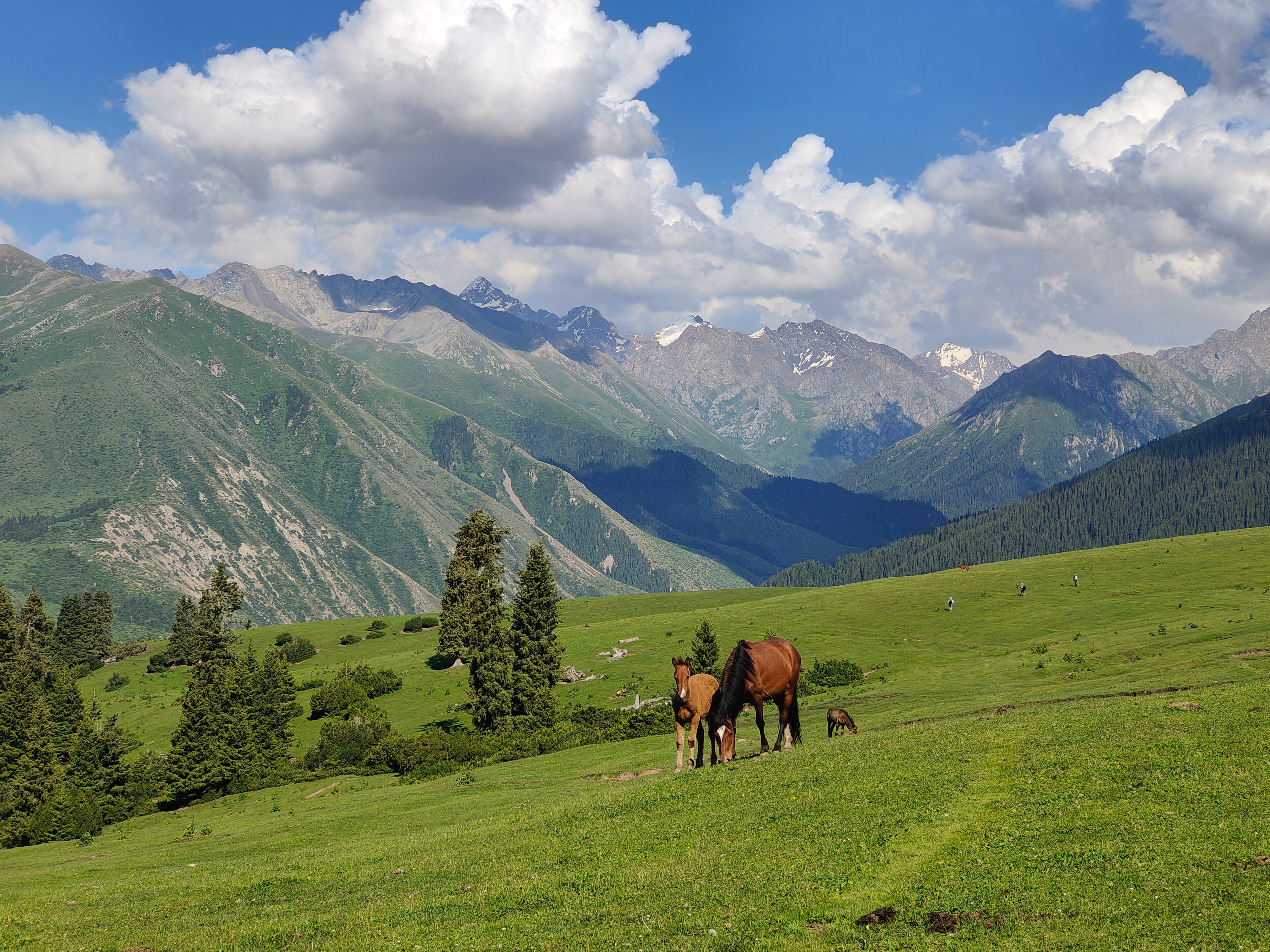
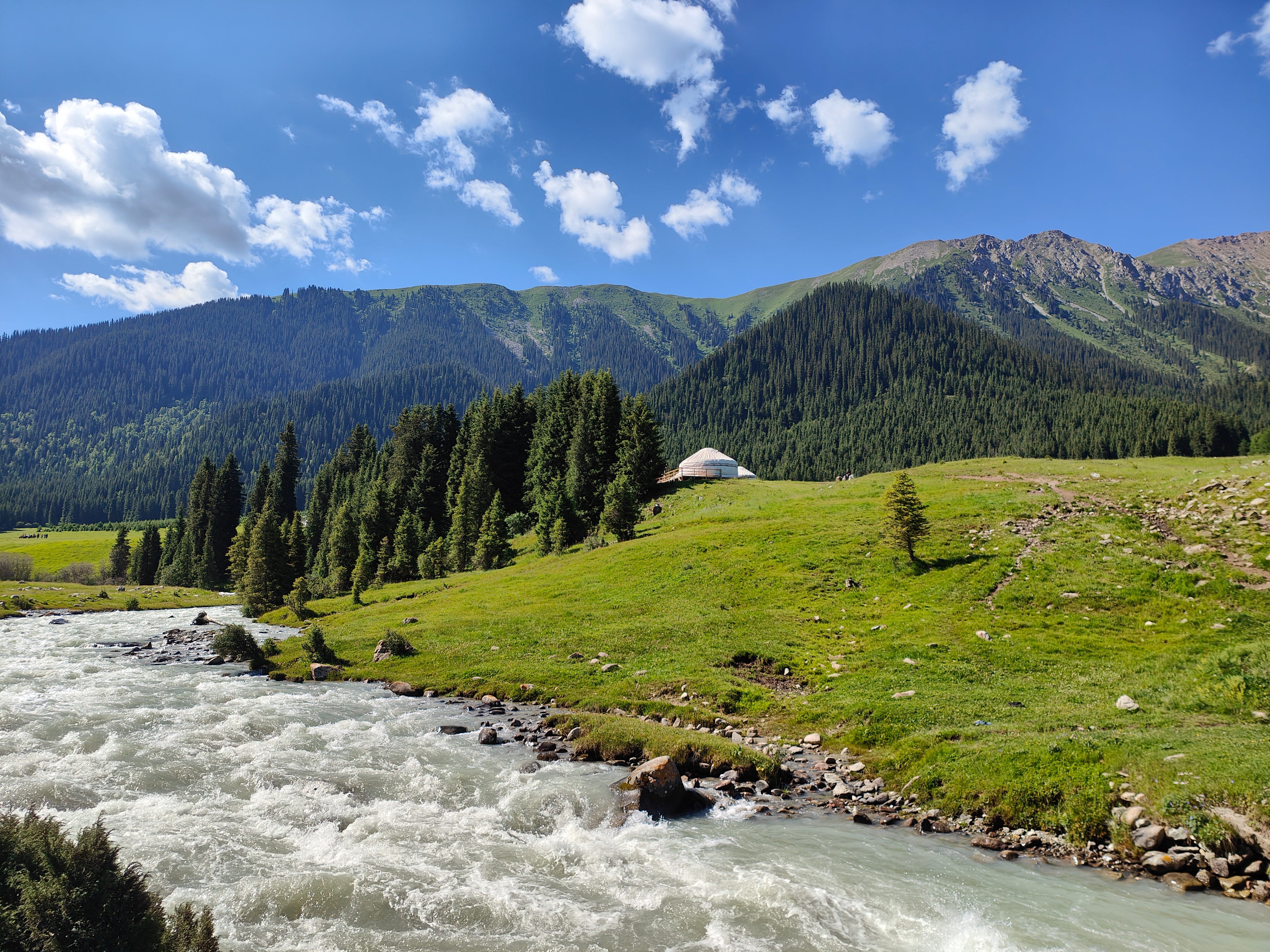
The Silk Road might be what brings most travellers to the region, but our own route is as meandering and fluid as the crystalline streams and foaming rivers that race down mountains, bisect vibrant-green hillsides and disappear into forests of fir trees on their way back down to the rusted rock canyons of Sutty Bulak.
On my 10-day trip with Intrepid, seven days were spent hiking for more than 50 miles up and down the unspoiled stretch of mountains between Sutty Bulak and the city of Karakol – during which time we passed just one other group of five western hikers. Nearly everyone else we met – and we did not meet many people – were nomad herders with livestock, following their seasonal transhumance cycles.
On day five, we stop briefly at a mountain homestead, consisting of a yurt and a caravan, engirdled by a rough, wooden fence containing a herd of cows and a couple of horses. Talai, the owner of the herd, greets us with a glass of fermented horse milk, which tastes sharp and sour. Vadim downs his own then drinks mine.
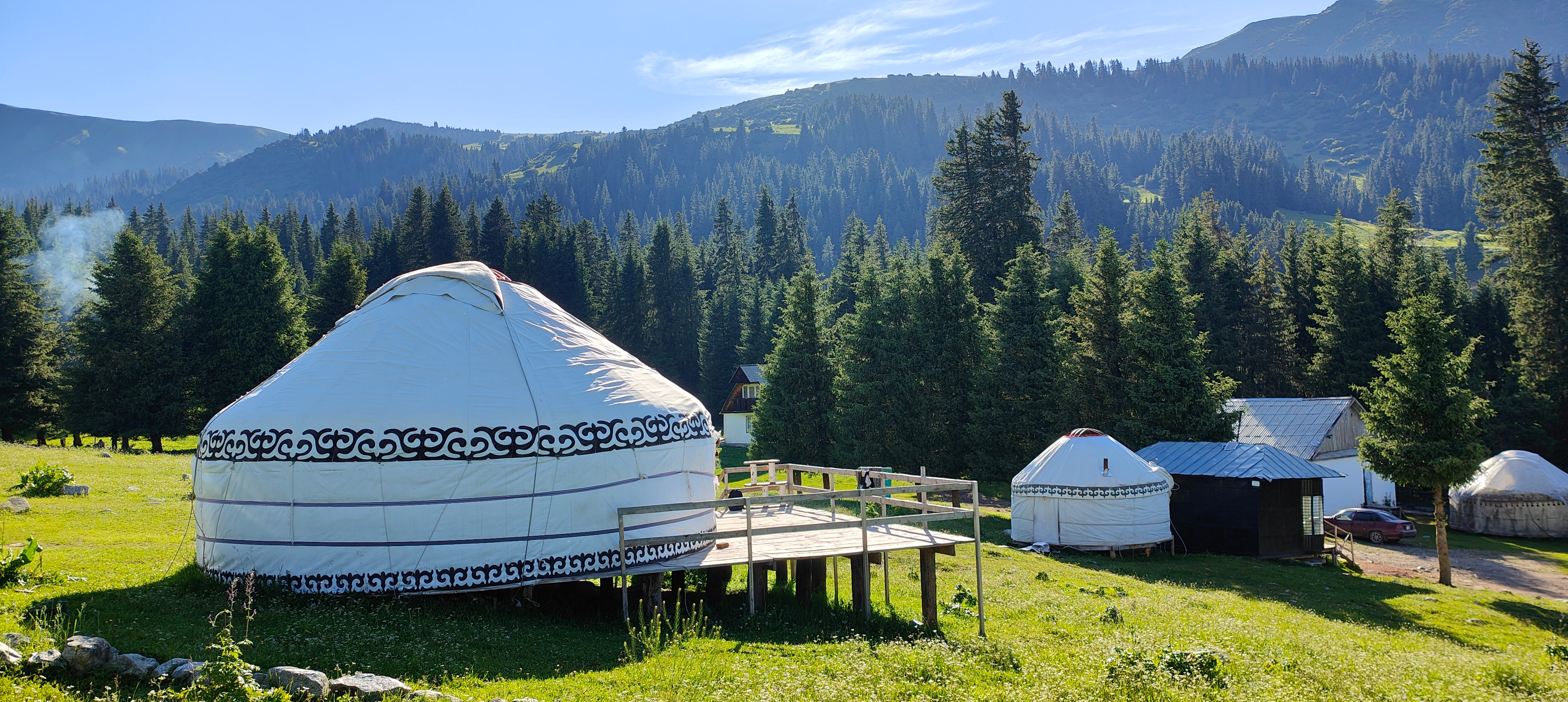
I should, I feel, be teleported back to simpler times, when remote lifestyles defined culture – but Talai’s wearing an FC Barcelona cap and a brand-new Kia 4x4 gleams behind him. Talai explains that, in summer, he spends but a few days in the mountains each week and the rest of the time in the nearest city, Karakol. He winters in Bishkek. As soon as he hears my accent, he asks me, “Chelsea?” Ignoring my head shake, he enthusiastically adds, “I saw them play Burnley at Stamford Bridge last season.”
It appears Kyrgyzstan isn’t quite as remote as I’d imagined. Social media is shrinking the world for everyone, not just us westerners.
On our final morning of hiking – just a couple of hours after waking in a remote valley with only cows for company – we climb gently up onto one of the mountains’ foothills. The heady perfume of wild-growing tarragon, sage, mustard, lavender and cannabis ripples through the long grass. When we reach the top, however, I’m bewildered to see the city of Karakol sprawling beneath us, its glass and steel glinting in the sunlight.
For the past week, I’ve felt entirely removed from modern civilisation, but as my companions’ phones start to ping and they stop on this lonely ridge to post a week’s worth of selfies, I realise it was waiting for us all along, never far away. I want to turn back.
How to do it
Intrepid Travel’s “10-day Kyrgyzstan: Trekking the Tien Shan Trails” trip starts at £1,944pp, including accommodation, ground transportation, services of a local tour leader, guided hikes and some meals.
James was a guest of Intrepid