I’m a Nutritionist, and These Are the 14 Vegetarian Recipes I Actually Recommend
High-protein, low-carb, and built from real food you'll find in any grocery store. The post I’m a Nutritionist, and These Are the 14 Vegetarian Recipes I Actually Recommend appeared first on Camille Styles.
 BigThink
As a nutrition consultant, I spend a lot of time with vegetarian and vegan-curious clients on one specific question: How do you hit a solid protein number without leaning on a scoop of powder or a package of fake meat? Add in a dairy intolerance or a preference for non-dairy options, and hitting your protein goals can feel even more complicated.
The 14 recipes below skip protein powder and meat substitutes entirely, built instead from ingredients you’d already find in the dairy case or the dry-goods aisle. Each entry lists its protein and net carbs per serving, its main protein source, and a quick way to round it out into a fuller meal if you need one. Happy plant-forward cooking!

The Best Vegetarian Protein Sources to Know
To start, here’s a quick cheat sheet of the vegetarian protein sources worth keeping stocked, with protein and carbs per typical serving:
Chickpeas: 9g protein, 27g carbs per 3.5oz (cooked) Black beans: 9g protein, 24g carbs per 3.5oz (cooked) Lentils: 9g protein, 20g carbs per 3.5oz (cooked) Tofu (extra firm): 15g protein, 2.5g carbs per 3.5oz Tempeh: 19g protein, 9g carbs per 3.5oz Paneer: 18g protein, 3.5g carbs per 3.5oz Halloumi: 21g protein, 2g carbs per 3.5oz Eggs: 13g protein, 1g carbs per 3.5oz (about 2 large eggs) Cottage cheese: 11g protein, 3.4g carbs per 3.5oz Greek yogurt: 10g protein, 3.6g carbs per 3.5oz14 Low-Carb High-Protein Vegetarian Recipes
When I set out to round up my favorite low-carb, high-protein vegetarian recipes, filling the list with contenders was easy. Narrowing it down to the ones that held up once I crunched the numbers? That proved a little trickier. With your protein goals and carb count in mind, the 14 below made the cut. Each one is satisfying and flavor-forward while landing on both sides of that equation. And of course, they’re vegetarian the whole way through! Scroll on to see what’s on the menu.
A quick reality check before you dive in: These are estimates built from standard food composition data, not lab results, so treat them as a close planning tool rather than a printed nutrition label.
Breakfast
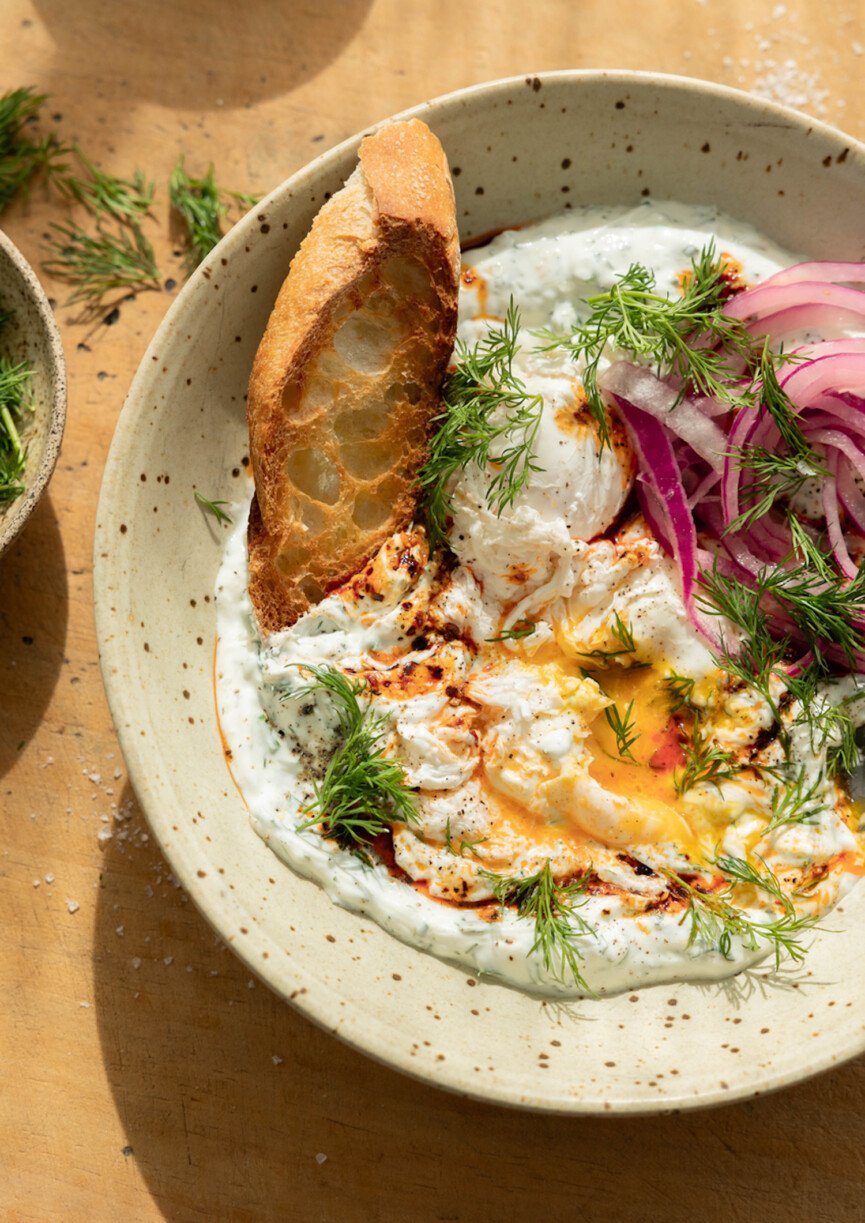
Spicy Turkish Eggs Breakfast Bowl
Garlicky yogurt, poached eggs, and a drizzle of chili oil. This has the best protein-to-effort ratio on the whole list.
Per serving (1 bowl): ~49g protein, ~15g net carbs. The protein comes mainly from the yogurt base, with the poached eggs adding a smaller share. To round it out, add a slice of crusty bread or a side of greens, since this one runs short on fiber on its own.
Green Shakshuka
A spinach-based take on the tomato classic, with eggs cooked right into the greens. One skillet, minimal cleanup.
Per serving (yields 2): ~24g protein, ~11g net carbs. Eggs are the main protein source, with the spinach adding volume more than protein. Serve with crusty bread or over a scoop of white beans to make it more filling.
Asparagus, Potato, & Goat Cheese Frittata
Eight eggs and goat cheese spread across eight servings, so the protein here is steady rather than a single big hit.
Per serving (yields 8): ~10g protein, ~5g net carbs. Eggs and goat cheese share the protein load fairly evenly. Net carbs run very low, so pair it with fruit or a slice of toast if you want more volume at breakfast.
Lunch
Crispy Torn Halloumi Salad
Halloumi holds its shape under heat, which makes it one of the better cheese-forward proteins to build a salad around instead of just crumbling on top.
Per serving (assumed 4 servings): ~15g protein, ~14g net carbs. Halloumi is the sole protein source here. Add a scoop of white beans or crispy chickpeas if you want more staying power than the cheese alone provides.
Mediterranean Kale Salad
A full block of feta and a cup of crunchy chickpeas do most of the work here, with avocado adding richness on top. It’s also proof a salad titled kale salad can, in fact, contain kale, a fact more than one reader has pointed out in the comments over the years.
Per serving (yields 4): ~18g protein, ~29g net carbs. Feta and chickpeas split the protein about evenly. This one is balanced as written, no adjustment needed.
Zucchini Ribbon Salad
Thin ribbons of zucchini and squash, tossed with goat cheese and avocado, plus toasted nuts for crunch. One of the lowest-carb dishes on the whole list.
Per serving (yields 4): ~13g protein, ~16g net carbs. Goat cheese and nuts carry most of the protein. Top with a soft-boiled egg or a handful of crispy chickpeas to push the protein higher for a main-dish portion.
Avocado Caprese Salad
A twist on the classic caprese, with avocado added alongside the usual tomato and mozzarella, plus fresh basil on top.
Per serving (yields 4): ~10g protein, ~8g net carbs. Mozzarella or burrata is the only protein source in this one, which makes it the lowest-protein recipe on the list. Pair it with a fried egg or a side of white beans to turn it into a full meal instead of a starter.
Smoky & Spicy Cauliflower Salad
Roasted chickpeas and a tahini dressing add both protein and staying power to what could otherwise be a side-dish salad.
Per serving (yields 3): ~17g protein, ~36g net carbs. Chickpeas and feta are the main protein sources. It’s solid as written, though extra feta or a dollop of Greek yogurt in the dressing pushes it higher.
Loaded Vegetarian Taco Salad
A full block of tofu and a cheddar-yogurt dressing make this the highest-protein recipe on the list by far.
Per serving (yields 2): ~47g protein, ~35g net carbs. Tofu is the primary protein source, backed up by the cheddar and yogurt dressing. No adjustment needed, this one carries a full meal on its own.
Dinner
Vegan Coconut Dal with Kale
A cozy, one-pot lentil dinner.
Per serving (yields 4): ~7g protein, ~15g net carbs. Red lentils are the sole protein source, and this is the lowest-protein recipe on the entire list once it’s stretched across four servings of broth. Two soft-boiled eggs on top add about 13g of protein, enough to clear 15g total with barely any change to the carb count. A 3-ounce side of pan-seared tempeh does the same job, adding roughly 17g of protein for about 6g more carbs, landing around 24g protein and 21g net carbs. A cup of peas stirred in also works, though it’s the least efficient of the three, it only just clears 15g of protein while adding enough carbs to push this past the 30g low-carb ceiling used for the rest of the list.
Vegetarian White Chickpea Chili
Chickpeas and cannellini beans form the base, with a full block of crumbled tofu adding even more protein on top, making this one of the stronger performers in the dinner category.
Per serving (yields 4): ~24g protein, ~29g net carbs. Beans and tofu share the protein load here. This one’s already well-balanced, and it freezes well for later.
Caramelized Onion and Spinach-Stuffed Portobello Mushrooms
A box of fresh spinach plus mozzarella and parmesan give this more protein than a mushroom-and-onion dish might suggest.
Per serving (assumed 6 servings): ~10g protein, ~8g net carbs. Mozzarella and parmesan carry the protein. Serve two mushroom caps instead of one, or add a side of beans, for a fuller dinner portion.
Spring Onion and Goat Cheese Quiche
Four eggs and six ounces of goat cheese carry most of the protein, with whole milk rounding out the custard.
Per serving (yields 6): ~15g protein, ~26g net carbs. Eggs and goat cheese are the protein sources, and the crust accounts for most of the carb total. Pair with a green salad topped with chickpeas or beans for more fiber and protein alongside the rich custard.
Paneer Tikka Kebabs
Paneer is one of the more underrated vegetarian proteins, and two full 12-ounce blocks marinated overnight make these kebabs worth the effort.
Per skewer (yields 10 skewers): ~14g protein, ~7g net carbs. Paneer is the only protein source, so plan on 2 to 3 skewers per person rather than one. Add rice or a cooling yogurt sauce for a complete meal.
FAQ’s
So, what counts as a high-protein, low-carb vegetarian food? And how do you get enough protein at a meal? Here are the questions I hear most frequently:
What Vegetarian Foods Are High in Protein and Low in Carbs?
In my opinion, eggs and Greek yogurt are the easiest to reach for daily! Cottage cheese and tofu are close behind. Halloumi and paneer round things out for something more substantial. All of them land well over 15g of protein per serving with under 5g of carbs in most cases, a rarer combination among vegetarian proteins than people assume. Legumes like chickpeas and lentils are still worth eating regularly; they just carry more natural carbohydrate alongside their protein.
Not sure how to tell on a nutrition label? Compare the grams of protein to the grams of carbs per serving. For example, if a food has 15g of protein and 5g of carbs, you know you’re getting more protein for your bite.
How Can Vegetarians Get 30 Grams of Protein at a Meal?
A few recipes on this list clear 30 grams on their own: the Turkish eggs bowl at 49g and the taco salad at 47g. The shakshuka and the white chickpea chili both land at 24g, close enough that a slightly larger portion closes the gap. For recipes that come in lower individually, like the coconut dal at 7g or the asparagus frittata at 10g, pairing two protein sources in the same meal, a scoop of Greek yogurt alongside eggs, or crispy chickpeas on top of a salad, is usually enough to reach 30g.
Can You Eat Low-Carb on a Vegetarian Diet?
Yes, though it takes more planning than it does with meat. Vegetarian protein sources split into two camps: naturally low-carb picks—like eggs and cheese—and naturally higher-carb picks, like beans and lentils. Building a low-carb vegetarian meal usually means leaning on the first group as the main protein, with the second group playing a smaller supporting role instead of being the base of the dish.
In practice, that’s the difference between the Turkish eggs bowl, where yogurt and eggs carry the entire protein load, and the white chickpea chili where chickpeas add bulk (but the crumbled tofu is still doing the heavier protein work). A dish like the Mediterranean kale salad shows the balance in one bowl: The chickpeas bring welcome volume and fiber, while the feta keeps the overall carb count from climbing too high.
How Can I Add More Protein to a Vegetarian Meal?
The easiest additions don’t require a separate dish. Stir a spoonful of Greek yogurt or cottage cheese into a bowl, or scatter crispy chickpeas over a salad. An extra egg cracked into a hot pan or a handful of shaved parmesan works just as well. In our house, we love to sprinkle hemp seeds and nutritional yeast on top of everything from yogurt bowls and cereal to soups and pasta! Ultimately, none of it requires planning a new recipe, just keeping a protein source on hand to add to what’s already cooking.

Putting It Into Practice
With protein and carb numbers at your fingertips, you’re ready to get more strategic with your meals. To make things even easier, keep a few of the cheat sheet staples stocked (like black beans), and pick one recipe from each meal category to start with. Rotating through this list gets easier every time you cook from it! Best of all, none of these recipes call for anything you can’t find at most grocery stores. If a dish comes up short on its own, add a spoonful of Greek yogurt or a handful of chickpeas. Don’t underestimate the beauty—and practicality—of having a few vegetarian staples on hand.