LinkedIn shares tips on optimizing post content for AI chatbots
The platform published a new guide outlining how users can enhance their content to improve their chances to appear in artificial intelligence answers.
 Hollif

This audio is auto-generated. Please let us know if you have feedback.
With recent studies showing that LinkedIn is now a leading information source for artificial intelligence chatbots, the platform is keen to capitalize on the potential of this insight amid rising interest in optimizing for AI chatbot mentions.
In line with this, LinkedIn published a new guide on how its members can use the app to maximize their potential to appear in AI answers. The research contains detailed notes on what’s getting referenced, what AI chatbots look for and how to align LinkedIn activity with AI discovery.
First, LinkedIn said that ensuring posts are educational is key.
As per LinkedIn: “The secret sauce is to frequently craft and share high-quality, insightful content that showcases your expertise or firsthand experience through unique angles, data, and information about your industry, brand, products, and services.”
LinkedIn said that AI models are looking for depth of information far more than opinion pieces or personal updates, and as such, sharing in-depth insight and knowledge is a good way to align with AI crawlers.
LinkedIn has also noted that long-form articles, newsletters and posts are the most commonly cited, accounting for 60% of all AI citations.
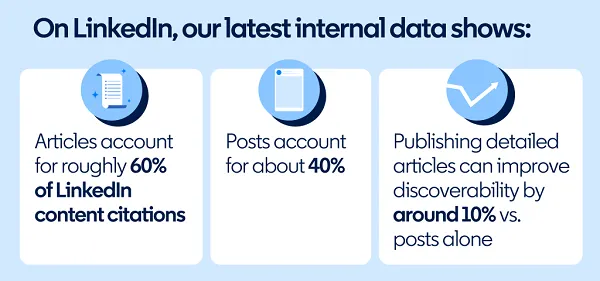
LinkedIn said that users should aim to post long-form articles that are between 800 and 1,200 words to maximize opportunities to be referenced in AI answers.
“Publishing authentic content, rather than fully AI-generated text, can also help you avoid being flagged or blocked from indexing,” the report added.
That would seem pretty obvious. Users need to be contributing original, human-created content, but clearly LinkedIn felt that it needed to be underlined. And given that the platform has all the data on how people are posting, I assume there’s a reason for this.
LinkedIn also noted that actionable advice is more powerful, such as using ranked lists and clear steps, while including specific dates can also help ensure that the focus is clear and readable by AI engines.
In addition, LinkedIn advised that creators should use the journalistic inverse pyramid approach to content, with the most important information at the beginning, and information presented in descending order of relevance throughout the rest of a post.
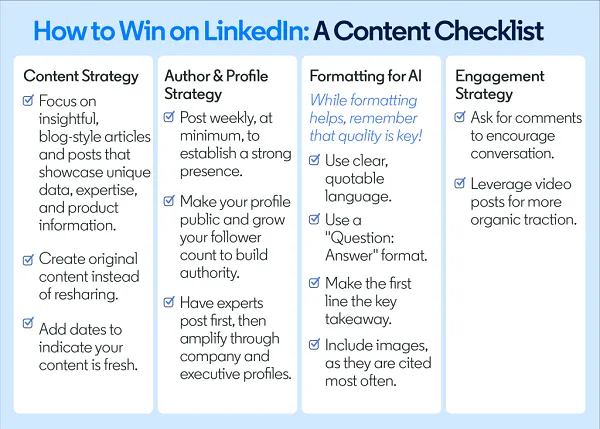
LinkedIn also shared a simplified checklist of AI optimization tips for reference:
LinkedIn has become a much bigger reference point for AI chatbots over time, with its like and comment systems providing key guidance points for AI bots. Meanwhile, its network of business professionals also suggests that these users have knowledge and presence that can guide AI responses.
As such, the platform is worth considering as a branding tool as the use of AI bots as discovery tools continues to rise.