New players are shaking up the memory industry, but even Apple can’t strong-arm the RAM crisis for your wallet
Apple turned to CXMT for cheaper DRAM, only to discover that even its enormous order volumes no longer guarantee favorable pricing.
 Troov
Troov
Apple can usually make suppliers bend the knee. It buys components in volumes few consumer technology brands can match and has built a supply chain that rivals spend decades trying to copy. However, that leverage has now run into a memory manufacturer willing to say no.
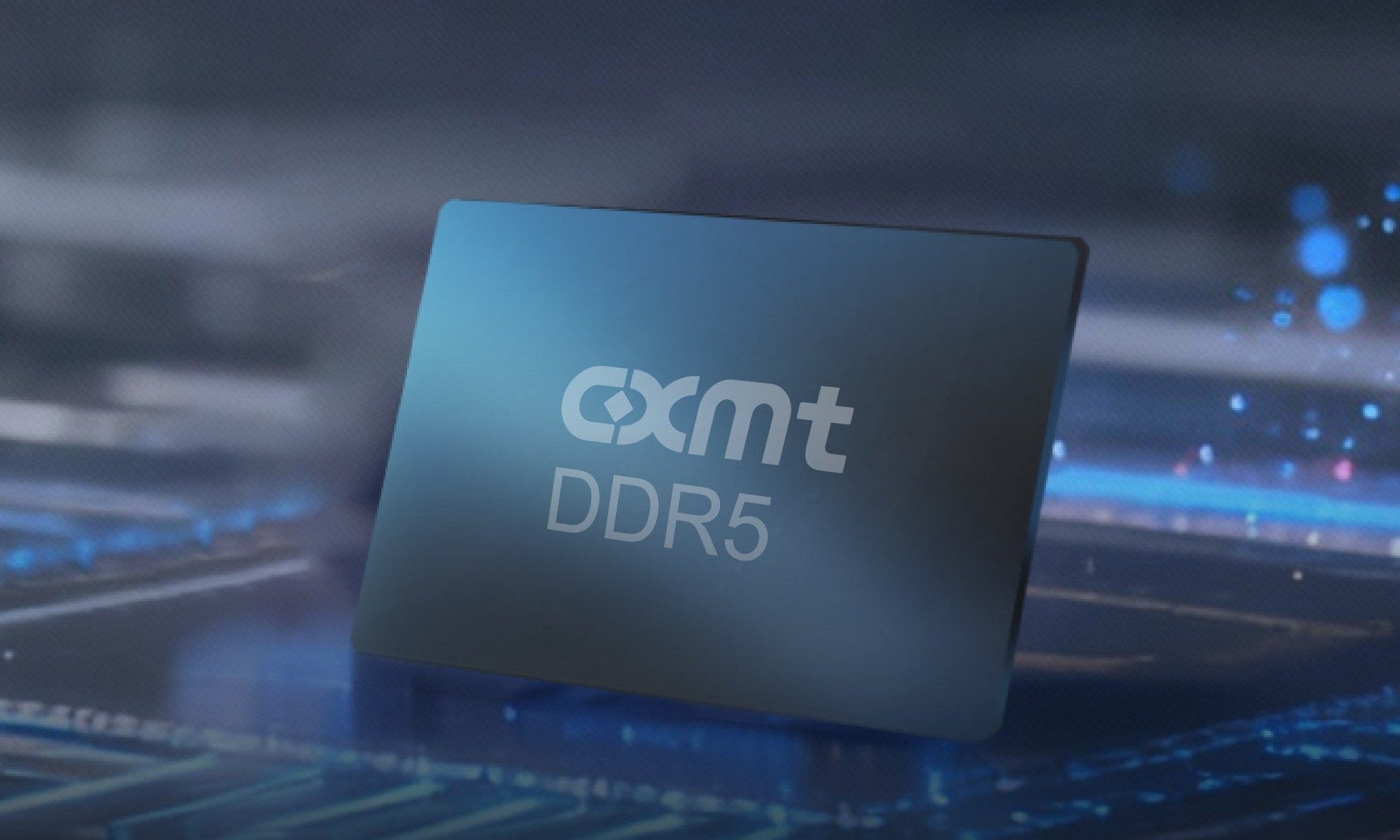
Apple reportedly approached China’s CXMT as an additional DRAM supplier and asked for lower prices. CXMT instead quoted figures comparable to or even higher than Samsung and SK Hynix. Huawei, Xiaomi, and other Chinese manufacturers have already locked up much of its output through higher-priced long-term deals, leaving the company with little reason to accept Apple’s terms.
I felt a much smaller version of the same crisis recently. A failing Corsair Vengeance LPX 8GB DDR4-3200 stick made my aging PC unstable, so I had little choice but to replace it. The same module should have cost around 1,500 INR, or roughly $16, before the RAM crisis. I paid 8,000 INR, around $84.
Paying more than five times the sensible price for old DDR4 hardware is absurd. Apple has billions of dollars and purchasing power that I obviously do not. Yet in today’s market, even Apple is learning that scale may secure memory supply without necessarily making it affordable.
 CXMT
CXMT
Apple’s supply-chain muscle has finally hit a wall
CXMT’s growing influence should eventually be good for the memory industry. It gives device makers another serious supplier beyond Samsung, SK Hynix, and Micron, potentially reducing their dependence on the three companies that have dominated DRAM for years.
More competition usually leads to better pricing. Unfortunately, CXMT is expanding into a market where nearly every available memory chip already has a buyer waiting for it. Samsung and SK Hynix are investing heavily in high-bandwidth memory for AI accelerators, where the profit margins are far higher than those of ordinary consumer DRAM. Chinese smartphone and computer manufacturers are securing CXMT’s conventional memory before it leaves the factory. Apple cannot use one supplier to pressure another when all of them are already struggling to meet demand.
The company has reportedly asked the US government to let it source DRAM from CXMT and NAND storage from YMTC for products sold outside the country. Approval would likely help Apple secure enough memory, but it may do little to bring down what the company pays. CXMT has already shown that it does not intend to become Apple’s bargain supplier, weakening the company’s hopes of using another manufacturer to rein in rising memory costs.
Memory costs are already reaching Apple buyers
Apple spent months shielding customers from rising component costs, but it has now started passing them on to buyers. Prices for several Macs and iPads have already gone up by hundreds of dollars, and the iPhone 18 Pro lineup may be next.
TrendForce says conventional DRAM contract prices jumped between 93% and 98% in the first quarter of 2026, pushing industry revenue up 81% to $97 billion. By July, prices were still rising, although the pace of increase had started to slow. Counterpoint Research estimated the 12GB and 1TB iPhone 18 Pro Max could cost Apple nearly $300 more to build than its predecessor, with memory and storage responsible for the largest part of that increase.
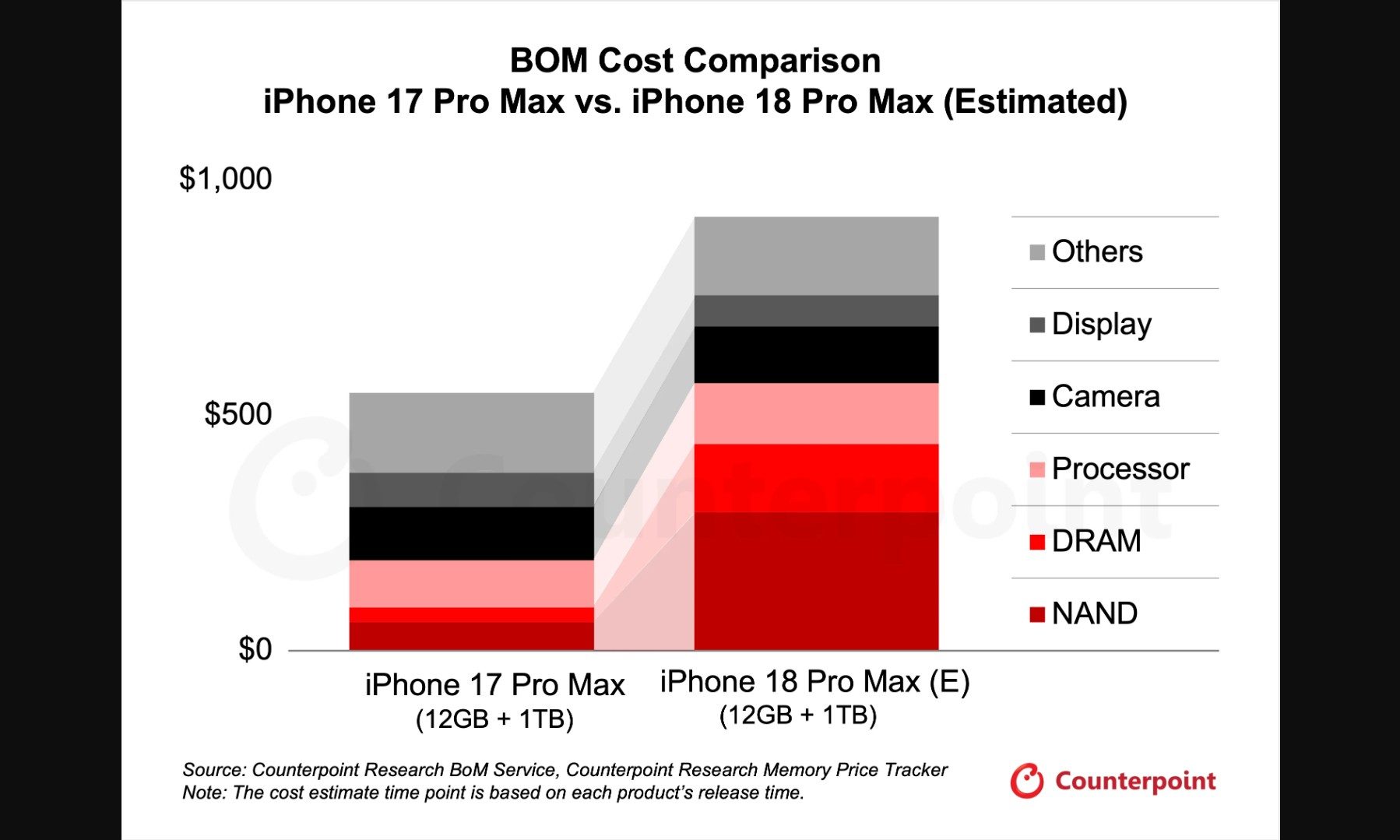 iPhone 18 Pro Max (12GB + 1TB) bill of materials estimate Counterpoint research
Supply is not growing fast enough to bring prices back down. IDC expects the amount of DRAM available this year to rise by only 16%, while industry revenue is forecast to jump 177% to $418.6 billion.
Apple can absorb the increase, accept lower margins, reduce memory or storage configurations, or pass the cost on to buyers. We have already seen which option it picked for Macs and iPads. The iPhone may not remain protected for much longer.
The blame game is in full swing, but it won’t lower your bill
Micron has its own explanation for the current mess. The company claims a couple of major customers used their purchasing power during the previous memory downturn to secure rock-bottom prices. Those prices supposedly made expansion difficult to justify, leaving manufacturers unprepared when demand returned. Micron did not publicly identify Apple, although reports have connected the remarks to the company.
I find Micron’s argument a little ridiculous.
A company placing massive, predictable orders will always expect a volume discount. Apple does not buy DRAM at retail, and Micron, Samsung and SK Hynix were not producing millions of components for one of the world’s most profitable companies as a charitable exercise. I also find it difficult to accept that Micron continued serving Apple for years without earning enough money to keep the relationship viable. If the contracts were genuinely unsustainable, Micron had the option to renegotiate them or sell its production elsewhere.
 Sergei Starostin / Pexels
Memory is one of the most cyclical parts of the technology industry. Manufacturers expand production when prices are high, excess supply pushes prices down, investment slows, and the next shortage sends them back up. Blaming customers for negotiating during the low part of that cycle feels awfully convenient now that suppliers have regained pricing power.
Micron does not have a spotless history here, either. A former Micron sales manager pleaded guilty to obstructing the US Justice Department’s DRAM price-fixing investigation after withholding and altering subpoenaed documents. Samsung and Hynix later pleaded guilty to participating in the conspiracy, paying fines of $300 million and $185 million, respectively. None of that proves anything illegal is happening today, but it gives me little reason to accept its version without question.
Still, Micron is right about one part of the crisis. AI companies are buying huge quantities of highly profitable HBM, and memory manufacturers have every reason to prioritize those customers. Conventional RAM for phones, laptops, consoles, and PC repairs is left competing for what remains.
 CXMT
CXMT
CXMT’s rise could eventually loosen the grip of the established memory manufacturers, but more competition needs more production before buyers see any relief. For now, the new player has entered the same expensive market rather than disrupted it.
Apple will pay more, device makers will pass those costs along, and customers will delay upgrades or accept higher prices. Others, like me, will pay $84 for an 8GB DDR4 stick because an aging PC suddenly leaves them with no other choice.