No Home Go Home / Go Home No Home
Jeffrey Yang’s linked poems and Kazumi Tanaka’s tea-ink drawings search for a way home when return is impossible. The post No Home Go Home / Go Home No Home appeared first on Tricycle: The Buddhist Review.
 KickT
KickT
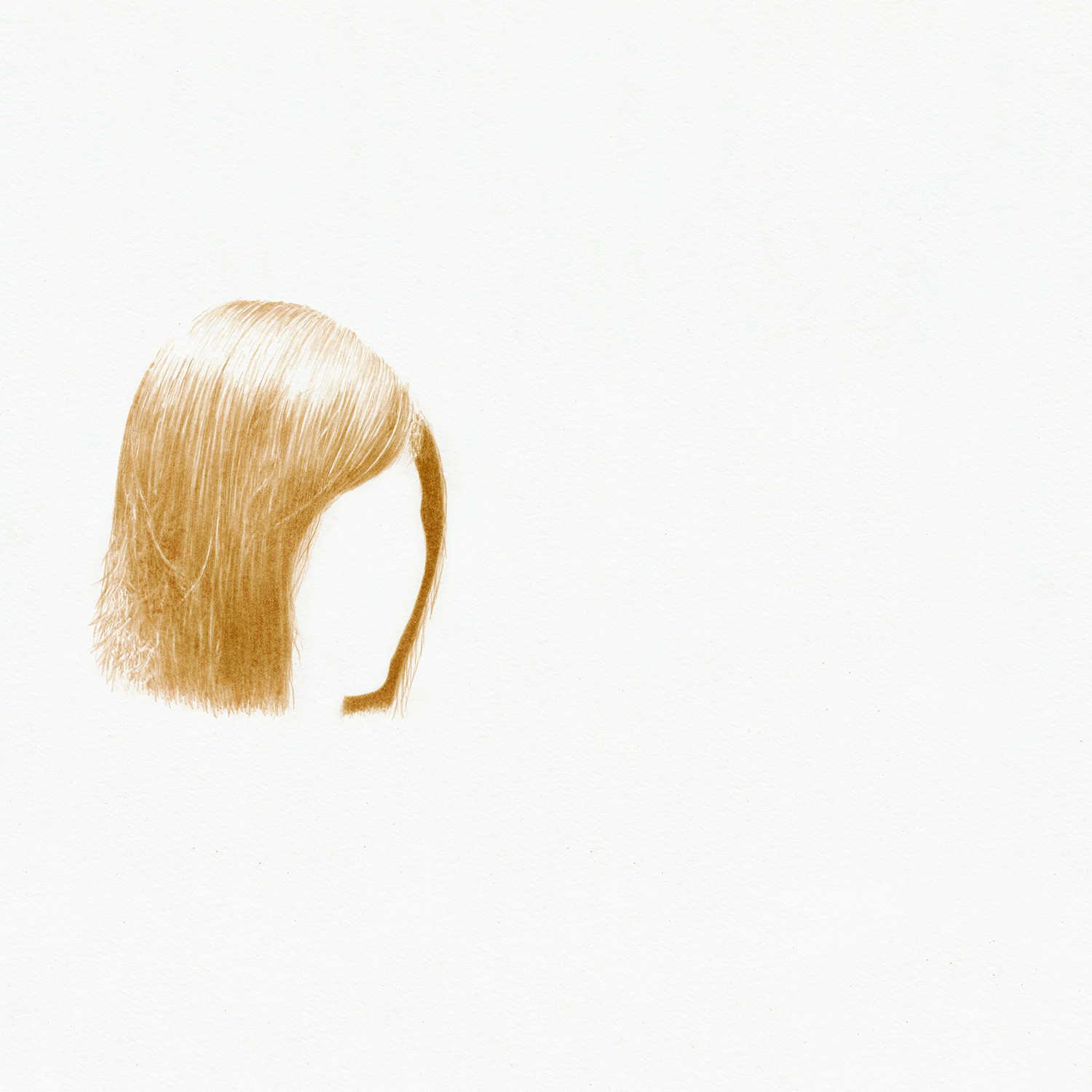
Jeffrey Yang’s linked poems and Kazumi Tanaka’s tea-ink drawings search for a way home when return is impossible.
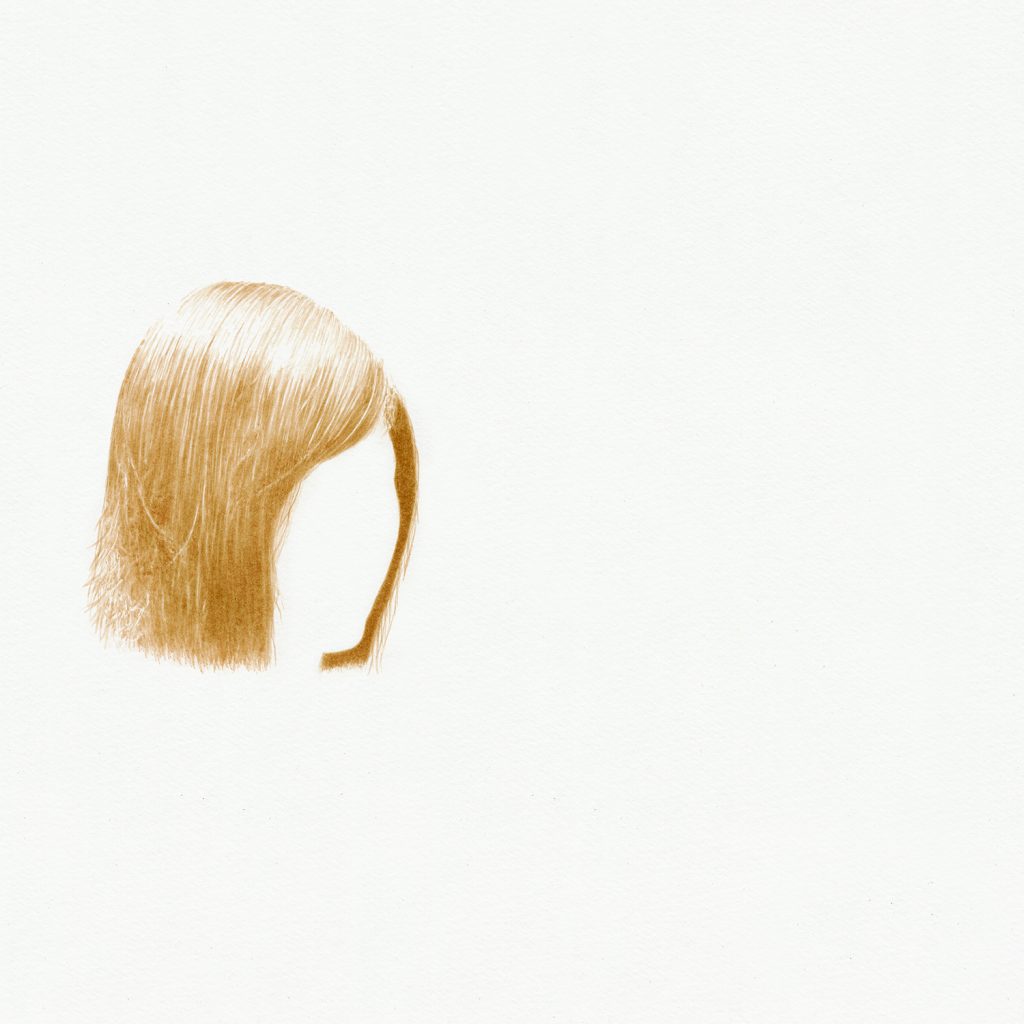 Girl. 10 x 10 inches. Oolong tea on paper. Drawing by Kazumi Tanaka.
When I first visited Kazumi Tanaka’s studio in a renovated brick building at the end of a small bridge above a creek in our town, she showed me a series of tea-ink drawings she had been working on since 2007, each image brushed on a ten-by-ten-inch paper sheet and connected to a particular memory of her Osaka childhood. Kazumi had expected the pictures to fade gradually with time, turning the weeks and months she had spent on each drawing into a meditation on temporality and evanescent memory. She stored the drawings carefully, rarely bringing them out into the light, and as time passed, the images showed no signs of vanishing, the umber lines and shades even deepening against the pale-yellow paper.
Kazumi displayed the drawings for me on a table, each work covered with a square sheet she flipped, like the pages of a book, to reveal the picture underneath, and then covered it again before moving on to the next one. The order of the drawings seemed deliberate, the kinds of tea leaves used for each drawing varied, subject to chance and experiment. The small scale of the work and the act of turning each sheet to view the next image heightened the intimacy of the experience. The detailed simplicity and finely measured strokes, the shifts in perspective and distance, the repetition of certain ritual objects, the specificity of the flowers, the changing position of the drawing on the page that usually occupied a section of the square field—all of these aspects spoke to the work’s art, an art that reminded me of the double-leaf butterfly mounting of the classical Chinese album.
Small, delicate, portable—the Chinese album merged poetry, calligraphy, and painting into a serial practice of reading and seeing. Thought to have originated during the Tang dynasty as Buddhist sutras were being translated and passed around, the traditional album consisted of a sequence of images on a single, or mixed, subject such as flowers, birds, animals, human figures, bamboo, or views of a landscape—the world encompassed in the world’s particulars. The painter and writer Shitao (1642–1707) made a lasting contribution to the art form. Shitao, or Daoji, cousin of the “mad monk” painter Bada Shanren (one of his seals, we are told, read “control madness”), lived most of his life through the transition of the Ming to the Qing in the 17th century as an itinerant Buddhist monk and painter. Shitao believed personal belongingness involved “an absolute sense of place” and embraced the concept of the single brushstroke as the origin of all phenomena: “Mountains, rivers, and I merge in spirit and meld into a single line.”
Shitao’s innovative album Returning Home is part of the collection at the Metropolitan Museum of Art in New York. Twelve paintings are paired with twelve poems, alternating images of flower and plants with landscape views, while the calligraphic style of each poem changes according to the content and style of the paintings, or the style of painting changes according to the style of calligraphy, vermillion seals harmonized with the design. A tiny wash of color doesn’t appear until the fifth leaf, on the face of the lonely traveler, squinting from the cold in a skiff. Sometimes a poem only fills a small portion of a leaf; other times it fills half a leaf or the full leaf. Shitao made the album at a tumultuous point in his life. Born to a Ming imperial prince who was killed trying to claim the throne when Shitao was only 4, he took Buddhist vows to avoid persecution in the newly established Manchu state. After living almost forty years as a monk, he made the journey to Beijing to accept the honor of a second audience with Emperor Kangxi. He failed to attain imperial patronage and quickly became disillusioned with the “floating world” of the capital. A “tenfold bitter coldness” overwhelmed him as he made his way home south to Yangzhou in 1692. He would make his album in late 1695, during another period of wandering. “With respect to antiquity,” Shitao asks, “how could I have learned from it without transforming it?” He left the sangha a year or two later to devote himself entirely to his art as a secular Daoist and teacher.
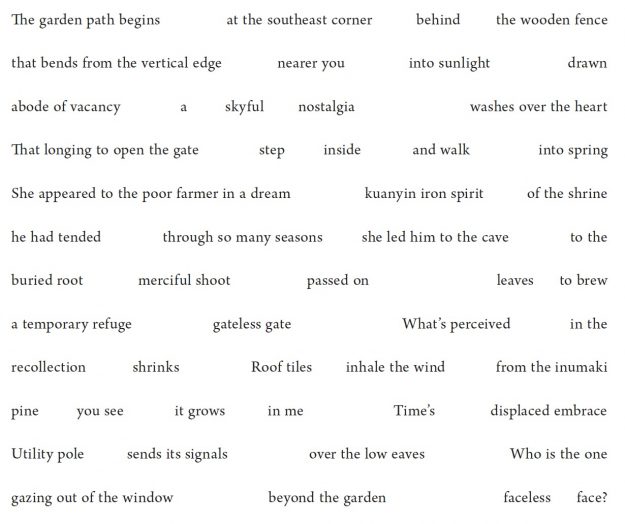
After that initial encounter, words and lines surfaced in my mind out of Kazumi’s drawings. Thoughts bound to no single narrative, no single theme, image opening a way into a world of connotations wheeling around the icon of home as presence and absence. Worried I would be using her private childhood memories and dreams for my own nefarious sanctifications, I asked Kazumi how she felt about the possible conjunction of words with her pictures. Instead of spitting in my face she encouraged me to continue. We talked more about the drawings and her family history. Was there a way to conceptualize the drawings the way Tōru Takemitsu conceptualized the water dreaming in that Papunya painting? Could the poems be a gift to the drawings the way poetry is a gift to words? What transubstantiated through the writing formed a loose renga, using Kazumi’s pictures as a visual linkage between each verse—each image a verse unit—so that the end of one poem foretells the image that follows it while each poem dwells on the image before it. As with Shitao’s album, the drawings and poems of our little book look for a paradoxical way home, when return is an impossibility.
At the heart of No Home Go Home / Go Home No Home is Kazumi’s mother, a longtime devotee of Tenrikyo, a religion strongly influenced by Shintoism and Buddhism. Only a few decades younger than Mormonism, Tenrikyo originated in the 19th century through the teachings of a peasant woman, Nakayama Miki, whose revelations of Tenri-O-no-Mikoto are recorded in her Ofudesaki (Tip of the Writing Brush). Tenrikyo tells us that the body is a thing lent, a thing borrowed from God the Parent, and so through hinokishin, or daily service, one can awaken the divine intention within and attain the Joyous Life.
Divine intention. Divine transposition: what the illustrious dice-throwing French poet of a distant century felt to be the “spiritual task” of poetry in its movement from fact to ideal through the apperception of relations and vital rhythm, “each soul a melody renewed.” Master Hiroaki Sato, generous and melodic soul, has contributed the Japanese translations to the poems to complete the album’s circle—home-no-home, from line to image to line, crossing the ocean back to the place of the Mother’s tongue. Not long after we completed the album, Kazumi’s mother passed away and her house in Osaka—the house Kazumi grew up in, the house you see here—was bulldozed. Whatever ideal of the whole the poem still reaches for, whatever transposition of language and experience and vision, endures through the memory space of shadows and light, here set in traces of tea and ink, pictures and words.
–Jeffrey Yang


[Nest. 10 x 10 inches. Irish breakfast tea on paper.]
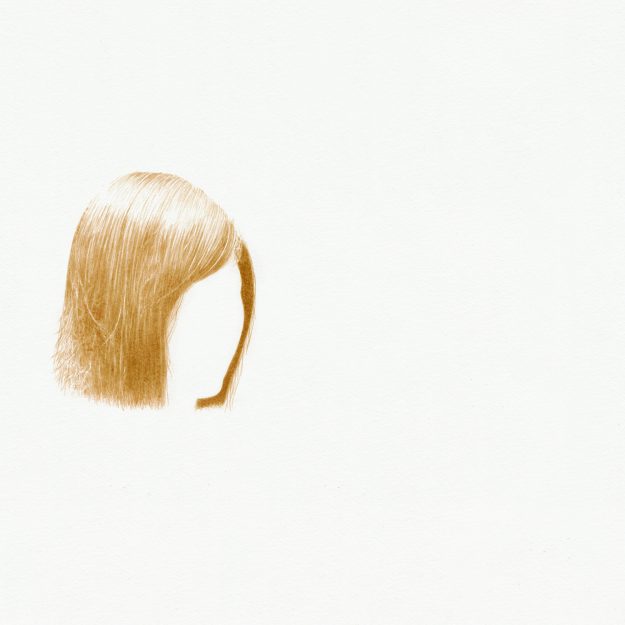
[Girl. 10 x 10 inches. Oolong tea on paper.]


[Sunflower. 10 x 10 inches. Sabbathday Lake Shaker chamomile tea, green tea, Earl Grey tea on paper.]


[Mother. 10 x 10 inches. Houji tea on paper.]
♦
Jeffrey Yang (with drawings by Kazumi Tanaka), excerpts from “No Home Go Home / Go Home No Home” from Line and Light: Poems. Copyright © 2022 by Jeffrey Yang. Drawings copyright © by Kazumi Tanaka. Reprinted with the permission of The Permissions Company, LLC on behalf of Graywolf Press, Minneapolis, Minnesota, graywolfpress.org.

Thank you for subscribing to Tricycle! As a nonprofit, we depend on readers like you to keep Buddhist teachings and practices widely available.
This article is only for Subscribers!
Subscribe now to read this article and get immediate access to everything else.
Already a subscriber? Log in.