Powerful Kundalini Yoga for Beginners: Complete Guide (2026)
Kundalini yoga for beginners is a dynamic practice combining specific postures (asanas), breathing techniques (pranayama), chanting (mantras), and meditation to […]
 UsenB
UsenB
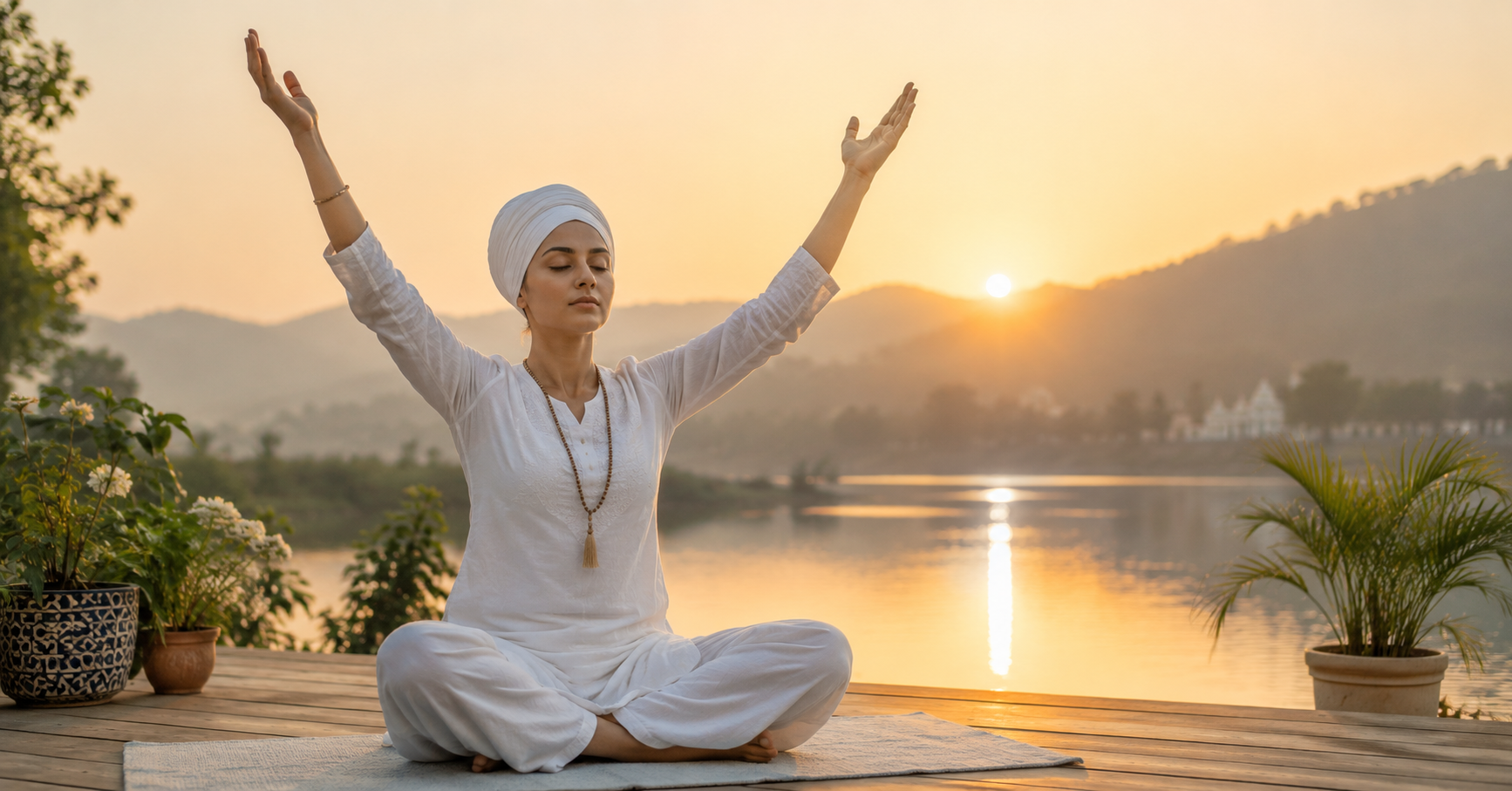
Kundalini yoga for beginners is a dynamic practice combining specific postures (asanas), breathing techniques (pranayama), chanting (mantras), and meditation to awaken dormant spiritual energy at the base of the spine. Unlike other yoga styles, kundalini focuses on moving energy through the seven chakras to achieve heightened awareness and spiritual awakening. Beginners can safely practice with proper guidance, starting with simple kriyas (sequences) that prepare the body and mind.
You’ve heard whispers about kundalini yoga—the “yoga of awareness,” the practice that promises profound spiritual transformation. Maybe you’ve seen practitioners in white turbans, heard about mysterious energy rising up the spine, or read about intense experiences that sound equal parts fascinating and intimidating.
You’re curious. But you’re also wondering: What exactly is kundalini yoga? Is it safe? Can a complete beginner start this practice?
Here’s what you need to know: kundalini yoga for beginners is accessible, practical, and doesn’t require years of preparation or spiritual mastery. While it’s often called the most powerful form of yoga, it’s also systematic and scientific—a precise technology for consciousness that anyone can learn.
This comprehensive guide demystifies kundalini yoga, explaining exactly what it is, how it differs from other yoga styles, what happens in your body and mind, and how to begin safely. You’ll learn five beginner-friendly practices you can start today, understand the science behind the mysticism, and discover whether this transformative practice is right for you.
What Is Kundalini Yoga? Understanding the Basics
Kundalini yoga is an ancient spiritual practice that remained secret for thousands of years, passed only from master to student. In 1968, Yogi Bhajan brought it to the West, making these powerful techniques available to everyone.(1)
Kundalini literally means “coiled snake” in Sanskrit—referring to dormant spiritual energy believed to rest coiled at the base of the spine. The practice aims to awaken this energy and guide it upward through the seven chakras (energy centers) along the spine, culminating in spiritual enlightenment and expanded consciousness.
Unlike physical-focused yoga styles, kundalini yoga is designed to deliver an experience. It combines:
Dynamic and static postures Specific breathing patterns Hand positions (mudras) Body locks (bandhas) Chanting and mantras Meditation techniques Deep relaxationThe goal: Rapid personal transformation, heightened awareness, and connection to your highest self.
How Kundalini Differs from Other Yoga Styles
| Primary Focus | Energy and consciousness | Physical alignment and strength |
| Pace | Varied (rapid repetitions + stillness) | Slower, flowing transitions |
| Breathing | Specific pranayama techniques (Breath of Fire) | Ujjayi breath or natural breathing |
| Sequences | Fixed kriyas with precise timing | Flexible sequencing |
| Mantras | Essential component | Optional or absent |
| Goal | Spiritual awakening | Physical health and flexibility |
| Intensity | Mentally and energetically challenging | Physically challenging |
| Practice Wear | Often white clothing, head covering | Any comfortable athletic wear |
In short: If hatha yoga is like stretching with awareness, kundalini is like plugging into an energetic power source.
The Science Behind Kundalini: What Actually Happens
Neurological Effects
Modern neuroscience validates many kundalini experiences:
Brain Wave Changes: Kundalini meditation shifts brain activity from beta (active thinking) to alpha and theta waves (deep relaxation, heightened intuition). Studies show experienced practitioners can achieve gamma wave states associated with peak performance and insight.
Prefrontal Cortex Activation: Kundalini practices strengthen the brain’s executive function center, improving decision-making, emotional regulation, and self-awareness.
Nervous System Balance: The combination of dynamic movement and deep relaxation activates both sympathetic (energizing) and parasympathetic (calming) nervous systems, creating resilience to stress.
Endocrine System Stimulation
Pituitary and Pineal Glands: Many kundalini meditations specifically target the “master glands” that regulate all other hormones. This explains reported improvements in mood, sleep, and overall vitality.
Hormonal Balance: Regular practice has been shown to normalize cortisol levels, increase DHEA (longevity hormone), and optimize thyroid function.
The Energy Body Perspective
From a yogic viewpoint, kundalini works with subtle energy:
Chakras: Seven energy centers along the spine, each governing specific physical, emotional, and spiritual functions.
Nadis: 72,000 energy channels throughout the body (comparable to meridians in Chinese medicine).
Prana: Life force energy that animates all living beings.
Kundalini energy: When awakened, it purifies nadis, balances chakras, and expands consciousness.
Scientific correlation: While Western science doesn’t have instruments to measure prana directly, the physiological effects (improved nervous system function, hormone balance, neuroplasticity) are measurable and documented.
What to Expect in Your First Kundalini Class
The Typical Class Structure
Kundalini classes follow a specific format:
1. Tuning In (3-5 minutes)
Sitting in Easy Pose Chanting the Adi Mantra: “Ong Namo Guru Dev Namo” (I bow to the Creative Wisdom, I bow to the Divine Teacher within) Purpose: Creates sacred space, connects to lineage, centers the mind2. Pranayama or Warm-Up (5-10 minutes)
Breath work to prepare the nervous system Simple spinal flexes or cat-cow movements Purpose: Activates energy flow, warms the body3. Kriya (20-45 minutes)
A specific sequence of postures, breath, and sound Each kriya has a particular purpose (stress relief, emotional balance, physical healing, etc.) Exercises are timed precisely Purpose: The main transformative work4. Relaxation (5-15 minutes)
Deep rest, usually lying on back (Savasana) Integration time for the energy work Purpose: Allows the nervous system to recalibrate5. Meditation (5-20 minutes)
Seated meditation with specific breath, mantra, or mudra Purpose: Deepens awareness, stabilizes the mind6. Closing (2-3 minutes)
Song, blessing, or silent reflection Three long “Sat Nam” chants (Truth is my identity) Purpose: Seals the practice, brings awareness back to daily lifeTotal time: 60-90 minutes typically
What You Might Feel During Practice
Physical Sensations:
Shaking or trembling (energy moving, releasing tension) Heat in the body, especially along the spine Tingling in hands, feet, or crown of head Temporary dizziness (usually during breath work) Intense muscle burn during repetitive exercisesEmotional Releases:
Unexpected tears or laughter Waves of emotion without obvious cause Feeling of lightness or heaviness Deep peace or temporary restlessnessEnergetic Experiences:
Sense of energy moving upward Feeling of expansion or dissolving boundaries Heightened sensory perception Inner visions or colors (with eyes closed) Deep stillness or profound silenceMental States:
Quiet mind, absence of thoughts Rapid stream of insights or realizations Temporary confusion or mental fog Extreme clarity and focus Altered sense of timeAll of these are normal. Kundalini is designed to create experiences that break through habitual patterns. Trust the process and stay present.
Is Kundalini Yoga Safe for Beginners?
Understanding the Concerns
Kundalini yoga has a reputation for intensity, and some practitioners report overwhelming experiences. Let’s address the fears honestly:
The myths:
“Kundalini awakening is dangerous and can cause psychological breaks” “You need years of preparation before practicing kundalini” “Only highly spiritual people should attempt it”The reality:
Traditional kundalini yoga as taught by Yogi Bhajan is safe and systematic The practices are designed to gradually prepare your nervous system Millions of people worldwide practice safely without adverse effects Problems typically arise from improper technique or pushing too hard too fastSafety Guidelines for Beginners
DO: ✓ Start with beginner-level kriyas
✓ Follow prescribed timing and repetitions
✓ Practice with a qualified teacher initially
✓ Honor your body’s limits
✓ Stay hydrated
✓ Allow adequate rest between practices
✓ Practice on an empty or light stomach
✓ Create a calm, dedicated practice space
DON’T: ✗ Rush through the sequence
✗ Skip the warm-up or relaxation
✗ Practice while intoxicated
✗ Force intense breath work if you have respiratory issues
✗ Practice advanced techniques without foundation
✗ Compare your experience to others
✗ Ignore red flags from your body
When to Avoid or Modify Practice
Consult a healthcare provider first if you have
Severe mental health conditions (schizophrenia, bipolar disorder, severe PTSD) Epilepsy or seizure disorders Heart conditions High or very low blood pressure Recent surgery or acute injuries Pregnancy (many practices need modification)Modifications available: Most conditions don’t prevent practice—they require adjustments. A qualified teacher can guide appropriate modifications.
The Seven Chakras: Your Energy Map
Understanding chakras helps make sense of kundalini experiences:
1. Muladhara (Root Chakra)
Location: Base of spine
Element: Earth
Governs: Survival, security, grounding, basic needs
When balanced: Feeling safe, stable, present
Mantra: LAM
Color: Red
2. Svadhisthana (Sacral Chakra)
Location: Lower abdomen, below navel
Element: Water
Governs: Creativity, sexuality, pleasure, emotions
When balanced: Fluid emotions, creative expression, healthy relationships
Mantra: VAM
Color: Orange
3. Manipura (Solar Plexus Chakra)
Location: Upper abdomen, stomach area
Element: Fire
Governs: Personal power, confidence, will, digestion
When balanced: Strong sense of self, clear boundaries, decisiveness
Mantra: RAM
Color: Yellow
4. Anahata (Heart Chakra)
Location: Center of chest
Element: Air
Governs: Love, compassion, connection, forgiveness
When balanced: Open heart, empathy, unconditional love
Mantra: YAM
Color: Green
5. Vishuddha (Throat Chakra)
Location: Throat
Element: Ether/Space
Governs: Communication, truth, self-expression
When balanced: Clear communication, authentic voice, speaking truth
Mantra: HAM
Color: Blue
6. Ajna (Third Eye Chakra)
Location: Between eyebrows
Element: Light
Governs: Intuition, insight, imagination, wisdom
When balanced: Clear perception, strong intuition, vision
Mantra: OM
Color: Indigo
7. Sahasrara (Crown Chakra)
Location: Top of head
Element: Thought/Consciousness
Governs: Spiritual connection, enlightenment, unity
When balanced: Sense of connection to all, spiritual awareness, inner peace
Mantra: Silent or AUM
Color: Violet/White
How kundalini works: The practice awakens energy at the root and guides it upward through each chakra, clearing blockages and expanding consciousness at each level.
5 Beginner Kundalini Practices to Start Today
Practice 1: Breath of Fire (Agni Pran)
What it is: The foundational kundalini breathing technique—rapid, rhythmic breathing through the nose.
Benefits:
Energizes entire system Clears mind Strengthens nervous system Releases toxins Builds core strengthHow to practice:
Sit in Easy Pose (cross-legged) with straight spine Place hands on knees Begin with a few deep breaths Start rapid breathing: forceful exhales through nose, passive inhales Keep mouth closed, breathe only through nose Focus on pumping navel point in and out with each breath Chest stays relatively still—movement comes from belly Start with 30 seconds, gradually build to 1-3 minutes End with deep inhale, hold briefly, exhale slowlyWhat to expect: Initial dizziness is common. If you feel lightheaded, slow down or stop. With practice, you’ll build capacity.
Contraindications: Avoid if pregnant, menstruating heavily, have heart conditions, high blood pressure, or vertigo. Practice Long Deep Breathing instead.
Practice 2: Spinal Flexes (Cat-Cow in Easy Pose)
What it is: Rhythmic flexing and extending the spine while seated.
Benefits:
Wakes up spine and central nervous system Balances energy flow Improves flexibility Massages internal organs Prepares body for deeper practiceHow to practice:
Sit in Easy Pose (cross-legged) Grab shins or knees with both hands Inhale: Arch spine forward, lift chest, look slightly up (Cow) Exhale: Round spine backward, tuck chin, pull navel in (Cat) Move with the breath—one movement per breath Create a wave-like motion through the spine Keep arms straight, movement comes from spine and pelvis Continue for 1-3 minutes End by inhaling in neutral position, hold breath briefly, exhale and relaxVisualization: Imagine energy flowing up your spine with each inhale, distributing through your body with each exhale.
Modification: If cross-legged is uncomfortable, sit on a cushion or chair.
Practice 3: Ego Eradicator
What it is: Arms held in a V-shape overhead with specific breath work.
Benefits:
Opens lungs Balances brain hemispheres Clears negativity Strengthens electromagnetic field Builds willpowerHow to practice:
Sit in Easy Pose with straight spine Curl all fingers into palms, extend thumbs straight up Raise arms to 60-degree angle (forming a V) Eyes closed, focused at third eye point (between eyebrows) Begin Breath of Fire Hold for 1-3 minutes (start with 1 minute) To finish: Inhale deeply, touch thumbs together overhead, hold breath 10 seconds Exhale and slowly lower armsMental focus: “I am releasing what no longer serves me.”
What you’ll feel: Intense shoulder burn is normal—this is part of the transformation. Stay with it if possible, but don’t force beyond your capacity.
Practice 4: Sat Kriya (Basic Version)
What it is: A fundamental kundalini practice combining posture, breath, mantra, and energy focus.
Benefits:
Awakens kundalini energy Strengthens sexual system Improves digestion Channels energy up the spine Balances all chakrasHow to practice:
Sit on heels (Rock Pose) or in Easy Pose Interlace fingers except index fingers, which point straight up Raise arms overhead, keeping elbows straight Men: right thumb over left; Women: left thumb over right Begin chanting “SAT NAM” (rhymes with “but mom”) Pull navel in sharply on “SAT” Relax navel on “NAM” Continue rhythmically for 3 minutes (beginners start with 1-2 minutes) To finish: Inhale deeply, hold breath, pull in all muscles from buttocks to neck (Root Lock), hold 5-10 seconds Exhale, relax arms down Immediately lie on back and relax for at least twice as long as you practicedImportant: The relaxation after is NOT optional—this is when integration happens.
Progression: Work up to 11 minutes daily for profound transformation over 40 days.
Practice 5: Simple Meditation for Beginners
What it is: Basic kundalini meditation using breath and mantra.
Benefits:
Calms mind Develops concentration Opens intuition Reduces anxiety Creates inner peaceHow to practice (Sa Ta Na Ma Meditation):
Sit comfortably with straight spine Rest hands on knees in Gyan Mudra (thumb and index finger touching) Close eyes and focus at third eye Mentally chant: SA TA NA MA (means “Infinity, Life, Death, Rebirth”) As you chant each syllable, touch thumb to each finger: SA: Thumb to index finger TA: Thumb to middle finger NA: Thumb to ring finger MA: Thumb to pinky finger Visualize the sound flowing in an “L” shape: entering through crown, down to third eye, out through crown Continue for 5-11 minutes To finish: Inhale deeply, exhale completely, take a few natural breaths Stretch arms overhead, then slowly bring them downPractice tip: If the mind wanders (it will), gently bring attention back to the finger movements and mantra.
Progression schedule:
Weeks 1-2: 5 minutes daily Weeks 3-4: 7 minutes daily Weeks 5+: 11 minutes dailyCreating Your Home Practice Routine
Your First 40 Days: The Beginner’s Journey
In kundalini, 40 days is considered the minimum time to create lasting change. Here’s a realistic beginner routine:
Daily Practice (20-30 minutes):
Tuning In (2 minutes):
Sit comfortably Chant “Ong Namo Guru Dev Namo” 3 times Take 3 deep breathsWarm-Up (5 minutes):
Spinal Flexes: 2 minutes Shoulder Shrugs: 1 minute Neck Rolls: 1 minute (slow and gentle) Cat-Cow on hands and knees: 1 minuteKriya (7-10 minutes):
Choose ONE of the practices above and stick with it for 40 days Week 1: Breath of Fire (1 minute) or Ego Eradicator (1 minute) Week 2-6: Sat Kriya (gradually increase from 3 to 11 minutes)Relaxation (5-7 minutes):
Lie on back, arms at sides, palms up Let go completely Observe sensations without judgmentMeditation (5-11 minutes):
Sa Ta Na Ma meditation Start with 5 minutes, build to 11Closing (1 minute):
Sit up slowly Bring palms together at heart Chant “Sat Nam” 3 times Set an intention for your dayBest practice times:
Morning: 4-7 AM (traditional “ambrosial hours”)—deepest meditation Evening: Before dinner—releases day’s stress Anytime: Consistency matters more than timingCreating Your Sacred Space
Minimum requirements:
Quiet area where you won’t be disturbed Yoga mat or sheepskin (natural fibers preferred) Cushion for sitting (optional but helpful)Enhanced environment:
White or neutral wall space to face Candles (represents light and focus) Natural elements (plant, crystal, water) Inspirational image or altar Comfortable temperatureDress code:
Comfortable, non-restrictive clothing Natural fibers preferred (cotton, linen, wool) White is traditional (reflects all light and expands aura) but not required Head covering (natural fiber fabric or turban) is traditional—it’s believed to contain energyWhy these details matter: Kundalini is about energy management. Small details that might seem superficial actually optimize your energetic field.
Common Experiences and How to Navigate Them
“I Can’t Stop Crying During Practice”
What’s happening: Kundalini releases deeply stored emotions. Your body is purging what you’ve been holding.
What to do:
Let it flow—don’t suppress Continue the practice if possible Extra rest after practice Journal about what’s surfacing Be gentle with yourselfThis is healing: Emotions moving through you means they’re leaving you.
“I Feel Agitated/Angry After Practice”
What’s happening: You’ve stirred up energy but haven’t fully processed it, or you pushed too hard.
What to do:
Ensure adequate relaxation time (at least 5 minutes) Add calming practices (Long Deep Breathing, gentle walking) Take a cool shower Reduce intensity—do 50% less next time Ground yourself: eat root vegetables, walk barefootPrevention: Always respect the timing. If instructions say 3 minutes, don’t do 10.
“Nothing Happens—I Don’t Feel Anything”
What’s happening: Your mind is either highly resistant or you’re blocking subtle perception.
What to do:
Keep practicing—sometimes results are cumulative Focus more on technique than outcome Notice small changes: sleep quality, patience, subtle shifts Try different practices—everyone responds differently Be patient—transformation isn’t always dramaticRemember: Not everyone has intense experiences. Quiet, gradual change is equally valid and often more sustainable.
“I Had a Weird/Intense Vision or Experience”
What’s happening: Kundalini can open perception beyond ordinary awareness. You’re accessing deeper layers of consciousness.
What to do:
Don’t grasp or try to recreate it Don’t assign too much meaning immediately Journal what you experienced Continue regular practice Discuss with a teacher if it feels important Stay grounded in daily lifePerspective: Visions and experiences are signposts, not destinations. The real transformation is how you live your life.
Kundalini Yoga vs. Other Spiritual Practices
Comparison Chart
| Kundalini Yoga | Rapid (weeks-months) | Moderate-High | Very High | Moderate (requires instruction) | Highly structured |
| Hatha/Vinyasa Yoga | Gradual (months-years) | Moderate-High | Low-Moderate | High (many classes available) | Flexible |
| Meditation | Gradual (months-years) | Low | High | High (easy to start) | Simple but challenging |
| Tai Chi | Gradual (years) | Low | Moderate | Moderate | Structured |
| Breathwork | Moderate (months) | Low-Moderate | Moderate-High | High | Varies by method |
Kundalini’s unique proposition: It’s designed for rapid transformation. Yogi Bhajan called it a “rocket ship to consciousness”—you get results faster, but the ride is more intense.
Finding a Teacher and Community
Why a Teacher Matters
While you can begin with home practice, a qualified teacher is invaluable:
Teachers provide:
Proper technique instruction Energy management guidance Personalized modifications Experience interpreting your process Support through challenges AccountabilityRed flags in teachers:
Promise of magical powers or quick enlightenment Inappropriate guru worship or dependency Sexual misconduct (unfortunately too common) Pressure to commit money or time Isolation from other support systemsGreen flags:
KRI (Kundalini Research Institute) certification Transparent about their own practice and training Emphasize your inner teacher Create safe, respectful boundaries Encourage questions and critical thinkingFinding Classes
Search terms:
“Kundalini yoga near me” “Kundalini yoga beginner class [your city]” “3HO kundalini yoga studio” (3HO is Yogi Bhajan’s organization)Online resources:
3HO.org (largest kundalini community) Kundalini Yoga classes on YouTube (Spirit Voyage, Brett Larkin, The Yoga People) Ra Ma TV (online subscription platform)What to expect in class cost:
Drop-in: $15-30 Monthly unlimited: $100-200 Online classes: Often free or $10-20/monthThe 40-Day Personal Transformation Practice
Why 40 Days?
In yogic science, specific timeframes create different levels of change:
40 days: Breaks a habit, establishes new pattern 90 days: Confirms new habit, integrates into lifestyle 120 days: The new way becomes who you are 1000 days: MasteryFor beginners: Commit to 40 days of one practice.
Choosing Your First 40-Day Kriya
For stress and anxiety:
Sat Kriya Meditation for Stress Relief Sodarshan Chakra Kriya (advanced—work up to this)For confidence and personal power:
Ego Eradicator Nabhi Kriya (core strength) Warrior pose sequencesFor emotional healing:
Heart-opening kriyas Venus Kriya sequences Meditation for Emotional BalanceFor mental clarity:
Sa Ta Na Ma meditation Kirtan Kriya Tratakam (candle gazing)Beginner recommendation: Start with Sat Kriya or Sa Ta Na Ma meditation—both are complete practices that work on all levels.
Tracking Your Journey
Keep a practice journal:
Date and time of practice Which kriya you did How long you practiced Physical sensations Emotional states Mental clarity Any insights or realizations Challenges you faced Progress you noticeWeekly review: Look back at the week. What patterns emerge? What’s shifting?
Celebrate milestones: Every 10 days, acknowledge your commitment.
Integration: Living the Practice Off the Mat
The Real Goal
Kundalini yoga isn’t about perfecting postures or having mystical experiences. The real measure of progress is how you show up in daily life:
Signs your practice is working:
You respond to stress differently You notice space between impulse and action Relationships improve You feel more authentic Decision-making becomes clearer You sleep better Physical health improves You feel more connected to purpose Compassion naturally increases Life flows more easilyThis is the real awakening: Not dramatic visions, but living with more presence, peace, and power.
Daily Integration Practices
Morning:
Practice before the day begins Cold shower (stimulates nervous system, builds resilience) Healthy breakfast Set intention for the dayThroughout the day:
Pause for 1-minute breathing breaks Notice when you’re reactive—return to breath Chant “Sat Nam” silently as you walk Stay hydrated Take technology breaksEvening:
Light dinner 2-3 hours before bed Evening practice or gentle stretching Reflect on the day without judgment Gratitude practice Early to bed (10 PM is ideal for deep rejuvenation)Advanced Concepts (For After You’ve Started)
The 10 Bodies
Kundalini yoga works with 10 bodies, not just the physical:
Soul Body Negative Mind (protective) Positive Mind (expansive) Neutral Mind (meditative) Physical Body Arc Line (halo/aura) Auric Body (electromagnetic field) Pranic Body (energy body) Subtle Body (finesse) Radiant Body (royal presence)Why this matters: Different practices strengthen different bodies. This is why kundalini is so comprehensive—it works on all 10 dimensions of your being.
Naad Yoga: The Science of Sound
Mantra isn’t just spiritual—it’s precise tongue placement and sound vibration:
How mantras work:
Specific tongue positions on the palate stimulate meridian points These points connect to glands and organs Vibration of sound creates neurological patterns Repetition creates new neural pathwaysExample: “Sat Nam”
Tip of tongue hits palate behind teeth on “Sat”—stimulates hypothalamus Tongue drops on “Nam”—completes circuit Result: Balances brain hemispheres, calms mindThis is why precision matters: It’s not just affirmation—it’s scientific technology.
CONCLUSION
You’ve reached the end of this guide, but you’re standing at the beginning of something profound.
Kundalini yoga for beginners isn’t just another wellness trend or fitness fad. It’s an ancient technology for consciousness—precise, powerful, and now available to you.
You don’t need to be flexible, spiritual, or special. You just need to be willing to sit down, breathe intentionally, and show up for yourself consistently.
The practices in this guide have transformed millions of lives over thousands of years. They’ve helped people break through limitations, heal deep wounds, discover hidden potential, and live with more presence, power, and peace.
They can do the same for you.
But none of this matters until you actually practice.
Start today. Right now, if possible. Just one practice. Just five minutes. Set a timer, sit down, and begin Breath of Fire or the Sa Ta Na Ma meditation.
Notice how you feel afterward. That small shift is the beginning.
Then come back tomorrow. And the next day. And the next.
Commit to 40 days. Track your progress. Watch what unfolds.
Your kundalini isn’t somewhere far away, waiting to be earned. It’s already there, coiled at the base of your spine, waiting to be awakened.
The question isn’t whether you can do this. The question is: will you?
FAQ
Q1: Is kundalini yoga dangerous for beginners?
Ans: No, kundalini yoga for beginners is safe when practiced correctly with proper guidance. While it’s powerful, the traditional sequences taught by certified instructors are designed for gradual awakening. Problems arise only from improper technique, pushing too hard, or skipping essential elements like warm-up and relaxation. Start slowly, follow instructions precisely, and practice with awareness.
Q2: How long does it take to awaken kundalini energy?
Ans: Kundalini awakening is a gradual process, not a single event. Most beginners experience subtle energy shifts within weeks—improved mood, clarity, or vitality. Deeper experiences develop over months and years of consistent practice. The goal isn’t forced awakening but steady transformation. Trust your own pace; dramatic experiences aren’t necessary for profound benefits.
Q3: Can I practice kundalini yoga at home without a teacher?
Ans: Yes, you can begin with basic practices at home using quality resources, but working with a qualified teacher is highly recommended, especially initially. A teacher ensures proper technique, provides guidance through experiences, and offers personalized modifications. Start with beginner videos and guides, then seek live instruction to deepen your practice safely and effectively.
Q4: What’s the difference between kundalini yoga and regular yoga?
Ans: Kundalini focuses on energy work and consciousness expansion through specific kriyas (sequences), intense breathwork, mantras, and meditation, while most yoga styles emphasize physical postures and flexibility. Kundalini classes follow a fixed structure with precise timing, and practitioners often wear white. The goal is spiritual awakening rather than primarily physical fitness, though both provide physical benefits.
Q5: Do I need to be spiritual or religious to practice kundalini yoga?
Ans: No, kundalini yoga is a technology for consciousness that works regardless of belief system. While it has spiritual roots, you can practice for purely practical benefits—stress reduction, mental clarity, physical health. Many practitioners are secular or integrate it with their existing beliefs. The techniques work physiologically and neurologically whether you embrace the spiritual framework or not.