Revealed: Most dangerous Tube stations as £3m paid out in personal injury claims
More than 4 million people travel on the London Underground network every day
 JimMin
The most dangerous Tube stations in London when it comes to injury have been revealed.
The new data shows more than 10,000 injuries were recorded on the London Underground over the past three years, with Transport for London (TfL) paying more than £3 million in personal injury claims in a single year.
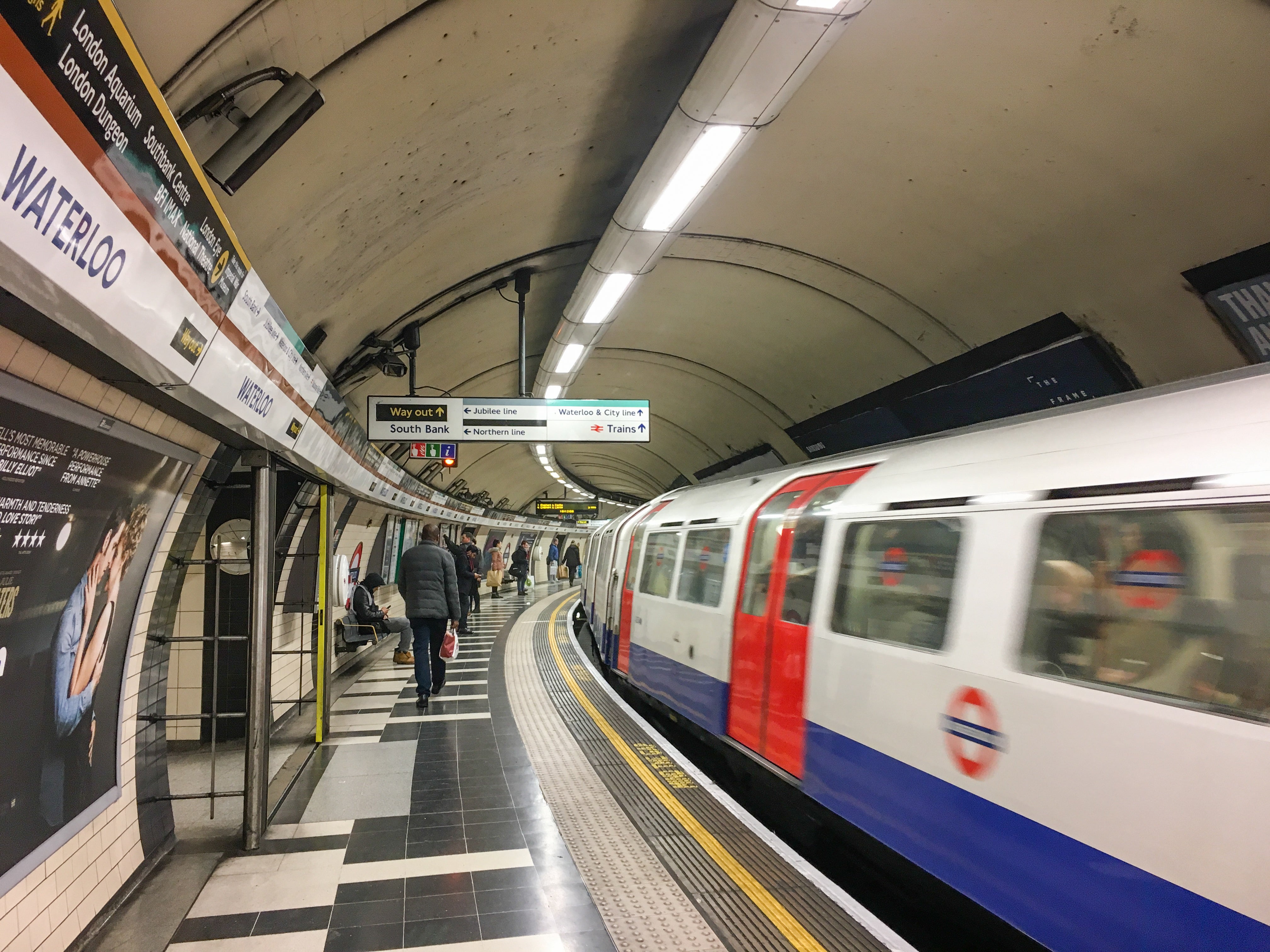
The station with the largest number of injury reports was found to be Waterloo, which recorded 471 incidents between 2022 and 2025. This revelation may not be considered surprising, since data published by TfL last year ranked it as the busiest Tube station, while it is also part of the largest railway station in the UK. More than 4 million people travel on the London Underground network every day.
Following closely behind is King’s Cross St Pancras, which reported 470 injuries across the same three-year period, and has been ranked by TfL as the capital’s second busiest Tube station.

In third place, with 375 injury reports, is London Bridge, another busy station thanks to its location in one of the city’s bustling tourist areas.
The top five also includes Euston – a significant entry point to the city due to its overground railway station – which filed 323 reports, as well as Baker Street, one of the most historic stations on the Tube network, which reported 320 injuries during the three years.
Overall, the new data, which was obtained by Personal Injury Solicitors London via Freedom of Information requests, shows that 3,275 injuries were reported across the Tube network during 2022-23, with 3,631 logged in 2023-24 and 3,567 in 2024-25 – a total of 10,473 injuries over three years.
According to the findings, TfL paid out £3,209,421 during 2024-25 – more than twice the amount paid out during the previous two years combined – for 325 injury claims logged last year alone.
By contrast, during 2023-24, TfL shelled out £892,128 for 333 personal injury claims lodged that year, while in 2022-23, the sum of £473,894 was paid out in compensation – a total of £1,366,022 across the two years.
An expert has warned the figures amount to a “concerning” trend.
Patrick Mallon, senior solicitor at Personal Injury Solicitors London, said: “The sharp rise in compensation payouts by TfL is a concerning trend.
“Thousands of people use these services each day to get about, and it's important that they're protected from the risk of harm when doing so. An injury can cause major disruption to a person's life, preventing them from the likes of working and socialising.
“What's worse about these figures is that many of these incidents, such as slips and falls, can be avoided if proper health and safety procedures are followed.”
The claims received by TfL covered a wide range of injuries, with the most common category being slips, trips and falls, which accounts for 6,847 of the transport network’s injury reports between 2022-23 and 2024-25.
Another significant cause is recorded by TfL as PTI, or ‘platform train interface’, which refers to navigating the space between the platform and the train – hence the famous Tube warning of “mind the gap”. Negotiating PTI involves potential hazards such as tripping on the step, falling into the gap between the train and the platform, or even falling onto the track itself. It resulted in 1,336 injury reports over the three years.

The data also revealed which parts of the London Underground are the most dangerous.
People were most likely to become injured on escalators, where a total of 4,585 injuries were reported to have taken place.
Stairs (1,382), station platforms (1,274) and the booking hall (768) are among the other top dangerous areas.
TfL has said it is taking “targeted action” to address safety issues.
A spokesperson said: “The safety of our customers and staff is always our top priority and we have a comprehensive programme of work aimed at making travelling on our network even safer as we work towards the mayor’s aim of eliminating deaths and serious injuries from the transport network by 2041.
“We safely carry millions of Tube and Rail customers each day, and are working to become even safer through targeted action on higher risk areas such as boarding and alighting trains, or using stairs and escalators.”
In July 2025, Mayor of London Sadiq Khan reaffirmed his commitment to transport safety, stating it would be addressed in the upcoming Vision Zero Action Plan 2, which is due to be published early this year.
He told Mayor’s Question Time: “I am committed to Vision Zero and the elimination of all deaths and serious injuries from London’s transport network by 2041.”
The Independent has approached the mayor’s office for further comment.
























.jpg&h=630&w=1200&q=100&v=c0f97a310e&c=1)