Should I be concerned about shigella in Cape Verde? What you need to know as cases rise causing diarrhoea and fever
Exclusive: Recent reports of shigella outbreaks on the islands off the coast of West Africa have caused alarm among holidaymakers – but how worried do we really need to be? These are the facts and figures, as well as...
 KickT
KickT

A number of alarming news stories have broken over the past few months reporting cases of shigella among tourists who have just returned from holidays in Cape Verde.
The UK and EU health authorities have warned of a rise in cases of shigella, a bacteria that can cause severe diarrhoea, fever and stomach cramps,
Yet Cape Verde’s tourism minister is urging holidaymakers to continue visiting the islands, emphasising that they are safe and urging people to continue to enjoy the hot weather, beach resorts and cultural attractions.
The health authorities on the West African island have insisted the volume of cases is not enough to classify as an “outbreak” – the term used by European health authorities to describe the current situation.
The islands have become an increasingly popular tourist destination, with 1.2 million tourists visiting in 2025, almost 400,000 of which were British. So how worried should we really be?
Shigella is a very common cause of bacterial diarrhoea worldwide, with one US-based healthcare education platform, StatPearls, finding in 2025 that the estimated annual global incidence of shigellosis is 188 million cases. Approximately 164,000 cases result in death.
Some European authorities have reported a rise in cases in Cape Verde, leading the UK’s Foreign Office to advise those with an underlying health condition to speak to a healthcare professional before travelling.
What do health authorities say?
The European Centre for Disease Prevention and Control (ECDC) carried out a rapid risk assessment in 2022 during what it described as an outbreak of shigella in Cape Verde.
It reported that 95 travel-related cases were found in the UK between 22 November 2021 and 9 December 2022.
ECDC’s 2022 assessment report also stated that 10 EU/EEA countries, as well as the UK and the US, reported a total of 258 cases linked to recent travel to Cape Verde.
The UK Health Security Agency (UKHSA) released updated data, showing that 158 cases were reported since 1 October 2025. However, not all of these have been connected to Cape Verde. Some 118 cases reported travelling internationally – of which 112 travelled to Cape Verde, the majority to the Santa Maria and Boa Vista areas.
“These publications demonstrate that the number of cases of the particular strain of shigella that is associated with travel to Cape Verde was greater in the 2025 outbreak compared to the 2022 outbreak,” a UKHSA spokesperson told The Independent.
“The reactivation of the outbreak investigation in 2025 was initiated because we saw a greater than expected number of cases compared with the usual background level for the place and time where the outbreak has occurred.”
At the end of November 2025, five countries reported new increases in the number of cases infected with the outbreak strain to the ECDC, among travellers returning from Cape Verde, mainly observed during the period September/November 2025.
These countries include the UK (137), the Netherlands (8), France (21), Sweden (26) and Ireland (one), although not all of these cases were associated with international travel or travel to Cape Verde specifically.
The ECDC stated in its November report that the infections are primarily caused by a specific S. sonnei strain, “suggesting a common source, or a persistent route of transmission throughout the outbreak period”.
Shigella infections can spread by contact with contaminated faeces either directly through person-to-person transmission, or indirectly from food, water, or surfaces.
Some groups are more at risk than others, such as young children, people who have travelled abroad, men who have sex with men, and people who are experiencing homelessness.
The reports show affected travellers stayed in five-star, all-inclusive hotels located in the region of Santa Maria on the island of Sal or the island of Boa Vista.
The agency did, however, say the cause of infections has not been identified. Multiple modes of transmission are plausible, with the most likely being foodborne. The ECDC added that person-to-person transmission cannot be excluded, although further investigation would need to take place to confirm the cause.
In an updated report in March, the ECDC said that “the likelihood of travellers contracting shigella or other gastrointestinal pathogen infections when visiting the Santa Maria region in Cabo Verde is moderate, given that cases continue to be reported and the source of infection has not yet been identified”.
What does Cape Verde say?
When these statistics were put to the Cape Verde Institute of Public Health, it responded that “surveillance services have not confirmed these cases”, and “epidemiological surveillance has not detected any outbreak of shigellosis cases”.
The institute added that Cape Verdean authorities are occasionally detecting an increase in cases of diarrhoea in some hotels, “as is happening worldwide”.
“The private clinics in these hotels are conducting rapid tests that are not specific to shigella,” it said. “A new investigation using more tests that are reliable is currently underway.”
It concluded that “diarrhoea is a notifiable disease in Cape Verde, and no outbreaks have been detected”.
The high percentage of cases the European health authorities found among UK citizens could be attributed to the large volumes of tourists in Cape Verde arriving from the UK.
Dr José Luís Sá Nogueira, Cape Verde’s tourism minister, told The Independent that 1.2 million tourists visit Cape Verde each year, and of that number, 36 per cent, over 400,000, are from the UK.
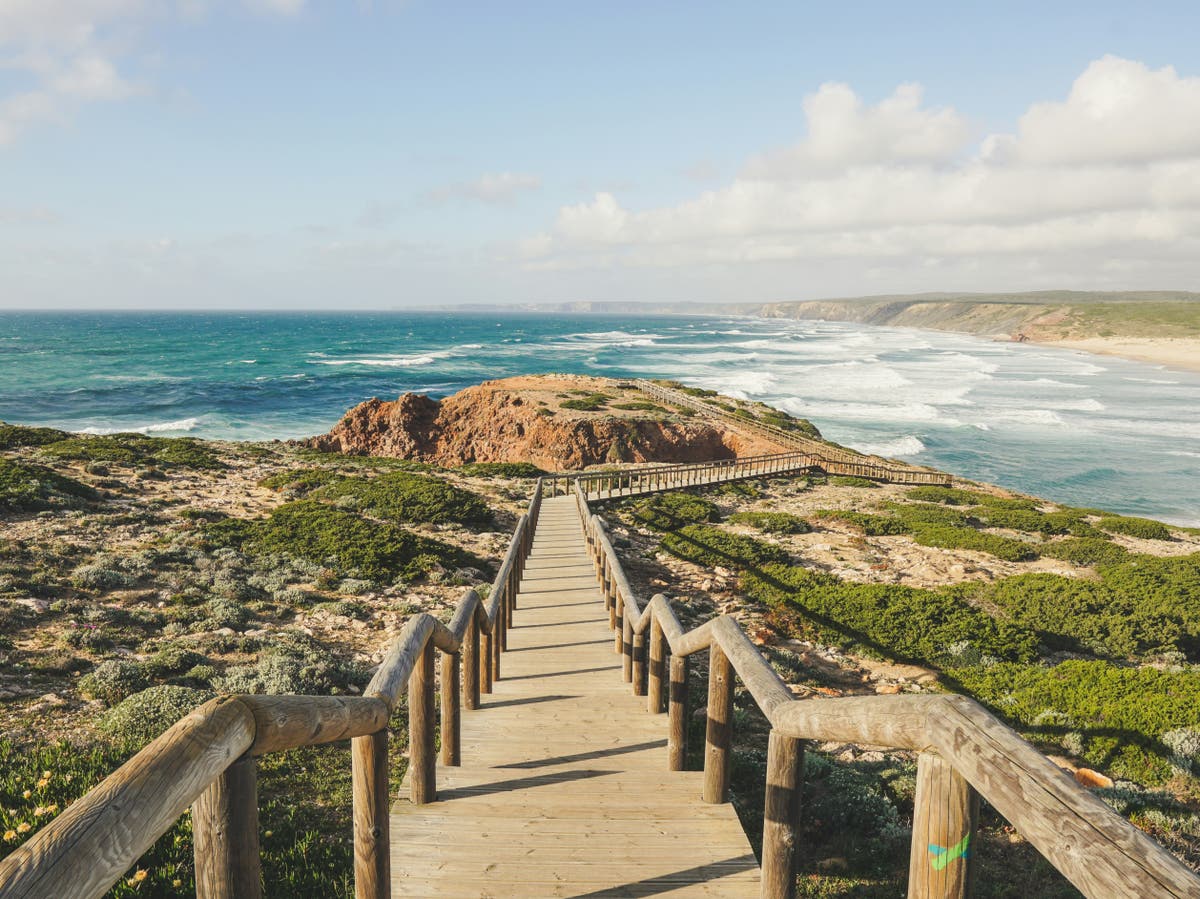
The West African islands have seen a huge increase in tourists visiting for its guaranteed winter sun, white sand beaches and five-star resorts.
The total number of tourists visiting the country grew by 39 per cent between 2022 and 2024. “We pride ourselves in a country that is as beautiful as it is safe – in every sense,” he said.
When asked if shigella and salmonella cases are a problem in Cape Verde, the tourism minister said: “There is no evidence that travel to Cape Verde is riskier than to other hot countries.
“As with travel anywhere away from your home, you need to take sensible precautions.”
The minister insisted that there have been no deaths caused by shigella. He said the deaths of four British holidaymakers after trips to Cape Verde coincided with the UK’s Foreign Office releasing a shigella case warning over the country, blurring the lines between the two.
While none of them tested positive for shigella or other pathogens, the four people, who also had underlying health conditions, showed symptoms of gastric illness.
“The newspaper reports four deaths, and we have found no evidence that any of those were caused by shigella,” Dr Sá Nogueira said. “Two of those named in the story did sadly pass away in Cape Verde, but this was attributed to other causes.”
The families members of the tourists who died criticised the healthcare provided in Cape Verde.
The son of Karen Pooley, 64, who died of various medical complications, told The Times: “We were not confident in the days leading up to Mum’s death that she was in a competent and up-to-standard medical facility.”
He added that his mother described the clinic as “a war zone” to him over the phone.
Yet Dr Sá Nogueira claimed that healthcare in Cape Verde is “generally very good” and “where provision is private, government oversight is robust and informed by international best practice”.
“Life expectancy in our country at 76 years compares favourably to the UK. Our healthcare provision is ranked higher in internationally recognised health indices than many other non-European tourist destinations popular with British tourists, including Morocco, Tunisia, and Egypt,” he added.
The tourism minister is asking visitors to continue holidaying on the islands. “We have ten islands that people can visit. There is so much to see and do, there is so much variety,” he said.
“Cape Verde is safe to visit. And, compared to many other similar sun and sand destinations, is probably safer.
“Wherever you go, you need to take sensible precautions as all the travel advisers recommend.”
Dr Richard Dawood, a travel medical specialist at Fleet Street Clinic, told The Independent that while on holiday, the focus is on prevention: “You need to use things like hand sanitiser, hand wipes, and pick your food more carefully. Make sure you're eating things that are freshly and thoroughly cooked.”
He said that approximately two-fifths of travellers will suffer from diarrhoea on their travels to hot countries, showing that getting sick while travelling abroad is not uncommon.
Dr Dawood added that he understands “these days, more than ever, when travel is so expensive, our leisure time is so precious that it [diarrhoea] can be highly disruptive.”
Read more: What travellers need to know about Shigella – doctor’s advice following cases in Cape Verde