The truth about those stealable little hotel toiletries and why they were replaced with refillable dispensers
Exclusive: Single-use hotel toiletries get extremely bad press and have even been banned in several U.S. states, but were loved by many travelers. A sustainability scientist from Ohio State University lays bare the reason behind the shift
 Lynk
Lynk

Single-use hotel toiletries have an image problem.
While seen as hygienic — they haven’t been used by previous guests — and luxurious (they’re often packed and taken home), they’ve been widely attacked as a scourge on the environment.
Social media users complain about them ballooning landfill sites, and lawmakers have stepped into the fray to help check them out of hotels permanently.
The U.S. states of California, New York, and Illinois have banned mini hotel toiletries and Washington is phasing in a prohibition that will come into effect in 2027 for larger hotels and 2028 for smaller properties.
Hotels themselves have been quick to agree that mini toiletries should be ousted. InterContinental Hotels Group and Marriott, for example, have pledged to end their reliance on them and switch to refillable dispensers.
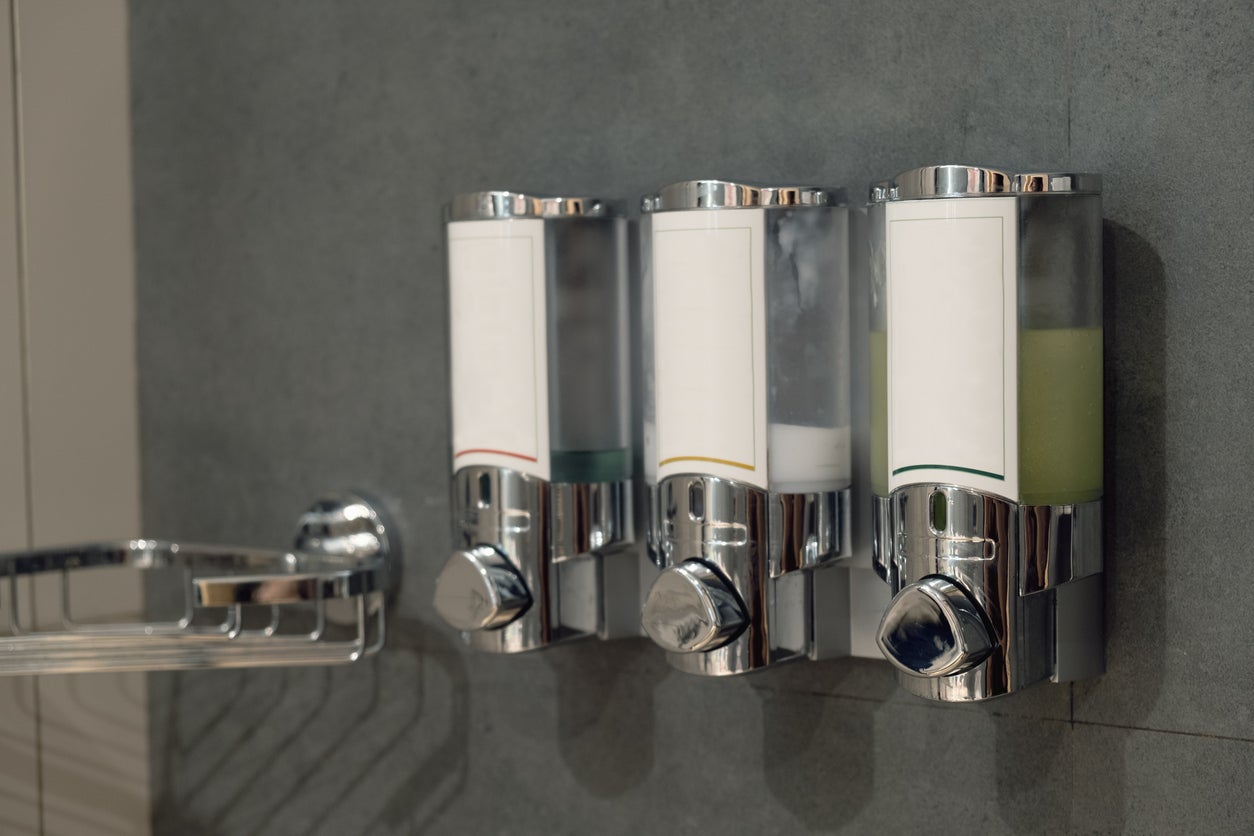
There’s certainly logic in play — Marriott has claimed it’s saving around 500 million mini bottles going to landfill each year, and Miguel Lobo Maia from international amenities supplier Groupe GM, told The Independent that the switch to refillables has lowered the carbon footprint of its operations.
He said: “Based on our internal carbon accounting, the introduction of large-format dispensers in France and Portugal, for example, has contributed to an estimated reduction of approximately 600 tonnes of CO2 equivalent, primarily through the elimination of single-use bottles and tubes and the associated reduction in material production and transport.”
But the science suggests that the conversation needs to be rebalanced — because mini hotel toiletries are nowhere near the biggest sustainability issue facing hotels.
We spoke to Assistant Professor Daniel B. Gingerich, from Ohio State University's Sustainability Institute, who argued that in terms of environmental benefit, switching to refillable dispensers barely moves the needle.
He remarked: “Refillable hotel toiletry systems do reduce environmental harm, but only marginally.”
To begin with, he says, the landfill argument can be overstated.
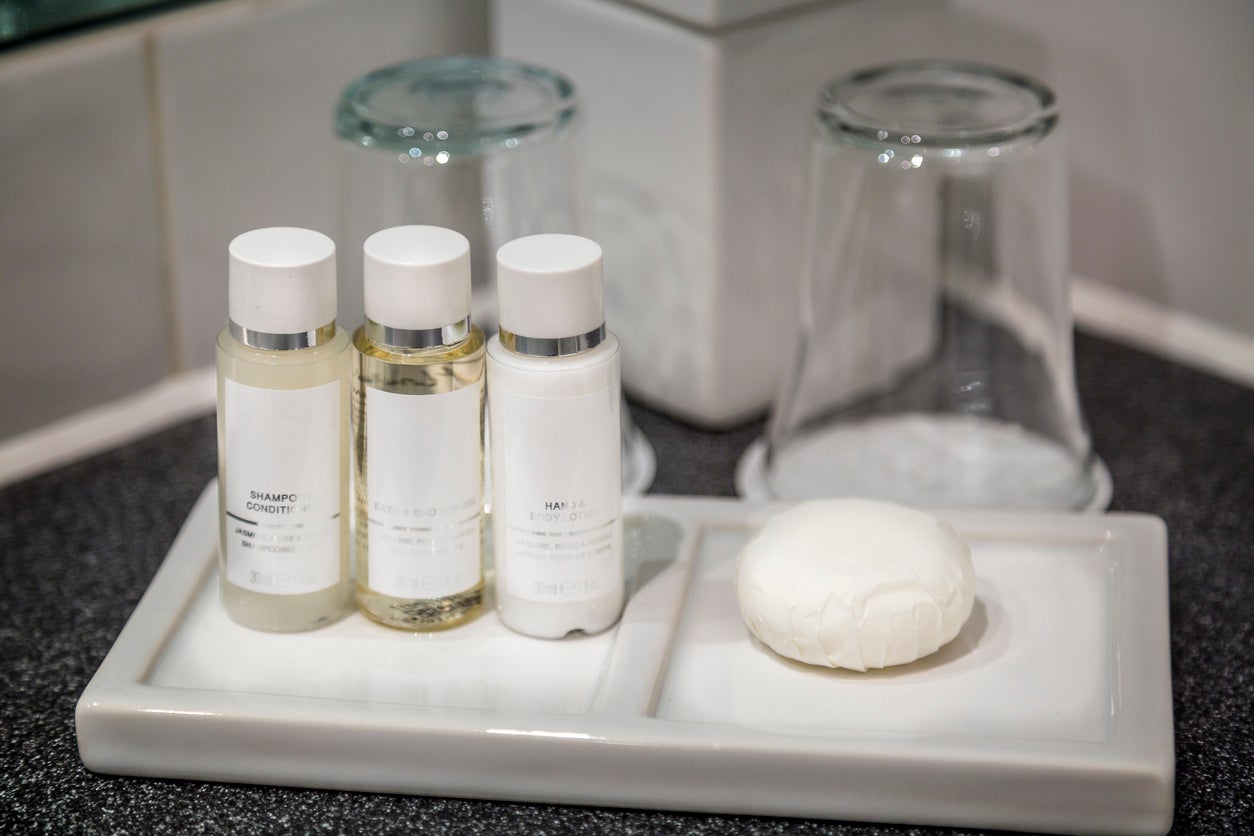
Gingerich explained: “It’s always useful to keep things out of landfills and reducing our material use is the first priority in the waste minimization hierarchy — reduce, then reuse, then recycle, then recover. Landfills are expensive to build and take a decade to construct, so we want to reduce the overall volume going into them however we can.”
He continued: “At scale though, I’m not sure how big of a problem it is. Globally, about three billion metric tonnes of municipal solid waste are generated each year. That comes out to around 350kg per person. Given that scale of solid waste, I’m not sure [eliminating single-use toiletries] is a major dent in the problem. And when it comes to solid waste produced at hotels, food waste probably has a bigger impact on landfills than these bottles.”
Gingerich also noted that the recycling system handles many used toiletry bottles.
He explained: “Whether or not a bottle ends up in a landfill is heavily location-specific. Here in Columbus, where I live, that bottle would be nowhere near a landfill if the hotel had its act together. It would just be recycled and used to make more bottles.
“In many parts of continental Europe, where they practice energy recovery, from a few different techniques, it’s also unlikely to end up in a landfill — as a bottle. Instead, it may be ash or other remnants following an energy process.”
The more pressing issue for Gingerich is carbon footprints, and switching to refillables doesn’t significantly shrink them.
He explained that for context, the climate footprint of a guest to spend the night in a hotel is on the order of 10-30kg of CO2.
“Most of this comes from energy use — both electricity and thermal fuels,” said Gingerich.
“Studies tend to find the impacts of toiletries to be negligible. The benefits of switching to refillable toiletries are around 10 grams of CO2 per guest. So, orders of magnitude smaller.”
George Curtis, CEO of the Carbon Neutral Group, agreed that in the hierarchy of hotel sustainability issues, toiletries do not rank highly.

He commented: "Energy use is the biggest headache for hotels when it comes to sustainability.
"Food waste is also a major climate issue. Hotels often waste anywhere up to 30 percent and sometimes more of the food that they purchase. Laundry is also a concern, but this has been on the agenda for a while."
What’s more, toiletries “may not even be the most important single-use plastic to get rid of,” according to Gingerich.
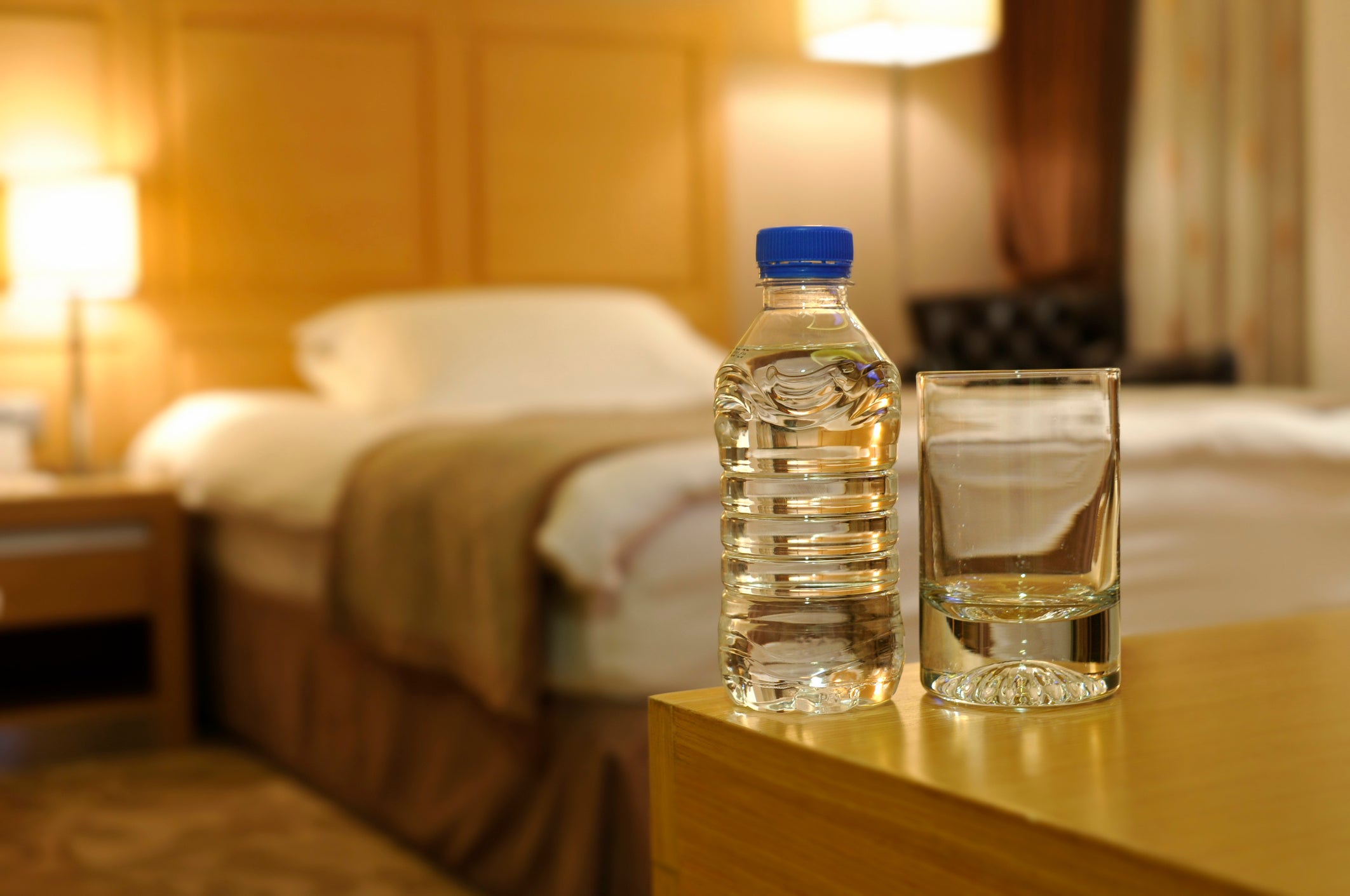
He explained: “Doing things like promoting tap water use and not giving out bottled water may be better.
“People go through a lot more water bottles than toiletry bottles when traveling and studies have shown that tap water promotion can save around 100 grams of CO2 per guest.”
So, would a purely science-led toiletries policy involve switching towards refillable dispensers?
Gingerich said: “A science-led policy does involve switching towards refillable toiletries. It shouldn’t be hotels’ biggest priority since it is such a small piece of the impact, but that doesn’t mean hotels shouldn’t do it as part of an ‘all-of-the-above’ strategy.
“It also has two points in its favor that other actions don’t necessarily have: it has a short payback period and it is something almost entirely in the hotel’s control that’s easy to implement.
“These switches are low-hanging fruit to save the hotel money, which is almost certainly why they’re doing it.
“It also doesn’t necessarily rely on other people to fix other things first. To reduce the impact of electricity use, we either need to figure out how to decarbonize thermal fuels, to replace things like natural gas, have an electricity grid with less fossil fuels, or to have composting and organic waste management systems in place.
“Hotels don’t control how many realistic options they have to replace burning natural gas to heat spaces or water, or whether local landfill systems have real green waste management.
“But they can control how they provide guests with toiletries.”
And there’s a “magic number” for hotels to consider.
Gingerich said: “Ultimately, what influences whether or not refillable bottles are more sustainable is the number of times they’re used before they break / are replaced.
“Refillable dispensers are heavier and made with a sturdier plastic. That means that they have a larger carbon footprint, about 200 times that of a single-use one, taking into account transportation and disposal.
“So long as they replace 200 single-use bottles, then they’re worth it.”