Sony and Warner just sued Anthropic over copyrighted music used to train Claude, seeking $150,000 per track
Sony Music and Warner Chappell are suing Anthropic, alleging the company pirated tens of thousands of songs to train Claude.
 Kass
Kass

Anthropic's Claude models allegedly learned to write lyrics by pirating the exact songs Sony and Warner now want paid for.
 Shikhar Mehrotra / Digital Trends
This isn’t the first time music publishers have sued a big AI company, but the scale makes it worth your attention. Sony Music and Warner Chappell have filed sweeping new lawsuits against Anthropic.
The publishers claim that Anthropic pirated tens of thousands of copyrighted songs to train Claude (via Business Insider). This chatbot has become quite popular for its accuracy and ability to handle complex tasks.
 Nadeem Sarwar / Digital Trends
So what exactly do Sony and Warner claim?
The companies filed their 48-page lawsuit late Friday in federal court in Northern California, claiming this is one of the largest and most blatant ongoing thefts of intellectual property rights (protected by copyright and not allowed for commercial use without permission) in history.
The core claim, as mentioned in the lawsuit, is that Claude can reproduce near-identical or even identical copies of lyrics from copyrighted songs. Publishers argue that the output competes directly with the human-written songs the chatbot was trained on. It names Anthropic, along with CEO Dario Amodei and co-founder Benjamin Mann, as defendants.
Specific songs named in the filing span decades: Survivor’s “Eye of the Tiger,” Marvin Gaye’s “Ain’t No Mountain High Enough,” Mariah Carey’s “All I Want for Christmas Is You,” Taylor Swift’s “Paper Rings,” and Bon Jovi’s “Livin’ on a Prayer.”
Sony and Warner claim Anthropic pulled lyrics and sheet music through pirate archives like Library Genesis and Pirate Library Mirror.
 Rachit Agarwal / Digital Trends
How big is the damage claim?
As mentioned in the lawsuit, both music publishers want a jury trial against Anthropic. Furthermore, the companies are seeking statutory damages of up to $150,000 for every composition that has been plagiarized or copied.
I don’t want to overstate this, but $150,000 multiplied by the tens of thousands of songs allegedly pirated or used to train a chatbot adds up to a potentially eye-watering figure. While Anthropic hasn’t commented publicly on the lawsuit, we should expect a statement soon, given the sheer scale of claimed damages.
As I mentioned at the beginning of the article, this isn’t the first time a publisher has sued an AI company. Just recently, Anthropic agreed to pay authors and publishers $1.5 billion to settle a separate class-action lawsuit tied to pirated books, reportedly the largest copyright settlement in U.S. history at the time.
Music publisher BMG has also sued Anthropic separately, though that case covers a comparatively narrow 493 compositions next to this new suit’s far broader scope. And Anthropic isn’t alone. OpenAI has faced similar allegations in the past, from outlets including The New York Times and Encyclopedia Britannica.

For more than five years, Shikhar has consistently simplified developments in the field of consumer tech and presented them…
Stung by OpenAI pulling GPT models from Cursor? Anthropic offers a timely lifeline with higher Claude limits
OpenAI is leaving Cursor, and Anthropic just slid into the DMs
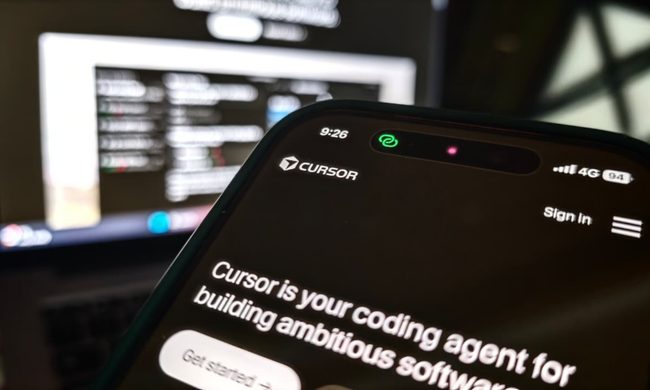
For Cursor users who suddenly found themselves caught in the middle of an AI industry spat, the timing could hardly be worse. OpenAI is reportedly moving to cut off Cursor’s direct access to its models - but Anthropic is stepping in with a rather convenient alternative.
SpaceX has notified Cursor that it intends to terminate its contract for providing OpenAI models, with the shutdown proposed for November 12, 2026, according to OpenAI. Cursor co-founder and CEO Michael Truell confirmed the development, saying OpenAI models account for about 5% of Cursor user traffic and that the company is speaking with OpenAI to resolve the issue.
The robo pizza chefs aren’t doing okay
The dream of fully automated pizza is running into some very human problems

The future of fast food was supposed to look something like this: walk into a restaurant, place an order, and watch a robot assemble your pizza with machine-like precision. Instead, some of the companies that promised to automate pizza-making have struggled to turn that vision into a sustainable business.
The latest example is Picnic, whose robotic pizza-making system was deployed at a Moto Pizza restaurant in Seattle. But in May, its supplier abruptly shut down, leaving the restaurant with expensive machines and no technical support. Lee Kindell, who had invested about $160,000 in the cabinet-like equipment, was left questioning whether robotic pizza-making was worth the gamble.
Anthropic just showed an early version of self-improving AI
Anthropic is testing how much of AI development can be handed over to AI itself

Anthropic has been talking about AI systems eventually helping build better versions of themselves. Its latest research shows what the early stages of that could look like.
The company gave Claude Sonnet 5 an early version of the more powerful Claude Opus 4.8 and asked it to make the model behave better. Over roughly 60 hours, Sonnet tested more than 50 different ideas before creating a training method using about 2,400 examples.













/cdn.vox-cdn.com/uploads/chorus_asset/file/25830987/2193093662.jpg)