Taylor Swift & Travis Kelce’s Rumored July 4 ‘Taymerica’ Wedding: The Hidden Pressure Cooker No One’s Talking About
Travis Kelce just dropped a hint that he and Taylor Swift‘s wedding could double as the most patriotic party of the year. Red, white, and “I do.” Sparklers, probably. A guest list that reads like the Met Gala collided...
 Hollif

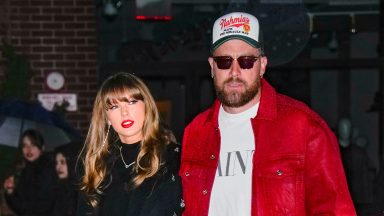
Travis Kelce just dropped a hint that he and Taylor Swift‘s wedding could double as the most patriotic party of the year. Red, white, and “I do.” Sparklers, probably. A guest list that reads like the Met Gala collided with the Super Bowl.
And if the rumors hold, they’re exchanging their vows over July 4 weekend. A holiday. With a theme. With Taylor’s legendary “Taymerica” energy baked into the night.
It sounds perfect. That’s the problem.
Because in my office, I see what happens when a wedding has to be the best night of your life. The bigger the expectation, the harder the landing if anything wobbles. And nobody, not even Taylor and Travis, gets to opt out of that physics.
The Sneaky Danger Hiding Inside a Perfect Wedding
Here’s something I tell every couple planning a big event. Anytime the cultural script says you’re supposed to feel deeply connected, the potential for disappointment skyrockets. Holidays. Anniversaries. Valentine’s Day. Christmas morning. Weddings most of all.
Greater expectation that it’ll go well comes with a greater sense of failure and pain when something goes sideways. Your sensitivity to feeling injured by your partner actually goes up, not down. Which is wild when you think about it. The night you most want to feel close is the night you’re most primed to feel hurt by a small thing.
High achievers especially carry this unconscious belief that because they’ve built something monumental on the outside, the inside should feel smooth. You should feel like you’ve arrived. Not still behind where you’re supposed to be. And nowhere is that more true than in your relationship.
Underneath the glamour, two nervous systems are running the same primal program every other human runs. Are you there for me? Am I enough for you? Taylor is asking it. Travis is asking it. The dress designer can’t answer it. The fireworks can’t answer it. Only the other person can.
This is what I’d call the science behind the noise, the same logic I write about in the science behind red flags in a relationship. The flags aren’t the dramatic blowups. They’re the quiet expectations that nobody said out loud.
Why a Fight About the Seating Chart Is Never About the Seating Chart
Every Tuesday, I sit with couples arguing aggressively about the guest list. The caterer. Who gets a plus one. Whose mom sits where. They are completely convinced these logistics are the actual problem.
They’re not. Couples use the battleground of the topic to play out their attachment wounding over and over and over again. It is so much easier to talk about the schedule than to talk about the feeling of being alone. It is so much easier to fight about party favors than to look at your partner and say, “I am terrified I am not a priority to you.”
So when you read a gossip story about a famous couple bickering over a wedding detail, hold a little compassion. What looks like a petty argument is almost always two terrified people protesting their disconnection. I call it the Protest Polka. Looks ugly. Means something tender.
If you’re reading this and recognizing yourself in the polka, you can take our free relationship quiz and see which pattern you and your partner default to under pressure. Most couples have no idea they’re dancing the same three steps.
The other trap I see in famous couples especially is the pop psychology pile-on. Someone decides one partner is the villain. The internet gets a bad guy. There’s a whole conversation right now about why the algorithmic mother matters, about how we let strangers online shape our intimate stories. The truth is messier. There are always two truths in every conflict. Your truth makes sense. Their truth makes sense. Two truths. One loop. No villains.
What I’d Actually Say to Taylor and Travis
If Taylor and Travis walked into my office tomorrow stressed about Taymerica, I would not let them argue about the venue.
I’m not worried about your ability to solve coffee this morning. I’m here to help you with the underneath. The part you can’t Google. The high-achiever trap I see most is what I call the Time Machine. Couples try to leap ahead to a logical solution in the future without first attending to the emotional reality of the present moment.
The solution is never the problem. The problem is we try to jump ahead in the Time Machine before we have connected.
So before anyone talks about the rehearsal dinner, I’d want each of them to say the scary sentence. Not the polished one. The vulnerable one. “I’m scared I’ll disappoint you on the biggest night of our lives.” “I’m scared you’ll be performing for everyone except me.” “I want this to be ours, not theirs.”
That’s the move. Connection first. Solution second. Always in that order. And if a fight breaks out somewhere between the cake tasting and the first dance? Don’t panic. Conflict is evidence of love, not failure. You only fight this hard about the people who matter this much. I tell my couples that when they fight, they should walk down to 7-Eleven and buy the most expensive bottle of champagne in the cooler. Because the fight is proof you still mean something to each other.
The Line I Hope They Remember
A perfect wedding is not a perfectly smooth one. It is one where, somewhere in the chaos of fireworks and flashbulbs and a stadium of expectations, two people find each other’s eyes and remember the simplest thing. I see you. You’re enough. I’m choosing you again.
Taymerica or not. Red, white, and blue or barefoot in a backyard. The wedding is the party. The marriage is the part where you keep answering the question nobody stops asking.
_____________________________________________________________________________________________
Figs O’Sullivan and his wife, Teale, are couples therapists in San Francisco, relationship experts to the Stars and Silicon Valley, founders of Empathi, and built Figlet, our AI relationship coach, an AI relationship coach trained on their clinical work.