The Late-Blooming Splendor of Kōda Aya’s ‘Tree’
In her debut English-language paperback, the cult figure of Japanese personal fiction takes us on an arboreal journey through life and death. The post The Late-Blooming Splendor of Kōda Aya’s ‘Tree’ appeared first on Tricycle: The Buddhist Review.
 Tfoso
Tfoso
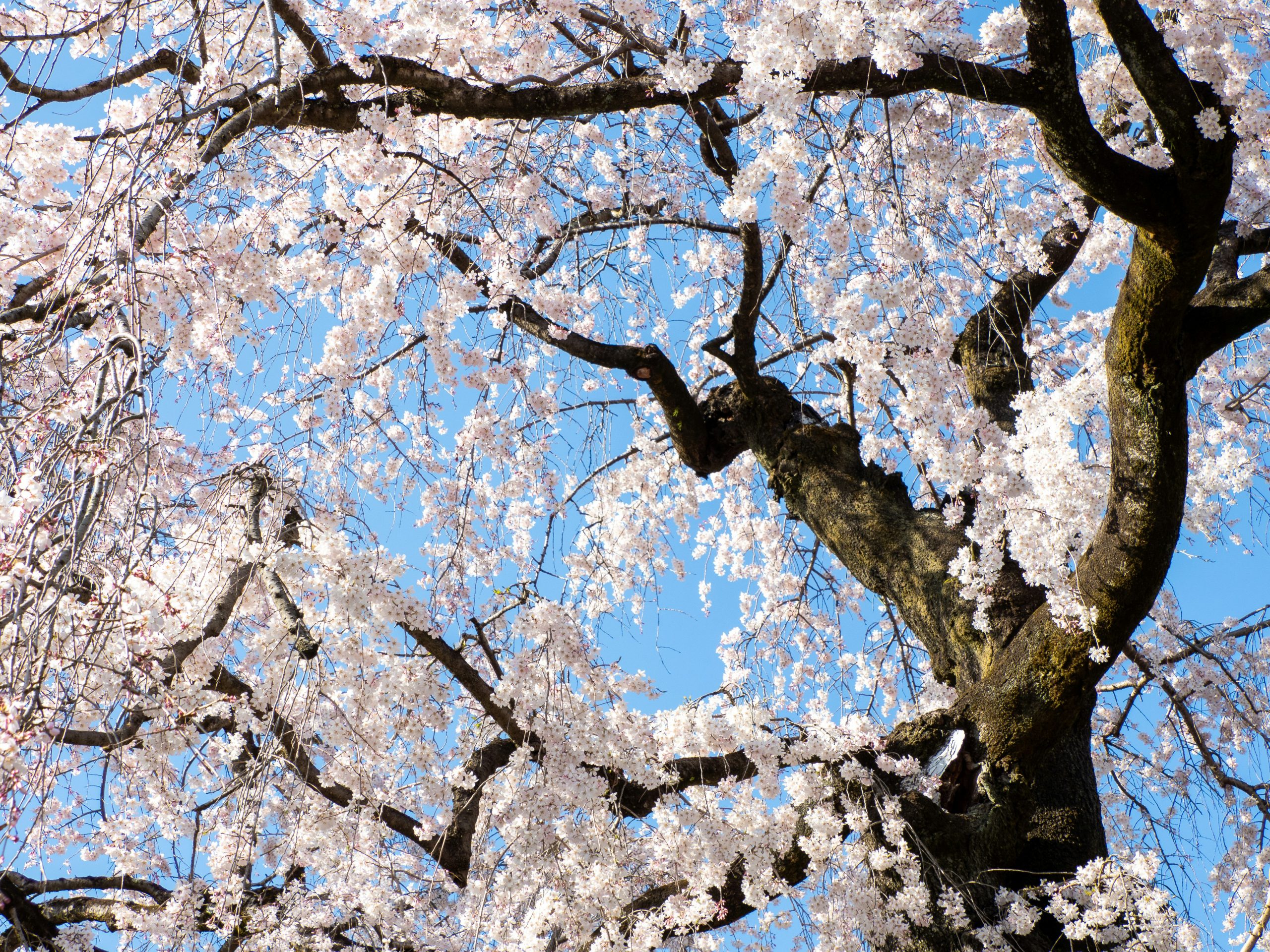
“I wondered whether the forest moves slowly, or whether people’s lives are particularly fleeting.”
Like many American moviegoers, my first exposure to the name and works of Kōda Aya occurred during the 2023 film Perfect Days, at around the sixty-sixth-minute mark. It was not her name but the cover of the Japanese edition of Ki, or Tree, that protagonist Hirayama, a toilet cleaner (played by Kōji Yakusho), finds at a used bookshop in Tokyo. After studying the front and back covers, he carries the book back to an enthusiastic bookstore clerk who remarks, “Kōda Aya, she deserves more recognition. She uses the same words we do, yet there’s something so special.”
In a manner of life imitating art, this placement in Wim Wenders’s film did indeed usher in a new wave of recognition for Kōda. This May, Penguin Classics is releasing the first-ever English language edition of Tree, deftly rendered by Edinburgh-based Japanese-to-English literary translator Charlotte Goff. But even the original Tree was a late-era Kōda work, published posthumously, following her death of heart failure in 1990, after she suffered a stroke two years prior.
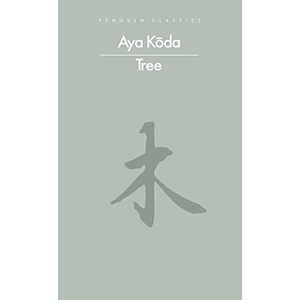
Tree
By Kōda Aya, translated by Charlotte Goff Penguin Classics, May 2026, 208 pp., $16.20, paper
Born in 1904, Kōda Aya never originally set out to be a writer. The daughter of a prolific man of words, literary celebrity, and Meiji-era Order of Culture recipient Kōda Rohan, Kōda tended to avoid the spotlight growing up, living in the shadows of her demanding, intellectual, and strict father as well as those of her bright older sister, Utako, and social younger brother (and the family’s prospective male heir), Ichiro. Yet as Ann Sherif records in her authoritative biography of the writer, Mirror: The Fiction and Essays of Kōda Aya, Kōda’s early life would be marked by tragedy and loss. At the age of 5, she lost her mother, Kimiko, then the following year she would lose Utako to scarlet fever and later Ichiro, after a short and troubled life, to tuberculosis.
Failing the entrance exams for the Tokyo Women’s Higher Normal School, Kōda entered the Joshigakuin, a Christian high school for girls, and graduated in 1922, where afterward, at 24, she married the son of a sake wholesaler and had her first and only child, a daughter named Tama (who would also go on to be a writer). After ten years together, the couple divorced, and Kōda returned with her daughter to live with and take care of her father. In the subsequent years, overshadowed by World War II, Kōda relegated herself to the household, raising a single daughter and caring for her ailing father in his old age. After Rohan’s death in 1947, as Sherif records it, Kōda turned to writing not as a career but simply as a means of supplementing her income, saying:
“My motivation for writing was purely commercial. Because my father was a writer, I knew what writers were like and I found it most disagreeable. When I was a child, Father always sat at his desk writing, and all we ever saw of him was his back. I thought that writing was a dull, dreadful occupation. After my father died, all I had was myself and my memories. I was asked to write them down, and I did, that’s all. No learning, no art, just a way to make it through the world. Japan had, after all, lost the war.”
In a simple yet refined style, Kōda’s prose packs imaginative depth into everyday language, bringing to mind the likes of English-speaking writers like Raymond Carver and Flannery O’Connor, or Japanese contemporaries like Hayashi Fumiko. And like Carver, Kōda, too, was a late bloomer, only beginning to write at age 43, which some critics bring up to explain why her earliest works were already so well-crafted. This might have been part of the reason, but while she sought to differentiate herself from him, perhaps the biggest influence on her writing was that of her father, Kōda Rohan.
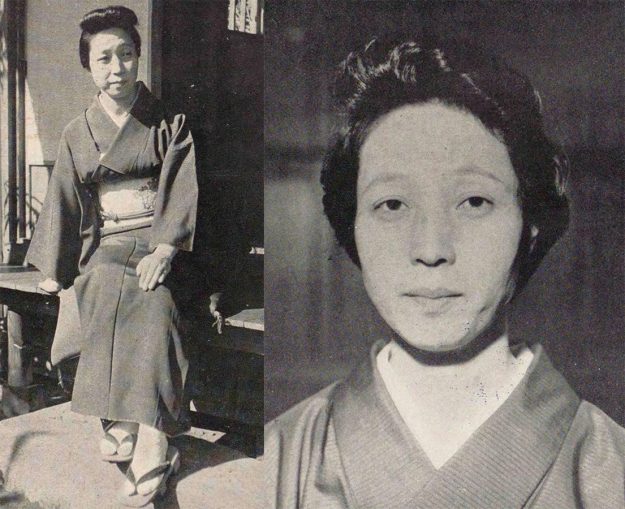 Kōda Aya. | Images via National Diet Library, Japan / Wikimedia Commons
Considered a national treasure in Japan, Kōda Rohan was a widely celebrated writer and socialite, his works punctuated by themes of spiritual discipline and tradition. In perhaps his most famous novel, The Five-Story Pagoda, protagonist Jubei, a despised, “slouching” carpenter is determined to build a pagoda at Kannoji Temple (an act of great religious merit), which survives in spite of the efforts of rivals and even a typhoon. Sometimes called the last kunshi, or scholar-gentleman, Rohan held many Confucian and Daoist values, and would frequently talk of philosophy and nothingness. According to Sherif’s biography, Rohan imparted to Kōda an adherence to the Confucian principle of kakubutsu chichi, or the “investigation of all things” with the goal of spiritual cultivation. All things, small and large, were worthy of spiritual inquiry: the work of maintaining the home, the straight rows of Ezo spruces growing uniformly in a forest, the great five-story pagodas.
Yet there are key differences between the works of Rohan and his daughter. Kōda Rohan wrote with a style that was varied and that often challenged his readers with difficult vocabulary and references to Chinese classics, whereas Kōda wrote in the vernacular, often writing about domestic scenes but always with a mature worldview attentive to time, loss, and decay. While Kōda believed in the tradition and values instilled in her by her father, she held no nostalgia for the past. Recalling her image of “Father’s back,” Kōda saw writing as a solitary effort that took one away from their duties in life, such as caring for the family, taking up the pen herself only once her daughter was an adult and her father had passed away.
As it draws from her experiences, Kōda’s work is sometimes seen as an example of the tradition of the 20th-century Japanese literary genre of watakushi shosetsu, or the I-novel subset of personal fiction: the evocation of a literary persona that does not differ a great deal from the historical author, fashioning a (semi)autobiographical fictional discourse. With an eye toward introspection, loss, and self-cultivation, Kōda presents scenes as a “frank exploration of memories,” in many ways owing back to her father’s emphasis on the “investigation of all things.” Not arriving at any overly trite take-home message or easily summarizable plot, Kōda’s writing emphasizes narrative voice and imagery over plot or characterization. Her earliest works centered on the life of her father, the death of her brother, and other early experiences tied to domestic life and the social realm, yet as she aged, her focus shifted to the natural world.
Celebrating the merits of living independently as an older woman in the 1960s and ’70s, Kōda took to writing about the places she had visited in Japan including sites of “huge and catastrophic landslides, tall stands of virgin forest, [and] the high seas.” As Sherif notes, Kōda visited landslides and forests because she found beauty in the process of the earth changing or trees growing, and, simultaneously, it also gave her the time to contemplate her own life and the process of aging. Through writing about nature, Kōda was also expressing ideas that had been in the Japanese collective consciousness from the ’60s onward about the threats posed by rapid and initially unquestioned capitalist growth, economic and industrial. Perhaps also owing to her memories of growing up during the war, in her writing, Sherif attests, Kōda reminds the reader of the potential for change, destruction, and simultaneously renewal forgotten in the “seeming certainty and solidity of urban structures, economic affluence, even the earth beneath our feet,” yet Kōda does so through feeling and intuition rather than erudite notation. When talking about her interest in landslides, she knew she would never be an expert, saying:
“I personally did not have that many years left in me, and even as a child I had not had much of an affinity for studying. . . . So I decided to call it quits as a scholar of landslides. . . . But I did have the capacity to venture out and see landslides with my own two eyes, and to grasp the feeling (Jp.: kandō) of landslides. I would be satisfied if I could create in words that emotion and convey it to my readers.”
In 1976, Kōda was chosen as a member of the Japan Art Academy. She spent much of her later years writing essays on the subject of trees and landslides, which would be published as books after her death. While Rohan is not the focal point of these later essays, he does come up from time to time. In Landslides, she is asked by a bookstore owner for her name card, when she suddenly becomes flustered, telling him she is just “an old woman who lives in Koishikawa and writes random essays.”
Prior to picking up Tree at the used bookshop, we are in Hirayama’s Tokyo apartment, going through a roll of film he had recently developed, mainly of trees, many of the sun coming in and out of the leaves during golden hour, a motif repeated throughout Perfect Days. The film even ends with a definition of the term komorebi, a Japanese concept that translates as “sunlight filtering through trees,” or “the dancing, shimmering light and shadows created by sunlight filtering through the leaves of trees.” Komorebi itself is a beautiful natural phenomenon, but when viewed continuously, it can feel hypnotic or even disorienting, always changing. As a toilet cleaner in Tokyo, Hirayama decorates his days with moments of beauty and awe, including his ritual of taking one komorebi picture every day in the park where he regularly takes his lunch. In his apartment, he sorts through his latest roll of film, discarding the pictures he feels aren’t worthy and keeping the ones that are, putting them in a box, labeling it, and storing it in his closet.
 Image by Brittany Lee
This habit of Hirayama’s directly parallels that of Kōda’s arboreal observations. Tree is written as a travelogue as well as an anthropological and botanical study, as Kōda visits the trees of Japan under the pretext of journalism and travel writing. While it is easy to read Tree as connected, each vignette represents a different travel writing assignment, or zuihitsu (essay). While Kōda professes to treat each visit like a commercial endeavor, it quickly becomes apparent that she is using the guise of travel writing to undergo a far more spiritual pilgrimage—taking advantage of the access journalism gives her to look at scenes she considers important for her life and self-cultivation. Kōda’s words are more so personal reflections than scientific, prioritizing subjective inner truths over intricate conventional reportage, with equal time given to the descriptions of trees as to autobiographical details, like her temperament on a specific day or descriptions of being given piggyback rides by her guides as, in her old age, she often doesn’t have the strength required for many of the long mountain walks necessary for viewing specific tree species. Though Tree is presented as a travelogue, much like the sun in komorebi, we gradually see Kōda’s life through the trees she visits. “I wondered whether the forest moves slowly, or whether people’s lives are particularly fleeting,” Kōda writes, and you get the feeling this is about more than reporting.
Across these fifteen essays, Kōda meets a bevy of different characters—research scientists, university professors, carpenters, travel guides, drivers—and yet some of the most defined characters are the trees themselves. Some trees are presented as mythical creatures in the book: the dainty color-drenched cherry blossom with ancient protruding roots, “old beyond knowledge”; the telepathic wisteria that unites father and daughter; the godlike giant sugi; the delicate weeping willows able to grow on devastated land. Reflecting her own aging and the aftermath of the war, Kōda does not shy away from the way lives degrade and decay as seen through the more destructive elements of nature; over the course of her travels she witnesses cannibalistic trees, earth-rupturing landslides and mudflows, tectonic eruptions spewing volcanic ash, and the quickening saws of the lumber mill. Simultaneously, trees are also presented as timeless guardians. “Trees are not just living things,” Kōda writes, “but feeling beings, like us.” Perhaps owing to Shinto, Shugendō, and other animist beliefs held in Japan, Kōda paints trees as conscious beings that are deeply connected to our ancestors. In her book, When the Forest Breathes, forest ecologist Suzanne Simard reflects on how “many Indigenous cultures have long viewed mother trees—and grandmother and grandfather trees—not just as metaphors for interdependence but as sacred relations who hold spiritual connection to the ancestors, and who provide wisdom, longevity, and regeneration.” Viewing trees as a kind of ancestor, it becomes easier to identify why Kōda feels so moved by her encounters with the different species. And suddenly, as Kōda rides on her guide’s back to see some of the harder to reach of these distant relatives, we, too, as readers are floating with Kōda the bodhisattva as she guides us on this journey through life and death.
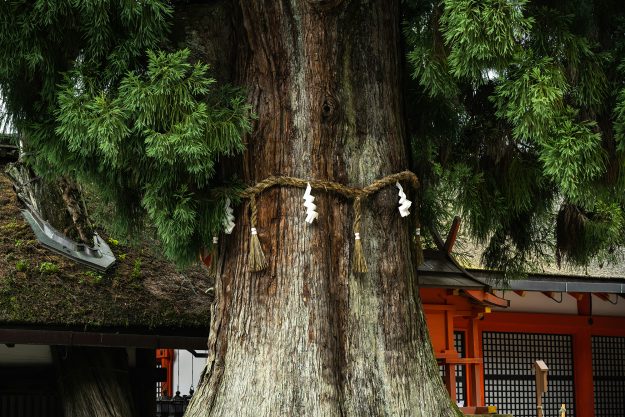 Shimenawa around an ancient cedar. | Image by Darren Ee
Beyond the life of trees standing still, Kōda also places emphasis on wood, differentiating between living trees, wood as a living material, dead wood, and “wood which has died.” She befriends several woodworkers in the book, notably a family of master carpenters called the Nishiokas. Speaking about novice carpenters who are less experienced with the saw, the younger of the Nishioka brothers, Narajiro, recites a line echoing a sentiment akin to Dogen’s concept of beginner’s mind: “People don’t usually make mistakes while they are nervous and trembling, it’s when they get more confident that the risk comes.” In this way, Narajiro surmises, the carpenter can only be confident in their skills while being heedful and holding reverence for the importance and severity of their actions, saying, “We go to work every day worried about the chop.” Through his carpentry stories, Narajiro teaches Kōda about the true nature of life and death. Upon seeing “wood which has died,” Kōda reflects, on both the wood and her own mortality, “I think seeing these remnants whose life was over made it clear to me that they had once lived.” The sacredness of wood, whether as a tree or chopped lumber, is a recurring theme throughout the book and mirrors Kōda’s own pursuits later in life as, in addition to trees, she wrote essays on architecture and dedicated much of her time to helping to rebuild the pagoda at Hōryū-ji temple in Nara, which had been damaged in a notorious fire on January 26, 1949. A Buddhist temple that was once regarded as one of the powerful Seven Great Temples of Nara, Hōryū-ji’s main hall is widely recognized as the world’s oldest wooden building, and the temple is considered one of the oldest Buddhist sites in Japan.
When Hirayama takes out his newly purchased copy of Tree later at an izakaya he frequents in the film, he flaunts the cover to the restaurant’s manager, Mama. Mama repeats the title and Kōda’s name, and then asks: “Her essays?” Hirayama excitedly asks if she’s read them. Mama dons a wincing smile. “You’re such an intellectual.” “No, I wouldn’t say that,” Hirayama replies. Humoring the other bar patrons between fixing up dishes, Mama is then goaded into singing a song to the regulars. She acquiesces when one barfly pulls out an acoustic guitar and the two perform a haunting rendition of “The House of the Rising Sun.”
Tree ends with an essay on the poplars of Japan as seen at the Awa Odori festival of Obon. In addition to the dancing of the festival’s human participants, Kōda is quick to mention the dancing of those very poplars, claiming to want to call out “Erai yoccha, erai yoccha” (“come over here, come over here”) at the trees as they bounce their branches in the wind. The Awa Odoro festival grew out of the Bon Odori, which is danced as a part of the Bon “Festival of the Dead,” the Japanese Buddhist festival where the spirits of the deceased are said to visit their relatives every year. As she ventures to visit these trees and sacred forests, you get the sense that Kōda is coming to grips with a landslide of loss and making sense of what happens when the earth breaks and everything falls away.
As she ventures to visit these trees and sacred forests, you get the sense that Kōda is coming to grips with a landslide of loss and making sense of what happens when the earth breaks and everything falls away.
Before the Bon festival, Kōda tells the story of the poplar’s origins in Japan. A relative of the cherry blossom, poplars had been imported to Japan from Italy after the war to provide an economic boon, particularly for their use as matchwood. Kōda tells the story of a person, “a young man I will call O-san,” who had spent his 20s growing the poplars in nurseries and then trying to propagate them out in the mountains. While the poplars grew well in his nurseries, the trees were unable to survive in the wild without specialist care and where the soil was not an adequate fit. “The passion of youth,” Kōda writes, “amounted to nothing more than painful memories and frustrated dreams.”
And yet the young man she calls O-san did not regret his life working in vain. “He mourned the poplars’ fate but had no regrets about the single-minded way he spent his youth . . . if anything, he said, the memories were pleasant for him.” It was in this way that Jubei had built the five-story pagoda and in this way that Kōda came to be an unwitting literary icon.
In recent years, Japanese research on poplars has shown how these trees are actually especially adept at absorbing and distributing radioactive cesium in contaminated areas, like in the site of the 2011 Fukushima disaster. “Some failures might better be called awakenings,” Kōda writes, evoking Wu-men’s saying in The Gateless Barrier, “The failure is wonderful, indeed.”