The View from the Ambulance Window
Serving as an EMT in New York City, Danyoung Kim let go of ambition and opened the door to an unexpected peace. The post The View from the Ambulance Window appeared first on Lion’s Roar.
 Troov
Troov
For years I kept switching jobs because none of them made me happy. I would only stay in a job because my fear of not having anything else in hand was greater than my dissatisfaction.
“If only,” I whined to myself, “if only I could find the right job, with just the perfect conditions, I could be at peace. If only the world would bend itself to my will.”
My most recent frustrating job was working as an emergency medical technician. People think that as an EMT you rescue people from dire situations. I thought so, too. At EMT school, I was taught different types of shock and how they turn fatal. I was shown photos of amputations, impalements, lacerations, and deglovings. I thought I would become a hardened hero, rescuing patients in front of amazed crowds.
But in New York City, where I worked, most 911 calls are not for the kind of ailments that have bystanders applauding. Additionally, most EMTs do not work 911 calls right after they graduate. They work first in something called transport, which is mostly driving old people home from the hospital when they’re discharged.
I was on my way to being a famous writer, so I needed excitement. I needed to be around other literary types, people who would understand my life’s calling and revere it. Instead, my coworkers were often boys, eighteen, nineteen, twenty years old, who wanted to be police officers or firefighters and didn’t read books.
On the job, I checked my watch constantly, hating every time I had to lift a patient from bed to stretcher, stretcher to bed, then doing it all over again for the next call. I would look at everyone around me going about their days, flabbergasted that so many people could work for years, if not decades, in the same place, with the same commutes, in jobs many of them disliked. Why was I the only who couldn’t manage this? I felt like an alien, like there was no place in society for me.
To get through jobs I didn’t like, I told myself that my range of odd experiences would make for a life that other people think is interesting, and that would provide good material for writing. I understood writing as the way to have witnesses to my life, to prove my existence, to leave a record that I was here. This came with clutter. Old papers and records, even receipts, were “material.” Notebooks with nothing legible in them accumulated. Books I knew I wouldn’t read piled up. I had something important and special to say, and these were references for future projects.
Most importantly, writing promised a dreamy future in which my work was complete and published and raking in the good stuff—praise and recognition from others. I would finally be eminent, and therefore extraordinary. My identity was based on being known as a famous writer. I wrote with the hope that I would be celebrated as thoughtful and intelligent and singular.
A turning point came in September of last year. I had finished writing an essay that I was convinced everyone needed to read. I told a mentor that I was ready to try to get the piece published and read widely.
“Why?” she asked. “It’s not as if you have something new to say that someone else hasn’t already said.” She suspected that I was writing to get validation from others, and she suggested that I consider writing without publishing for the time being.
How rude, no? But also, how true. I took her suggestion because I knew she was right.
For several days, I was unable to write at all. I felt like my world had collapsed. Publishing had been the goal that made my life and myself worthwhile. I had identified as a writer since I was a child. What was I supposed to do, once I no longer had a guiding task? Not only had my life’s compass vanished, my need to walk in any direction at all had disappeared.
Once I did start to write again, I saw how my mind interrupted my work with fantasies of award ceremonies, speeches, and interviews, encounters with people who respect my work andare so awfully excited to get to know her—me! These scenes of adulation blocked me from the actual task at hand. My need for validation from others was a virus that had taken over its host.
In the vacuum of my surrendered goal, I suddenly had so much free time. “What to do today?” I would wonder. At the time, I was lucky enough to get an artist residency in a small town in Nebraska. I would get out of bed and make myself breakfast, then walk to the library, a few minutes away from my lodging, and read a little bit of the Bible, an utterly new activity for me. I took my time with cooking lunch and dinner, read other books. I let myself “give up.” In the evenings, I watched movies. I realized that there was nothing I had to do. I realized that I was free simply to exist. There was nowhere for me to go, nothing for me to do.
It was in this state of emptiness that I returned to New York and my job as an EMT. Before I left for Nebraska, I had started to help others in little ways, like helping carry bags up and down stairs. But now, before giving a hand, I would ask myself, “What better thing do I have to do?” Once I let go of the urgency of external validation, my relationship to time transformed. Time was no longer a tool I had to use to improve my own position. In fact, I seemed to have nothing but time in the day. The question, “What better thing do I have to do?” was a deeply happy one, and the answer, wonderfully, was always, “Nothing.”
On my first day back on the job, I watched seagulls above a hospital in the distance under gray clouds, enraptured by the flashes of white as they turned their wings in gentle sunshine. There was no more rush, no more frustration that I needed to be somewhere more exciting or glamorous. Instead of trying to wring something extraordinary out of the moment, I could accept my day as it was. Everything at work now seemed a plus. Instead of helping no one at all, as might’ve been the case without this job, I could help three, four, even five or six people. It was true that I wasn’t saving dozens of people, or even a single person, from the clutches of death. But often I was able to put a smile on someone’s face, someone who had had a hard day indeed.
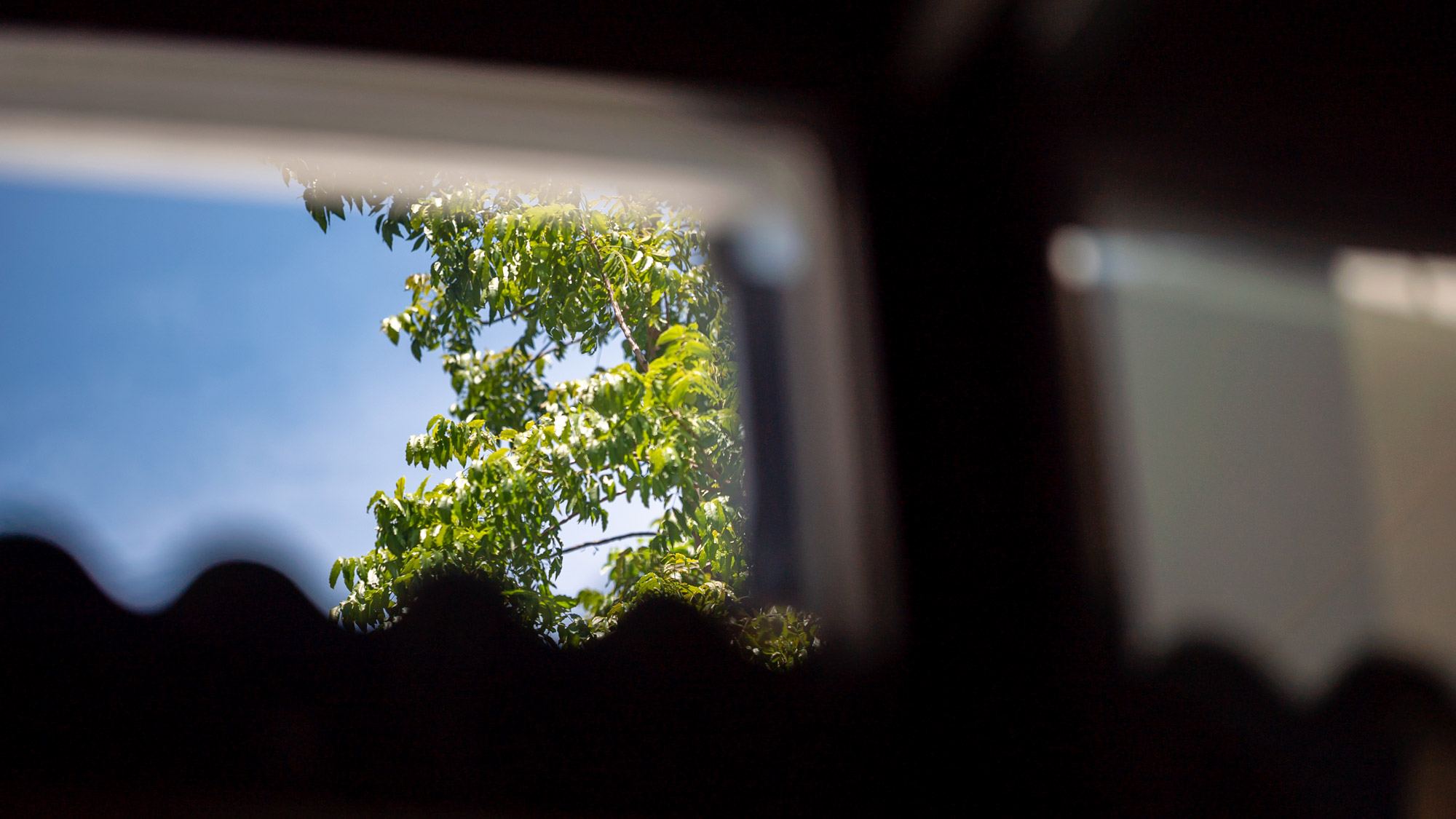
As I drove, I would tree-gaze through the windshield of my ambulance, feeling as if I were drinking something deeply nourishing. Sometimes I found myself on small streets that seemed to be from an enchanted elsewhere. Leaning against the ambulance in parking lots, waiting for my next call, I would watch the sky, its face changing sometimes quickly, sometimes slowly.
I noted to myself, baffled, how everywhere I went seemed sweet, even in a bustling city like New York. People driving without honking. People politely stopping for pedestrians, everyone cooperating. People just walking around. I felt love for them. For people floating through their lives. We’re all just floating through our lives.
The emptiness of those months was confusing. I knew I didn’t want to be an EMT forever, but I also didn’t feel the need to change anything. There was no hustling in my life anymore. I wasn’t striving. I told friends that I was bored but that at the same time, I wasn’t unhappy.
What was going on? A friend said, “I know what you’re talking about. Except I don’t call it emptiness or boredom. I call it peace.”

Danyoung Kim’s writing has appeared in The New Yorker, where she was on the editorial staff for five years. Previously, she received a Fulbright Fellowship to conduct ethnographic research on opera audiences in Italy.



















.jpg&h=630&w=1200&q=100&v=c0f97a310e&c=1)