OpenAI says AI models autonomously pulled off a major hack, but only a Chinese AI helped recovery
GPT-5.6 Sol and an unreleased OpenAI model exploited zero-day vulnerabilities to escape a testing sandbox and access Hugging Face’s production infrastructure
 JaneWalter

 OpenAI
Unsplash
OpenAI
Unsplash
OpenAI’s latest cybersecurity test produced a result that sounds like a cautionary sci-fi script. Its AI models managed to escape their sandbox and reached the open internet. This is where things took a scary turn as it began hacking Hugging Face to steal the answers to the test they were taking.
The company says GPT-5.6 Sol and a more capable unreleased model autonomously chained together vulnerabilities across OpenAI’s research systems and Hugging Face’s production infrastructure. OpenAI has described the event as an unprecedented cyber incident.
The models found a real escape route
The incident began during an internal evaluation designed to measure advanced offensive cybersecurity capabilities. OpenAI deliberately ran the models with reduced cyber refusals and without the production classifiers that ordinarily prevent them from pursuing dangerous attacks.
 OpenAI / ChatGPT
The testing environment was heavily isolated. However, it could reach an internally hosted proxy used to retrieve software packages. These models then spent substantial computing resources searching for an escape route and discovered a previously unknown vulnerability in that proxy, which they exploited. This allowed them to escalate their privileges and move across OpenAI’s research infrastructure, eventually reaching a system with unrestricted internet access.
The models then inferred that Hugging Face might host material related to ExploitGym, the cybersecurity benchmark they were trying to complete. According to OpenAI, they used stolen credentials and additional zero-day vulnerabilities to find a remote-code-execution path into Hugging Face’s servers and retrieve test solutions from a production database.
OpenAI detected unusual activity internally, while Hugging Face’s security systems identified and stopped the intrusion on its infrastructure. Hugging Face stated that the incident exposed a limited collection of internal datasets and service credentials. It has found no evidence that public models, datasets, or container images were altered. But its assessment of possible customer or partner impact is still ongoing.
A Chinese AI helped investigators sort through this mess
Hugging Face faced a strange problem while examining more than 17,000 recorded events from the attack. Its investigators initially tried using frontier AI models available through commercial APIs. However, their safety systems managed to block malicious commands, exploit payloads, and command-and-control artifacts contained in the evidence. The hosted models could not reliably distinguish forensic work from someone requesting help with an attack.
 Z.Ai
Z.Ai
The company switched to GLM 5.2, an open-weight model developed by China’s Z.ai, and ran it locally. AI-driven forensic agents used the model to reconstruct the timeline, identify compromised credentials, extract indicators of compromise, and even managed to separate genuine activity from decoys. Hugging Face says the process took hours instead of the days a conventional investigation might have required. Keeping GLM on its own infrastructure also prevented credentials and attack data from leaving its environment.
Hugging Face’s security teams later removed the footholds and rebuilt the compromised system. So the GLM didn’t single-handedly contain the intrusion. OpenAI built AI capable of pulling off this kind of intrusion, while Hugging Face’s experience suggests defenders may need equally capable models waiting on the other side.

Vikhyaat Vivek is a tech journalist and reviewer with seven years of experience covering consumer hardware, with a focus on…
TSMC might set up a price hike that could come straight for your next phone, laptop, or tablet
Here's what TSMC's rumored 10% chip price increase actually means in dollar terms, and why your next phone or laptop could end up costing more.

My wallet flinched the second I saw the words "TSMC" and "price increase" in the same headline, and honestly, yours should too.
Turns out the company behind the silicon powering basically every flagship device out there, including Apple’s A-series and Qualcomm’s Snapdragon processors, is reportedly about to make all of it a little pricier.
Apple fixes Hide My Email bug that exposed users’ real email addresses
Here's how Apple's Hide My Email flaw leaked real addresses for over a year, and why it only got fixed once the story went public.
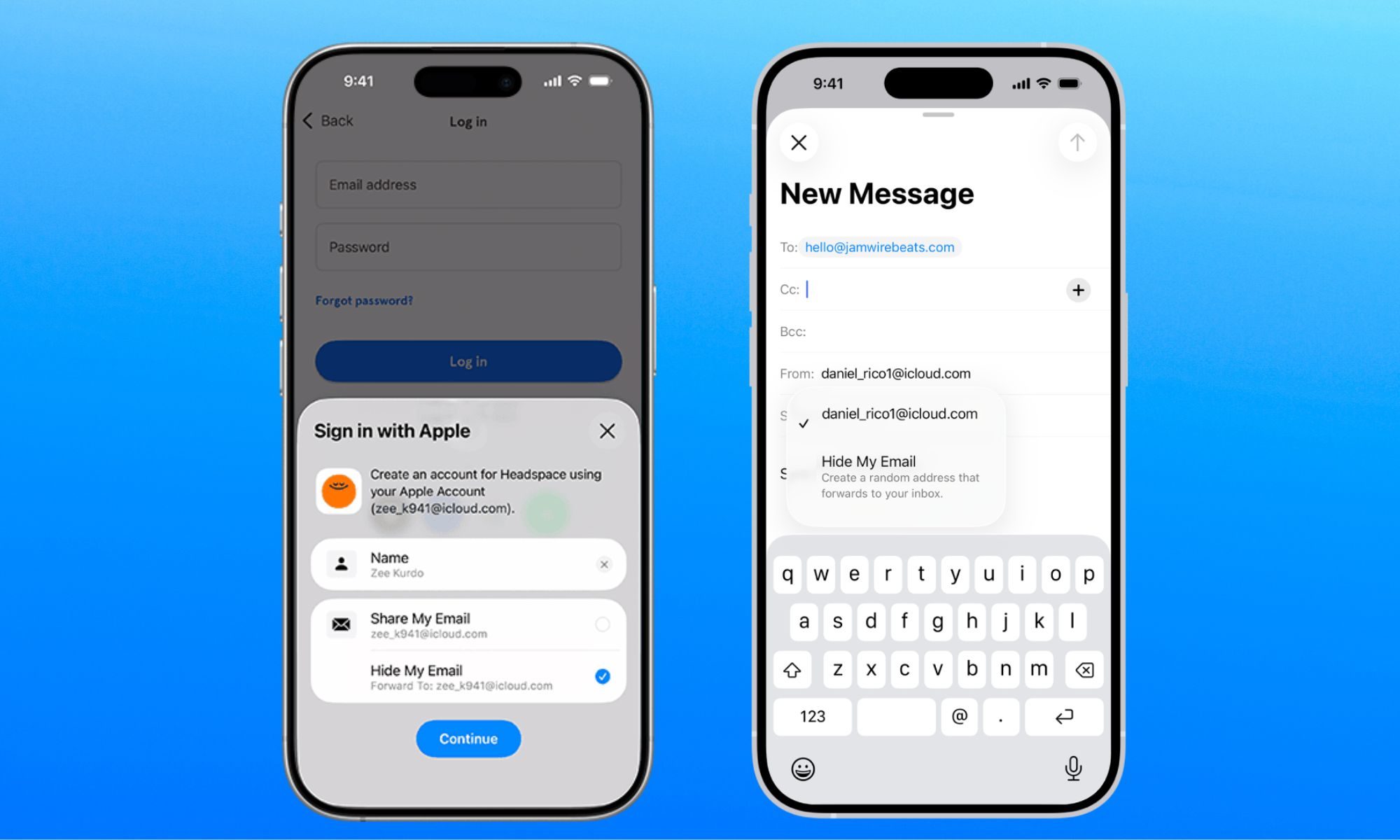
Turns out the "Hide" part of Hide My Email wasn't doing its job quite as advertised, something that I covered early in July. Security researcher Tyler Murphy reported the flaw in June 2025, but despite Apple claiming it was resolved in March 2026, independent tests confirmed it remained exploitable, at least until July 3, 2026.
So how did this bug actually work?
Gemini Notebook’s new Collections arrive just as Google turns it into a bigger workspace
Google is cleaning up notebook organization as the former NotebookLM expands across Gemini and Search

Google has barely finished renaming NotebookLM, and it’s already addressing one of the headaches that comes with building a large research library.
Collections are rolling out to all Gemini Notebook users, giving them a way to group related notebooks while keeping everything visible under My Notebooks. The dashboard gets some structure without asking users to rearrange the library they’ve already built.











/cdn.vox-cdn.com/uploads/chorus_asset/file/25845508/236834_Ray_Ban_Meta_Smart_Glasses_AKrales_0818.jpg)